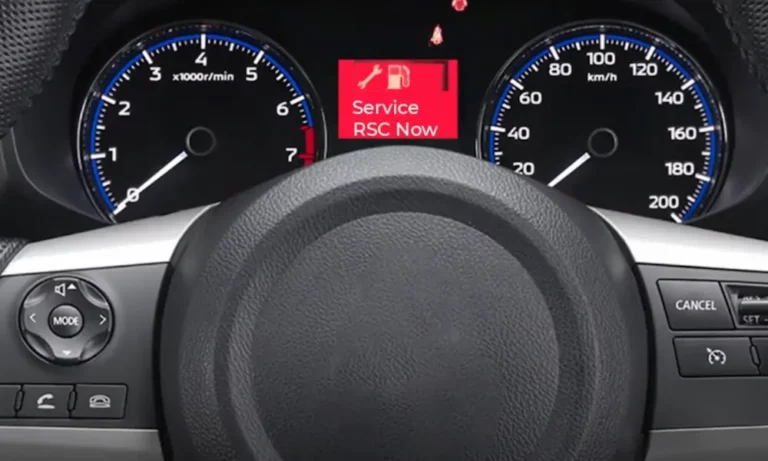
Ever seen a “Service RSC Now” message light up your Ford dashboard? It’s not just another annoying warning light—it’s actually your vehicle’s way of telling you something’s wrong with a critical safety system. This guide breaks down everything you need to know about this warning, from what RSC actually does to how you can diagnose and fix the problem yourself in many cases.
What Does Ford Service RSC Now Mean?
When your Ford displays “Service RSC Now,” it’s warning you about a problem with the Roll Stability Control (RSC) system. This advanced safety feature works alongside your vehicle’s Electronic Stability Control (ESC) and Anti-lock Braking System (ABS) to prevent rollovers during emergency maneuvers or sharp turns.
The RSC system uses several sensors to detect if your vehicle might roll over:
- Roll-rate sensors
- Wheel-speed sensors
- Yaw and lateral accelerometers
- Brake-pressure sensors
When RSC detects a potential rollover situation, it automatically applies individual wheel brakes (typically the outside front wheel) and reduces engine power to keep your vehicle safely on four wheels. According to NHTSA research, these interventions are crucial in preventing dangerous rollover accidents.
Common Causes of the Service RSC Now Warning
The “Service RSC Now” warning doesn’t appear randomly. Here are the most common reasons your Ford is displaying this message:
| Cause | Description |
|---|---|
| Faulty wheel-speed sensors | Damaged or misaligned sensors send incorrect speed data |
| ABS module failure | Problems with the ABS control unit that RSC depends on |
| Worn wheel bearings | Bad bearings distort wheel-speed readings |
| Brake-light switch malfunction | Since RSC uses brake-switch data, a bad switch disrupts system function |
| Software glitches | Occasional ECU software faults triggering false warnings |
| Low/contaminated brake fluid | Affects hydraulic pressure sensing needed for RSC operation |
The most frequent trigger is a faulty wheel-speed sensor. When these sensors malfunction, they can’t accurately relay wheel speeds to the control module, causing the system to trigger the warning and sometimes disable RSC functionality altogether.
How to Diagnose RSC Issues in Your Ford
Before heading to the dealership, try these diagnostic steps to pinpoint the problem:
1. Check for Warning Lights
Is the “Service RSC Now” warning accompanied by ABS or ESC lights? This pattern typically indicates a shared component failure among these interconnected systems.
2. Retrieve Error Codes
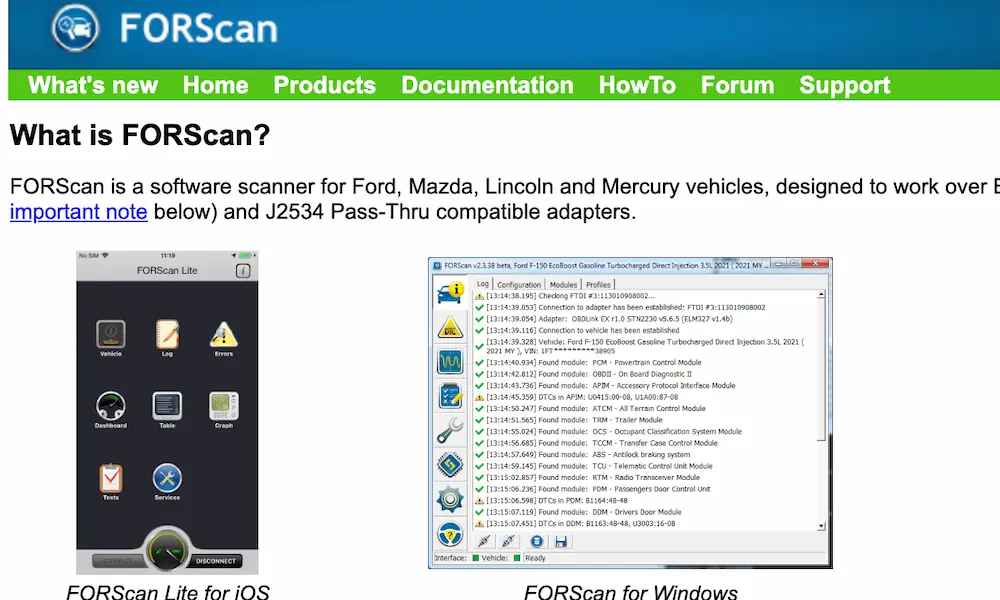
Use an OBD-II scanner that can read ABS/ESC codes. Common codes include:
- C1278: Steering angle signal fault
- C1155-C1158: Wheel-speed sensor circuit failures
- U0121: Lost communication with ABS module
Many auto parts stores offer free code scanning if you don’t have your own scanner.
3. Inspect the Wheel-Speed Sensors
Examine each wheel-speed sensor and its wiring for:
- Physical damage
- Corrosion
- Loose connections
- Metal debris stuck to the magnetic tip
These sensors are typically located at each wheel hub behind the brake rotor. According to owners’ experiences, cleaning or replacing these sensors often resolves RSC warnings.
4. Check Brake-Light Function
Since the RSC system interfaces with your brake system, verify that your brake lights work properly. A faulty brake-light switch can trigger RSC warnings because the system can’t properly detect when you’re braking.
5. Inspect Wheel Bearings
Worn wheel bearings create inconsistent wheel-speed signals. Check for:
- Grinding noises when driving
- Roughness when rotating the wheel by hand
- Excessive play in the wheel
Quick Fixes to Try First
Before diving into complex repairs, try these simpler resets that might temporarily clear the warning:
Battery Disconnect Method
- Turn off the vehicle completely
- Disconnect the negative battery terminal
- Wait 10-15 minutes to allow the system to reset
- Reconnect the battery
- Start the vehicle and check if the warning is gone
This method, demonstrated in this troubleshooting video, forces the control modules to reset and can clear minor glitches.
RSC Fuse Reset
- Locate the RSC/ABS fuse in your vehicle’s fuse box (check your owner’s manual for the exact location)
- Remove the fuse for about 30 seconds
- Reinsert the fuse
- Start the vehicle to see if the warning clears
Dashboard Button Reset
If your Ford has an ESC/RSC off button:
- Start the vehicle
- Press and hold the stability control OFF button for about 5 seconds
- This toggles the system off and then back on, potentially clearing temporary faults
As noted in the Ford owner’s manual, this reset works for minor system glitches only.
DIY Repair Options for RSC Problems
If the warning persists after reset attempts, you’ll need to address the underlying issue:
Replacing Wheel-Speed Sensors
- Identify the faulty sensor based on OBD codes (often C115X codes, where X is the wheel position)
- Purchase a replacement sensor for your specific Ford model
- Raise and secure the vehicle with jack stands
- Remove the wheel for access
- Disconnect the electrical connector from the sensor
- Remove any mounting bolt(s) securing the sensor
- Extract the old sensor and clean the mounting hole
- Install the new sensor and reconnect wiring
- Clear the error codes with an OBD scanner
Brake-Light Switch Replacement
If your brake lights are malfunctioning:
- Locate the brake-light switch near the brake pedal assembly
- Disconnect the electrical connector
- Unscrew or unclip the switch from its mount
- Install the new switch and reconnect wiring
Brake-light switch replacement typically costs $105-$196 including labor, but DIY can save significantly.
Wheel Bearing Replacement
If you’ve identified a worn wheel bearing:
- Raise and secure the vehicle with jack stands
- Remove the wheel
- Remove the brake caliper and rotor
- Depending on your Ford model, you may need to:
- Remove the axle nut
- Disconnect steering components
- Press out the old bearing
- Install the new bearing and reassemble components
This job requires specialized tools for many vehicles and might be better left to professionals if you’re not experienced.
Professional Repairs for RSC Issues
Some RSC problems require dealer-level repairs, including:
ABS Module Repair or Replacement
When the ABS module is at fault, professional diagnosis is usually needed because:
- The module often requires programming specific to your vehicle
- Special tools are needed to bleed the ABS system afterward
- The module houses complex integrated circuits that can be damaged during amateur repairs
A common experience with Ford vehicles shows that ABS module issues frequently trigger RSC warnings.
ECU Software Updates
Ford occasionally releases software updates to fix known RSC system bugs:
- Only Ford dealerships or specialized shops can perform these updates
- The procedure requires Ford-specific diagnostic equipment
- Updates can resolve intermittent false warnings and improve system performance
Complete RSC System Testing
Professional shops can perform comprehensive system diagnostics:
- Testing all RSC/ESC sensors simultaneously
- Pressure-testing the hydraulic components
- Analyzing communication between multiple control modules
The Importance of Fixing RSC Problems
Don’t ignore the “Service RSC Now” warning. Here’s why:
Safety Implications
The RSC system provides crucial protection in emergency situations. According to Ford’s safety information, vehicles with properly functioning stability systems experience significantly fewer rollover accidents.
Impact on Vehicle Performance
When RSC is disabled:
- Your vehicle may enter computer-controlled “limp mode” with reduced power
- ABS functionality might be compromised
- Overall handling becomes less stable in adverse conditions
- Traction control may be disabled
Long-Term Consequences
Ignoring RSC warnings can lead to:
- Accelerated wear on braking components
- Potential damage to other connected systems
- Significantly reduced vehicle value
- Failed safety inspections in some states
Preventing Future RSC Problems
To minimize the chances of RSC warnings returning:
Regular Maintenance Practices
- Check brake fluid levels and condition every 6 months
- Have wheel bearings inspected during tire rotations
- Clean wheel-speed sensors during brake service
- Keep vehicle software updated at routine service intervals
Driving Habits That Protect RSC Components
- Avoid deep puddles that can splash water and debris onto sensors
- Reduce exposure to heavily salted roads when possible
- Drive cautiously over rough terrain to prevent sensor damage
- Don’t ignore unusual noises from the wheel areas
RSC Systems Across Different Ford Models
The RSC system varies slightly across the Ford lineup:
Ford Explorer and SUV Models
Ford’s SUVs typically feature the most advanced RSC systems with:
- Curve Control technology
- Terrain-specific stability programming
- Integration with 4WD/AWD systems
Explorer owners often report RSC warnings after off-road use or in harsh weather conditions.
Ford F-Series Trucks
F-Series trucks use RSC with:
- Trailer Sway Control integration
- Load-compensating stability algorithms
- Heavy-duty sensor configurations
Ford Transit and Commercial Vehicles
Commercial vehicles feature:
- Load-adaptive RSC programming
- Enhanced rollover protection due to higher center of gravity
- Integration with fleet management systems
Understanding AdvanceTrac with RSC
Ford’s AdvanceTrac system works hand-in-hand with RSC. The difference:
- AdvanceTrac primarily controls side-to-side (yaw) stability
- RSC specifically focuses on rollover prevention
- Together they form Ford’s comprehensive stability control suite
AdvanceTrac with RSC provides optimal safety in all weather conditions, especially when properly maintained.
The Bottom Line on Ford Service RSC Now
The “Service RSC Now” warning shouldn’t be ignored, but it doesn’t always mean expensive repairs. In many cases, a simple sensor cleaning or reset solves the problem. Start with the diagnostics and simple fixes outlined above before pursuing costlier professional repairs.
Remember that RSC is a crucial safety system that can prevent rollovers in emergency situations. Keeping it in proper working order isn’t just about clearing an annoying dashboard warning—it’s about maintaining one of your vehicle’s most important safety features.