The LS3 is one of the most beloved V8 engines ever built. If you’re hunting for a car that came with one from the factory — or you want to know where the good ones are hiding — you’re in the right place. This guide covers every factory vehicle, some boutique supercars, and the crate engine program that keeps the LS3 alive today. Stick around.
What Exactly Is the LS3 Engine?
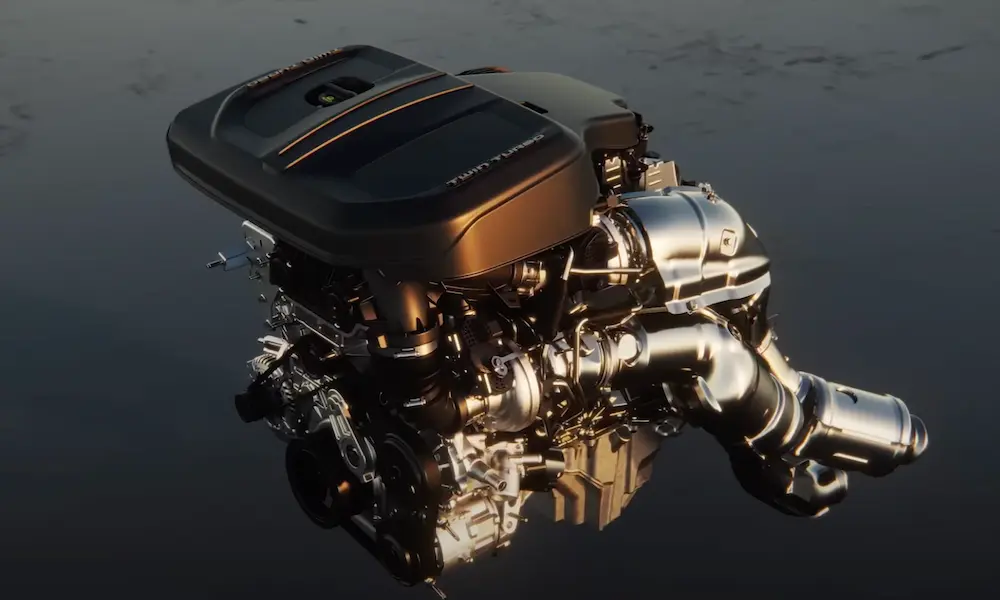
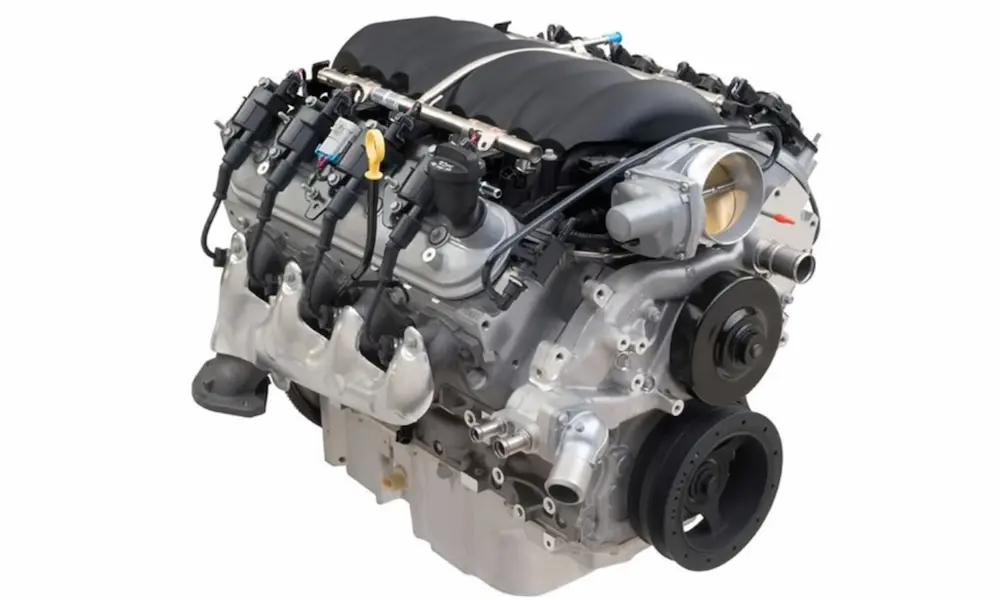
The LS3 is a 6.2-liter V8 from General Motors, built as part of the Generation IV small-block family. It debuted in the 2008 Chevrolet Corvette as a direct replacement for the 6.0-liter LS2.
Here’s what makes it special:
- Compact pushrod design — narrower and lighter than competing overhead-cam V8s
- Rectangular intake ports — borrowed from the L92 truck engine and optimized for high-rpm airflow
- Cast aluminum block with iron cylinder liners
- 430 horsepower in base Corvette trim
- 58X reluctor wheel for precise ignition timing
The full spec sheet reads like a performance engineer’s wish list: 4.065-inch bore, 3.622-inch stroke, 10.7:1 compression, and a 90mm drive-by-wire throttle body. It’s a purpose-built performance engine that somehow fit inside everyday cars.
U.S. Factory Vehicles With the LS3 Engine
General Motors kept the LS3 exclusive. You won’t find it in a base trim family sedan. Every factory application was a rear-wheel-drive performance vehicle.
The VIN’s eighth digit — the letter “W” — identifies a factory LS3 in U.S. market vehicles.
Chevrolet Corvette (2008–2013)
This is where it all started. The C6 Corvette got the LS3 as its base engine in 2008, producing 430 horsepower at 5,900 rpm and 424 lb-ft of torque at 4,600 rpm.
Add the optional dual-mode exhaust — with vacuum-actuated bypass valves — and those numbers climb to 436 horsepower and 428 lb-ft.
In 2010, Chevrolet launched the Corvette Grand Sport, combining the Z06’s wide body and bigger brakes with the naturally aspirated LS3. There’s a crucial technical split here:
- Manual transmission Grand Sports got a dry-sump oiling system and a forged steel crankshaft to survive high-G track use
- Automatic transmission Grand Sports kept the standard wet-sump setup and cast nodular iron crank
That dry-sump manual is the one to hunt for if you’re buying a Grand Sport for track days.
Pontiac G8 GXP (2009)
The G8 GXP was the LS3’s first four-door application in the U.S. Built on GM’s global Zeta platform, it produced 415 horsepower and 415 lb-ft of torque — slightly less than the Corvette due to tighter intake routing in the sedan chassis.
Buyers could choose a six-speed automatic or a Tremec six-speed manual. It rivaled European sport sedans costing far more.
Then GM’s financial crisis killed Pontiac entirely. That made the G8 GXP a one-year-only production run, and one of the most collectible modern American cars you can buy today.
Chevrolet Camaro SS (2010–2015)
Here’s where it gets specific. The fifth-gen Camaro SS used the LS3 only with the manual transmission.
Pick the six-speed automatic, and you got the L99 instead — same block and heads, but with Active Fuel Management and Variable Valve Timing, producing 400 horsepower instead of 426.
So if you’re shopping a used Camaro SS and you want a true LS3, check for the Tremec six-speed. It’s not just a preference — it’s a completely different engine under the hood.
Chevrolet SS Sedan (2014–2017)
After Pontiac died, GM eventually filled the performance sedan gap with the Chevrolet SS. Built in Australia alongside the Holden Commodore, it produced 415 horsepower and sent it all to the rear wheels.
The 2014 model launched with automatic-only. Manual fans had to wait, but GM eventually offered the Tremec six-speed.
It came loaded with magnetic selective ride control and Brembo brakes. Journalists loved it. GM killed it after 2017 when the Australian plant closed. Another instant collectible.
| Vehicle | Years | Output | Key Notes |
|---|---|---|---|
| Chevrolet Corvette Base/Z51 | 2008–2013 | 430–436 hp | Optional dual-mode exhaust adds power |
| Corvette Grand Sport | 2010–2013 | 436 hp | Manual models: dry-sump + forged crank |
| Pontiac G8 GXP | 2009 | 415 hp | One-year production; Zeta platform |
| Camaro SS | 2010–2015 | 426 hp | Manual trans only (L99 for automatics) |
| Chevrolet SS Sedan | 2014–2017 | 415 hp | Imported from Australia; magnetic ride |
International LS3 Factory Vehicles
The LS3 story doesn’t stop at U.S. borders. Australia and the UK both got factory LS3 vehicles, and some of them are genuinely spectacular.
Holden Special Vehicles (HSV)
Starting in April 2008, HSV switched their entire lineup from the LS2 to the LS3. The engines were built in North America and exported to Australia for final assembly.
Models that got the LS3 upgrade:
- ClubSport R8
- GTS
- Senator Signature
- Maloo R8 (a two-door performance ute — uniquely Australian)
- WM Grange (long-wheelbase luxury variant)
Initial output was 317 kW (about 425 hp). By the Gen-F generation, HSV squeezed out 340 kW (roughly 456 hp) from the naturally aspirated engine. That’s impressive work without a blower.
Holden Commodore VF Series II (2015–2017)
When Holden announced it was closing Australian manufacturing for good, they made one final decision that delighted enthusiasts everywhere: fit the LS3 into the standard Commodore lineup.
The VF Series II produced 304 kW (408–413 hp) and 570 Nm of torque — a jump of 34 kW and 40 Nm over the outgoing 6.0-liter L77. It hit 100 km/h in 4.9 seconds, making it the fastest factory Commodore ever built.
Three limited-edition farewell models launched in 2017:
- Motorsport Edition — forged wheels, Brembo brakes front and rear, magnetic ride control
- Director — Calais V-based luxury variant honoring Peter Brock’s legendary HDT Director
- Magnum — performance ute with sedan rear suspension
These aren’t just collector cars. They’re the final chapter of Australian V8 performance manufacturing.
Vauxhall VXR8 (2008–2013)
HSV vehicles were exported to the UK and sold as the Vauxhall VXR8. Factory right-hand-drive, massive American V8, priced below German rivals.
The VXR8 built a cult following in Britain for exactly what you’d expect: brutal torque, tire-shredding entertainment, and zero apologies.
Boutique and Low-Volume Cars With the LS3
The LS3’s compact pushrod design and GM’s E-Rod crate package — which includes catalytic converters and a locked ECU meeting 50-state emissions — made it the go-to engine for small manufacturers building street-legal performance cars.
Local Motors Rally Fighter
The Rally Fighter is a crowdsourced, street-legal desert racer built in micro-factories where buyers helped assemble their own cars. Its P-51 Mustang-inspired fiberglass body sits over a rigid tube-frame chassis.
Power comes from an E-Rod LS3 paired with a GM 4L85-E four-speed automatic, driving through a Strange Engineering Ford nine-inch rear axle with 4.11 gearing. It gets 18 inches of front travel and 20 inches of rear travel from its King coilover shocks.
You might recognize it from Transformers: Age of Extinction and The Fate of the Furious.
Drakan Spyder
The Drakan Spyder weighs just 2,000 pounds. A mid-mounted E-Rod LS3 producing 430 horsepower gives it hypercar-level power-to-weight numbers.
No ABS. No traction control. No driver aids at all. Just the engine, Wilwood brakes with 12.9-inch floating discs, and an AiM digital dash for data logging. It’s a track weapon in a street-legal body.
Ultima GTR and Evolution
The British-built Ultima Evolution weighs just 950 kg (about 2,094 lbs) and uses a rear-mid-mounted LS3 tuned to 480 hp and 479 lb-ft. Paired with a Porsche G97-50 six-speed transaxle, it runs 0–60 mph in 3.1 seconds.
It holds multiple acceleration world records, including the 0-100-0 mph run.
Lucra LC470
The Lucra LC470 combines a carbon fiber body with a 2,000-pound curb weight and an optional LS3. The manufacturer claims 0–60 in 2.5 seconds.
You’ve seen it in Fast & Furious 6 — Tej Parker’s car.
The LS3 Crate Engine Program
The factory production run ended, but the LS3 never really stopped. Chevrolet Performance offers several crate engine variants for hot rods, restomods, and race builds.
| Variant | Output | Key Feature |
|---|---|---|
| Standard LS3 (P/N 19540155) | 430 hp / 425 lb-ft | Matches 2008 Corvette spec |
| LS376/480 | 495 hp / 473 lb-ft | LS Hot Cam with longer duration |
| LS376/515 | 533 hp / 477 lb-ft | Carbureted intake; revs to 6,600 rpm |
| LS376/525 | 525+ hp | Aggressive cam for dedicated track use |
One installation note: the factory sedan oil pan frequently hits crossmembers in vintage chassis. Swap it for a low-profile muscle car pan before you drop it in.
Performance Upgrades and Known Weak Points
The LS3 is reliable, but it has limits. Knowing them before you modify saves you from expensive surprises.
The Rocker Arm Trunnion Problem
The factory rocker arm needle bearings are a well-documented failure point. Around 100,000 miles — or earlier under high valvetrain stress — those bearings disintegrate and send metal debris into the oiling system.
The fix is a trunnion upgrade kit that replaces the needle bearings with captured bronze bushings or heavy-duty roller bearings. Do it proactively.
Factory Pistons and Forced Induction
The factory hypereutectic cast aluminum pistons are fine for stock use. Under boost, they’re the first thing to crack.
General rule: 8–10 psi of boost on stock internals is manageable. Push past 800 horsepower, and you’ll need:
- Forged aluminum pistons
- Forged steel connecting rods
- Aftermarket head studs and main studs
- A four-corner steam vent kit to equalize coolant temps (cylinder seven runs hot)
The factory cast nodular iron crank survives near 900 horsepower. Above that, upgrade to forged steel.
The Harmonic Balancer Bolt
The factory crank bolt is a torque-to-yield design — it stretches on installation and can’t be reused safely. Any cam swap or supercharger installation requires a quality aftermarket bolt or ARP stud kit. Skip this and the balancer walks off the crank snout at speed.
FAQs About the LS3 Engine
What’s the recommended oil change interval for an LS3?
Change the oil every 5,000 miles using full synthetic. GM considers consuming one quart every 2,000 miles within normal parameters under hard use, so don’t panic if yours drinks a little.
What do you need to swap an LS3 into an older car?
You need a standalone ECU and custom wiring harness. Systems like the Holley Terminator X handle the 58X reluctor wheel signal, the drive-by-wire throttle, and the coil-on-plug ignition without a factory body control module.
Does the LS3 have oiling issues at high rpm?
Yes. Above 7,000 rpm, the factory oil pump can cavitate — introducing air bubbles and dropping oil pressure suddenly. A high-volume aftermarket pump like the Melling 10296 solves this for track builds.
How much does a fully dressed LS3 weigh?
Between 500 and 580 pounds, depending on accessories. The pushrod design eliminates heavy overhead cam hardware, keeping weight low for boutique sports car applications.
Why won’t an older GM ECU run an LS3?
The LS3 uses a 58X reluctor wheel for high-resolution crank position data. Older LS engines like the LS1 used a 24X wheel. The ECUs aren’t cross-compatible without an electronic conversion module — without one, the computer can’t read the crank signal and the engine won’t start.