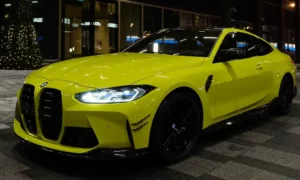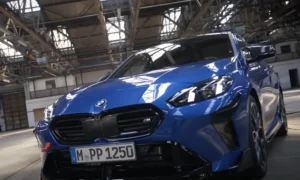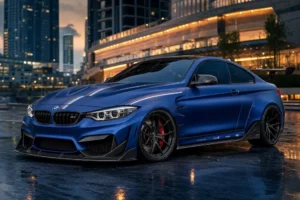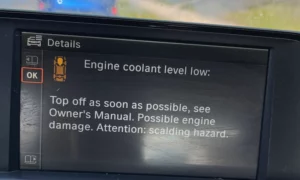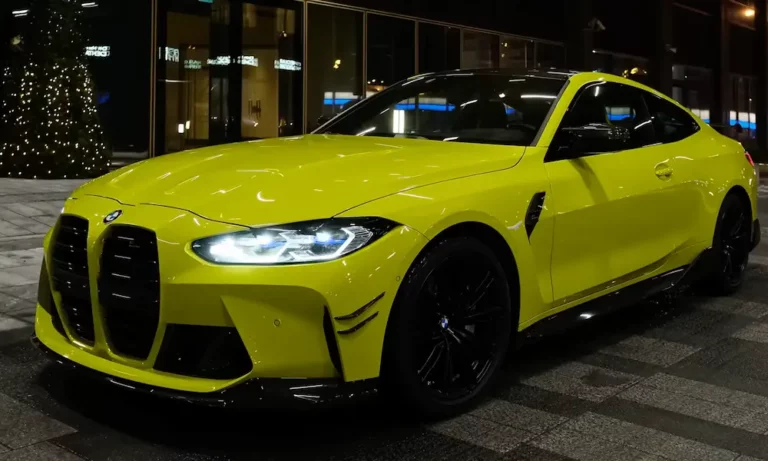
The BMW B58 engine powers more cars than most people realize — and it’s not just BMWs. If you’re shopping for a used car, planning a build, or just curious what’s under the hood, this guide covers every vehicle running this legendary inline-six. Stick around, because a few of these might surprise you.
What Is the BMW B58 Engine?
The B58 is BMW’s 3.0-liter turbocharged inline-six, introduced in 2015 as the successor to the N55. It’s earned a reputation as one of the most capable and tuneable engines of its generation — landing on Ward’s 10 Best Engines list five times between 2016 and 2024.
What makes it special? Two things set it apart from most modern engines:
- A closed-deck aluminum block that handles extreme cylinder pressure without bending or cracking
- Factory forged steel crankshaft and connecting rods that are massively over-engineered for the stock power output
Those two features are exactly why the tuning community calls it the “modern 2JZ.” The engine doesn’t just survive abuse — it thrives on it.
B58 vs. B58TU: What’s the Difference?
BMW rolled out a Technical Update in 2018, phasing it into 2019 and 2020 model year cars. The B58TU brought several key changes:
- A redesigned crankshaft that shed 2.3 pounds of rotating mass for faster revs
- A simplified single-piece timing chain replacing the older multi-piece system
- Upgraded fuel injection and cooling infrastructure
If you’re buying a pre-owned BMW and want the latest architecture, look for 2019 model year or newer.
What BMW Models Have the B58 Engine?
The B58 serves as BMW’s workhorse engine across the “40i” naming badge and several plug-in hybrid “50e” variants. Here’s the full breakdown.
Sedans and Coupes
2 Series — M240i
The compact M240i runs the B58 in both its older F22/F23 chassis (2016–2021) and the current G42 generation (2022–present). The G42 pushes 382 horsepower and remains one of the best driver’s cars in BMW’s lineup.
3 Series — 340i and M340i
The B58 actually debuted in the F30 340i for the 2015 model year, making 322 horsepower. The current G20 M340i bumped that to 382 hp and is widely regarded as one of the best all-around sports sedans on the market today.
4 Series — 440i and M440i
The 440i ran the B58 in coupe, convertible, and Gran Coupe body styles from 2016 through 2019. The redesigned M440i (G22/G23/G26) carries on from 2021 to present with the same 382-horsepower output as its sedan counterpart.
5 Series — 540i and 550e xDrive
The 540i has used the B58 since 2017 and continues in the current G60 generation with 375 horsepower. For 2026, the new 550e xDrive plug-in hybrid pairs a slightly detuned B58 with a transmission-mounted electric motor for a combined 483 horsepower and 0–60 mph in 4.1 seconds — with an estimated 33-mile electric range.
6 Series — 640i Gran Turismo
The G32 640i Gran Turismo used the B58 from 2017 through 2023. One important note for used car shoppers: earlier F06 640i Gran Coupe models used the older N55 engine, not the B58. Always verify the chassis code before buying.
7 Series — 740i and 750e xDrive
The 740i has run the B58 in both the G11/G12 generation (2015–2022) and the current G70 (2023–present). The 750e xDrive arrived for 2024, applying the same hybrid formula as the 550e to BMW’s flagship sedan.
8 Series — 840i
The 840i grand tourer, available as a coupe and convertible, rounds out the passenger car lineup with the B58 providing effortless long-distance power.
| Passenger Car | Specific Models | Body Style | US Years |
|---|---|---|---|
| 2 Series | M240i | Coupe / Convertible | 2016–Present |
| 3 Series | 340i, M340i | Sedan | 2015–Present |
| 4 Series | 440i, M440i | Coupe / Convertible / Gran Coupe | 2016–Present |
| 5 Series | 540i, 550e xDrive | Sedan | 2017–Present |
| 6 Series | 640i Gran Turismo | Liftback | 2017–2023 |
| 7 Series | 740i, 750e xDrive | Luxury Sedan | 2015–Present |
| 8 Series | 840i | Grand Tourer | 2019–Present |
SUVs and the Z4 Roadster
X3 M40i / X3 M50 xDrive
The X3 M40i ran from 2017 through 2024. For 2025, it’s been renamed the X3 M50 xDrive with a revised B58 making 393 horsepower — the highest output version in a production SUV.
X4 M40i
The coupe-SUV sibling to the X3 used the B58 from 2018 through 2025. Unfortunately, BMW has officially discontinued the X4 after the 2025 model year as the brand shifts toward the all-electric iX4.
X5 xDrive40i and X5 xDrive50e
The X5 40i delivers 375 horsepower for straightforward family hauling. The X5 50e plug-in hybrid pairs the B58 with an electric motor for a combined 489 horsepower and real electric-only commuting range — it even won a Ward’s Best Engine award in 2024.
X6 xDrive40i
The X6 40i runs the same 375-horsepower B58 as the X5, wrapped in a sportier coupe-SUV silhouette. A quick note: the high-performance Alpina XB7 variant of the X7 uses a twin-turbo V8, not the B58.
X7 xDrive40i
BMW’s three-row flagship SUV uses the 375-horsepower B58B30M2 variant. It gets the job done for most families, though power enthusiasts usually step up to the V8 option.
Z4 M40i
The two-seat Z4 M40i roadster gets the high-output 382-horsepower B58B30O1 variant. It’s also significant for a reason beyond BMW — its platform forms the foundation for one of the most talked-about automotive joint ventures in recent history.
| SUV/Roadster | Specific Models | Body Style | US Years |
|---|---|---|---|
| X3 | X3 M40i, X3 M50 xDrive | Compact SUV | 2017–Present |
| X4 | X4 M40i | Compact Coupe-SUV | 2018–2025 |
| X5 | X5 40i, X5 50e PHEV | Mid-Size SUV | 2019–Present |
| X6 | X6 40i | Mid-Size Coupe-SUV | 2019–Present |
| X7 | X7 40i | Full-Size 3-Row SUV | 2019–Present |
| Z4 | Z4 M40i | 2-Seat Roadster | 2019–Present |
What Non-BMW Cars Have the B58 Engine?
This is where it gets genuinely interesting. Four non-BMW vehicles run the B58, and they couldn’t be more different from each other.
Toyota GR Supra (2020–2026)
The fifth-generation GR Supra is the most famous non-BMW application of the B58. Co-developed alongside the Z4, it shares BMW’s powertrain, transmission, and platform architecture — but Toyota’s Gazoo Racing division tuned the suspension, steering, and active rear differential specifically for the Supra’s unique character.
Here’s the power timeline for US models:
- 2020: 335 hp (B58B30C variant), automatic only
- 2021+: 382 hp / 368 lb-ft (B58B30O1 variant), 0–60 mph in under 4 seconds
- 2023+: Six-speed manual added as a no-cost option
Toyota also offers a 2.0-liter Supra with the BMW B48 four-cylinder, introduced in the US for 2021. At 255 hp, it’s less powerful — but it removes roughly 220 pounds from the front axle, which sharpens turn-in and makes the car feel more nimble on tight roads.
The Supra’s production run ends with the 2026 model year. Toyota is marking the occasion with the MkV Final Edition, limited to 1,300 units across North America, featuring upgraded dampers, larger front brakes, and an optional matte GT4-style visual package.
Ineos Grenadier
The Ineos Grenadier is a deliberately old-school off-road vehicle — solid beam axles front and rear, a fully boxed ladder frame, and triple locking differentials. It’s built for serious terrain, not mall parking lots.
For this application, BMW’s B58 is intentionally detuned to 282 horsepower and 332 lb-ft of torque. That sounds modest, but it’s the right call. Off-road engineering prioritizes predictable low-rev torque and mechanical durability over peak power numbers. The full drivetrain — ZF eight-speed auto, two-speed transfer case, triple lockers — supports a maximum tow rating of 7,716 pounds.
The base Grenadier Station Wagon starts at $71,000 in the US, making it a rugged alternative to more comfort-focused luxury off-roaders.
Morgan Plus Six
The Morgan Plus Six pairs stunning mid-century coachbuilt styling with a bonded aluminum chassis, traditional English ash-wood framing, and the 335-horsepower B58. The result? A dry weight of under 2,500 pounds with enough power to reach 62 mph in 4.2 seconds and hit a 166 mph top speed.
There’s a catch for American readers: the Morgan Plus Six isn’t federally homologated for US sale. Its low-volume coachbuilt nature can’t meet US crash standards. Production ends in 2025 with a limited 30-unit Pinnacle Edition featuring bespoke wood veneers, sheepskin carpets, and premium leather throughout.
Boldmen CR4
The Boldmen CR4 is the most exclusive application on this list. Founded by former Wiesmann executives, Boldmen builds the CR4 on a Z4 donor chassis, strips the BMW bodywork, and replaces it entirely with a bespoke carbon fiber body featuring widened arches and a distinctive hexagonal intake.
The carbon fiber construction sheds 220 pounds from the Z4’s curb weight. The suspension drops 20mm for a lower center of gravity. Output figures for both variants:
- CR4: 408 hp / 450 lb-ft — 0–62 mph in 3.9 seconds
- CR4 S: 500 hp / 516 lb-ft — 0–62 mph in 3.7 seconds, 168 mph top speed
Every interior is entirely handmade with over 600 color and material combinations available. The Boldmen CR4 currently has no US homologation.
| Non-BMW Vehicle | Engine Output | Transmission | Drivetrain |
|---|---|---|---|
| Toyota GR Supra 3.0 | 382 hp / 368 lb-ft | 8-Spd Auto / 6-Spd Manual | Rear-Wheel Drive |
| Ineos Grenadier | 282 hp / 332 lb-ft | 8-Spd Auto | Four-Wheel Drive |
| Morgan Plus Six | 335 hp / 369 lb-ft | 8-Spd Auto | Rear-Wheel Drive |
| Boldmen CR4 / CR4 S | 408–500 hp | 8-Spd Auto | Rear-Wheel Drive |
How Much Power Can the B58 Make?
The B58’s closed-deck block and forged internals leave enormous headroom for power increases. Here’s what the tuning community consistently sees across different build levels:
- Stage 1 (downpipe + ECU flash): ~430 wheel horsepower on pump gas
- Stage 2 (ethanol or methanol injection): ~500 wheel horsepower pushing the stock turbo to its limit
- Stage 3 (upgraded turbo + port injection): ~600 whp on 93-octane, up to 850 whp on high-concentration ethanol
Remarkably, the factory crankshaft and rods generally survive at these power levels without internal engine work.
One important caveat: engines built after June 2020 use a heavily encrypted Bosch ECU that blocks standard flash tuning. Early adopters had to ship the ECU to European firms for a “jailbreak” costing $1,500+. Newer domestic bench-unlock solutions have simplified this process, but it’s worth factoring into your budget if you’re buying a newer B58-powered car.
The B58 Engine’s Power Output by Variant
Not every B58 makes the same power from the factory. BMW uses specific variant codes to tune the engine differently depending on the vehicle’s weight, purpose, and intended market.
| Engine Variant | Factory Output | Primary US Applications |
|---|---|---|
| B58B30M0 | 322–355 hp | 2016–2019 340i, 440i, 740i |
| B58B30M1 | 335 hp | Select early crossover applications |
| B58B30C | 335 hp | 2020 Toyota GR Supra |
| B58B30O1 | 382 hp | 2021+ Supra, Z4 M40i, M340i, M440i, X3 M40i |
| B58B30M2 | 375–393 hp | 2023+ X7 40i, 740i, X5 40i, X6 40i, 540i |
Is the B58 a Reliable Engine?
Yes — and the data backs it up. The closed-deck block design dramatically reduces bore distortion under high cylinder pressure, and the factory forged internals mean the bottom end rarely fails under normal use. BMW’s heat encapsulation system traps residual heat after shutdown, reducing cold-start wear and helping catalytic converters reach operating temperature faster.
Common things to watch on used examples include the cooling system components and valve cover gaskets as mileage climbs — typical for any turbocharged engine running hard. Overall, the B58 earns its reputation as a long-lasting, over-built platform whether it’s in a 340i daily driver or a purpose-built track car making 600 horsepower.
The B58 powers everything from a three-row family SUV to a carbon-fiber German exotic — and it excels at all of them. That’s not an accident. It’s the result of over-engineering a platform that was built to last, and then trusting the architecture enough to share it across brands, continents, and categories.