Fram oil has been on American shelves for decades. But right now, the brand is caught in one of the messiest corporate collapses in automotive history. If you want to know who actually makes it — and whether you should still trust it — keep reading.
The Short Answer: AOCUSA Makes Fram Oil
Fram doesn’t blend its own motor oil. Never has. A Tampa, Florida-based company called AOCUSA handles all the blending and packaging.
You might know AOCUSA by its former name: Amalie Oil Company. Founded in 1903, it’s the largest private, independent motor oil blender in North America. It’s still family-owned, which is a rarity in this industry.
Here’s what AOCUSA brings to the table:
- 38+ million gallons of tank storage capacity
- 189+ million gallons of annual blending capacity
- Facilities in Tampa, Charleston (SC), and California
- Their own blow-molding machines to make plastic bottles
- Their own cargo barges to transport base oil
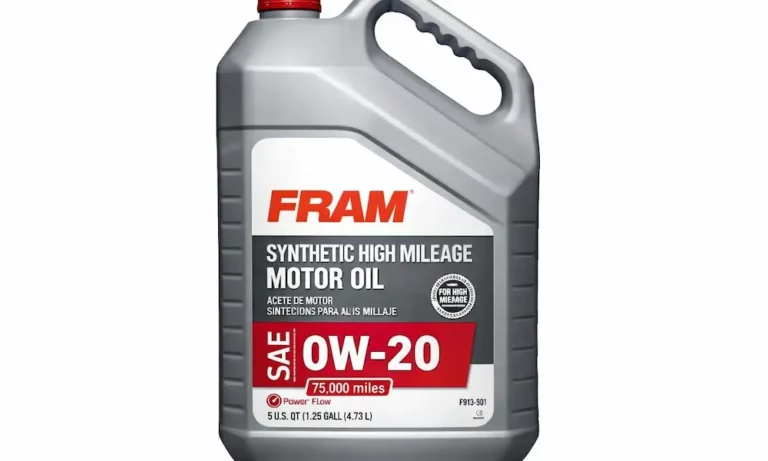
That’s serious manufacturing muscle. When you grab a bottle of Fram Full Synthetic 5W-30 or Fram 0W-20 off the shelf, AOCUSA made it.
In 2023, Advance Auto Parts named AOCUSA its “Superior Availability Vendor Partner of the Year” specifically for keeping Fram lubricants in stock. That award tells you something: the manufacturer side of this equation has been rock solid.
What About the Fram Brand Itself? That’s Where It Gets Wild
The company that owns the Fram name is a completely separate story — and it’s a chaotic one.
Fram’s brand ownership recently went through a catastrophic collapse. Here’s the fast version.
The Rise of First Brands Group
A Cleveland, Ohio company called First Brands Group bought Fram and spent years building a massive auto parts empire. By 2024, they’d assembled around 24 brands — Fram, Autolite, Trico, Raybestos, and more — pulling in over $5 billion in annual revenue.
Sounds impressive. It wasn’t built to last.
The entire thing was funded by enormous debt. And in September 2025, First Brands Group filed for Chapter 11 bankruptcy in the Southern District of Texas. Their liabilities sat between $10 billion and $50 billion. Their assets? Between $5 and $10 billion.
The Fraud Scandal That Made It Worse
The bankruptcy wasn’t just bad business decisions. It turned criminal.
In early 2026, federal prosecutors charged First Brands Group’s founder Patrick James and his brother Edward James with a multibillion-dollar fraud scheme. The allegations included:
- Using fake collateral to secure loans
- Double- and triple-pledging the same assets to different lenders
- Inflating accounts receivable to fake solvency
- Funneling hundreds of millions into personal accounts
Major banks got burned — including UBS, Jefferies, and Norinchukin. One creditor reportedly searched for $2.3 billion that simply disappeared. The former CFO flipped and agreed to testify against the James brothers.
Meanwhile, the company shut down 17 factories and laid off 4,000 workers. By early 2026, they were running week-to-week.
For consumers buying Fram filters or oil at Walmart and AutoZone, this created real uncertainty. Some shoppers discovered near-empty shelves and started asking questions about the brand’s future.
Who Owns Fram Now?
In late March 2026, a deal saved the Fram name. PGI Northstar, LLC purchased Fram along with 11 other brands — including Autolite and Trico — for approximately $25 million.
PGI Northstar is backed by Premium Guard Inc. (PGI), one of the biggest names in private-label filtration. You may not know Premium Guard’s name, but they’ve quietly dominated the back-end of the automotive parts industry for years.
This deal positions PGI Northstar to pair a nationally recognized consumer brand (Fram) with an already-strong supply chain. PGI previously acquired the Tenneco global aftermarket filter business and IPC Global Solutions. They know the industry.
The bottom line: Fram’s brand IP now sits with PGI Northstar, while AOCUSA continues blending the oil in Florida.
A Quick Look at Fram’s Ownership History
Fram’s gone through a lot of hands. Here’s the full timeline:
| Era | Owner | What They Did With It |
|---|---|---|
| 1934–1960s | Independent (Fram Corp) | Built the brand from scratch in Providence, RI |
| 1960s–1980s | Bendix Corporation | Folded it into industrial conglomerate |
| 1980s–2011 | AlliedSignal / Honeywell | Expanded globally, managed consumer products |
| 2011–2019 | Rank Group (NZ) | Private equity streamlining |
| 2020–2025 | First Brands Group | Debt-fueled acquisition spree, then collapse |
| 2026–Present | PGI Northstar | Distressed asset recovery, supply chain rebuild |
Fram was founded in 1932 in Providence, Rhode Island by Frederick Franklin and T. Edward Aldham. Their names gave the brand its portmanteau: FR-AM. Back then, the mission was straightforward — better oil filtration for the increasingly complex engines of the era.
What Fram Oil Products Does AOCUSA Actually Make?
AOCUSA blends the full Fram lubricant lineup. Each product meets specific industry standards set by the API and OEM requirements.
| Product | Specification | Where It’s Made |
|---|---|---|
| Fram Full Synthetic 5W-30 | dexos1 Gen 3 | AOCUSA, Tampa FL |
| Fram Full Synthetic 0W-20 | ILSAC GF-6A | AOCUSA, Tampa FL |
| Fram Premium Gear Oil 80W-90 | GL-5 | AOCUSA, Tampa FL |
| Fram Premium Hydraulic AW 32 | Industrial Grade | AOCUSA, Tampa FL |
The Fram Full Synthetic 5W-30 uses hydrotreated heavy paraffinic distillates as base stock, plus a proprietary additive package designed to reduce engine wear and boost fuel economy.
What About Fram Filters? That’s Different
The oil and the filters come from separate places.
Fram’s filtration products — the orange oil filters, air filters, and cabin filters — are engineered and manufactured at facilities in:
- Greenville, Ohio
- Rochester Hills, Michigan
- Hebron, Kentucky
These plants hold ISO 14001 and ISO/QS 9000 quality certifications. They use automated inspection equipment throughout production.
However, some filter components are now sourced from Mexico or China depending on the product line and the retailer. That’s been a sore point for buyers who prefer domestic manufacturing — and it’s worth knowing before you buy.
| Product Type | Manufacturing Hub | Main Retail Channels |
|---|---|---|
| Oil Filters | Greenville, OH / Rochester Hills, MI | Walmart, AutoZone, Advance Auto |
| Motor Oils | Tampa, FL (AOCUSA) | Retail automotive, commercial fleets |
| Wiper Blades | Trico facilities (now PGI) | Retail, OEM service centers |
| Spark Plugs | Autolite facilities (now PGI) | Retail, professional installers |
Should You Still Buy Fram Oil?
The corporate drama doesn’t change what’s actually in the bottle.
AOCUSA still makes the oil. They’ve been doing it reliably for years, and the manufacturing side of Fram’s operation wasn’t touched by First Brands Group’s implosion. The supply chain for Fram motor oil stayed functional even while the parent company was operating week-to-week.
PGI Northstar’s acquisition also signals stability. Premium Guard isn’t a group of financial engineers — they’re operators with an existing supply chain and a track record in filtration.
That said, online mechanic communities have been vocal about their skepticism since the fraud story broke. The concern isn’t product quality — it’s long-term support, parts availability, and whether the new owners will invest in innovation or just coast on the brand name.
Those are fair questions. The answers will come over the next year or two as PGI Northstar settles in.
For now: the oil on the shelf meets its listed specifications. AOCUSA blends it to API and OEM standards. If Fram’s viscosity grade fits your car’s requirements, it’s a technically sound choice.
The Bigger Picture
The story of who makes Fram oil turns out to be two stories running at the same time.
One story is about a steady, family-owned Florida manufacturer that’s been quietly blending quality lubricants for over a century. The other story is about financial engineering, fraud, and what happens when private equity piles billions in debt onto a legacy brand.
AOCUSA kept doing its job throughout all of it. That’s worth remembering when you’re standing in the oil aisle trying to decide if the orange bottle is still trustworthy.