You’ve spotted Fullway tires at rock-bottom prices and you’re wondering if they’re legit or just too good to be true. Here’s the deal: understanding who makes these tires—and where they’re actually manufactured—tells you everything you need to know about what you’re really buying.
Who Actually Makes Fullway Tires?
Fullway tires are manufactured by Qingdao Fullrun Tyre Corp., Ltd., a Chinese tire company established in 2003. The parent company is based in Qingdao, a major industrial port city in China’s Shandong province.
But here’s where it gets interesting. While Qingdao Fullrun owns the brand, they don’t make all Fullway tires in China. A significant portion of production happens at Golden Horse Rubber SDN BHD, their Malaysian subsidiary.
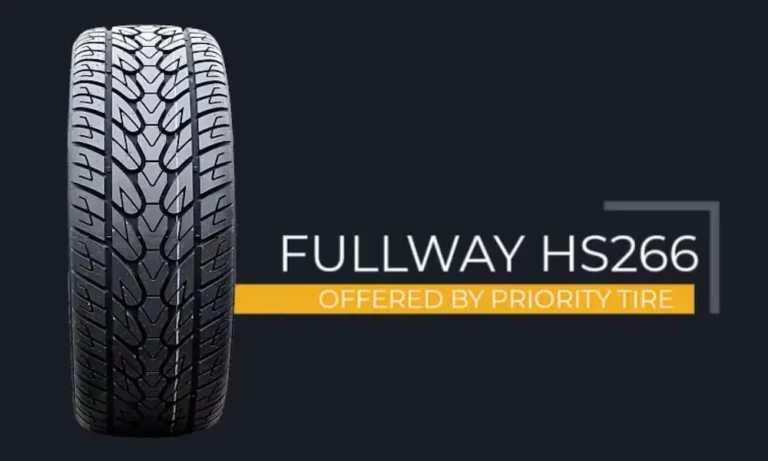
You’ll find “Made in Malaysia” stamped on many Fullway models, including the popular PC369 and HS266. Meanwhile, other models like certain HP108 variants roll out of the Chinese facility. This dual-manufacturing setup isn’t random—it’s a strategic move to dodge Chinese import tariffs and sidestep the stigma of “cheap Chinese tires” that many buyers still carry.
The Manufacturing Footprint
Qingdao Fullrun operates at serious scale. They pump out 9 million passenger car tires and 1 million truck tires annually. The facilities are ISO-certified, which sounds impressive until you realize that just means they follow basic quality management standards—not that they’re producing premium products.
Over 80% of their production gets exported to international markets, with the U.S. being a major destination. You won’t find Fullway at your local tire shop, though. They sell almost exclusively through online discounters like Priority Tire, SimpleTire, and Walmart’s marketplace.
Where Fullway Sits in the Tire Market Hierarchy
Let’s cut through the marketing fluff. Fullway isn’t competing with Michelin or Bridgestone. They’re not even playing in the same league as mid-tier brands like Kumho or Hankook.
Fullway operates in what industry insiders call “Tier 4” or “Tier 5″—the absolute bottom of the barrel. Their direct competitors aren’t brands you’d recognize. We’re talking Zenna, Forceland, and Lexani.
The Real Price Comparison
Here’s what the budget tire market looks like for a large SUV tire (285/45R22):
| Brand & Model | Price Per Tire | UTQG Rating |
|---|---|---|
| Bridgestone Dueler (Premium) | $350-$380 | Premium compound |
| Goodyear Eagle Touring | $164-$280 | 500 A A |
| Lexani LX-Thirty | $150 | 320 A A |
| Fullway HS266 | $136 | 420 A A |
| Forceland Kunimoto F28 | $120 | 460 A A |
| Zenna Argus UHP | $105 | 420 A AA |
Notice how Fullway sits right in the middle of this ultra-budget pack? They’re not even the cheapest option. They’re banking on buyers who think spending a bit more than the absolute bottom means they’re getting quality.
The Multi-Brand Strategy You Should Know About
Qingdao Fullrun doesn’t put all its eggs in the Fullway basket. The parent company runs multiple brand labels: FULLRUN, AUTOGRIP, ANTYRE, and CARBON SERIES.
This multi-brand approach lets them target different markets and vehicle types without one bad reputation sinking the whole operation. If Fullway gets torched in reviews, they’ve got four other brands ready to go.
It’s worth noting that all these brands share the same manufacturing facilities and likely the same basic rubber compounds. You’re getting rebranded versions of essentially the same product.
What DOT Certification Actually Means
Fullway tires carry DOT (Department of Transportation) certification, which means they’re legal to sell in the United States. Before you get too excited, understand what that actually guarantees.
DOT certification confirms the tire meets minimum federal safety standards. It doesn’t mean the tire is good—just that it won’t immediately fall apart under normal use. It’s the automotive equivalent of a restaurant passing a health inspection. You’re not getting food poisoning, but you might not be getting a great meal either.
A review of NHTSA recall data shows no active safety recalls for Fullway tires. That’s genuinely good news. These tires aren’t suffering from widespread manufacturing defects like tread separation or catastrophic blowouts.
Understanding UTQG Ratings on Fullway Tires
Many Fullway models carry a UTQG rating of 380 A A. Let’s decode what that means:
- Treadwear (380): This is low. Premium all-season tires often score 600-800. This number telegraphs a short lifespan.
- Traction (A): Decent straight-line braking on wet surfaces. But here’s the catch—this test doesn’t measure cornering grip or hydroplaning resistance.
- Temperature (A): Good heat resistance.
That “Traction A” rating is dangerously misleading. A tire can ace the straight-line wet braking test while still being terrifying in rain because the UTQG test doesn’t evaluate lateral grip or water evacuation during turns.
How Fullway Tires Actually Perform
The performance story is deeply split. Fullway nails some basics while failing spectacularly at others.
Dry Weather: Where They Shine
On dry pavement in warm weather, Fullway tires deliver surprisingly solid performance. Real-world testing shows precise handling and stable traction for everyday driving. Owners consistently report being “pleasantly surprised” by dry grip.
One long-term test rated dry performance at 4.6 out of 5. For commuting on sunny days, these tires handle just fine.
Wet Weather: The Critical Weakness
Wet performance is where things get dicey. That same long-term test dropped the wet rating to 4.0 out of 5, and that was in moderate rain.
Multiple owners report “slight drift in medium rain” and “no grip in the rain.” The most dangerous issue? Hydroplaning. Despite marketing claims about “optimal groove patterns,” real-world testing confirms these tires struggle to evacuate water at highway speeds during heavy downpours.
One owner’s advice is telling: “No grip… Adjust your driving accordingly and don’t full throttle in the wet… leave a slightly larger gap… they like to slide.”
You’re essentially being told to drive more carefully to compensate for the tire’s shortcomings. Premium tires are engineered with emergency safety margins. Fullway tires aren’t.
Winter Performance: A Complete Safety Failure
Every single source—professional testers, long-term owners, tire blogs—agrees on this point: Fullway tires are dangerous in winter conditions.
They’re “not suitable for freezing winter temperatures.” In snow and ice, they provide “minimal traction.” One owner’s warning is blunt: “Forget using them in any kind of winter weather.”
Despite being marketed as “all-season” tires (especially the HP108 model), they shouldn’t be used when temperatures consistently drop below 45°F. That’s not all-season performance. That’s a three-season tire with misleading marketing.
The Tread Life Lie You Need to Know
Here’s where Fullway’s value proposition completely falls apart. The marketing suggests a 50,000 to 60,000-mile lifespan. Some sources even mention warranties at those numbers.
The reality: These tires last 20,000 to 30,000 miles. That’s it.
Multiple real-world tests and owner reports confirm this range. One 12,000-mile long-term test projected a final tread life of just 20,000-30,000 miles. An independent owner on Reddit echoed: “They’re not a long life tire (20-30k mi).”
The Math That Kills the “Savings”
Let’s say you pay $400 for a set of Fullway tires versus $800 for premium tires like Michelin. Looks like you saved $400, right?
Not so fast. Those Michelin tires are typically warrantied for 50,000-80,000 miles. Your Fullway tires will be bald at 25,000 miles.
You’ll need to buy two sets of Fullway tires ($400 × 2 = $800) to match the lifespan of one set of premium tires. Now you’re at the same total cost—but you’ve also paid for mounting and balancing twice (another $100-$200).
Congratulations. You just spent more money for inferior wet-weather safety and winter performance.
The Warranty Black Hole
Check the fine print on Fullway product pages. You’ll find: “Mileage Warranty: N/A” or “No treadwear warranty.”
That’s right. Despite marketing suggestions of 50,000-mile coverage, there’s zero manufacturer warranty protecting you against premature wear. When your tires are shot at 22,000 miles, you’re stuck eating the cost.
The One Thing Fullway Actually Does Well
Surprisingly, Fullway’s strongest and most consistent feature is ride comfort and low noise. The 12,000-mile test that criticized everything else called comfort (4.1/5) and noise levels (4.0/5) a “genuine strength.”
Owners across multiple vehicle types—Toyota Camry, Kia Soul, BMW X5, Chevy Impala—report “minimal road noise” and “super quiet” operation.
This suggests Qingdao Fullrun made a deliberate engineering choice. Instead of investing in expensive rubber compounds for wet grip or longevity, they prioritized an easily perceived feature: a quiet, comfortable ride that mimics a luxury tire.
It’s a smart move for their target market. Budget-conscious buyers notice road noise immediately. They won’t notice compromised emergency handling until it’s too late.
Breaking Down Popular Fullway Models
Fullway HP108: The Dangerously Mislabeled Model
The HP108 is Fullway’s bestseller, available in sizes from 14 to 26 inches. It’s aggressively marketed as a “high performance all-season” tire.
This is dangerously misleading marketing. The HP108 is a budget summer tire. Period.
Reviews explicitly state: “Wet traction is very poor” and it “should not be used when temperatures are consistently below 45 degrees Fahrenheit.” Yet it’s sold as all-season.
The HP108 attracts owners of performance cars like the Chrysler 300S, Dodge Charger, and even Audi A4 because of its ultra-low prices for large-diameter performance sizes. If you live in Southern California and only drive in dry weather, it’s acceptable. If you see rain or cold weather, it’s a safety risk.
Fullway HS266: The Most Credible Option
The HS266 is Fullway’s SUV and light truck offering. Unlike the flawed HP108, it receives good marks for both dry and wet traction.
A compelling case study comes from a Cadillac Escalade owner who ran the HS266 for 20,000 miles over one year. Their verdict? “All doing great, no issues, would 100% buy these tires again.”
The HS266’s directional tread pattern appears more effective at resisting hydroplaning than other Fullway models. It’s still loud at high speeds and lacks a tread warranty, but it’s the most defensible tire in the Fullway lineup.
Fullway PC369: The Comfort-Touring Choice
The PC369 is Fullway’s touring tire, designed for comfort over sporty handling. It features computer-tuned tread for noise cancellation and a casing built to absorb impacts.
This model is explicitly manufactured in Malaysia and provides a “forgiving ride.” If maximum comfort is your priority and you drive low annual miles in mild climates, it’s worth considering.
Who Should Actually Buy Fullway Tires?
This is a rational purchase for only a very specific type of driver:
The Mild-Climate, Low-Mileage Driver: You live in Southern California, Florida, or Arizona where snow and ice don’t exist. You drive fewer than 12,000 miles per year, so the tires will age out before they wear out. You’ve done extensive research and understand all the trade-offs you’re making.
The Savvy Value Hacker: You’re choosing a specific model (like the HS266) based on research, not just grabbing the cheapest option. You’re willing to trade safety margins and longevity to save hundreds of dollars on a second vehicle or beater car.
Who Should Never Buy Fullway Tires?
Anyone in a Four-Season Climate: If you experience snow, ice, or temperatures below 45°F, these tires are a safety risk. The “all-season” marketing is false.
The Average Consumer: If you want “buy it and forget it” tires, these aren’t it. You’ll be disappointed when they’re worn out in 24 months with no warranty protection.
Safety-Conscious Drivers: Anyone who prioritizes wet-weather stopping distance or emergency handling. The lack of an active safety margin is the brand’s biggest liability. As one forum user put it: “Don’t cheap out on the most important safety device in your car.”
Heavy-Duty or Performance Users: The soft compounds and construction aren’t suitable for aggressive driving or heavy loads.
The Bottom Line on Who Makes Fullway Tires
Fullway tires are made by Qingdao Fullrun Tyre Corp. in China and their Malaysian subsidiary, Golden Horse Rubber. They’re a product of extreme value engineering—designed to hit rock-bottom prices by making calculated compromises.
They’re not universally bad. They’re a high-risk trade-off. You get unbeatable prices, decent dry performance, and surprisingly quiet rides. In exchange, you sacrifice winter safety, wet-weather grip, durability, and any warranty protection.
The “savings” are largely an illusion once you factor in the 20,000-mile lifespan and the need to replace them twice as often as premium tires. For most drivers, you’ll actually spend more money over time while driving on less safe tires.
If you fit the narrow profile of a low-mileage, warm-climate driver who’s done the research and accepts the risks, Fullway can work. For everyone else, spending an extra $10-$15 per tire to jump up to a Tier 3 brand like Kumho or Hankook gets you vastly better performance and actual warranty protection.
Your tires are the only thing between your car and the road. Choose wisely.