You’ve seen Hankook tires at your local shop, maybe even spotted them on BMWs and Audis. But who actually makes them? If you’re wondering whether Hankook is a reliable brand or just another budget option, you’re asking the right questions. Let’s dig into the company behind these tires and what they’re really about.
The Company Behind Hankook Tires
Hankook Tire & Technology Co., Ltd. is a South Korean tire manufacturer that’s been around since 1941. That’s over 80 years of tire-making experience. The company started small in Seoul under founder Cho Hong-jai, originally called Chosun Tire Company. Today, it’s the sixth-largest tire manufacturer globally by revenue.
Here’s what makes that impressive: Hankook produces roughly 100 million tires annually and ships them to over 160 countries. The company employs more than 20,000 people worldwide and operates eight manufacturing facilities across three continents.
Unlike some brands you might assume are American or European, Hankook remains an independent South Korean company. It’s publicly traded but not owned by any foreign corporation. The headquarters sits in Seongnam-si, Gyeonggi-do, South Korea, with regional offices in Nashville (North America), Shanghai (Asia), and Neu-Isenburg, Germany (Europe).
Where Hankook Tires Are Actually Made
Hankook doesn’t just manufacture tires in one location and ship them worldwide. The company strategically positions production facilities near major markets.
Manufacturing Plants by Region
| Region | Location | Facilities |
|---|---|---|
| South Korea | Daejeon, Geumsan | 2 plants (original headquarters facilities) |
| China | Jiaxing, Jiangsu, Chongqing | 3 plants serving East Asian markets |
| Southeast Asia | West Java, Indonesia | 1 plant ($1.1B investment by 2011) |
| Europe | Rácalmás, Hungary | 1 plant (€880M cumulative investment) |
| North America | Clarksville, Tennessee | 1 plant (completed 2017) |
The Tennessee facility is particularly important for American buyers. It produces Light Truck Radial (LTR) and Passenger Car Radial (PCR) tires specifically for North American roads and driving conditions.
The Hungarian plant serves European markets while meeting strict EU tire safety and environmental regulations. Hankook invested an additional €32 million in 2021 to modernize this facility.
Hankook’s Journey from Local Brand to Global Player
Understanding who makes Hankook tires means looking at how the company evolved.
The Early Struggles
Hankook didn’t have an easy start. During the Korean War in 1950, approximately 70% of its production facilities were destroyed. The company could’ve disappeared entirely. Instead, businessman Kang Kyung-ok leased the damaged facilities in 1955 and rebranded it as Hankook Tire Manufacturing Ltd. (“Hankook” means Korea in Korean).
Financial troubles continued. Samsung Trading Co. acquired the company in 1958, but Hankook entered bank receivership by 1962. That same year, Cho Hong-jae of the Hyosung Group bought a 49.1% stake, providing the capital and direction the company desperately needed.
Breaking Into Global Markets
In 1962, Hankook became the first Korean company to export automobile tires, shipping products to Pakistan. This wasn’t just a business milestone—it proved Korean tire quality could compete internationally.
The company hit another major achievement in 1974 by developing Korea’s first radial passenger tire. Radial tires dramatically improved driving safety and performance compared to older bias-ply technology. By 1981, Hankook established its first U.S. sales branch, formalizing its North American presence.
By 2007, Hankook ranked as the seventh-largest tire corporation globally by sales. As of 2020, it climbed to sixth place.
What Tires Does Hankook Actually Make?
Hankook doesn’t just make one type of tire. The company operates multiple brands targeting different market segments:
- Hankook: The flagship premium brand
- Laufenn: Mid-range performance and value
- Optimo: Comfort-focused options
- Kingstar: Budget-friendly choices
Popular Hankook Tire Lines
Ventus Series (Performance Tires)
The Ventus line represents Hankook’s premium performance offering. The Ventus S1 evo 3 ultra-high-performance summer tire has earned “Exemplary” ratings from Auto Bild magazine for outstanding wet and dry braking. It delivers the shortest braking distances in wet conditions and ranks first in dry handling.
If you’re driving a performance car or just want responsive handling, this is Hankook’s answer to Michelin Pilot Sport or Continental ExtremeContact.
Dynapro Series (SUV and Truck Tires)
The Dynapro HT (RH12) is an all-season highway tire built for SUVs and light trucks. It features reinforced sidewalls and rubber compounds that deliver solid grip on dry roads. Customer reviews on Walmart show 4.5 out of 5 stars across 687 evaluations, with buyers praising smooth, quiet rides.
However, wet-weather performance gets mixed feedback—something we’ll discuss more below.
Kinergy Series (Everyday Driving)
The Kinergy GT is a Grand Touring all-season tire designed for sedans. It’s optimized for smooth, quiet rides with responsive handling. Sounds great, right?
Unfortunately, customer reviews reveal concerning wet traction issues. Multiple buyers report slippery feel, hydroplaning tendencies, and mediocre wet performance despite the “all-season” label.
Winter icept Series (Winter Tires)
The Winter icept iZ3 gets much better reviews. This dedicated winter tire features extensive siping technology (small slits in the tread) that enhances ice grip. Hankook claims 9% better ice braking compared to predecessor models and 13% better ice handling versus competitors.
Gear Junkie’s review praised exceptional ice and snow traction, calling it a confidence-inspiring winter tire at a budget-friendly price.
Hankook’s Revolutionary EV Tire Technology
In May 2022, Hankook launched the iON family—the world’s first comprehensive tire lineup specifically designed for electric vehicles. This wasn’t just marketing talk. EVs present unique challenges: heavier weight from battery packs, instant high torque delivery, and the need for maximum efficiency to extend battery range.
What Makes iON Tires Different?
The iON evo (summer) and iON i*cept (winter) address these challenges with:
- Reduced rolling resistance: Up to 6% extended battery range
- Longer tread life: 15% longer than conventional tires
- Noise reduction: Up to 18% quieter through sound-absorbing foam layers
- Aramid fiber reinforcement: Counteracts deformation from high torque
The iON line has secured original equipment partnerships with Porsche Taycan, BMW i4 Gran Coupe, Audi Q4 e-Tron, Volkswagen ID.4, and Cupra electric vehicles. Auto Bild testing confirmed the iON evo’s superiority, awarding it Test Winner for three consecutive years (2023-2025) in dedicated EV tire evaluations.
What Do Real Customers Say About Hankook Tires?
Customer reviews paint a mixed picture. Hankook isn’t consistently terrible or consistently excellent—it’s solidly middle-of-the-road with some notable weak spots.
The Good Feedback
National Tyres UK provides granular performance ratings. The Ventus Prime 2 earns a perfect 10 out of 10 for wet-weather performance. The Hankook Vantra LT RA18 (van tire) achieves an impressive 9.7 out of 10 rating.
Consumer Reports tested the Ventus V12 evo2 ultra-high-performance tire and gave it a 72-point overall score, placing it in the upper third among tested models. The tire earned recommendation for well-rounded performance, particularly stellar dry braking.
The Concerning Patterns
Tire Rack’s comprehensive analysis of the Kinergy GT reveals troubling trends. While dry traction receives positive scores (8-10), wet traction shows problematic inconsistency, with numerous ratings between 0-6.
Multiple customers report:
- Slippery feel in rain
- Hydroplaning tendency at moderate speeds
- Tires wearing to minimum tread depth within 26,000-30,000 miles despite 60,000-mile treadwear warranties
One customer reported a hydroplaning incident that resulted in a ditch accident. Independent tire inspection confirmed adequate tread depth (24/32) and proper maintenance, suggesting compound or design limitations.
Reddit discussions echo these concerns. One user reported Hankook tires wearing to ground in less than 25,000 miles despite a 60,000-mile warranty. However, another reported opposite experience with Ventus V12 Evo2 tires lasting far longer than expected.
How Hankook Compares to Major Competitors
Top Tire Review conducted head-to-head comparisons between Hankook and major tire manufacturers:
| Competitor | Wins | Hankook’s Performance |
|---|---|---|
| Michelin | Michelin: 3, Hankook: 2, Draws: 1 | Strong in Track/Semi-Slick and EV tires |
| Bridgestone | 1 win each, 4 draws | Competitive parity across categories |
| Goodyear | Goodyear: 4, Hankook: 0 (2 draws) | Competitive in Track Day/Semi-Slick and Touring |
| Continental | Continental: 5, Hankook: 0 (1 draw) | Resilient in Winter (Middle Europe) |
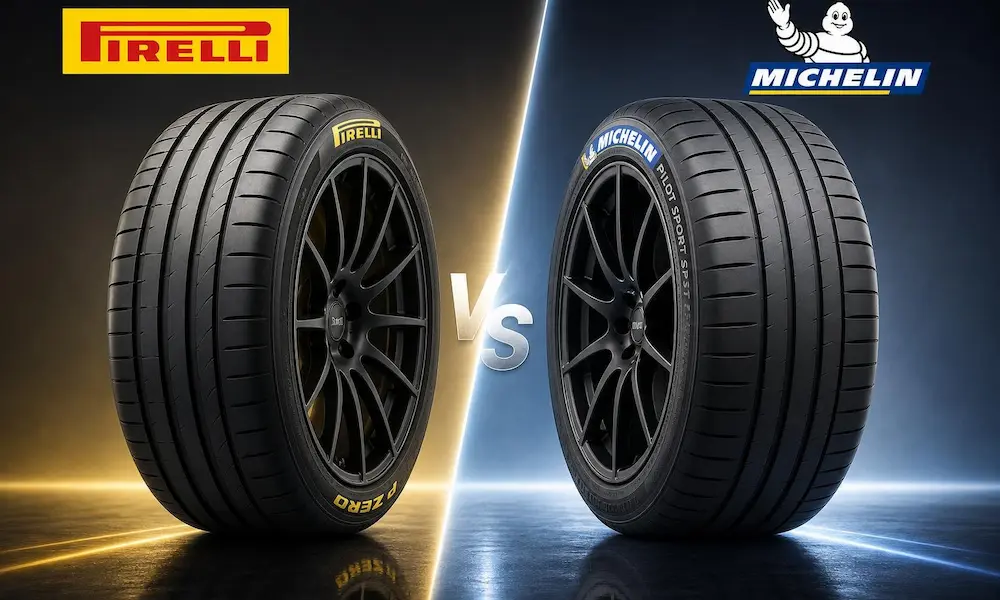
| Pirelli | Hankook: 3, Draws: 1 | Strong in wear resistance, efficiency, wet performance |
These results position Hankook as a credible competitor capable of excellence in specific categories, though not consistently leading across all segments.
Hankook’s Technology and Innovation
Hankook invests heavily in research and development through its global network of facilities.
Advanced Manufacturing Features
The company integrates 3D simulation technology in tire design, enabling engineers to optimize fuel efficiency and reduce road noise before physical prototypes exist. High-silica rubber compounds provide superior traction, while asymmetric tread patterns enhance handling in varied conditions.
One particularly clever innovation: 3D-printed tread molds enable hidden grooves and sipes that progressively reveal as tread wears. New channels automatically generate at approximately 40% tread wear to sustain wet grip throughout the tire’s lifecycle.
World-Class Testing Facilities
Hankook operates the Technodome research facility in Daejeon and the Hankook Technoring proving ground in Taean, featuring 13 test tracks covering 1.26 million square meters.
European facilities include Technotrack in Germany, Nürburgring workshops for racing tires, testing facilities in Ivalo, Finland (Arctic conditions), and Spanish facilities in Idiada (wet/dry performance). The American Technical Center in Uniontown, Ohio focuses on North American market development.
Environmental Commitment and Certifications
Hankook has earned significant recognition for sustainability efforts. The company achieved FIA Three Star Environmental Accreditation, the highest certification from Fédération Internationale de l’Automobile.
In 2021, Hankook’s Geumsan plant became the first tire industry facility to obtain ISCC PLUS certification for sustainable production practices. In August 2023, Hankook became the first Korean tire company with “Net Zero by 2050” approval from the Science Based Targets initiative (SBTi).
The Warranty Situation (Read This Carefully)
Hankook offers a 5-year limited warranty covering manufacturing defects, extending to the earlier of 5 years from purchase or 1.6mm remaining tread depth. In certain U.S. markets, warranty extends to 6 years from manufacture or purchase date, whichever benefits the customer.
What’s Covered
During the first 2/32 inch of original tread and within one year from purchase, Hankook replaces defective tires with comparable new tires free of charge, including mounting and balancing.
After that initial period, Hankook provides credit determined by multiplying current dealer selling price by remaining usable tread percentage. You’ll pay mounting, balancing, and taxes.
What’s NOT Covered (The Fine Print)
Warranty coverage excludes:
- Irregular or premature tread wear
- Structural manipulation
- Improper tire fitment
- Tires purchased from unauthorized dealers
Customer Service Complaints
Multiple customers have reported frustrating warranty experiences. Better Business Bureau complaints reveal patterns of:
- Warranty denials despite following manufacturer procedures
- Excessive delays in claim resolution
- Poor communication between manufacturer and authorized dealers
- Inflexible warranty interpretation
One customer reported tires coming apart at less than 3 months and 5,000 miles, with Hankook refusing direct communication and forcing the customer to purchase replacement tires while warranty determination remained pending after one month.
Another customer experienced uneven wear and cupping on Kinergy GT OEM tires, but warranty coverage was denied based on allegedly missed tire rotation outside the original invoice timeline.
Pricing: What You’ll Actually Pay
Hankook positions itself in the mid-range pricing tier between budget generic brands and premium competitors.
UK market pricing demonstrates this strategy:
- Kinergy Eco K425 (entry-level): Starting at £65.58
- Ventus S1 Evo 3 (premium performance): Up to £169.33
This pricing enables Hankook to appeal to cost-conscious consumers seeking quality above bargain brands while remaining accessible to middle-market buyers balancing performance and affordability.
Should You Buy Hankook Tires?
Here’s the honest answer: it depends on your specific needs.
Buy Hankook If You:
- Own an electric vehicle and want the iON EV series for extended battery range and reduced noise
- Need dedicated winter tires and want the Winter i*cept series for excellent ice/snow performance
- Drive a performance car and prioritize dry-weather grip with the Ventus line
- Want mid-range pricing without bottom-tier quality
Consider Alternatives If You:
- Need consistent all-season performance, especially reliable wet-weather traction
- Require extended tread life (60,000+ miles actual performance)
- Want hassle-free warranty support
- Live in areas with frequent heavy rain
For everyday all-season driving requiring consistent wet-weather performance and extended tread life, competing brands from Michelin, Bridgestone, or Continental may provide better value and reliability.