You’re shopping for new tires and spot “Nexen” on the price board—cheap, great warranty, but who actually makes them? Let’s dig into the company behind these budget-friendly tires and whether their Korean engineering lives up to the hype.
The Company Behind the Name: Nexen Tire Corporation
Nexen Tire Corporation is a major South Korean tire manufacturer headquartered in Yangsan and Seoul. It’s not some shady off-brand—it’s publicly traded on the Korea Exchange (KRX: 002350) and posted $1.96 billion in revenue for 2023.
CEO Travis Kang leads a company that’s been in business for over 80 years, though you wouldn’t know it from the name. The “Nexen” brand is relatively new—it only showed up in 2000.
From Heung-A to Nexen: The 80-Year Evolution
Who makes Nexen tires today isn’t who started the company back in 1942. Here’s the condensed timeline:
- 1942: Founded as Heung-A Tire Company
- 1956: Became Korea’s first domestic tire company
- 1985: Built a dedicated radial tire plant in Yangsan
- 1987-1991: Partnered with Michelin for technology sharing (ended in 1991)
- 1994: Rebranded to Woosung Tire
- 2000: Final rebrand to Nexen Tire Corporation
The name “Nexen” combines “next” and “century”—basically, Korean corporate-speak for “we’re ready for the future.” The Michelin partnership was brief but crucial. It gave them the technical foundation for modern radial production before they went independent.
Where Are Nexen Tires Made? Four Global Plants
Nexen operates a systematic production network across three continents:
South Korea (Home Base)
- Yangsan: Original headquarters and R&D hub
- Changnyeong: Opened 2012, one of the world’s most automated tire plants; focuses on high-value OE tires for premium automakers
China (Volume Play)
- Qingdao: Opened 2007 to capture China’s massive automotive market
Europe (Local Presence)
- Zatec, Czech Republic: Second fully automated plant; expanded in 2021 to produce 11 million tires annually by 2024
They also run R&D centers in Seoul (THE NEXEN univerCITY), China (Qingdao facility), and Finland (winter tire testing, opened 2025). That Finland center is key—it signals they’re serious about competing in the technically demanding winter tire segment.
Market Position: Mid-Tier Brand with Premium Ambitions
Nexen positions itself as “higher quality than budget tyres, but not nearly at the standard of premium tyres”. Translation: they’re the smart middle option.
Their core pitch is “premium products at a sensible price”—typically 20-40% cheaper than Michelin. In Korea, this strategy worked. They grew domestic market share from 8% to 20%.
But there’s a perception gap. While Nexen invests heavily in R&D, some consumers still view them as “cheap” or “Tier 3” budget rubber. They’re fighting that stigma with two main strategies.
The Credibility Play: Porsche, Patents, and Awards
Original Equipment Wins
Nexen supplies OE tires to Hyundai, Kia, Chrysler, and Volkswagen. But their crown jewel? Porsche.
Getting selected as standard equipment for the Cayenne isn’t about volume—it’s about reputation. If Porsche trusts Nexen’s engineering, that “halo effect” elevates the entire brand.
Technology & Design
They developed Korea’s first V-shaped directional tires and hold patents for nano-composite tire technology. They also swept five major design awards (IDEA, G-Mark, Dot Design)—the first tire company to do so.
The Warranty Advantage: Nexen’s Secret Weapon
Here’s where Nexen gets aggressive. Their “Total Coverage Warranty” is arguably the best in the industry:
- Treadwear warranties up to 80,000 miles (Aria AH7 model)
- 2-year Road Hazard Replacement for nail/pothole damage
- 36-month 24/7 Roadside Assistance with free flat changes or towing
- 45-day/500-mile trial money-back guarantee
Most brands charge extra for road hazard and roadside coverage. Nexen includes it. That’s smart positioning—it removes the risk from buying a “lesser-known” brand.
How Nexen Stacks Up Against the Competition
Nexen vs. Michelin: Value vs. Premium
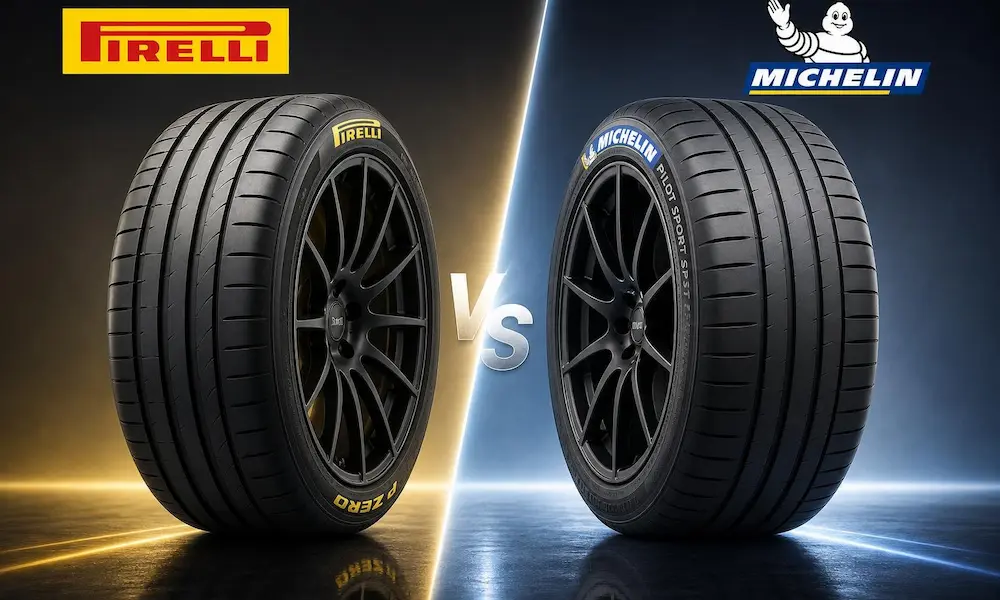
Michelin wins on performance—better wet traction, longer life, quieter ride. But you pay for it.
Nexen’s value proposition is simple: “good enough” performance at 20-40% less cost. One user who switched from OE Nexen to Michelin Defenders noticed a “much better” experience, but that’s expected when moving up a tier.
Nexen vs. Hankook: The Korean Rivalry
Hankook has better brand perception—often ranked as “upper mid-tier” versus Nexen’s “bottom mid-tier.” But model-by-model comparisons tell a different story.
All-Terrain Showdown: Nexen Roadian ATX vs. Hankook Dynapro AT2 Xtreme
| Metric | Nexen ATX | Hankook AT2 |
|---|---|---|
| Traction | 8.7 | 8.5 |
| Handling | 8.6 | 8.3 |
| Longevity | 9.1 | 8.9 |
| Warranty | 70K miles | 70K miles |
| Price (set) | $688 | $752 |
Nexen wins every category and costs less. The perception doesn’t match reality here.
Nexen vs. Kumho: Inconsistent Results
All-Weather Test (Nexen N Blue 4S 2 vs. Kumho Solus HA32): Nexen wins on longevity (9.6 vs. 8.9), warranty (70K vs. 60K), and price ($492 vs. $520).
Mud-Terrain Test (Nexen MTX vs. Kumho MT71): Kumho dominates—better performance (8.8 vs. 8.2) and cheaper ($1,504 vs. $1,572).
Verdict: Nexen crushes it in high-volume segments but gets beaten in niche categories. You can’t judge the brand as a whole—it’s model-specific.
Best Nexen Tires by Category
Passenger/Touring: Aria AH7
The Aria AH7 is Nexen’s standout touring tire with an 80,000-mile warranty—one of the highest in the industry.
Pros: Solid wet/dry traction, smooth ride, proven longevity (one user hit 98,000 miles)
Cons: Poor winter performance—”never had good snow traction” even when new
There’s a potential issue with rubber compound degradation. Some reviews note wet grip deteriorates before the tread wears out. You might get 80K miles of tread but only 40K miles of safe wet performance.
SUV/Light Truck: Roadian HTX2
The Roadian HTX2 is Three Peak Mountain Snowflake certified—meaning it’s rated for severe snow service. It comes with a 70,000-mile warranty and gets consistently positive reviews for all-weather capability.
This is arguably Nexen’s best tire. It’s what they should be known for.
All-Terrain: Roadian ATX
Professional testing of the Roadian ATX revealed something surprising: it’s quieter on-road than many highway tires.
The review noted an “uncanny absence of the usual howl and drone,” with “precise” handling that “easily matched (and even bested) the stock tires.” Off-road, it cleared mud and sand effortlessly.
For the price, this tire punches way above its weight.
Performance: N’Fera Sport R
The N’Fera Sport R is a 200-treadwear extreme performance tire designed for autocross and track days.
Professional testing showed it posted “test leading lap times” with “solid advantage in braking distances.” It’s not for daily driving—expect a choppy ride and road noise—but it proves Nexen can build legitimate performance rubber.
The “Two Nexens” Problem: OE vs. Aftermarket
Here’s the dirty secret: not all Nexen tires are created equal.
The company supplies cheap, low-quality tires to automakers as Original Equipment, then sells much better versions in the aftermarket. This two-tier strategy is killing their reputation.
Example: N’Priz AH8
This tire is OE on VW Jettas, Hyundai Elantras, and Kia K5s. Tire Rack reviews are brutal:
- “Excessive road noise”
- “Unbearable road noise”
- “Poor” 4.2 rating for winter traction
- Only “Fair” 6.1 for ride quality
Yet on Nexen’s own site, retail buyers praise it as “very freaking quiet” with a “smooth ride.”
The explanation? The OE version uses a harder, cheaper compound to meet automaker cost targets. The retail version is significantly better. But new car buyers who experience the terrible OE version will never buy Nexen again—even though the aftermarket tire is completely different.
The Roadian GTX shows the same pattern. It’s OE on 2025 VW Atlases with “horrible” ratings, while Nexen’s aftermarket HTX2 is excellent. One tire brand, two completely different quality levels.
Quality Concerns: What NHTSA Data Shows
Older NHTSA complaints from 2014 cited sidewall bubbles and tire separation on models like the CP671 and N5000.
Recent 2024 Better Business Bureau complaints mention tires being “out of round,” causing vibration issues.
These aren’t widespread problems, but they contribute to the “cheap tire” reputation that Nexen is still fighting.
Should You Buy Nexen Tires?
Yes, if you buy the right model:
✅ Aria AH7 for high-mileage touring (avoid winter use)
✅ Roadian HTX2 for SUVs/trucks needing all-weather capability
✅ Roadian ATX for quiet all-terrain performance
✅ N’Fera Sport R for track/autocross use
Avoid these situations:
❌ New car with OE Nexen tires (N’Priz AH8, Roadian GTX)—they’re the inferior version
❌ N’Fera AU7 (UHP all-season)—multiple reports of premature wear despite 50K warranty
Who makes Nexen tires? A legitimate Korean manufacturer with solid R&D and modern facilities. But they’re undermining their own brand by selling cheap OE tires to automakers while keeping the good stuff for the aftermarket. If you’re replacing worn tires and choose the right Nexen model, you’re getting genuine value. Just don’t judge the brand by the garbage rubber on your new Hyundai.