You’re staring at your tires, wondering if they’ll handle that snow forecast next week. It’s a valid question—and one that could mean the difference between stopping safely or sliding through an intersection. Let’s cut through the marketing fluff and look at what actually happens when all-season tires meet snow.
The Short Answer: They’re Barely Adequate
All-season tires can handle light snow, but they’re not good in it. Think of them as the swiss army knife of tires—they do everything okay but nothing exceptionally well. The rubber compound in all-season tires starts hardening when temperatures drop below 45°F, which happens before you even see snow.
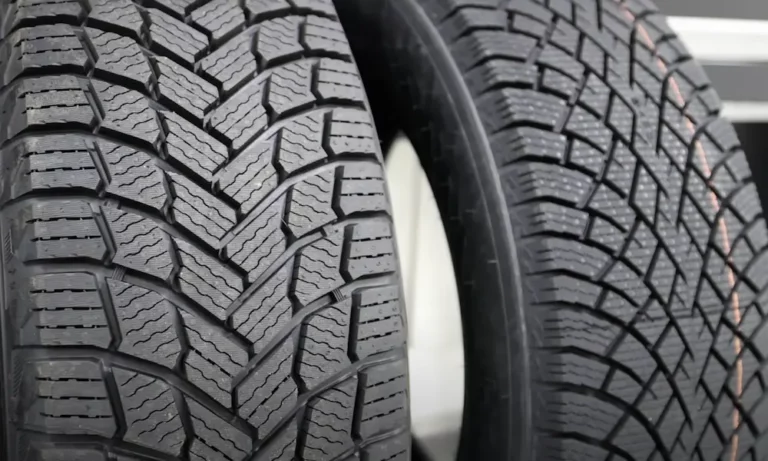
This isn’t just a minor inconvenience. When the rubber hardens, your tires lose their ability to grip the road surface. It’s like trying to pick up a coin while wearing thick winter gloves. The tread pattern doesn’t help much either—all-season tires have fewer and less aggressive sipes (those tiny slits that bite into snow) compared to dedicated winter tires.
What Happens Below 45 Degrees
Here’s something most people don’t realize: all-season tires start losing effectiveness even on dry pavement once temperatures hit that 45°F threshold. The compound chemistry just wasn’t designed for cold weather.
Your tires become less flexible and can’t conform to the road surface properly. This affects everything—braking, accelerating, and cornering. Industry experts consistently recommend switching to winter tires at this temperature, not because of snow, but because of the fundamental compound limitations.
Winter tire compounds use different materials (often including silica and specialized polymers) that stay flexible in the cold. All-season tires? They’re optimized for temperatures above 45°F, which means they’re already compromised before winter really begins.
Real Testing Data You Need to See
Let’s talk numbers, because the performance gap is bigger than you’d think.
Stopping Distance Differences
Tire Rack conducted comprehensive testing with BMWs stopping from 30 mph on snow. The results? Winter tires stopped in 59 feet. All-season tires needed 89 feet—that’s 30 feet longer, or about two car lengths.
Canadian research found similar results. At 50 km/h, winter tires required 18 meters versus 27.1 meters for all-season tires. That’s a 33.6% improvement—not a small margin when you’re trying to avoid a collision.
Consumer Reports testing backs this up with multiple tests showing winter tires consistently provide 20-30% shorter stopping distances on snow and ice.
Acceleration Performance
The same Tire Rack test measured how long it took to accelerate 200 feet on snow. Winter tires: 8 seconds. All-season tires: 11 seconds. That’s a 37% difference in getting moving.
On ice, the gap widens even more. Winter tires reached 18 meters in 4.5 seconds compared to 6 seconds for all-season tires.
Cornering Ability
This is where things get scary. During a 90-degree turn at 25 mph, vehicles with winter tires completed the maneuver successfully. Vehicles with all-season tires? They slid right off course.
Maximum safe cornering speeds showed winter tires maintaining control at 18 km/h while all-season tires lost grip at just 13 km/h.
The Three-Peak Mountain Snowflake Symbol Explained
You’ve probably seen this symbol on some tires—it looks like a mountain with a snowflake inside. It’s called the 3PMSF certification, and it means the tire passed certain snow traction tests.
But here’s what the tire companies don’t advertise: the testing only measures acceleration traction on medium-packed snow. It doesn’t test braking (the most critical safety factor) or cornering. It doesn’t test ice performance either.
Even more surprising? A tire only needs to perform 10% better than a reference all-season tire to earn the symbol. That’s not exactly a high bar.
Some all-season tires now carry this 3PMSF symbol, which is better than nothing. But it doesn’t make them winter tires.
All-Weather Tires: The Middle Ground
The tire industry created a compromise category called all-weather tires. They’re designed to provide better winter performance than all-season tires without requiring seasonal swaps.
Michelin CrossClimate2
This tire is often called the best all-weather option available. It provides roughly 90% of dedicated winter tire performance in most snow conditions while maintaining quiet operation and good fuel economy.
The CrossClimate2 carries the 3PMSF symbol and actually earns it through legitimate snow performance. Real-world testing shows it handles wet weather excellently and achieves 50,000-60,000 mile tread life.
Nokian Remedy WRG5
Nokian invented the winter tire concept, so they know cold weather. Their Remedy WRG5 brings that expertise to an all-weather design with advanced siping and tread compound technology.
Users report confidence in snow conditions while maintaining year-round usability. It’s backed by a 60,000-mile warranty and performs better than most all-season tires in winter.
Your AWD Won’t Save You
Here’s a dangerous misconception: people think all-wheel drive eliminates the need for proper winter tires. It doesn’t.
AWD helps you accelerate in snow. That’s it. It provides zero additional benefit for braking or cornering—the places where most accidents happen. Your tires determine how well you stop and turn, regardless of how many wheels receive power.
The same goes for electronic stability control, traction control, and anti-lock brakes. These systems manage available traction; they can’t create it. If your tires can’t grip, no amount of electronic intervention will help.
When All-Season Tires Are Actually Fine
Don’t take this as “all-season tires are terrible.” They work fine in the right conditions:
- You live where temperatures rarely drop below 40°F for extended periods
- Snow events happen 1-5 times per winter and melt quickly
- You drive primarily on well-maintained urban roads
- You can avoid driving during the worst weather
Many southern and coastal regions fit this description perfectly. If you see snow once every few years, dedicated winter tires don’t make sense.
When You Actually Need Winter Tires
Dedicated winter tires become essential when you face:
- Consistent temperatures below 45°F during winter months
- Regular snow and ice conditions lasting days or weeks
- Mountain driving or rural roads with limited maintenance
- Steep terrain where traction is critical
- Extended winter seasons lasting four months or more
The safety improvements are dramatic. We’re talking about 25-50% shorter stopping distances, which could prevent serious accidents.
The Cost Reality
Let’s address the elephant in the room: winter tires cost money.
You’ll spend $600-1,200 for a set of winter tires depending on your vehicle. Add another $400-800 if you want a separate set of wheels (which most people do to protect their alloy wheels and make swapping easier).
Then there’s the mounting and dismounting costs—expect $100-200 per seasonal change. You’ll need storage space for the off-season tires too.
But here’s the thing: you’re distributing tire wear across two sets. Your all-season tires aren’t wearing out while your winter tires are on, potentially extending overall tire life. Some insurance companies offer discounts for winter tire use, which offsets costs slightly.
The real question isn’t “can I afford winter tires?” It’s “what’s the cost of an accident I could have prevented?”
What to Actually Buy
Your decision depends on where you live and how you drive.
For Regular Winter Weather Regions
Buy dedicated winter tires. Period. If you consistently see snow, ice, and sub-45°F temperatures, nothing else provides adequate safety margins. The testing data is clear—winter tires outperform everything else by significant margins.
Install them when nighttime temperatures consistently reach 45°F or below. Use complete sets of four tires—never mix tire types on the same vehicle.
For Moderate Climate Regions
High-quality all-weather tires with 3PMSF ratings make sense here. The Michelin CrossClimate2 and Nokian Remedy WRG5 top the list for good reason—they handle occasional snow events without the hassle of seasonal swaps.
This works if you see snow 1-5 times per winter, temperatures rarely drop below 40°F for long, and you drive mostly on maintained urban roads.
For Warm Climate Regions
Traditional all-season tires remain appropriate if you rarely or never see snow and temperatures consistently stay above 50°F. They’re cost-effective, long-lasting, and provide good performance in their intended conditions.
The Tire Technology Evolution
The gap between all-weather and winter tires continues narrowing as compound chemistry improves. Manufacturers are developing silica-enhanced compounds that maintain flexibility across wider temperature ranges.
Advanced computer modeling enables more sophisticated tread patterns that balance different performance requirements. Variable-depth siping optimizes traction without compromising handling, while asymmetric designs address multiple needs simultaneously.
But even with these improvements, dedicated winter tires still deliver superior performance in serious winter conditions. The physics of cold temperatures and snow haven’t changed.
Making Your Decision
Are all-season tires good in snow? The honest answer is no—they’re adequate at best, inadequate at worst.
They’ll get you through light, occasional snow if you drive carefully. But testing consistently shows they stop 25-50% longer distances than winter tires, provide significantly worse traction, and compromise cornering stability.
If you face regular winter weather, dedicated winter tires remain the safest choice. For moderate climates, quality all-weather tires with 3PMSF certification offer a reasonable compromise. Only in warm climates do traditional all-season tires make complete sense year-round.
Your local climate, driving patterns, and risk tolerance determine the right choice. But when it comes to winter driving safety, don’t let marketing convince you that “all-season” means “all-weather.” The NHTSA provides additional tire safety information worth reviewing.
The bottom line? If you regularly drive in snow and ice, proper winter tires aren’t an optional upgrade—they’re a safety necessity your all-season tires simply can’t match.