Shopping for tires sucks. You’re stuck between dropping serious cash on big-name brands or gambling on cheaper options you’ve never heard of. If you’ve stumbled across Atturo tires, you’re probably wondering if they’re legit or just another sketchy budget brand. Let’s cut through the marketing fluff and figure out if these tires are actually worth your money.
What You Need to Know About Atturo Tires
Here’s the thing: asking “are Atturo tires good?” is like asking if Toyota makes good cars. Which model? For what purpose?
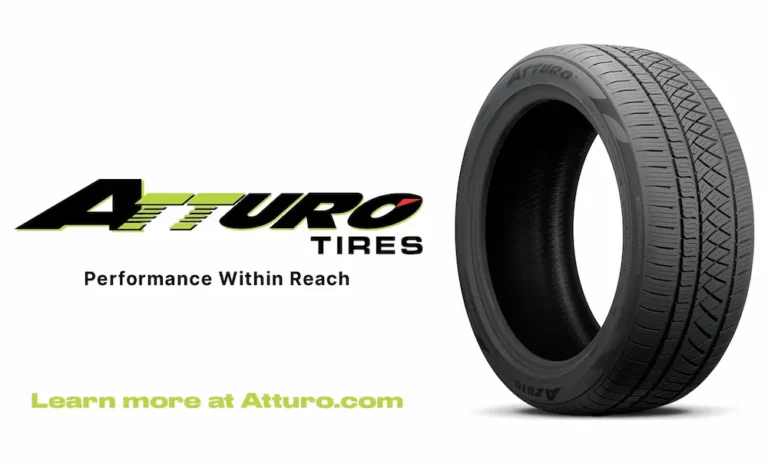
Atturo isn’t a one-size-fits-all brand. They’ve carved out a specific niche since launching in 2009—delivering performance within reach for truck and performance car enthusiasts. Founded by Michael Mathis and still 100% independently owned, Atturo takes a different approach than the big corporate tire companies.
The brand’s strategy is simple: target specific enthusiast markets and deliver 90% of premium performance at 60% of the price. But here’s where it gets tricky—not all Atturo tires live up to this promise.
Where Atturo Tires Come From (And Why It Matters)
Let’s tackle the elephant in the room. When people discover Atturo manufactures tires in Asia, they often jump to “cheap Chinese junk” conclusions. That’s lazy thinking.
Atturo primarily sources from Taiwan and Thailand—two well-established hubs for quality tire production. These aren’t random factories churning out garbage. They’re certified facilities with 80+ years of combined experience producing tires for respected brands.
Only a limited number of Atturo’s tires (mainly trailer tires) come from China. Quality control runs through their Chicago headquarters, and independent agencies test their products to meet global standards.
This sourcing strategy isn’t a weakness—it’s how they deliver value. You’re getting the same manufacturing expertise that builds tires for premium brands, just without paying for the massive marketing budgets.
The Trail Blade Off-Road Series: Where Atturo Shines
If you drive a truck, Jeep, or SUV and actually use it for more than grocery runs, the Trail Blade lineup is where Atturo proves its worth.
Trail Blade X/T: The Aggressive Hybrid
This tire literally pioneered the hybrid-terrain category when it launched in 2014. It was the first commercially available tire to blend mud-terrain looks with all-terrain road manners.
The design features massive shoulder blocks and aggressive “Knife Blade” sidewall lugs (developed with Quartermaster Knives, which is pretty cool). You get solid off-road performance in sand and mud, plus it rides surprisingly nice for such an aggressive tire.
The trade-offs? It’s loud. Users consistently report that noise is noticeable, with comfort ratings around 3.1 out of 5. Also critical: it’s NOT Three-Peak Mountain Snowflake certified. It handles light winter conditions, but don’t count on it in serious snow.
You get a 45,000-mile warranty, which is fair for this category.
Best for: Enthusiasts who want aggressive looks and 3-season off-road capability without committing to a full mud-terrain tire.
Trail Blade A/T: The All-Weather Workhorse
This is Atturo’s proper all-terrain tire, and it’s genuinely impressive for the price.
The killer feature? Three-Peak Mountain Snowflake certification. That symbol means it passed rigorous third-party testing for severe snow traction—not just marketing claims.
You get aggressive tread blocks, jagged sipes for biting edges, optional 3-ply sidewalls for durability, and stone ejectors to protect the casing. One user praised its snow performance as superior to more expensive BFGoodrich options.
The downsides are minor: slightly firmer ride and some road noise compared to highway tires. But that’s standard for any legitimate all-terrain.
It carries a 50,000-mile warranty and directly competes with respected options like the Falken Wildpeak A/T3W—at a fraction of the cost.
Best for: Drivers who need genuine year-round capability and don’t want to compromise on snow performance.
Trail Blade H/T: The Hidden Gem
This might be Atturo’s smartest tire, and most people don’t even know it exists.
It’s a highway-terrain tire designed for the 90% of truck and SUV owners who mostly drive pavement. But here’s what makes it special: it combines a 60,000-mile warranty, 3PMSF all-weather certification, and a quiet, comfortable ride.
That combination is rare. Most highway tires only carry basic M+S ratings. The 3PMSF certification means you get severe-snow capability in a tire designed for daily commuting.
Best for: Daily drivers who want long tread life, year-round safety, and comfort without paying premium prices.
Trail Blade Performance Comparison
| Feature | Trail Blade X/T | Trail Blade A/T | Trail Blade H/T |
|---|---|---|---|
| Best For | Aggressive looks, off-road fun | True all-weather capability | Highway comfort, long life |
| Severe Snow Rating | No | Yes (3PMSF) | Yes (3PMSF) |
| Warranty | 45,000 miles | 50,000 miles | 60,000 miles |
| Noise Level | Loud | Moderate | Quiet |
| Primary Trade-off | Road noise, poor snow grip | Firmer ride | Limited off-road ability |
The AZ850: Budget Performance That Delivers
If you drive a Mustang, Charger, or performance SUV, the AZ850 ultra-high-performance summer tire is legitimately good.
It features an asymmetrical tread pattern, reinforced sidewalls for high-speed stability, and advanced rubber compounds that resist heat during aggressive driving. Reviews consistently praise its sports-car level handling and excellent braking.
What’s unusual? It delivers a surprisingly refined and quiet ride for a UHP tire. That’s rare in this category.
Owners frequently compare it favorably to the Nitto NT555 and call it “good bang for your buck”. You’re getting 90% of premium tire performance for significantly less money.
Best for: Performance enthusiasts who drive aggressively but don’t want to drain their bank account.
The AZ610: A Tire to Avoid
Here’s where Atturo’s value proposition completely falls apart.
The AZ610 is a touring all-season tire marketed to mass-market CUV and SUV owners. On paper, it looks great: quiet ride, 60,000-mile warranty, only $81 per tire in some sizes.
In reality? It’s a disaster.
Multiple users report catastrophic premature wear—we’re talking tires “dead” and “down to the wear bars” at just 22,000-23,000 miles on a tire with a 60,000-mile warranty. That’s not falling short—that’s complete failure.
Even the professional reviews contradict themselves. SimpleTire’s review praises the tire’s noise-reducing features in one paragraph, then explicitly lists “louder-than-average noise” as a primary con. Their wet traction ratings are the lowest of any performance metric.
The $81 price tag looks like a deal until you replace them at 23,000 miles instead of 60,000. Suddenly, they’re MORE expensive per mile than premium tires that actually last.
Bottom line: Stay away from the AZ610. The “value” is a mirage.
Safety Record: What You Should Know
A critical check for any tire brand involves reviewing NHTSA’s recall database and the U.S. Tire Manufacturers Association recall tool.
The good news? There’s no evidence of widespread recalls or safety investigations involving Atturo tires. No chatter about tread separation or catastrophic blowouts across multiple review platforms and forums.
This matters. While the AZ610 suffers from severe economic and performance failures, it doesn’t appear to present catastrophic safety risks. That separates Atturo from genuinely dangerous bottom-tier brands.
Their tires appear to be safe, even when they’re not durable.
Real Owner Experiences: The Pattern That Emerges
Analyzing owner complaints reveals Atturo’s split personality clearly.
Enthusiast tire complaints focus on expected trade-offs. X/T owners note the tires are “somewhat loud”—that’s not a failure, it’s physics. Aggressive tread patterns make noise.
Commuter tire complaints describe actual product failure. AZ610 owners warn others to “STAY AWAY” and report complete tread wear failures that violate the tire’s fundamental economic promise.
This pattern is consistent and telling. Atturo delivers on its promises to enthusiasts but fails mainstream buyers looking for basic reliability.
Who Should Buy Atturo Tires?
Buy Atturo If You:
Drive a truck, Jeep, or SUV for recreation. The Trail Blade lineup offers exceptional value for off-road and all-terrain use. These tires compete with options costing 40-50% more.
Own a performance or muscle car. The AZ850 delivers legitimate UHP performance at budget prices. It’s a smart choice for spirited driving without premium costs.
Want all-weather capability on a budget. Both the Trail Blade A/T and H/T offer 3PMSF certification, giving you severe-snow capability that most “all-season” tires can’t match.
Skip Atturo If You:
Drive a daily commuter CUV or sedan and want simple reliability. The AZ610 is a high-risk gamble that isn’t worth the upfront savings. Even if you get a “good” set, too many users report catastrophic failures.
Live in harsh winter climates. While the A/T and H/T have 3PMSF ratings, if you regularly face severe winter conditions, dedicated winter tires from established brands are safer bets.
Can’t tolerate road noise. The X/T is legitimately loud. If you’re sensitive to tire noise, this isn’t your tire.
The Smarter Atturo Strategy
Here’s the insider move most buyers miss: if you want an Atturo tire for daily driving, skip the obvious “touring” tire (the AZ610) and buy the Trail Blade H/T instead.
Despite its confusing “Trail Blade” name, the H/T is specifically designed for highway use. It delivers everything the AZ610 promises but can’t deliver: quiet operation, a full 60,000-mile warranty that users confirm it actually meets, and genuine all-weather capability with 3PMSF certification.
It’s the hidden value in Atturo’s lineup for mainstream buyers.
Where Atturo Actually Excels
Atturo’s biggest strength is also the most misunderstood: they’re NOT trying to be everything to everyone.
When Atturo launched the Trail Blade X/T in 2014, they created an entirely new tire category. Major brands followed their innovation. That’s not something budget brands typically do.
Their independent ownership frees them from the constraints of big corporate tire companies focused on high-volume OE contracts. They can target niche enthusiast markets and deliver exactly what those buyers want—without compromise.
The Trail Blade series consistently demonstrates this focus. Each model serves a specific purpose with clear trade-offs. The X/T sacrifices snow performance and quiet for aggressive capability. The A/T balances all-terrain grip with severe-winter certification. The H/T prioritizes comfort and longevity for highway use.
That’s smart product development.
The Value Equation That Actually Matters
Are Atturo tires good? It depends entirely on which tire you buy and what you need it to do.
For truck and performance enthusiasts, Atturo delivers genuine value. You’re getting 80-90% of premium tire performance for 50-60% of the cost. That math works.
For mainstream buyers seeking boring reliability, the brand is hit-or-miss. The Trail Blade H/T works. The AZ610 doesn’t.
The smartest approach? Match the specific tire to your specific needs. Don’t buy based on brand reputation alone—Atturo’s halo effect from enthusiast products doesn’t transfer to all their tires.
Check reviews for the exact model you’re considering. If you’re looking at Trail Blade or AZ850 products, you’re likely getting solid value. If you’re tempted by a crazy-cheap AZ610, remember that some bargains aren’t actually bargains.
Your tires are literally where your vehicle meets the road. Choose based on data, not just price tags.