Thinking about getting that sleek BMW you’ve been eyeing? Before you sign on the dotted line, you might want to understand what you’re getting into beyond the luxury badge and driving thrills. Let’s break down the real costs of keeping your Bimmer running smoothly and see if those maintenance expenses should make you think twice.
The True Cost of BMW Ownership vs. Other Brands
When you compare BMWs to other vehicles on the road, the numbers tell an interesting story. BMW owners spend about $968 annually on maintenance and repairs—that’s a whopping 48% higher than the industry average of $652.
Let’s put this in perspective with a quick comparison:
| Brand | Average Annual Maintenance Cost |
|---|---|
| BMW | $968 |
| Mercedes-Benz | $1,241 |
| Audi | $1,349 |
| Ford | $1,059 |
| Toyota | $602 |
| Honda | $585 |
| Lexus | $600 |
Interestingly, while BMW maintenance costs more than mainstream brands, they’re actually less expensive than some other German luxury competitors. The real eye-opener is when you compare them to Japanese brands like Toyota, Honda, and even luxury counterpart Lexus, which all cost significantly less to maintain.
Why BMW Maintenance Hits Your Wallet Harder
Complex Engineering Demands Special Care
BMWs aren’t expensive to maintain just because of the badge—there’s real substance behind these costs. These vehicles pack sophisticated technology and high-quality components that require specialized knowledge to service properly.
The electronic systems in particular can be complex puzzles that demand expertise to solve. Diagnosing and repairing these issues can cost anywhere from $200 to $2,000 depending on what’s gone wrong.
Premium Pricing on Parts and Labor
When your BMW needs attention, you’ll notice the impact in two key areas:
- Labor costs: BMW dealership technicians command premium rates—often $150-$200 per hour compared to $90-$120 for mainstream brands.
- Genuine parts: Original BMW parts carry substantial markups over aftermarket alternatives. For example, a simple oil change can range from $150 to $400, while the same service on a Toyota might cost under $100.
More Frequent Shop Visits
According to RepairPal data, BMW owners visit repair shops about 0.9 times per year—more than double the industry average of 0.4 visits. This higher service frequency adds up quickly, especially when each visit comes with those premium labor rates.
How BMW Models Differ in Maintenance Costs
Not all BMWs will drain your wallet equally. There are significant variations across the model lineup:
Most Affordable BMW Models to Maintain
The BMW i3 electric vehicle stands out as the budget-friendly option, with annual maintenance averaging just $247. This makes sense—electric vehicles have fewer moving parts and fluids to worry about.
For traditional BMW models, the 325i ($600/year) and entry-level 3 Series variants generally keep costs more reasonable. Their simpler engineering and more abundant parts supply help keep service expenses in check.
Budget-Busting BMW Models
On the other end of the spectrum, luxury coupes like the 650i can hit you with around $1,800 annually in maintenance costs. High-performance M models like the M3 aren’t far behind at approximately $1,500 per year. The complex engineering that delivers their thrilling performance demands more specialized care and more frequent attention.
The Age Factor: How Costs Climb Over Time
The financial impact of BMW maintenance doesn’t stay constant—it grows dramatically as your vehicle ages:
| Ownership Year | BMW Average Cost | Industry Average | Difference |
|---|---|---|---|
| Year 1 | $686 | $400 | +$286 |
| Year 5 | ~$1,200-1,500 | ~$700 | +$500-800 |
| Year 10 | $2,369 | $1,300 | +$1,069 |
New BMW ownership starts with a significant advantage: BMW Ultimate Care covers scheduled maintenance for the first three years or 36,000 miles. This dramatically reduces initial costs. However, once this coverage expires, you’ll need to budget carefully.
By year 10, you’re looking at maintenance costs that are more than $1,000 above the industry average annually. This explains why many second and third-hand BMW owners are surprised by maintenance requirements.
Common BMW Issues That’ll Empty Your Wallet
Certain problems appear frequently in BMW service records, and knowing about them can help you budget (or decide if BMW ownership is right for you):
1. Oil Leaks
Oil leaks from the engine area typically emerge after 60,000 miles and cost between $300-$800 to repair. These often originate from valve cover gaskets, oil pan gaskets, or the notorious oil filter housing gasket.
2. Water Pump Failures
The water pump is a critical component that tends to fail in BMWs between 80,000 and 120,000 miles. Replacement costs range from $500-$1,200, and many experienced BMW owners proactively replace this part to prevent bigger problems.
3. Cooling System Problems
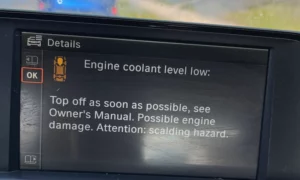
Beyond just the water pump, BMWs are known for cooling system issues affecting radiators, expansion tanks, and hoses. Repairs typically cost $400-$1,500 and become increasingly common as the vehicle ages.
4. Electronic Gremlins
From window regulators to climate control modules to engine management systems, BMWs pack sophisticated electronics that can be troublesome. These repairs vary widely from $200 for simple fixes to $2,000+ for complex control modules.
How to Keep BMW Maintenance Costs Under Control
Despite their reputation for expensive upkeep, you can take steps to make BMW ownership more affordable:
Find a Reputable Independent Specialist
One of the most effective ways to reduce BMW maintenance costs is to find a good independent BMW specialist. These shops typically charge 20-30% less than dealerships while maintaining expertise in BMW systems. Many owners report saving hundreds of dollars annually through this approach alone.
Repair quality at independent European car repair shops is often comparable or even superior to dealership service, as these specialists focus exclusively on European vehicles.
Choose Your BMW Model Wisely
If you’re shopping for a BMW, consider the maintenance economics of different models:
- Best choices for budget-conscious buyers: i3 electric vehicle, 3 Series sedans, and models with the N52 engine
- Models to approach with caution: Any V8-powered BMW, 7 Series, and high-performance M variants
The difference in annual maintenance can be over $1,000 between budget-friendly and expensive-to-maintain models.
Maximize Warranty and Maintenance Coverage
New BMWs come with a 4-year/50,000-mile factory warranty and 3-year/36,000-mile complimentary maintenance through BMW Ultimate Care. When purchasing, consider:
- Certified Pre-Owned BMWs with remaining warranty coverage
- Extended warranty options for older models
- BMW’s Extended Service Contracts that provide coverage for up to 7 years from the original in-service date
Embrace Preventive Maintenance
Regular servicing according to BMW’s recommended schedule prevents many costly emergency repairs. Pay special attention to:
- Oil changes using BMW-approved synthetic oils
- Cooling system maintenance, including preemptive water pump replacement
- Transmission fluid services (despite BMW’s “lifetime fluid” claims)
- Regular brake fluid changes to prevent system corrosion
The BMW Maintenance Reality Check
Yes, BMWs are more expensive to maintain than average vehicles—about 48% more annually. But this figure doesn’t tell the whole story.
For the first three years, BMW’s included maintenance program cushions the financial impact. The real costs accelerate in years 4-10, when you might spend between $1,200 and $2,400 annually depending on your model and its age.
The value equation ultimately comes down to your priorities. If you love the driving dynamics, engineering precision, and prestige of the BMW brand, the extra maintenance expenses might be a worthwhile tradeoff. Just be sure you’re budgeting realistically for the total cost of ownership, not just the purchase price.
With strategic model selection, independent service options, and diligent preventive maintenance, you can enjoy the “Ultimate Driving Machine” without letting maintenance costs drive you to financial stress.