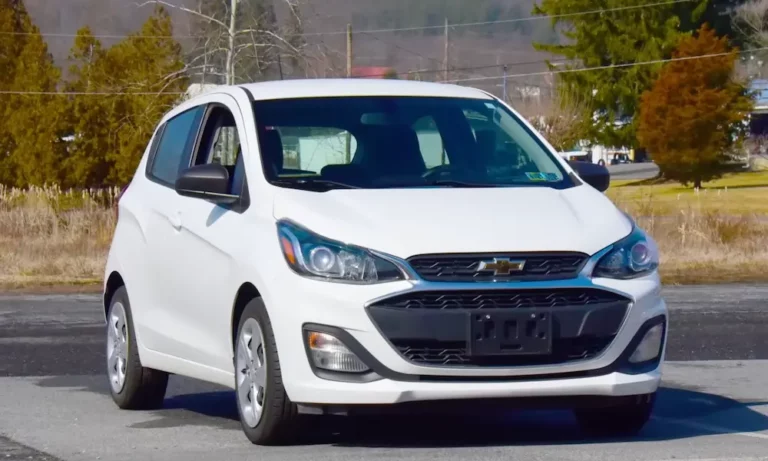
Thinking about a Chevy Spark but worried about reliability? You’re looking at one of the most affordable cars on the market, but affordability means nothing if you’re constantly visiting the repair shop. I’ve analyzed thousands of owner reports, reliability data, and expert assessments to bring you the definitive answer on Spark reliability.
Chevy Spark Reliability Ratings: Better Than You Might Think
The Chevrolet Spark shows surprisingly strong reliability for a budget subcompact. With a 4.0 out of 5.0 reliability rating from RepairPal, it ranks 10th out of 21 subcompact cars. That’s solidly above average for its class.
Other industry ratings back this up:
- iSeeCars awards the Spark a 7.7 out of 10 reliability score
- J.D. Power scores range from 73-88 out of 100 depending on model year
- The 2018 model year received J.D. Power’s highest rating for overall quality
What makes these ratings impressive is that they come despite the Spark’s budget-friendly price point. Many owners report their Sparks continuing to run reliably well past 100,000 miles with proper maintenance.
Maintenance Costs: Surprisingly Affordable
One of the Spark’s strongest reliability points is its affordable maintenance costs:
| Expense Type | Chevy Spark | Subcompact Average | All Vehicle Average |
|---|---|---|---|
| Annual Maintenance | $434 | $456 | $652 |
| Repair Shop Visits | 0.3 times/year | 0.3 times/year | 0.4 times/year |
| Severe Repair Probability | 12% | 11% | 12% |
These numbers tell an important story: the Spark costs less to maintain than most vehicles and needs repairs less frequently. Over ten years, expect maintenance costs between $6,000-$6,139 – roughly 37% of the vehicle’s original purchase price.
The Spark’s simple mechanical design and readily available, affordable replacement parts contribute to these lower costs. It’s one of Chevrolet’s most affordable models to maintain over its lifespan.
Best and Worst Model Years: Choose Wisely
Not all Chevy Spark model years are created equal. Knowing which to seek out and which to avoid can save you thousands in repairs.
Most Reliable Spark Model Years
2016-2018 models represent the sweet spot for Spark reliability. These years benefit from design refinements after early production challenges and show consistently low complaint rates. The 2018 model particularly stands out with J.D. Power’s highest quality rating.
The 2021 model year also demonstrates strong reliability with a solid J.D. Power score of 77. It benefits from final production refinements before the model’s discontinuation.
If buying used, focus on these model years for the best reliability experience.
Chevy Spark Years to Avoid
The 2013 model year is widely considered the most problematic, generating 315 NHTSA complaints and earning the title of worst Spark year according to multiple reliability tracking services. Its primary issue involves excessive oil consumption, with repairs averaging $2,700.
The 2014 model year continues with significant transmission problems, including complete transmission failures requiring replacements averaging $2,600.
The 2015 model year shows improvement but still presents reliability concerns with airbag system malfunctions and electrical component failures.
Transmission Reliability: Manual vs. Automatic
The Spark’s transmission type significantly impacts its reliability:
The five-speed manual transmission demonstrates superior reliability compared to the CVT (continuously variable transmission) options. Owner reports consistently show manual Sparks experience fewer mechanical problems and maintain better long-term durability. Reddit users describe the manual as “bulletproof reliable” and “more fun to drive.”
The CVT transmission requires more attention. For buyers considering CVT-equipped Sparks, diligent maintenance is crucial. The JATCO CVT7 transmission needs fluid changes every 30,000-45,000 miles – significantly more frequent than traditional automatics. With proper care, CVTs can last 150,000+ miles, but neglect leads to premature failure.
Common Reliability Issues and Solutions
Understanding common problems helps you maintain your Spark properly or know what to look for when buying used.
Engine-Related Problems
Excessive oil consumption affects primarily 2013 model Sparks. This issue stems from worn piston rings, gaskets, or seals and can lead to engine damage if ignored. Repair costs average $2,700.
Cabin rattling occurs across multiple model years. While not mechanically serious, these rattles impact driving experience. Solutions include securing loose components, adding padding to eliminate vibrations, and lubricating door hinges.
Electrical and Safety System Issues
Airbag system malfunctions have affected multiple model years, resulting in four separate recalls addressing deployment failures and sensor problems. The NHTSA has documented these issues ranging from deployment failures to persistent warning lights.
Electrical component failures occur sporadically, including battery drainage, faulty gas indicators, and issues with electronic systems. While not typically expensive individually, these problems can accumulate over time.
Safety Recalls: What You Should Know
The Spark has had relatively few recalls – only 9 across its entire production run. The most significant include:
Hood latch recall affecting over 120,000 Spark and Spark EV vehicles from 2013-2015. This addresses secondary hood latch corrosion that can result in hoods opening unexpectedly while driving. The Consumer Reports documentation shows this issue resulted in 22 crashes and one injury.
Airbag-related recalls have addressed multiple safety concerns including manufacturing mode settings preventing deployment and improper passenger-side airbag positioning. These affect various model years from 2016-2019.
Always check if a used Spark has had all recall work completed before purchasing.
Long-Term Ownership Experience
With proper care, Sparks can deliver impressive longevity. The average lifespan is 134,883 miles, but many owners report reaching 200,000+ miles.
A 2013 owner reports exceeding 200,000 miles with minimal issues by following regular maintenance and choosing quality tires. Another achieved 40,000+ miles over three years without problems in a 2015 model.
Owner satisfaction typically centers on:
- Excellent value proposition
- Impressive fuel efficiency
- Surprising interior space despite compact dimensions
- Maneuverability in urban environments
Common complaints focus on limited power, road noise at highway speeds, and CVT transmission behavior – though most owners consider these acceptable trade-offs for the low purchase and operating costs.
Impact of Discontinuation on Reliability
Chevrolet discontinued the Spark after the 2022 model year, raising questions about long-term parts availability.
Currently, parts availability remains adequate with common maintenance items readily available through dealer and aftermarket channels. GM typically maintains parts inventory for 10-15 years after production ceases, though specialty components may become harder to find over time.
The Spark’s relatively simple design and shared components with other GM vehicles help ensure continued parts availability for essential systems for the foreseeable future.
Maintenance Best Practices for Maximum Reliability
To maximize your Spark’s reliability, follow these essential maintenance practices:
Regular oil changes are critical, with recommended intervals of 3,000-7,500 miles depending on driving conditions. The small-displacement engine requires consistent lubrication to prevent premature wear and oil consumption issues.
CVT transmission service is essential for automatic Sparks, requiring fluid changes every 30,000-45,000 miles using OEM-specified fluids. Manual transmission vehicles need less frequent service but benefit from periodic fluid inspection.
Cooling system maintenance deserves attention, particularly in warmer climates, as some owners report overheating issues. Regular coolant flushes and radiator inspection help prevent expensive engine damage.
Tire selection and maintenance significantly impact performance and safety. Many owners emphasize purchasing quality tires appropriate for driving conditions, noting the Spark’s light weight makes it sensitive to tire quality.
Battery maintenance requires attention due to reported 12V battery failures. Some owners recommend proactive replacement every 2-3 years and using battery maintainers for vehicles with irregular use patterns.
How Spark Reliability Compares to Competitors
Within the subcompact segment, the Spark demonstrates competitive reliability rankings. Its 10th place ranking out of 21 subcompacts positions it in the upper half of its class, with annual costs comparing favorably to segment averages.
Compared to primary competitors:
- Vs. Mitsubishi Mirage: The Spark offers superior interior quality and features with similar reliability
- Vs. Ford Fiesta (discontinued): The Fiesta provided more power but higher maintenance costs
- Vs. Nissan Versa: The Versa offers more interior space but at a higher price point
The Spark balances reliability with affordability more effectively than many subcompact alternatives. While not reaching the reliability levels of a Toyota Corolla, it provides acceptable dependability at a much lower price point.
The Verdict: Are Chevy Sparks Reliable?
Yes, Chevy Sparks are generally reliable vehicles, especially considering their budget-friendly price point. With a 4.0/5.0 reliability rating and annual maintenance costs of just $434, the Spark provides excellent value for budget-conscious buyers.
For maximum reliability:
- Choose 2016-2018 or 2021 model years
- Consider manual transmission over CVT when possible
- Avoid 2013-2015 model years
- Follow regular maintenance schedules diligently
With proper care, many Sparks achieve 150,000+ miles of reliable service, making them economical choices for urban commuting and basic transportation needs. The vehicle’s simplicity, low operating costs, and established service network support its viability as both a new and used purchase option.
While not the most luxurious or powerful vehicle on the market, the Spark delivers on its promise of affordable, reliable transportation – exactly what many budget-conscious buyers need.