Shopping for budget tires? You’ve probably spotted Dextero at Walmart and wondered if they’re worth it. Here’s the straight talk: most Dextero models are a gamble you don’t want to take. One was recalled for sidewall failures that can cause crashes, and the entire lineup lacks winter safety certification. But there’s one exception worth discussing.
What You’re Actually Buying: The Walmart Budget Brand
Dextero isn’t some scrappy startup. These tires come from Giti Tire, one of the world’s largest tire manufacturers. Giti operates state-of-the-art plants across the globe and distributes to over 130 countries.
The “American Engineered and American Made” marketing you’ll see? That’s referring to Giti’s South Carolina plant that opened in 2017. It’s a smart move to combat the stigma around budget tires.
But here’s the catch: Dextero is sold exclusively at Walmart. It’s a private-label brand manufactured to hit Walmart’s rock-bottom price point. That means Giti isn’t producing their best tire here—they’re producing their cheapest.
Think of it this way: same factory, different recipe. The ingredients (rubber compounds, belt packages, quality control) get dialed back to meet the price Walmart demands.
The Recall That Should End the Debate
Let’s start with the worst news first.
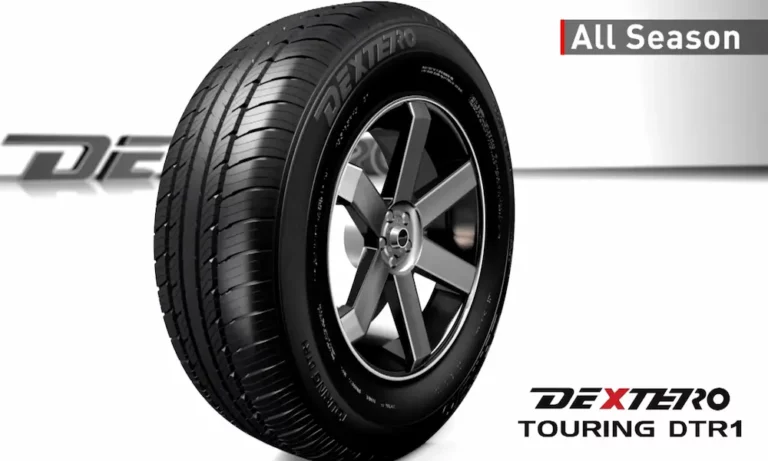
In October 2016, Giti initiated a major safety recall with the NHTSA (Campaign ID 16T017). The affected model? The Dextero Touring DTR1.
What Went Wrong
The official report identified cracks developing in the lower sidewall area. This wasn’t a minor cosmetic issue. The defect could cause:
- Sudden air pressure loss
- Complete tire failure
- Loss of vehicle control
- Increased crash risk
This exact problem hit three of Giti’s private-label brands (Dextero, Primewell, and GT Radial) from the same plant. That’s not a design flaw—it’s a manufacturing quality problem.
The Problem Didn’t Stay in 2016
Fast-forward to 2023. A motorhome owner reported on Walmart’s site that two different Dextero tires failed catastrophically:
- First tire: sidewall bubble and tread separation at under 10,000 miles
- Second tire: tread separation at under 14,000 miles
Same failure mode. Different year. Different model. The pattern is clear.
The Quality Control Lottery
Beyond catastrophic failures, there’s a more common headache: persistent shaking and vibration.
One DHT2 owner described the nightmare:
- Tires balanced and installed
- Two days later: shaking starts, tires rebalanced
- After 400 miles: shaking returns, rebalanced again
- Shaking continues, tires returned
This is textbook “out of round” manufacturing—the tire isn’t perfectly circular. No amount of balancing fixes a misshapen tire.
Another user reported replacing two out-of-round tires at just 12,000 miles. Even Walmart staff reportedly see regular problems with Dexteros on trucks.
| Issue | Model | Source | Details |
|---|---|---|---|
| Sidewall cracks / Air loss | DTR1 | NHTSA Recall 16T017 | “May develop cracks in lower sidewall, resulting in sudden tire failure” |
| Sidewall bubble / Tread separation | E450 Motorhome tire | Walmart Review 2023 | “Bubble in sidewall at under 10K miles, tread separation at 14K miles” |
| Severe vibration | DHT2 | Walmart Review | Persistent shaking even after three balancing attempts |
| Out of round defects | Dually application | Reddit User | “2 out of round” at only 12,028 miles |
Breaking Down the Three Models
The DTR1 Touring: Don’t Even Consider It
This is Dextero’s passenger car tire for sedans, crossovers, and minivans. It promises a quiet, comfortable ride with precise handling.
None of that matters. This is the exact model that was recalled for sudden tire failure. A “quiet ride” means nothing if your sidewall cracks at highway speed.
Verdict: Unacceptable safety risk. Hard pass.
The DHT2 Highway: Mediocre and Missing Critical Safety
The DHT2 targets SUVs and light trucks focused on highway driving. Marketing emphasizes excellent wet and dry handling with low road noise.
It’s got two major problems:
Problem #1: Quality Issues
This model generates the bulk of those vibration and shaking complaints. You’re rolling the dice on whether you’ll get a properly round tire.
Problem #2: Winter Performance Failure
This deserves its own section below, but here’s the short version: the DHT2 is dangerous in winter conditions despite being called “all-season.”
SimpleTire’s rating system gives it a dismal 3.3 out of 10 for winter performance.
Verdict: Only suitable for warm, dry climates if you’re willing to gamble on quality control.
The DAT1 All-Terrain: The One Exception
Here’s where things get interesting. The DAT1 is called an “absolute sleeper” across multiple forums and is highly regarded as one of the best options for the price.
What Makes It Different:
The on-road refinement surprises people. Despite aggressive tread, it’s consistently reported as surprisingly quiet at highway speeds.
Off-road, the aggressive tread pattern and sidewall lugs deliver solid grip in dirt, sand, and mud. Users say it airs down well for trail use—a sign of decent sidewall construction.
It carries a 50,000-mile warranty and gets genuine praise from people who’ve run them hard.
The Reality Check:
It’s still a Dextero. You’re still playing the manufacturing lottery. Some users report the same vibration and balancing issues that plague other models.
Verdict: The only model worth considering, but only for specific buyers (more on that below).
The Winter Safety Deception You Need to Understand
This is where Dextero’s marketing gets dangerous.
M+S vs. 3PMSF: What the Symbols Actually Mean
Dextero tires wear an “M+S” (Mud and Snow) rating. Sounds good for winter, right?
Wrong.
M+S is meaningless. It’s a self-declared label based on tread pattern geometry—the ratio of grooves to blocks. A tire can be branded M+S and be dangerously incompetent on ice and snow because there’s no performance test required.
3PMSF (Three-Peak Mountain Snowflake) is the real standard. This symbol can only be applied to tires that pass a standardized snow traction test mandated by the U.S. Tire Manufacturers Association. It’s the minimum certification for severe snow service.
Here’s the problem: No Dextero tire carries 3PMSF certification.
SimpleTire explicitly warns against using the DHT2 in regions where roads get snow and ice or temperatures drop below 45°F for exactly this reason.
Why the Positive Snow Reviews Are Misleading
You’ll find reviews claiming good snow performance. Here’s why they’re unreliable:
Vehicle vs. Tire:
One DAT1 owner praised snow performance while crediting their all-wheel-drive system in the same sentence. AWD helps you accelerate (go), but it doesn’t help you brake (stop) or turn—that’s all tire.
Light vs. Severe Snow:
Most M+S tires handle light, fresh snow fine. That’s not the same as packed snow, ice, or sustained sub-freezing temperatures.
Marketing vs. Data:
A promotional video claims the DHT2 outperformed competitors in snow acceleration. That’s an unverifiable marketing claim from a sales video, not independent testing.
The technical data is indisputable. If you drive in a four-season climate (Chicago, Wisconsin, Colorado, etc.), relying on Dexteros is a safety gamble.
The False Economy: Why “Cheap” Costs More
Dextero’s core pitch is low price. But let’s run the actual numbers against mid-range competitors.
| Feature | Dextero DAT1 | Cooper Discoverer AT3 4S | Dextero DHT2 | General Altimax 365AW |
|---|---|---|---|---|
| Sample Size | 235/75R15 | 235/75R15 | 225/65R17 | 225/65R17 |
| Price per Tire | $110 | $188 | $118 | $171 |
| Tread Warranty | 50,000 miles | 65,000 miles | 50,000 miles | 60,000 miles |
| Winter Rated? | No (M+S only) | Yes (3PMSF) | No (M+S only) | Yes (3PMSF) |
For an extra $50-$80 per tire, you get:
- An additional 10,000-15,000 miles of warranty
- Actual winter safety certification
- Better quality control and manufacturing consistency
That’s not just safer—it’s better value over the tire’s lifespan.
Who Should Actually Buy Dextero Tires?
Let’s be brutally honest about who fits this tire.
Skip Dextero If You’re:
Anyone in a four-season climate
No 3PMSF certification means you’re compromising safety every time temperatures drop below 45°F or snow hits the ground.
Safety-conscious drivers
The NHTSA recall for sudden tire failure and persistent structural failures make this a high-risk brand.
High-mileage drivers
50,000-mile warranties are significantly shorter than the 60,000-65,000+ you’ll get from competitors.
Anyone who values their time
The high probability of getting an out-of-round tire means multiple trips to diagnose unfixable vibration issues.
The Only Scenario Where Dextero Makes Sense:
You might—might—consider the DAT1 All-Terrain if all of these apply:
- You live in a warm, dry climate (Arizona, Southern California, Florida, South Texas) where snow never happens
- It’s for a secondary, low-mileage vehicle (old truck for weekend projects)
- You’re on an extreme budget
- You’re willing to accept the risk of manufacturing defects
That’s an incredibly narrow use case.
The Bottom Line on Dextero Quality
Are Dextero tires good? For the vast majority of drivers, no.
The brand’s low price is offset by documented safety recalls, persistent quality control problems, shorter warranties, and a complete absence of winter safety certification. A tire you can’t safely use 3-6 months of the year isn’t a bargain—it’s a liability.
The DAT1 All-Terrain is the sole exception, offering legitimate value for warm-climate, off-road use. But even that comes with quality control risks that don’t exist with slightly pricier competitors.
You’re not just buying a tire. You’re buying peace of mind, safety margins, and reliability. Dextero asks you to sacrifice all three to save $50 per tire. That’s not a trade worth making.