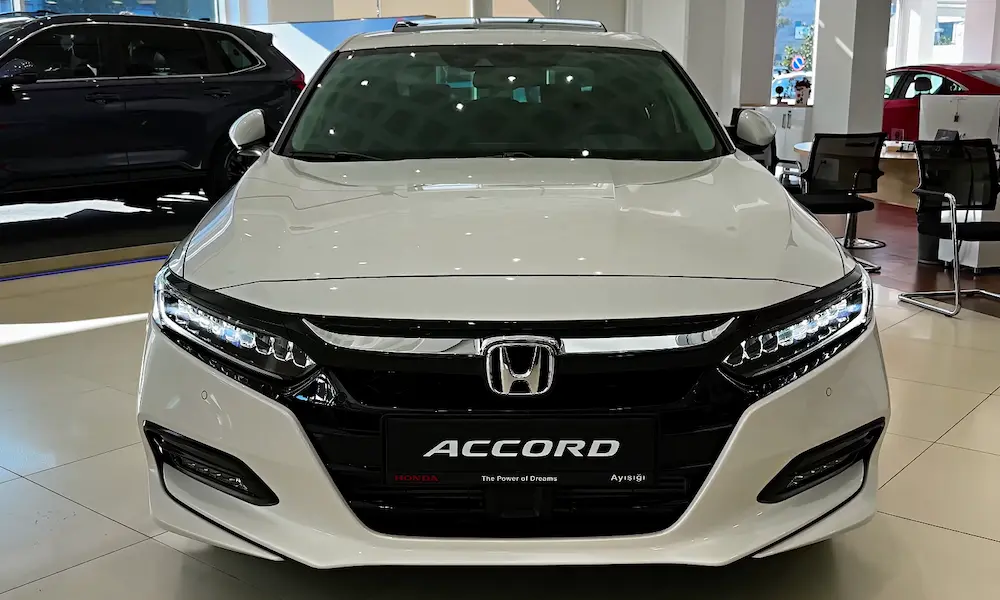
Thinking about buying a Honda Accord but wondering if it’ll stand the test of time? You’re asking the right question. The Accord has built a reputation as a reliability champion, but does it really deserve the hype? Let’s dig into what makes these sedans tick (or not) and whether they deserve your hard-earned cash.
Honda Accord Reliability Scores and Rankings
Honda Accords consistently rank at the top of reliability charts. RepairPal gives the Accord an impressive 4.5 out of 5 stars, ranking it 1st out of 24 midsize sedans for reliability. That’s not just good—that’s category-leading performance.
J.D. Power backs this up with reliability scores hovering around 81-83 out of 100 for recent models. The 2017 and 2022 Accords particularly shine with scores of 82/100 and 83/100 respectively.
What these numbers translate to in real life:
- Fewer unexpected repair shop visits
- Lower maintenance costs (around $400 annually)
- More years of trouble-free driving
How Long Do Honda Accords Last?
The million-dollar question: will your Accord go the distance? The data says yes.
With proper maintenance, Honda Accords routinely reach the 200,000-mile mark and beyond. Many owners report their Accords still running strong at 250,000-300,000 miles. This impressive longevity stems from Honda’s engineering philosophy of building engines that can withstand the test of time.
A study of Accord’s long-term durability shows that maintaining the recommended service schedule can significantly extend your Accord’s lifespan. The 2.0L engines in particular have proven especially durable in long-term ownership studies.
Common Honda Accord Problems to Watch For
Despite their stellar reliability, Accords aren’t perfect. Here are the most common issues that owners report:
Transmission Issues (2000-2004 Models)
The early 2000s models, especially the 2003 Accord, developed a reputation for transmission failures around the 100,000-mile mark. These repairs weren’t cheap, averaging about $2,700 per replacement. Honda extended warranties on some affected vehicles, but many owners faced significant repair bills.
Oil Consumption (2008-2012 Models)
Some Accords from this generation burn oil faster than normal. Owners report needing to add a quart every 1,000-2,000 miles. While not catastrophic, it’s something to monitor.
Electrical Gremlins (Various Years)
From faulty door locks to glitchy infotainment systems, electrical issues occasionally pop up across multiple generations. These problems tend to be annoying rather than serious reliability concerns.
Fuel Pump Recalls (2017-2019 Models)
Several recent Accords were recalled for fuel pump issues that could cause stalling. Honda addressed these through dealer service at no cost to owners.
Best and Worst Honda Accord Years for Reliability
Not all Accords are created equal when it comes to reliability.
The Most Reliable Honda Accord Years
- 2017 Accord (9th Generation) – Only two recalls and minimal reported issues, with annual maintenance averaging just $316.
- 2022 Accord (10th Generation) – Early data shows excellent reliability with few owner complaints.
- 2013 Accord – The first year of the 9th generation addressed previous models’ issues.
- 2025 Accord (11th Generation) – Though still new, early reliability data looks promising.
Honda Accord Years to Avoid
- 2003 Accord – Notorious for transmission failures.
- 2008 Accord – Higher incidence of brake problems and excessive oil consumption.
- 2000-2002 Accords – Transmission issues similar to the 2003 model.
Honda Accord Maintenance Costs
One of the Accord’s strongest selling points is its affordable maintenance. According to RepairPal data, the average annual maintenance cost for an Accord is $400—notably lower than the $430 average for midsize sedans and significantly below the $652 average for all vehicles.
What makes Accords cheaper to maintain:
- Widely available and affordable parts
- Simple engine designs that mechanics know well
- Less frequent major repairs
- Strong dealer network for warranty work
This table breaks down typical maintenance costs:
| Service | Interval | Average Cost |
|---|---|---|
| Oil Change | Every 5,000-7,500 miles | $35-70 |
| Brake Pads | Every 30,000-50,000 miles | $150-300 |
| Timing Belt (older models) | Every 90,000-105,000 miles | $400-700 |
| Transmission Fluid | Every 30,000-60,000 miles | $100-200 |
| Major Service | Every 30,000 miles | $300-500 |
Honda Accord vs. Competitors: Reliability Comparison
How does the Accord stack up against other popular midsize sedans?
Accord vs. Toyota Camry
These Japanese stalwarts are neck-and-neck in reliability. The Camry scores slightly better in some Consumer Reports rankings with a reliability score of 83/100 versus the Accord’s 81/100. However, the Accord typically has lower repair costs and fewer reported issues with its infotainment system.
Accord vs. Nissan Altima
The Accord handily outperforms the Altima in reliability metrics. The Altima’s CVT transmission has been problematic, leading to higher repair frequencies (0.9 annual visits versus the Accord’s 0.7). The Accord’s 4.5/5 RepairPal rating outshines the Altima’s 4.0/5.
Accord vs. Hyundai Sonata
While the Sonata offers an impressive 10-year/100,000-mile powertrain warranty, its long-term reliability doesn’t match the Accord’s. The Sonata’s 4.0/5 RepairPal score is good but falls short of the Accord’s category-leading 4.5/5.
Honda Accord Hybrid Reliability
The Accord Hybrid deserves special mention for combining excellent fuel efficiency with strong reliability. The 2025 Accord Hybrid achieves 40 MPG in real-world testing while maintaining Honda’s reliability standards.
Key reliability factors for the Accord Hybrid:
- The two-motor hybrid system has proven durable with fewer mechanical parts than traditional automatic transmissions
- Battery packs show minimal degradation even after several years
- Regenerative braking reduces wear on traditional brake components
- The hybrid system’s 204 hp balances performance and efficiency without straining components
One potential downside: Hybrid models omit the spare tire in favor of a repair kit, which some drivers find problematic, especially in rural areas.
Safety Features and Their Impact on Reliability
Honda’s commitment to safety indirectly enhances the Accord’s reliability. The Honda Sensing suite of driver assistance features helps prevent accidents that would otherwise lead to expensive repairs or total losses.
Standard safety features on recent Accords include:
- Collision Mitigation Braking System
- Road Departure Mitigation
- Adaptive Cruise Control
- Lane Keeping Assist
- Traffic Sign Recognition
The IIHS testing of the Accord’s crash avoidance capabilities shows it can successfully avoid collisions at speeds up to 56.5 mph, reducing the likelihood of accident-related repairs.
Real Owner Experiences with Honda Accord Reliability
What actual Accord owners say carries significant weight. Based on Edmunds owner reviews, 88% of 2025 Accord owners would recommend the vehicle to others.
Long-term owners frequently report:
- Reaching 200,000+ miles with only routine maintenance
- Excellent resistance to rust and body deterioration
- Consistent engine performance even at high mileage
- Better-than-expected fuel economy as the vehicle ages
Common complaints from owners include:
- Non-adjustable passenger seat height in some trims
- Road noise, particularly with the Hankook tires on lower trims
- Minor electrical quirks in infotainment systems
- Lower-than-expected fuel economy in city driving for non-hybrid models
Maximizing Your Honda Accord’s Reliability
To get the most longevity from your Accord, follow these expert-recommended practices:
Maintenance Best Practices
- Follow Honda’s recommended maintenance schedule religiously
- Use Honda Genuine parts or high-quality equivalents
- Change oil at the specified intervals using the recommended grade
- Don’t skip transmission fluid changes (every 30,000-60,000 miles)
- Address minor issues before they become major problems
Driving Habits That Extend Life
- Allow the engine to warm up properly before hard acceleration
- Avoid aggressive driving, especially when the engine is cold
- Use quality fuel from reputable stations
- Park in covered or shaded areas when possible to protect the interior and paint
- Keep the vehicle clean to prevent rust and corrosion
Is a Honda Accord Extended Warranty Worth It?
Given the Accord’s strong reliability, is an extended warranty a smart investment? The answer depends on your risk tolerance and how long you plan to keep the car.
For most owners, Honda’s standard 3-year/36,000-mile basic and 5-year/60,000-mile powertrain warranties provide adequate coverage through the period when manufacturing defects typically emerge.
If you plan to keep your Accord beyond the factory warranty, consider that CARCHEX extended warranty options for Accords start around $1,500 for a multi-year plan. Given the Accord’s low average repair costs of $400 annually, the math suggests you might be better off setting aside money for potential repairs rather than purchasing extended coverage.
Should You Buy a Used Honda Accord?
Used Accords often represent excellent value due to their reliability and longevity. When shopping for a pre-owned Accord:
Best Used Accord Models to Consider
- 2017-2019 (9th generation): Excellent reliability with modern features
- 2013-2015: Good value with proven durability
- 2022-2023: Nearly new with depreciation savings
What to Check on a Used Accord
- Maintenance records (consistent service history is crucial)
- Transmission operation (especially on pre-2005 models)
- Oil consumption (check dipstick condition and level)
- Recall compliance (verify all recalls have been addressed)
- Body and undercarriage for rust or accident repair
The Verdict: Are Honda Accords Truly Reliable?
After examining decades of reliability data, owner experiences, and expert assessments, the verdict is clear: Honda Accords are indeed among the most reliable midsize sedans on the market. Their combination of durable engineering, modest maintenance costs, and longevity makes them a smart choice for value-conscious buyers.
While no vehicle is perfect—and certain model years should be approached with caution—the Accord’s overall reliability track record is impressive. For buyers seeking a sedan that will deliver years of trouble-free service with minimal financial surprises, the Honda Accord deserves its reputation as a reliability benchmark.
Whether you choose a brand-new model with the latest hybrid technology or a well-maintained used example, the Accord stands as a testament to Honda’s commitment to building vehicles that stand the test of time.