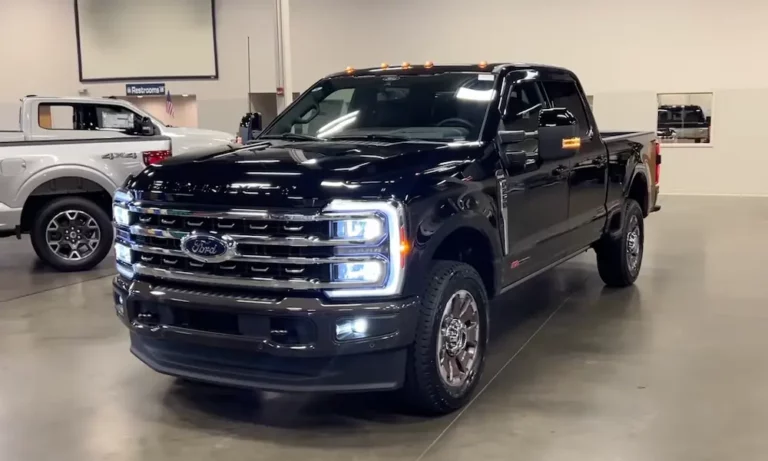
Is your Ford F250 letting you down with trailer lights that refuse to cooperate? It’s frustrating when you’re ready to hit the road but your trailer’s running lights, turn signals, or brake lights suddenly go dark. You’ve got cargo to haul and places to be – and non-working trailer lights can quickly turn into safety hazards and potential tickets.
Let’s cut through the confusion and get your trailer lights working again. I’ll walk you through the most common causes of trailer light failures specific to Ford F250 trucks and show you how to fix them yourself in most cases.
Why Your Ford F250 Trailer Lights Might Not Be Working
When your trailer lights fail, the problem typically falls into one of five categories:
1. Blown Fuses: The First Thing to Check
Blown fuses account for about 40% of all trailer light failures in Ford F250s. The fuse layout varies depending on your truck’s model year:
For 2017-2019 F250 models:
- Look for fuse #42 (40A) in the engine compartment power distribution box that protects the trailer tow lighting module
- Check fuse #18 (trailer park lamp relay) and fuse #37 (trailer tow battery charge relay)
For 2020-2022 F250 models:
- Check fuse #10 (30A) that controls trailer tow park lamps
- Examine fuse #44 (40A) that protects the trailer tow lighting module
- The 2022 model has a dedicated fuse #43 (10A) for trailer backup lamps
For older F250s (1999-2016):
- Look in the power distribution box near the brake master cylinder
- Check fuse #4 (20A for backup/park lamps) and fuse #8 (15A for brake illumination)
- 2007 models use fuse #100 (30A) for trailer turn signals
Fuses typically blow when you’ve been towing heavy loads or after your connector has been exposed to moisture. Always replace blown fuses with ones that match the original amperage rating.
2. Bad Ground Connections: The Silent Culprit
Poor grounding is responsible for about 35% of trailer light issues. The white ground wire in your 7-way connector needs a solid, low-resistance connection to your truck’s chassis.
Common ground-related problems include:
- Corroded socket contacts: Moisture and road salt build up in the 7-way socket, creating resistance
- Faulty chassis ground points: Paint or debris on grounding surfaces disrupts electrical continuity
- Broken harness grounds: Fraying or corrosion in the ground wire between connector and frame
Here’s a quick test: Use a multimeter to compare voltage between the 7-way ground pin and a direct chassis ground. A difference suggests a ground problem.
3. Damaged Wiring Harness: The Hidden Breakdown
The wiring harness in your Ford F250 is vulnerable to damage in three key spots:
- Behind the 7-way connector: Vibration and exposure to debris often break wires where they enter the connector
- Along the frame rail: Wires can rub against sharp edges or get damaged by heat from the exhaust system
- At module connections: Loose terminals at the Trailer Brake Control module can trigger fault warnings
Inspect these areas carefully for signs of wear, breaks, or pinched wires.
| Harness Damage Location | Signs to Look For | Fix Difficulty |
|---|---|---|
| 7-way connector rear | Broken insulation, exposed wire | Easy |
| Frame rail routing | Abraded sections, melted insulation | Moderate |
| Module connections | Loose pins, corrosion | Moderate |
4. LED Compatibility Issues: The Modern Problem
If your trailer has LED lights, you might face compatibility issues with your Ford’s Smart Trailer Tow Module. This is especially common in 2020+ models.
The module expects the electrical resistance of traditional incandescent bulbs. When it detects the lower resistance of LEDs, it may shut down circuits thinking there’s a short.
Solutions include:
- Installing load resistors on the trailer’s turn signal circuits
- Using a 7-way adapter with built-in resistance compensation
5. Connector Corrosion: The Exposure Effect
The 7-way connector on your Ford F250 is constantly exposed to the elements. Over time, the metal contacts can corrode, creating high resistance that prevents proper current flow.
Signs of connector corrosion include:
- Green or white powdery substance on pins
- Intermittent light function that changes when you wiggle the connector
- Some lights working while others don’t
Step-by-Step Diagnostic Process for F250 Trailer Lights
When troubleshooting your F250’s trailer lights, follow this systematic approach:
Step 1: Verify Fuse Integrity
- Locate your truck’s engine compartment fuse box (check your owner’s manual for the exact location)
- Identify the trailer-related fuses using the charts above
- Visually inspect each fuse for breaks in the metal strip
- For a more thorough check, use a multimeter to test continuity across each fuse
- Replace any blown fuses with OEM-specified ratings
Step 2: Test Ground Connections
- Disconnect your trailer from the truck
- Using a multimeter, measure resistance between the 7-way ground pin (usually the white wire) and a good chassis ground point
- Readings above 0.5 ohms indicate a problem with the ground connection
- Clean the 7-way socket with electrical contact cleaner and a wire brush
- Check that the ground wire has a solid connection to the truck’s frame
Step 3: Check Voltage at the Connector
For this test, you’ll need a circuit tester or multimeter:
- With your trailer disconnected, turn on your truck’s headlights
- Test the following pins in your 7-way connector:
- Brown wire (running lights): Should show 12V with headlights on
- Yellow/Green wires (turn signals): Should show pulsing 12V when signals activated
- Red wire (brake lights): Should show 12V when brakes applied
Step 4: Inspect the Wiring Harness
- Look for physical damage along the entire length of the harness
- Pay special attention to areas where the wiring passes near moving parts or hot components
- Check for pinched wires where the harness passes through tight spaces
- Inspect for water intrusion at connector points
Step 5: Perform an Isolation Test
Connect a known working trailer or a trailer light tester to your truck. If the problem persists, the issue is likely with your truck. If the lights work correctly, the problem is with your trailer.
Common F250-Specific Trailer Light Problems (By Model Year)
Different F250 model years have their own quirks when it comes to trailer lighting:
2017-2019 F250 Models
These trucks use a trailer tow lighting module that can sometimes get confused after disconnecting the trailer. The fix is simple:
- Disconnect the trailer
- Turn off the truck completely
- Wait 30 seconds
- Restart the truck
- Reconnect the trailer
This resets the module and often solves intermittent lighting issues.
2020-2022 F250 Models
The newer models use a Smart Trailer Tow Module that can be more finicky with LED lights. If you’re using LED trailer lights:
- Check if your module is the latest version
- Consider installing load resistors on each LED circuit
- Look for a “TBC FAULT” message on your dash that indicates a module issue
Older F250 Models (1999-2016)
The older trucks have simpler wiring but are more prone to connector issues:
- Check for corrosion in the 7-way socket
- Verify the trailer fuses in the power distribution box
- Look for broken ground connections at the hitch
DIY Fixes for Ford F250 Trailer Light Problems
Many trailer light issues can be fixed with basic tools and a little know-how:
Cleaning Corroded Connectors
- Disconnect the trailer and turn off the truck
- Spray electrical contact cleaner into the 7-way socket
- Use a small wire brush to gently scrub the contacts
- Apply dielectric grease to the pins before reconnecting
Repairing Ground Connections
- Locate the ground wire (usually white) at the 7-way connector
- Follow it to where it connects to the truck’s frame
- Remove the connection point, sand the metal surface until shiny
- Reattach the ground wire, ensuring a tight connection
- Apply dielectric grease to prevent future corrosion
Installing LED Compatibility Resistors
If your trailer has LED lights, install load resistors:
- Purchase LED load resistors rated for automotive use
- Connect them in parallel with each LED light circuit
- Mount the resistors to a metal surface (they get hot!)
- Secure all connections with heat-shrink tubing
Professional Repairs: When DIY Isn’t Enough
Sometimes trailer light problems require professional diagnosis, particularly if:
- The truck’s Smart Trailer Tow Module needs replacement
- There’s damage to the internal wiring harness
- The issue involves the truck’s computer or CAN-BUS system
In these cases, take your F250 to a Ford dealer or a qualified trailer specialist.
Preventative Maintenance For F250 Trailer Connections
Keep your trailer lights working reliably with these preventative steps:
- Apply dielectric grease to connector pins every 3-4 months
- Keep a protective cap on your 7-way connector when not in use
- Inspect your wiring harness annually for wear or damage
- Test all trailer functions before each trip
- Carry spare fuses that match your truck’s specifications
For 2020+ F250 owners with Smart Trailer Tow Modules, perform a system check through your truck’s information display before each towing trip.
The Trailer Light Essentials Kit for F250 Owners
Create a simple toolkit to keep in your truck for trailer light emergencies:
- Assorted fuses matching your truck’s specifications
- Dielectric grease
- Basic multimeter
- Wire brush for cleaning connections
- Electrical tape and zip ties
- Small container of electrical contact cleaner
With these tools and the knowledge from this guide, you’ll be prepared to handle most trailer light issues that might arise with your Ford F250.
Remember that functioning trailer lights aren’t just convenient – they’re required by law and essential for safety. Taking the time to properly maintain your connections and quickly address any problems will ensure many trouble-free miles of towing.