Shopping for tires on a budget? You’ve probably stumbled across Laufenn and wondered if they’re legit or just another sketchy bargain brand. Here’s the deal: Laufenn isn’t your typical cheap tire—it’s made by Hankook, a massive Tier-1 manufacturer. But “good” depends entirely on where you live and how you drive. Let’s dig into what you’re actually getting for your money.
What Makes Laufenn Different From Other Budget Tires
Laufenn isn’t some mystery brand cranked out in a sketchy factory. It’s Hankook’s strategic answer to capturing the value market without cheapening their main brand name.
Since 2014, Laufenn has operated as Hankook’s “associate brand”—think of it like Toyota and Lexus, but in reverse. You’re getting Hankook’s engineering, testing facilities, and manufacturing standards, just with a different name slapped on the sidewall.
The tires come from the same state-of-the-art facilities in Indonesia and Hungary that produce Hankook’s premium lines. They’re developed at Hankook’s Technical Centre in Germany and tested in Korea. This isn’t basement-level quality control.
The Real Cost Difference: Laufenn vs. Hankook
Here’s where it gets interesting. Let’s talk actual numbers.
For a 255/55R18 tire, you’ll pay $163.97 for the Laufenn X Fit HP versus $202.99 for the equivalent Hankook Dynapro HP2. That’s $39 per tire, or roughly $160 for a full set.
Price Comparison: Laufenn vs. Hankook
| Tire Size | Laufenn Model | Laufenn Price | Hankook Model | Hankook Price | Savings Per Set |
|---|---|---|---|---|---|
| 255/55R18 | X Fit HP | $163.97 | Dynapro HP2 | $202.99 | $156 |
| 35×12.50R20 | X FIT AT | $377.97 | Dynapro AT2 Xtreme | $417.99 | $160 |
That $160 isn’t random—it’s the price of specific performance trade-offs that Hankook engineers deliberately built into the design. You’re making a calculated swap: take the manufacturing quality and keep the cash, but accept you’re not getting cutting-edge rubber compounds.
How Laufenn Performs in Dry Conditions
In dry weather, Laufenn tires punch way above their weight class.
The X FIT HT highway tire dominated Tire Rack’s dry testing. It delivered test-leading grip and stopped 6 feet shorter than its closest competitor in 50-0 mph braking tests. The steering felt precise and the handling was surprisingly athletic.
The S FIT AS performance tire shows similar dry-weather competence. Testers noted precise steering with good feedback, and drivers report it handles confidently through corners—at least when the pavement’s dry.
For everyday commuting in sunny climates, these tires feel genuinely good. You’re not sacrificing comfort or handling for the price savings.
The Wet Weather Problem You Need to Know About
Here’s where things get sketchy. Laufenn’s all-season tires have a consistent, documented weakness in wet conditions.
That same X FIT HT that crushed the dry braking test? In wet conditions, it needed an extra 10 feet to stop compared to the test leader. Ten feet isn’t a minor difference—it’s the gap between stopping safely and rear-ending someone.
The S FIT AS performance tire showed “limited traction” in wet testing. When pushed to the limit, the front end would “dissolve into understeer.” Translation: the tires stop gripping exactly when you need them most.
Real drivers confirm this. One owner reported they “ended up sideways when it was raining pretty lightly”. Another literally spun into a ditch during light rain.
The engineering makes sense: Hankook uses harder rubber compounds that excel in dry conditions and probably last longer, but they can’t chemically grip wet pavement like softer, premium compounds do.
What About Snow Performance?
Let’s be brutally honest: Laufenn’s “all-season” passenger tires are terrible in snow.
Owners describe the winter performance as “abysmal”. One driver reported “very, very little traction in even the lightest dusting of snow”. The all-season label is misleading—these are really three-season tires for spring, summer, and fall.
Don’t confuse this with Laufenn’s dedicated winter tire, though. That’s a completely different story.
The Exception: Laufenn’s Winter and All-Terrain Tires
Laufenn makes two tire types that actually deliver solid value without the same compromises.
I FIT Ice Winter Tire
The I FIT Ice is a dedicated, studdable winter tire with a specialized cold-weather compound and aggressive siping. It’s designed to stay flexible below 40°F—the exact opposite of their all-season compounds.
Owners in Chicago and Minneapolis report “excellent traction” on ice and snow. One driver said they’d “100% recommend” them after using them for snow plowing.
They’re not premium Bridgestone Blizzaks, but they’re incredibly cheap for a studdable tire and get the job done safely.
X FIT AT All-Terrain Tire
The X FIT AT is Laufenn’s standout product. Based on 924,000 miles of owner data, it scores 8.6/10 for wet traction and 9.0/10 for dry traction. A whopping 94% of drivers would recommend it.
Why does this tire succeed in wet conditions when the others fail? It uses deep, blocky tread elements that provide mechanical grip by biting through water, plus it likely has a more robust rubber compound designed for off-road durability.
Drivers report it “handles well wet or dry” with minimal wear after 10,000 miles. The trade-off? It’s loud at highway speeds and rides firmer than a highway tire.
Laufenn Performance Summary
| Tire Model | Best For | Dry Performance | Wet Performance | Snow Performance | Value Rating |
|---|---|---|---|---|---|
| S FIT AS | Dry climates | Excellent | Poor | Abysmal | Good for specific use |
| X FIT HT | Dry highway driving | Excellent | Poor | Not recommended | Good for specific use |
| X FIT AT | Trucks/SUVs | Excellent | Excellent | Good | Outstanding |
| I FIT Ice | Winter only | N/A | N/A | Excellent | Outstanding |
Who Should Actually Buy Laufenn Tires
Laufenn makes sense for specific drivers, not everyone.
You’re a Good Candidate If:
You live in a dry climate. If you’re in Southern California, Arizona, or Texas where heavy rain is rare and snow doesn’t exist, Laufenn delivers 90% of the performance at 60% of the cost. The wet-weather weakness barely matters.
You’re willing to run two sets. Smart drivers in Chicago or Minneapolis can buy S FIT AS for summer and I FIT Ice for winter. You’ll get better year-round performance than any all-season tire, often for less total money than one set of premium all-weather tires.
You need all-terrain capability. The X FIT AT is a legitimate high-value performer that doesn’t compromise safety for cost.
You Should Avoid Laufenn If:
You expect one tire to handle everything. If you live in the Pacific Northwest or Midwest and want your “all-season” tire to actually work in rain and snow year-round, these will disappoint and potentially put you at risk.
You drive aggressively. The vague feeling at the limit and tendency to lose grip suddenly makes these unsuitable for spirited driving, especially in anything but perfect conditions.
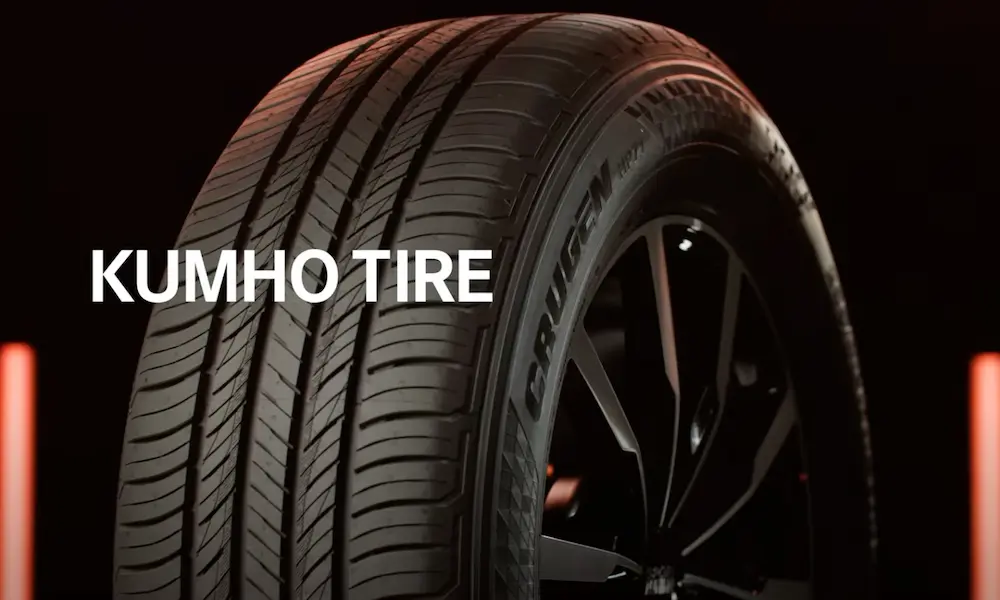
You want peace of mind. If $160 in savings isn’t worth the anxiety of knowing your tires have documented wet-weather weaknesses, spend the extra money. Brands like Kumho, General Tire, or mainline Hankook offer proven all-weather performance for just a bit more.
The Bottom Line on Laufenn Quality
So, are Laufenn tires good? It’s the wrong question. The right question is: are they good for you?
Laufenn isn’t a scam brand—you’re getting legitimate Hankook manufacturing quality and impressive dry-road performance. The ride is comfortable, the build quality is solid, and in the right conditions, they feel like tires costing twice as much.
But you’re making a specific trade. That $160 savings comes with measurably worse wet braking and laughably bad snow traction in their all-season models. This creates a dangerous false confidence: the tires feel great 90% of the time, then suddenly betray you when conditions deteriorate.
For the dry-climate commuter or the savvy two-set driver, Laufenn is genuinely smart money. For the one-tire-fits-all driver in a rainy or snowy region, those savings could cost you way more than $160 when you’re standing in the rain waiting for a tow truck—or worse.
Know what you’re buying, know what you’re giving up, and make the call that matches your actual driving conditions. That’s the only way Laufenn becomes a “good” tire.