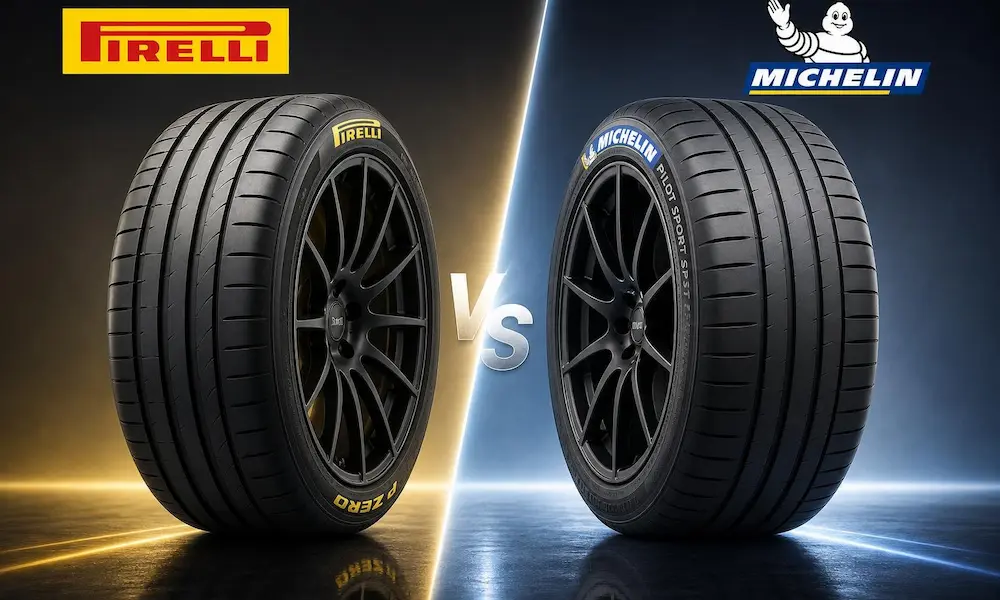
Looking for premium tires but wondering if Michelin’s higher price tag is worth it? You’re about to discover what makes these tires stand out from the competition and whether they deserve their reputation for excellence. This in-depth review covers everything from performance and durability to value—helping you decide if Michelin should be your next tire purchase.
What Makes Michelin Tires Different?
Michelin has built a stellar reputation over 130+ years in the tire industry. Consumer Reports has consistently rated Michelin as the top tire brand with an overall score of 71 out of 100. But what’s behind these impressive ratings?
The brand excels in three key areas:
- Exceptional longevity
- Superior wet weather performance
- Consistent build quality
These strengths come at a premium price—typically 15-30% higher than comparable competitors. But many drivers find the long-term benefits outweigh the initial investment.
Impressive Longevity That Saves Money Long-Term
Michelin’s most significant advantage is their outstanding tread life. The Michelin Defender 2 leads Consumer Reports’ testing with a projected tread life of 100,000 miles—the highest of any tire tested.
This isn’t just marketing hype. Real-world testing shows that the Michelin CrossClimate2 outlasted the Bridgestone WeatherPeak by more than 36,000 miles in controlled testing, delivering nearly twice the tread life. One consumer reported driving 85,000 miles on CrossClimate2 tires while maintaining adequate tread depth.
What’s their secret? Two key technologies:
- Full-depth sipes that extend through the entire tread block (not just surface layers like many competitors)
- C3M Technology that combines flexibility with precision manufacturing for more uniform wear patterns
Wet Weather Performance: Where Michelin Truly Shines
If safety in rainy conditions matters to you, Michelin delivers impressive results. The CrossClimate2 dominated Car and Driver’s all-weather tire test, finishing at the top of every objective wet performance measurement.
Professional testing reveals Michelin tires typically stop 1-3 meters shorter than competitors in wet braking tests—a difference that could prevent an accident.
This wet-weather superiority comes from:
- EverGrip Technology with expanding rain grooves that widen as the tire wears
- Advanced silica-infused compounds that maintain flexibility in wet conditions
- V-shaped tread patterns that excel at water evacuation
Dry Performance: Strong But Not Unbeatable
While Michelin performs admirably in dry conditions, this is an area where some competitors occasionally match or slightly exceed their performance.
The Michelin Pilot Sport 4S delivers exceptional dry grip and handling precision for high-performance applications. However, some competitors like Continental or Bridgestone may offer marginally superior ultimate dry grip in specific testing scenarios.
The trade-off is intentional—Michelin prioritizes balanced performance across all conditions rather than excelling in just one area.
Model-Specific Performance: Finding Your Perfect Match
CrossClimate2: The All-Weather Champion
The CrossClimate2 represents Michelin’s most acclaimed all-weather tire, earning widespread professional praise and high consumer satisfaction. It offers exceptional versatility by:
- Performing competitively in dry conditions
- Dominating wet weather testing
- Handling light snow effectively
- Lasting 60,000-70,000 miles for many users
Its distinctive V-shaped tread pattern and dual-compound construction provide year-round capability without requiring seasonal tire changes—a convenience that helps justify the premium price for many drivers.
Pilot Sport 4S: For Performance Enthusiasts
The Pilot Sport 4S targets high-performance vehicles requiring maximum grip. Professional testing reveals:
- Exceptional steering response
- Outstanding cornering stability
- Superior braking in both dry and wet conditions
This tire incorporates racing-derived technology from Michelin’s involvement in the 24 Hours of Le Mans. Consumer feedback praises the performance characteristics but notes that comfort and tread life are less impressive than in Michelin’s touring models.
Defender 2: The Everyday Champion
The Defender 2 is Consumer Reports’ top-rated all-season tire for cars and small SUVs. It emphasizes:
- Exceptional longevity (100,000-mile projected tread life)
- Excellent everyday usability
- Solid performance across all weather conditions
- Enhanced comfort and low noise levels
The impressive tread life provides excellent long-term value despite higher upfront costs.
What Consumers Love About Michelin Tires
Analysis of over 10,000 consumer reviews shows high satisfaction across most categories. Ninety percent of consumers would recommend Michelin tires to others, with 92% rating durability positively.
Common praise points include:
- Exceptional longevity: Many report mileage significantly exceeding warranty expectations
- Wet weather confidence: Drivers note improved safety and control in rain
- Build quality: Few reports of defective tires or quality control issues
- Consistent performance: Reliable handling characteristics across the tire’s lifespan
Common Complaints About Michelin Tires
Not everything is perfect. Consumer criticisms include:
- Price sensitivity: About 25% of reviewers question value relative to competitors
- Road noise: Some models receive complaints about noise, particularly on certain road surfaces
- Ride comfort: Performance-oriented models sometimes feel firmer than comfort-focused competitors
Customer service experiences vary, with some consumers reporting difficulty with warranty claims. However, these negative experiences represent a small minority of overall feedback.
Are Michelin Tires Worth The Extra Money?
This is where things get interesting. Michelin tires typically cost 15-30% more than equivalent models from competitors like Bridgestone, Continental, or Goodyear. However, the superior tread life often results in better cost-per-mile economics.
| Tire Brand | Initial Cost (avg) | Expected Mileage | Cost per 1,000 Miles |
|---|---|---|---|
| Michelin | $225 | 70,000 miles | $3.21 |
| Competitor | $175 | 45,000 miles | $3.89 |
Additionally, fuel efficiency benefits from Michelin’s low rolling resistance designs can provide 1-2% improved fuel economy compared to higher rolling resistance competitors—creating meaningful savings over the tire’s lifespan.
How Michelin Compares To Other Premium Brands
While Michelin leads in longevity and wet performance, competitors excel in specific areas:
- Bridgestone: Often matches Michelin in dry performance with slightly lower pricing
- Continental: Provides excellent wet performance at competitive pricing
- Goodyear: Strong all-around performer with good winter capabilities
- Nokian: Excels in winter conditions
Few competitors match Michelin’s combination of longevity, wet performance, and overall quality consistency.
The Technology Behind Michelin’s Performance
Michelin invests heavily in research and development—significantly more than most competitors. This results in continuous technological advancement through:
- The Laurens Proving Ground for extensive testing
- Manufacturing innovations like C3M Technology
- Exclusive compounds and tread designs
- Rigorous quality control standards
These advantages translate directly to consumer benefits in the form of longer-lasting, better-performing tires.
Best Michelin Tires For Different Vehicles And Needs
For Everyday Sedans And Small SUVs
If you drive a typical passenger car or small SUV, these options offer the best balance:
- Michelin Defender 2: Best for maximum longevity and value
- Michelin CrossClimate2: Best for all-weather versatility
- Michelin Primacy Tour A/S: Best for comfort and quiet ride
For Performance And Sports Cars
Performance enthusiasts should consider:
- Michelin Pilot Sport 4S: Excellent for street driving and occasional track use
- Michelin Pilot Super Sport: Maximum dry grip for serious performance
- Michelin Pilot Sport All Season 4: Best for performance in variable weather
For Trucks And Large SUVs
Larger vehicles have different needs:
- Michelin Defender LTX M/S: Best for longevity and all-season capability
- Michelin LTX A/T2: Best for light off-road use while maintaining on-road comfort
- Michelin Agilis CrossClimate: Best for commercial applications and heavier loads
Real-World Longevity: Do Michelin Tires Actually Last Longer?
This is where Michelin truly separates itself from competitors. Multiple studies have documented the superior longevity:
- Michelin CrossClimate2 tires outlasted comparable all-weather tires by 25,000+ miles
- The Defender series consistently achieves 70,000-90,000 miles in real-world use
- Even Michelin’s performance tires typically outlast competitors by 15-20%
This longevity stems from Michelin’s manufacturing precision, advanced compounds, and tread designs that promote even wear throughout the tire’s life.
Are There Drawbacks To Michelin Tires?
While Michelin excels in many areas, potential drawbacks include:
- Higher initial cost: The premium pricing can be a barrier for budget-conscious shoppers
- Comfort trade-offs: Some models prioritize performance over maximum comfort
- Not always the best specialist: Other brands might perform better in specific niches (like dedicated winter or off-road applications)
Additionally, some drivers report that certain Michelin models produce more road noise than expected, particularly on concrete highways or as they approach replacement time.
Making The Right Purchase Decision
When deciding if Michelin tires are right for you, consider:
- Your driving priorities: If longevity and wet safety are top concerns, Michelin offers clear advantages
- Your budget timeline: The higher upfront cost delivers savings over time
- Your specific needs: Match the tire model to your vehicle and driving conditions
For most drivers who can afford the initial investment, Michelin tires provide excellent long-term value through their combination of performance, safety, and durability.
What Safety Data Shows About Michelin Tires
Safety is a crucial consideration in tire selection. According to NHTSA data, Michelin tires have:
- Lower defect rates than industry averages
- Fewer safety recalls than many competitors
- Consistent performance in independent safety testing
Particularly impressive is Michelin’s commitment to “performance when worn.” Their tires are designed to maintain safety characteristics even as they wear, with testing showing that worn Michelin tires often outperform new budget tires in wet braking tests.
The Environmental Impact Of Choosing Michelin
Michelin has made significant strides in sustainability, which might matter to environmentally conscious consumers:
- Their tires’ longer lifespan means fewer tires in landfills
- Lower rolling resistance reduces fuel consumption and emissions
- Manufacturing processes have reduced carbon footprint by over 22% since 2010
- The company has committed to using 100% sustainable materials by 2050
These environmental benefits provide another factor to consider when evaluating the total value proposition of Michelin tires.
Professional Driver Insights On Michelin Performance
Professional drivers and automotive journalists consistently praise Michelin tires for their balanced performance. Reviews highlight:
- Predictable handling at the limit
- Consistent performance characteristics through the life of the tire
- Excellent wet weather confidence
- Progressive breakaway characteristics that forgive driver errors
These qualities make Michelin a favorite among those who drive for a living—from taxi and rideshare drivers to professional racers and test drivers.
The Final Verdict: Are Michelin Tires Worth It?
Michelin tires justify their premium positioning through superior longevity, exceptional wet weather performance, and consistent quality. While the higher upfront cost may deter price-sensitive consumers, the combination of extended tread life, improved safety, and fuel efficiency benefits often provide superior long-term value.
For most consumers, Michelin’s reputation for excellence stems from measurable performance advantages rather than marketing hype. The extensive positive professional testing results and high consumer satisfaction ratings indicate that while Michelin tires cost more, they generally deliver commensurate value through superior performance and longevity.
Your decision should ultimately depend on your specific needs, driving habits, and budget constraints. If you value long-term reliability, safety, and quality consistency, Michelin tires represent a sound investment that typically delivers on their premium promises.