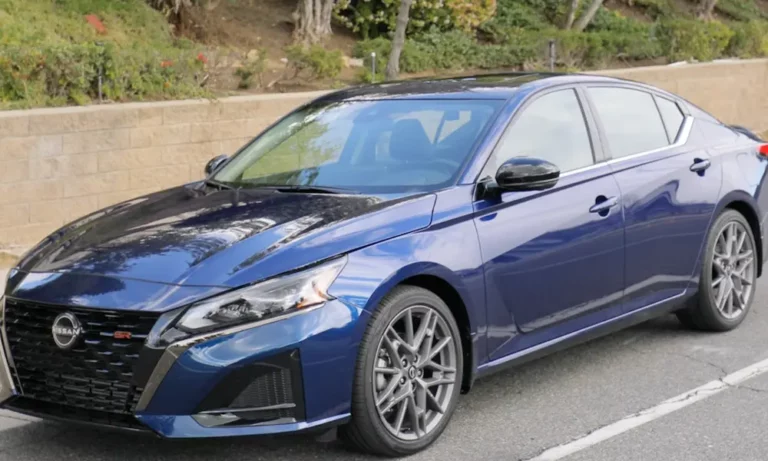
Thinking about a Nissan with a CVT transmission? You’re likely wondering if those horror stories about reliability issues are true or overblown. Whether you’re eyeing a used Altima or a brand-new Rogue, understanding what you’re getting into with Nissan’s CVT technology could save you thousands in unexpected repairs and headaches down the road.
What Are CVT Transmissions and Why Did Nissan Choose Them?
CVT stands for Continuously Variable Transmission, a design that uses a belt and pulley system instead of traditional fixed gears. Nissan began mass-adopting this technology in the early 2000s, making it standard in popular models like the Altima, Sentra, and Rogue.
Unlike conventional transmissions with set gear ratios, CVTs provide seamless acceleration without shifting. This design offers two main advantages:
- Improved fuel efficiency (typically 3-6% better than traditional automatics)
- Smoother driving experience without gear-change jolts
Nissan doubled down on this technology to meet growing fuel economy standards while delivering a comfortable ride. The problem? Early designs prioritized cost-effectiveness over durability, setting the stage for widespread reliability concerns.
The Evolution of Nissan’s CVT Reliability
Nissan’s CVT reliability varies significantly by generation and model year. Here’s how they’ve evolved:
Pre-2015 Models: The Trouble Years
The earliest widespread Nissan CVTs (2007-2014) have earned a notorious reputation. Models from this era show the highest failure rates, often developing serious problems before reaching 100,000 miles.
Common issues include:
- Transmission overheating during normal driving conditions
- Complete transmission failure requiring $3,500-$4,500 replacements
- Jerking, shuddering, and power loss during acceleration
These problems became so prevalent that Nissan extended the warranty to 10 years/120,000 miles for many affected vehicles following class-action lawsuits.
Models to approach with extreme caution include:
- 2007-2012 Nissan Sentra
- 2008-2013 Nissan Altima
- 2008-2014 Nissan Rogue
2015-2018: Incremental Improvements
Facing mounting criticism, Nissan implemented design changes after 2015:
- Wider steel belts to reduce slippage
- Enhanced cooling systems to prevent overheating
- Updated control module programming
These modifications reduced overall failure rates by approximately 30% compared to previous generations. However, consumer complaints remained significantly higher than industry averages, with many owners still experiencing premature failures around 60,000-80,000 miles.
2019-Present: Better But Not Perfect
Nissan’s newest CVTs incorporate further refinements:
- More sophisticated cooling mechanisms
- Improved fluid formulations
- Advanced software calibrations
While these changes have resulted in better reliability scores, current models still don’t match the dependability of competitors’ transmissions. JD Power reliability ratings show improvement but continue to place Nissan below industry averages for transmission dependability.
Common Nissan CVT Failure Symptoms to Watch For
If you own a Nissan with a CVT, be alert for these warning signs:
Early Warning Signs
- Whining or grinding noises: A high-pitched whine during acceleration often indicates belt wear
- Shuddering or vibration: Especially noticeable at low speeds or when accelerating from a stop
- Delayed response: Hesitation when pressing the gas pedal
- RPM fluctuations: Engine revving unexpectedly without corresponding speed increase
Advanced Problems
- Sudden loss of power: The transmission enters “limp mode” to prevent complete failure
- Check Engine light: Particularly when accompanied by transmission-related error codes
- Fluid leaks or burning smell: Indicates overheating or seal failures
- Complete inability to accelerate: The final stage before total transmission failure
If you notice these symptoms, immediate attention from a qualified mechanic is essential to prevent catastrophic failure.
The Technical Reasons Behind Nissan CVT Failures
Understanding why these transmissions fail helps explain their reliability issues:
Heat Management Problems
The root cause of many CVT failures is inadequate cooling. CVTs generate significant heat under normal operation, and Nissan’s early cooling systems couldn’t effectively dissipate it.
This leads to:
- Transmission fluid breakdown (which should maintain viscosity up to 220°F)
- Warping of critical components
- Accelerated wear on belts and pulleys
In extreme cases, temperatures can reach dangerous levels during everyday driving scenarios like climbing hills or towing light loads.
Belt and Pulley Wear
Nissan CVTs rely on a steel belt running between two pulleys to transfer power. This system:
- Experiences constant friction
- Requires precise tension and alignment
- Depends on clean, high-quality fluid for lubrication
When any part of this system degrades—whether from heat, poor maintenance, or manufacturing defects—the belt begins slipping. This creates a cascade effect that rapidly accelerates damage to the entire transmission.
Control Module Issues
The Transmission Control Module (TCM) manages the complex hydraulic systems within the CVT. Software glitches or electronic failures can cause:
- Improper pressure regulation
- Erratic shifting behavior
- Failure to respond appropriately to driving conditions
Even with mechanical components in good condition, TCM problems can render the transmission unreliable or completely non-functional.
How Nissan’s CVT Reliability Compares to Competitors
To put Nissan’s CVT reliability in perspective, here’s how it stacks up against other manufacturers:
| Manufacturer | CVT Design Type | Average Failure Rate (within 100k miles) | Notable Differences |
|---|---|---|---|
| Nissan | Steel belt-driven | 8-12% | Higher failure rates, especially in older models |
| Honda | Chain-driven CVT | 2-3% | More durable chain design, better cooling |
| Toyota | Hybrid-integrated | 1-2% | Uses planetary gears with CVT principles |
| Subaru | Chain-driven | 3-5% | Better reliability but still some overheating issues |
Consumer Reports data consistently ranks Honda and Toyota transmissions as 1.5 times more reliable than Nissan’s, with fewer reported problems across all vehicle age groups.
The key distinction: competitors typically use more robust designs with better heat management systems, even when employing CVT technology.
Maintenance Tips to Extend Your Nissan CVT’s Lifespan
If you already own a Nissan with a CVT, these maintenance practices can significantly improve your transmission’s longevity:
Fluid Changes: The Single Most Important Maintenance Item
While Nissan originally claimed their CVT fluid was “lifetime,” this proved dangerously incorrect. For maximum reliability:
- Change CVT fluid every 30,000-50,000 miles (more frequently in severe driving conditions)
- Always use genuine Nissan NS-3 fluid (generic alternatives lack crucial friction modifiers)
- Ensure proper fluid level during changes (overfilling is as damaging as underfilling)
A proper fluid change costs $200-300 but can prevent premature failure worth thousands in repairs.
Cooling System Upgrades
For older Nissans or vehicles operated in hot climates, consider:
- Aftermarket transmission coolers ($150-300 plus installation)
- Higher capacity radiators if the vehicle uses an integrated cooling system
- Monitoring transmission temperature with an OBD scanner
These modifications can reduce operating temperatures by 20-30°F, substantially extending component life.
Driving Habits That Protect Your CVT
How you drive dramatically affects CVT reliability:
- Avoid aggressive acceleration whenever possible
- Let the transmission fully engage before accelerating from a stop
- Minimize towing (stay well below manufacturer limits)
- Come to a complete stop before shifting from reverse to drive
Gentle driving can help a Nissan CVT last well beyond 150,000 miles, while aggressive habits might cause failure before 60,000.
Real-World Reliability: What Owners Are Saying
Owner experiences provide valuable insights into actual CVT reliability:
The Good
Some owners report excellent experiences:
- “My 2015 Altima has 180,000 miles on the original CVT with just fluid changes every 40k miles.”
- “The newer CVTs (post-2018) seem much better. My Rogue has been flawless for 85,000 miles.”
These positive reports typically share common factors:
- Regular maintenance following recommended intervals
- Conservative driving habits
- Vehicles from more recent model years
The Bad
Negative experiences remain commonplace:
- “My 2013 Sentra’s CVT failed at 68,000 miles, just outside warranty. $3,800 repair.”
- “Three CVT replacements in our 2010 Altima before 120,000 miles. Never buying Nissan again.”
Online forums and reviews show certain models and years have extraordinarily high complaint rates, with some owners reporting multiple failures despite proper maintenance.
Financial Implications of Nissan CVT Ownership
The potential financial impact of CVT issues extends beyond repair costs:
Repair and Replacement Costs
When CVTs fail, they typically require complete replacement:
- Average replacement cost: $3,500-$4,500
- Rebuilt options: $2,200-$3,000 (with shorter warranties)
- Dealership vs. independent shop difference: approximately $800-1,200
These costs often approach or exceed the value of older vehicles, making repairs economically impractical.
Impact on Resale Value
Nissan models known for CVT problems suffer significant resale devaluation:
- 15-20% lower resale value compared to segment competitors
- Faster depreciation curves, especially after 5-7 years
- Difficulty selling privately once models exceed 100,000 miles
This resale penalty represents a hidden cost of ownership even if your specific transmission never fails.
Should You Buy a Nissan with a CVT Transmission?
Based on comprehensive reliability data, here’s a practical buying guide:
Consider a Nissan With CVT If:
- You’re purchasing a 2019 or newer model (ideally with remaining factory warranty)
- The vehicle has complete maintenance records showing regular fluid changes
- You drive conservatively and don’t need to tow
- The price reflects the added risk compared to competitors
- You plan to trade in before reaching 100,000 miles
Look For Alternative Options If:
- You’re considering any pre-2015 Nissan with a CVT (especially high-risk models)
- The vehicle lacks maintenance records or shows signs of aggressive driving
- You need exceptional reliability for high-mileage driving or commercial use
- The price doesn’t account for potential transmission replacement costs
- You plan to keep the vehicle beyond 100,000 miles
For many buyers, the fuel economy benefits don’t outweigh the reliability risks, particularly when competitors offer similar efficiency with better transmission durability.
The Future of Nissan CVT Reliability
Nissan continues working to improve their CVTs, but questions remain about long-term durability:
Recent Improvements
Nissan has implemented significant changes:
- Redesigned cooling systems in 2021+ models
- More durable belt materials and manufacturing processes
- Comprehensive software updates addressing shift behavior
Early data suggests these changes are yielding better reliability metrics, though long-term performance remains unproven.
Lingering Concerns
Despite improvements, fundamental design limitations persist:
- The basic belt-and-pulley system remains susceptible to wear
- Heat management continues to be challenging in extreme conditions
- The complexity of CVT design makes repairs difficult and expensive
Industry analysts remain divided on whether Nissan’s current generation CVTs will ultimately prove reliable over extended timeframes.
The Bottom Line on Nissan CVT Reliability
Nissan’s CVT transmissions have earned their problematic reputation through years of documented issues across multiple vehicle lines. While newer models show improvement, they still lag behind industry leaders in transmission reliability.
For current owners, proactive maintenance—particularly regular fluid changes—offers the best protection against premature failure. For prospective buyers, the decision should balance purchase price advantages against potential repair costs and resale penalties.
The most reliable approach? Consider alternatives with conventional automatic transmissions or hybrids, or limit your search to the most recent Nissan models with comprehensive maintenance records and remaining factory warranty coverage.