You’re staring at ice-covered roads wondering if those metal-spiked tires are really worth the extra cash and hassle. Here’s the truth: studded tires excel on ice but come with serious trade-offs. Let’s break down when they’re brilliant and when they’re just expensive overkill.
What Makes Studded Tires Different
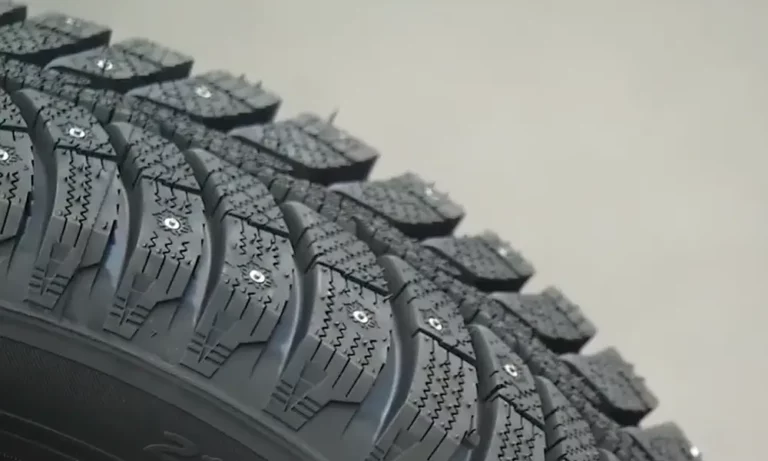
Studded tires aren’t your typical winter rubber. They’ve got small metal studs—usually tungsten carbide—poking through the tread. These little metal teeth physically bite into ice, giving you grip where regular tires just spin.
Most road-legal studded tires pack between 130 to 250 studs per tire. The studs stick out about 4 millimeters beyond the rubber surface, using your vehicle’s weight to dig into icy terrain. It’s a mechanical advantage that chemistry alone can’t match.
Think of it this way: studless tires rely on special rubber compounds to grip ice. Studded tires actually stab into it. Different approaches, different results.
The Ice Performance That Turns Heads
Here’s where studded tires earn their reputation. Testing shows jaw-dropping differences in stopping distance on ice.
At near-freezing temps (-5°C), studded winter tires stopped in just 29 meters. Studless winter tires? A whopping 54 meters—that’s 25 extra meters of sliding. You could park six cars in that gap.
From 30 km/h (about 19 mph) on pure ice:
- Studded tires: 22.6 meters
- Studless winter tires: 27.2 meters
- All-season tires: 34 meters
Temperature matters too. Russian research found that at -20°C, studless tires actually beat studded ones (32 meters vs. 38 meters). But when temps hover near freezing and ice gets slick? Studded tires dominate.
This explains why they’re perfect for coastal areas and regions with constant freeze-thaw cycles. That’s when ice is at its slipperiest and most dangerous.
Better Cornering on Slick Stuff
Modern studded tire designs spread studs across the entire tread face instead of boring rows. You get better side-to-side grip for navigating icy intersections and treacherous mountain passes where black ice loves to hide.
The Downsides Nobody Mentions Enough
Studded tires aren’t all glory. They’ve got some real problems you need to know about.
Bare Pavement Becomes Your Enemy
Those helpful metal studs? They turn into a liability on dry roads. The studs actually lift the rubber slightly off the pavement, reducing your contact patch. Less rubber touching the road means worse traction.
Studies show increased stopping distances on concrete pavement compared to unstudded tires. You’re literally worse off when roads are clear—which they are most of the time in many areas.
Wet Roads and Hydroplaning Risk
Here’s a danger many folks miss: studded tires increase your hydroplaning risk. Because the studs elevate your tread and shrink the rubber contact patch, water evacuation suffers.
Drivers in Newfoundland reported that studded tires perform “terrible in a situation where there is ice covered in slush/water”. The very conditions you’d think they’d handle well.
Washington State research found another problem: drivers with studded tires often get overconfident, driving faster and following closer. That’s asking for trouble.
The Noise Factor
That constant clicking sound of metal hitting pavement gets old fast. Electric vehicle owners especially hate it since they’re used to whisper-quiet cabins. Some manufacturers like Nokian have improved stud design to reduce noise, but studded tires remain noticeably louder.
Your Wallet Takes a Hit
Studded tires cost $15-50 more per tire than comparable studless models. Premium options run $124-342 per tire depending on size.
But there’s more. Research shows highway fuel consumption increases roughly 5% with studded tires due to extra rolling resistance. For typical drivers, that’s $50-100 annually in extra gas.
The Road Damage Problem Is Real
This is where things get serious. Engineering research conclusively shows that tire studs damage both asphalt and concrete, eventually forming ruts through a process called “raveling.”
Numbers Don’t Lie
University of Alaska-Anchorage research found something shocking: rutting from passenger cars with studded tires actually exceeds damage from heavy truck axle loads.
On freeways, studded passenger vehicles caused 0.0116 inches of wear per 100,000 vehicles. Heavy trucks? Only 0.0049 inches per 100,000. Let that sink in.
The Price Tag for Everyone
Alaska faces $13.7 million in annual damage costs—42 times what the state collects in studded tire fees ($318,000 yearly). The 20-year projected cost? A staggering $203.2 million.
Washington State takes a $16 million annual hit to state highways. Oregon estimates $8-10 million yearly. Each studded tire causes roughly $8 in pavement damage per year.
Here’s the kicker: all taxpayers foot this bill, not just studded tire users. You’re subsidizing road repairs even if you don’t use them.
Legal Restrictions Vary Wildly
This patchwork of regulations significantly affects whether studded tires are even practical for you.
United States Rules
Only seven states allow year-round use: Alaska, Colorado, Kentucky, New Hampshire, New Mexico, Vermont, and Wyoming.
Several states completely ban metal studded tires: Hawaii, Illinois, Louisiana, Michigan, Minnesota, Mississippi, Texas, and Wisconsin.
Most states permit studded tires only during specific months:
- Washington: November 1 – March 31
- California: November 1 – April 30
Violating these dates can result in fines and liability issues if you’re in an accident.
Canadian Regulations
Canada’s rules vary by province. Alberta, Saskatchewan, Northwest Territories, Nunavut, and Yukon have no restrictions.
British Columbia and Manitoba allow studded tires October 1 – April 30. Quebec permits them October 15 – May 1.
Ontario’s weird: prohibited in Southern Ontario but allowed in Northern Ontario (specific districts only) from September 1 – May 31. Only lightweight Scandinavian-style studs are acceptable.
British Columbia adds a twist: if you use studded tires on front wheels, you must use them on rear wheels too. Maximum stud height is 3.5mm.
Modern Studless Tires Are Seriously Good Now
Technology has changed the game. Premium studless winter tires now compete with studded tires in ways that seemed impossible a decade ago.
Rubber Science Gets Sophisticated
Modern studless tires use advanced compounds that stay flexible way below freezing. High-silica formulations and specialized polymers let the rubber conform to microscopic ice surface irregularities, creating friction through chemistry instead of mechanical penetration.
Top performers include:
- Michelin X-Ice Snow
- Nokian Hakkapeliitta R5
- Bridgestone Blizzak WS90
- Continental VikingContact 7
The Bridgestone Blizzak series features a multi-cell compound that removes the thin water film on ice surfaces, dramatically boosting grip.
Tread Design That Actually Works
Premium studless tires pack thousands of sipes—tiny slits in the rubber—that create biting edges. Modern designs feature 3D interlocking sipes, zigzag patterns, and multi-directional grooves providing traction in all directions while keeping tread blocks rigid.
Performance Gap Is Closing Fast
A YouTube comparison test on a frozen lake showed the Nokian Hakkapeliitta R2 (studless) was only 5 seconds slower than the Hakkapeliitta 9 (studded) in timed driving. That’s remarkably close.
Finnish magazine Moottori’s 2025 testing revealed something interesting: cheaper studded tires can actually be less safe on ice than high-quality studless tires. Sparse studding, improper installation, or mediocre rubber compounds make the difference.
When Studded Tires Actually Make Sense
Despite the drawbacks, studded tires remain the best choice for specific situations.
Geographic Sweet Spots
Coastal regions where fog condenses into water that freezes on roads—creating sneaky black ice—are studded tire territory. Areas near rivers and mountain passes where shadows prevent sun exposure until afternoon also benefit.
Regions with frequent freeze-thaw cycles get the most from studded tires. These temperature swings around freezing create the slick, wet ice where studded tires show their biggest advantage.
Rural drivers on unpaved or poorly maintained roads with ice and hard-packed snow, especially on hills, will appreciate the extra bite. Emergency responders, rural mail carriers, and anyone who can’t avoid travel in severe weather may find them essential.
Driving Patterns Matter
If your daily commute includes icy intersections, steep grades, or roads that rarely see plows and sand, studded tires offer measurable safety improvements.
Urban and suburban drivers on well-maintained routes that get prompt plowing and chemical treatment? Studless winter tires are probably adequate and way more practical.
Vehicle Type Considerations
Two-wheel-drive vehicles—especially rear-wheel-drive pickups—benefit more from studded tires than AWD or 4WD systems. But remember: even advanced traction control only works with the grip your tires provide.
Making Your Decision
Here’s a framework to figure out if studded tires are worth it for you.
Check Your Climate Reality
Do you regularly encounter icy roads or mostly snowy ones? Heavy snowfall with consistent cold temperatures favors studless tires, which excel in snow. Frequent ice, freezing rain, and temps fluctuating around freezing favor studded.
| Condition | Best Choice |
|---|---|
| Heavy snow, consistent cold | Studless winter tires |
| Frequent ice, freeze-thaw cycles | Studded tires |
| Black ice, coastal fog freezing | Studded tires |
| Well-maintained urban roads | Studless winter tires |
| Mixed conditions, variable weather | Premium studless tires |
Verify Legal Status First
Check your state or province’s specific dates for legal studded tire use before buying. Violating restrictions means fines and potential liability in accidents.
Run the Real Numbers
Studded tires cost more upfront ($15-50 extra per tire). Add the 5% fuel economy hit ($50-100 yearly for typical drivers). Factor in potential stud replacement if you lose some. You’ll also need storage during off-seasons.
Many places require seasonal tire changes to comply with studded tire dates, meaning you need a second set for non-winter use. Some underground parking facilities prohibit studded tires due to damage concerns.
Consider Alternatives
Before committing, look at whether premium studless winter tires meet your needs. The Michelin X-Ice Snow, Bridgestone Blizzak WS90, and Nokian Hakkapeliitta R5 offer exceptional winter performance with fewer restrictions.
Ice radial tires are another option where studded tires are banned. These contain hard micro-bit particles in the tread compound for enhanced ice traction without metal studs. They’re pricier than traditional studless tires but quieter and less damaging.
Some tires are “studdable” with pre-drilled holes, letting you add studs later if conditions change or you travel to areas where they help.
The Bottom Line on Studded Tires
Are studded tires worth it? Yes, if you regularly drive on icy roads—particularly black ice, freezing rain, and hard-packed snow in coastal areas, mountain passes, or regions with constant freeze-thaw cycles. That 25-meter shorter stopping distance on ice can prevent accidents and save lives in these conditions.
For most drivers who encounter mainly snowy roads or mixed winter conditions on well-maintained routes, modern premium studless winter tires offer better overall performance. You avoid legal headaches, reduce noise, prevent road damage, maintain fuel economy, and perform better in wet conditions.
Before buying studded tires, honestly assess your typical driving conditions. Verify local laws. Calculate the total ownership cost including fuel economy impacts. Consider whether premium studless alternatives might work just as well.
For many drivers, investing in high-quality studless winter tires provides optimal winter safety without studded tire limitations. The key is matching your tire choice to your actual driving reality, not worst-case scenarios that rarely happen.
One thing’s certain: using dedicated winter tires—studded or studless—beats all-season tires by a mile when winter hits. That performance gap matters way more than the difference between studded and studless in most conditions.