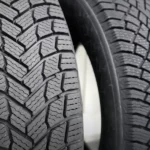
You’re staring at a worn tire and your wallet’s looking thin. Used tires cost half the price of new ones, but that nagging voice in your head wonders if you’re trading dollars for danger. Let’s cut through the noise and figure out whether used tires make sense for your situation—because this decision affects more than just your bank account.
The Real Cost of Used Tires
What You’ll Pay Upfront
Used tires run between $25 and $250 each, while new ones set you back $90-$300. That’s a 30-50% savings right off the bat. Sounds great, right?
Here’s the catch: you’re not just buying rubber. You’re buying miles.
Used tires typically give you about 20,000 miles before they’re done. New tires? They’ll go 50,000 miles or more. Do the math on a cost-per-mile basis, and the picture shifts dramatically.
Let’s break it down:
- Used tire at $50 with 20,000 miles = $0.0025-0.0035 per mile
- New tire at $120 with 50,000 miles = $0.0018-0.0028 per mile
The “cheaper” option actually costs you more in the long run.
Hidden Costs That Add Up Fast
Beyond the sticker price, used tires hit your wallet in sneaky ways:
More frequent replacements mean you’re back at the tire shop every 1.5-2 years instead of every 4-5 years. That’s more mounting fees, more balancing charges, and more of your Saturday mornings spent in waiting rooms with stale coffee.
Fuel efficiency takes a hit when tires aren’t in optimal condition. Compromised rolling resistance means your engine works harder, and your gas mileage suffers.
Your time has value. Shopping for tires, scheduling appointments, and dealing with installations multiple times more frequently adds up to hours you won’t get back.
According to Discount Tire, these replacement cycles create ongoing inconvenience and potential safety gaps that new tires simply don’t have.
The Safety Reality You Can’t Ignore
The Numbers Don’t Lie
The National Highway Traffic Safety Administration estimates 400-733 fatalities happen each year from tire-related failures. Their research shows something alarming: tires with 0-2/32″ tread depth are involved in 26.2% of tire-related crashes. Tires with 7+/32″ tread? Only 2.4%.
Most used tires you’ll find have significantly reduced tread depth. You’re starting closer to the danger zone from day one.
What You Can’t See Will Hurt You
Here’s the scary part: you can’t see what matters most.
A used tire might look fine on the outside while hiding serious problems inside. That tire could’ve been:
- Run severely underinflated, weakening the internal structure
- Overloaded beyond its capacity
- Damaged in an accident
- Exposed to chemicals that degraded the rubber
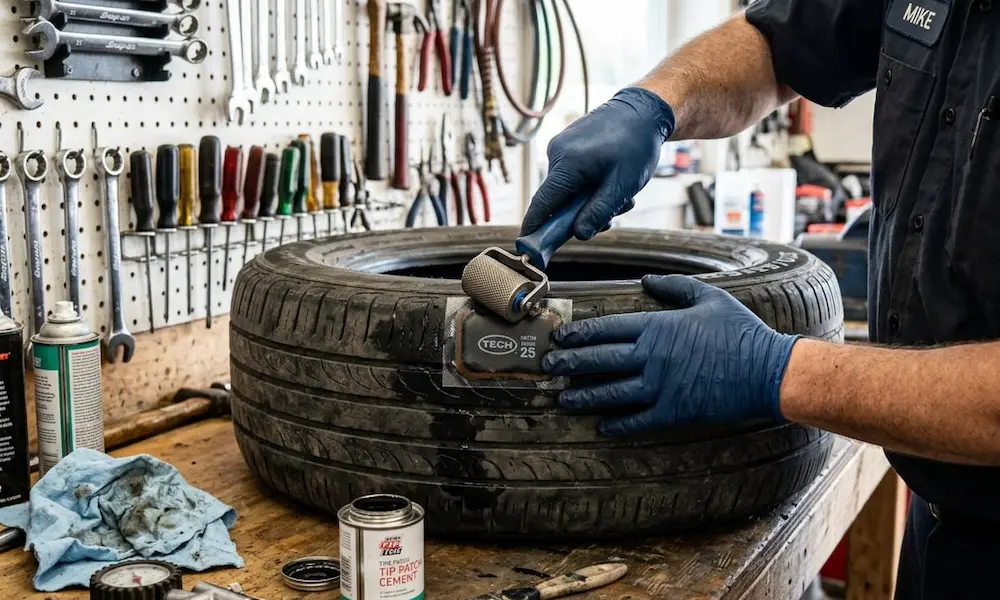
- Improperly repaired in ways that don’t meet safety standards
Professional tire inspectors will tell you straight up—they can’t fully assess a tire’s internal condition without dismounting it and doing a detailed examination. When you buy used, you’re flying blind.
UTires explains that internal damage commonly occurs from impacts that weaken cords and belts, small glass fragments embedded deep in the rubber, and invisible pinholes allowing water infiltration.
Tires Age Like Milk, Not Wine
Even if a used tire hasn’t been driven much, age works against it. Rubber compounds naturally break down through oxidation and environmental exposure. Most experts recommend replacing tires after 6-10 years regardless of tread depth.
That “lightly used” tire might’ve been sitting in someone’s garage for eight years, slowly degrading. The sidewalls become brittle. Cracks form. Blowout risk skyrockets.
Check the DOT date code on the sidewall—it tells you when the tire was manufactured. But here’s the problem: some used tire sellers don’t care. There are documented cases of dealers selling “new” used tires over 12 years old.
Bridgestone’s replacement guidance makes it clear that age matters as much as wear.
When Used Tires Might Actually Make Sense
Desperate Times Call for Desperate Measures
Look, life happens. Sometimes you’re genuinely stuck between a rock and a hard place. There are a few scenarios where buying used tires isn’t completely crazy:
You’re stranded with a blown tire and need to get home. It’s late, options are limited, and you need wheels under you right now.
You’re broke but your current tires are dangerous. A used tire beats bald tires every single time. If it’s genuinely your only option to stay safe until you can save up, it’s the right call.
Your car’s on its last legs anyway. If you’re driving a 20-year-old beater that’s worth $800 and needs tires, dropping $600 on new rubber doesn’t make financial sense.
You need a temporary spare. For a donut replacement or emergency-only spare, used might work.
Specific Situations Where Risk Drops
A few other cases where used tires aren’t completely insane:
- Replacing one tire to match existing wear patterns (though most pros recommend replacing in pairs)
- Vehicles driven infrequently or very short distances
- Lease returns where you’re dumping the car in three months anyway
Even then, you need to be extra careful about inspection and buying from reputable dealers.
How to Inspect Used Tires Like a Pro
Your Pre-Purchase Checklist
If you absolutely must buy used, don’t wing it. Here’s what to check:
Tread depth first. Use a tread depth gauge or the penny test—stick Lincoln’s head into the tread upside down. If you can see all of his head, walk away. You want at least 4/32″ of tread depth. The legal minimum of 2/32″ is dangerously low.
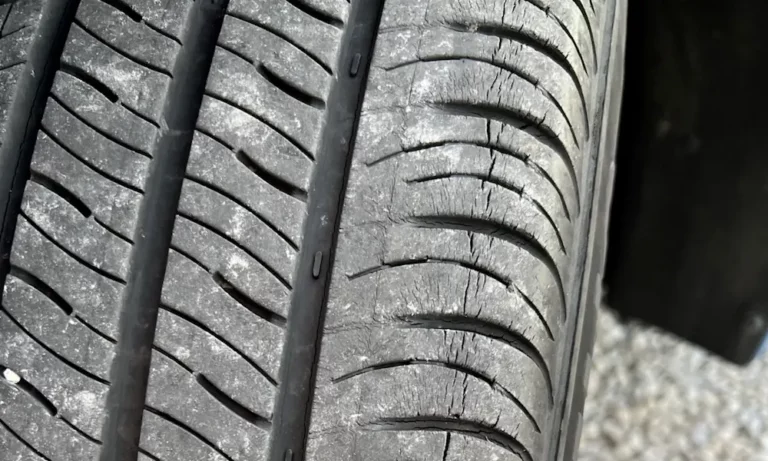
Sidewall examination. Look for bulges, cracks, cuts, or weathering. Any of these are instant disqualifiers.
DOT date code. Find it on the sidewall—it’s a four-digit number. First two digits are the week, last two are the year. “2318” means the 23rd week of 2018. If it’s over six years old, pass.
Wear patterns tell stories. Uneven wear screams alignment problems, improper inflation, or suspension issues on the previous vehicle. That tire experienced abnormal stress that probably compromised its structure.
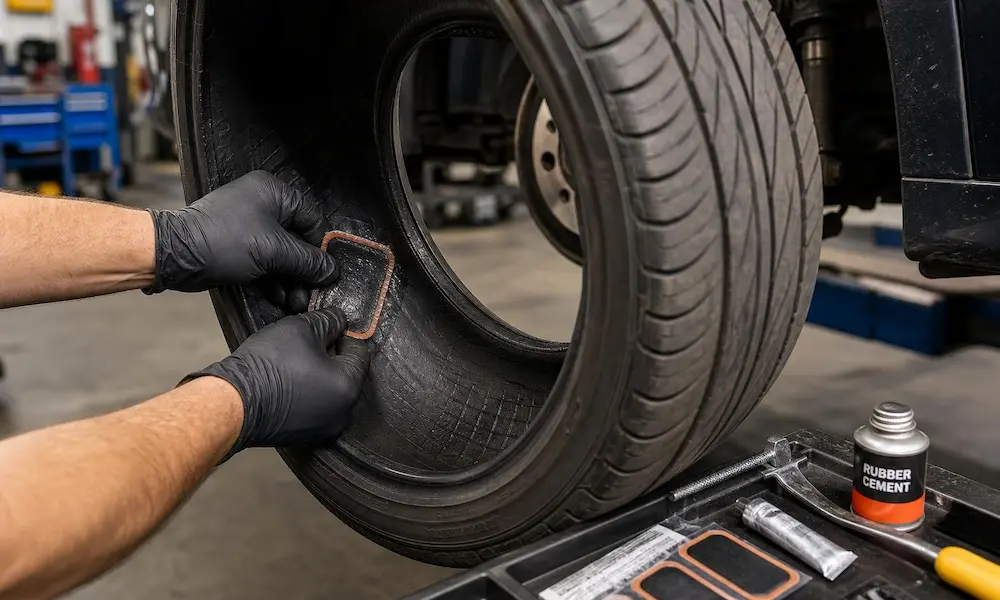
Look for repair evidence. Patches in the sidewall or shoulder area are no-gos. Multiple repairs anywhere mean that tire’s been through too much.
Red Flags That Mean Run Away
Some things are absolute deal-breakers:
| Problem | Why It Matters |
|---|---|
| Visible cord exposure | Structural failure imminent |
| Sidewall bulges | Internal damage, blowout risk |
| Age over 6 years | Rubber degradation regardless of appearance |
| Missing DOT codes | Unknown age and origin |
| Uneven wear patterns | Previous vehicle had mechanical issues |
| Chemical odors | Possible petroleum damage to rubber |
Don’t let a salesperson sweet-talk you past these issues. Your safety isn’t negotiable.
What Regulations Say About Used Tires
States Are Cracking Down
California passed legislation in 2019 that actually prohibits installing unsafe used tires. The law requires professional assessment before installation and creates legal liability for dealers selling dangerous tires.
Other states are watching and considering similar rules. The trend is clear—regulators recognize the used tire market needs oversight because too many unsafe tires are being sold to unsuspecting customers.
What Tire Manufacturers Actually Recommend
Here’s something important: major tire manufacturers universally discourage buying used tires. Goodyear, Bridgestone, and other industry leaders explicitly tell consumers to avoid them.
Why would tire companies turn away potential sales? Because they know the risks. They’ve seen the test data. They understand what you can’t see.
GT Radial’s safety guidance puts it bluntly: the unknown maintenance history and potential hidden damage make used tires a gamble not worth taking.
The Rubber Manufacturers Association has documented widespread quality problems in used tire markets, with studies showing significant percentages contain safety defects.
What Mechanics Really Think
The Inside Scoop from the Pros
Talk to experienced mechanics off the record, and they’ll tell you: customers who buy used tires frequently come back with premature failures and safety issues. Many end up spending more than if they’d bought new tires from the start.
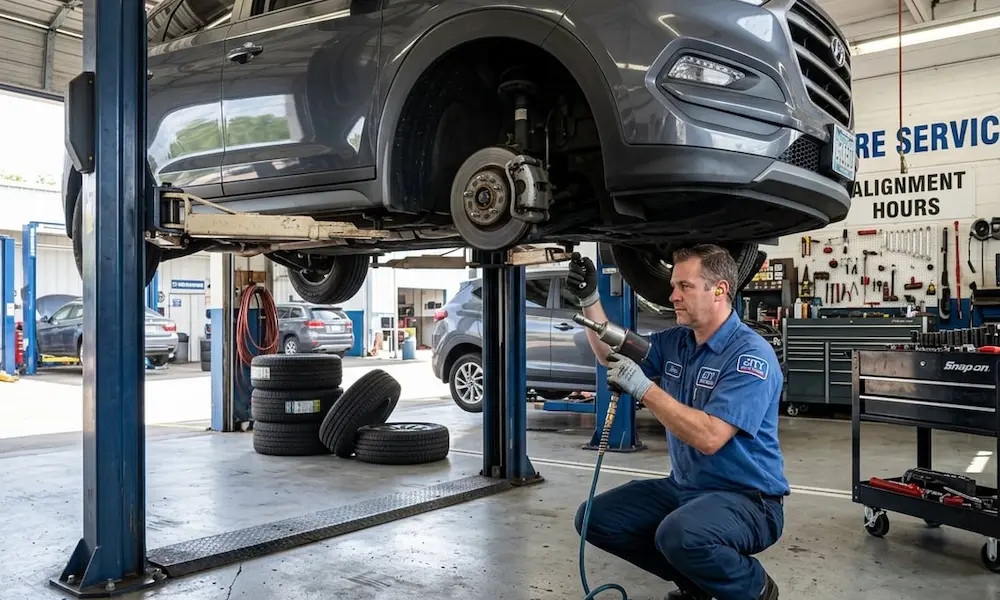
Professional tire installers deal with extra headaches on used tires:
- Difficulty balancing due to irregular wear
- Mounting challenges from bead damage
- Liability concerns about installing questionable tires
Even tire shops that profit from used tire sales often recommend new tires when customers can afford them. That should tell you something.
The Value Proposition Breaks Down
Tire retailers who sell both new and used products admit that used tires primarily serve customers with immediate budget constraints—not people looking for genuine long-term value.
Raymond’s Tires analyzed the real economics and concluded that apparent savings disappear when you factor in reduced lifespan, increased replacement frequency, potential safety costs, and reduced fuel efficiency.
The Environmental Angle
Used Tires and Sustainability
About 30 million used tires enter the marketplace annually, keeping them out of landfills temporarily. That’s an environmental positive, right?
Sort of. The benefit shrinks when you consider that used tires need replacement two to three times more frequently than new ones. You’re not necessarily reducing overall waste—you’re just spreading it out differently.
Modern tire recycling programs convert old tires into roads, athletic surfaces, playground mulch, and other useful products. These programs provide environmental benefits without the safety trade-offs of putting worn tires back on vehicles.
Better Alternatives to Used Tires
Making New Tires Affordable
If budget is your main concern, explore these options before going used:
Financing programs. Many tire retailers offer same-as-cash deals that let you spread payments over several months without interest. You get new tires now and pay over time.
Budget-tier new tires. Reputable manufacturers make entry-level tires that cost significantly less than premium models but still deliver safety and warranties.
Seasonal sales. Memorial Day, Labor Day, and Black Friday typically bring substantial tire discounts.
Payment plans. Most tire shops offer financing that makes new tires manageable even on tight budgets.
Consumer Reports tracks tire sales and identifies the best times to buy for maximum savings.
Making Your Current Tires Last Longer
The best way to save money on tires is making them last. Proper maintenance can extend tire life by 25-50%:
- Rotate regularly. Every 5,000-7,000 miles keeps wear even.
- Maintain proper inflation. Check monthly and adjust as needed.
- Get alignment checked annually. Misalignment kills tires fast.
- Drive smoothly. Hard acceleration, aggressive cornering, and sudden braking wear tires prematurely.
These habits cost little but save hundreds over time.
Emergency Solutions That Don’t Involve Used Tires
When You’re Stuck Right Now
If you’re facing an immediate tire emergency without funds for new tires, consider these alternatives:
Tire sealants and plugs can fix minor punctures temporarily. They’re not permanent solutions, but they buy you time.
Mobile tire services deliver and install new tires at your location. Many offer financing options.
Emergency road service programs through your insurance or auto club can provide immediate assistance.
Ask about layaway or holds. Some shops will hold new tires while you make payments, then install when paid off.
These options keep you safe while you figure out the financial piece.
The Bottom Line on Used Tires
Are used tires worth it? For most drivers, in most situations, the answer is no.
The safety risks are real and documented. The economic savings are largely illusory when you calculate cost-per-mile and factor in replacement frequency. The unknown history creates unnecessary risk that you’re carrying around at highway speeds.
Tires are your only contact point between your vehicle and the road. They’re not the place to cut corners.
If you’re in a genuine emergency with zero alternatives, used tires can serve as a temporary bridge. But approach them with eyes wide open, inspect thoroughly, and replace with new tires as soon as financially feasible.
For everyone else? Invest in new tires. Use financing if needed. Shop sales. Buy budget-tier models from reputable manufacturers. But don’t gamble your safety and your family’s safety on someone else’s discarded rubber.
The peace of mind from knowing your tire’s complete history, having a manufacturer warranty, and getting consistent performance justifies the investment. Your life is worth more than saving a hundred bucks.