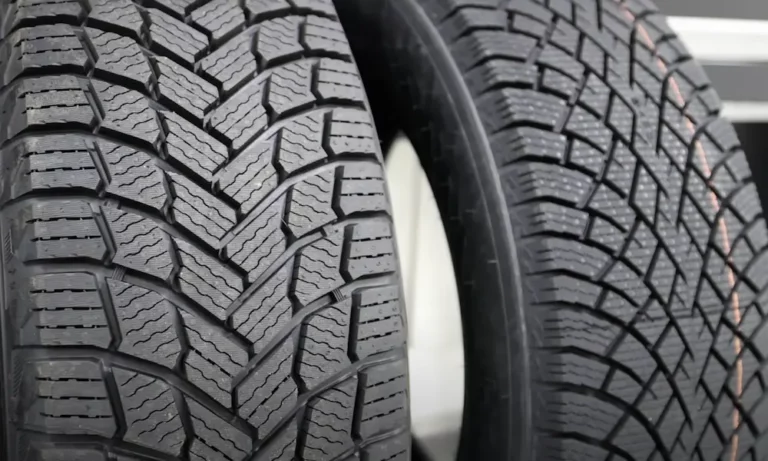
When temperatures drop and roads turn slippery, you’re probably wondering if snow tires are really worth the money. Short answer: if you drive where it gets cold, they’re one of the smartest safety investments you’ll make. Let’s dig into the numbers, costs, and real-world performance data so you can decide for yourself.
What Makes Snow Tires Different From All-Season Tires
Here’s the thing most people don’t realize: snow tires aren’t just about handling snow. They’re engineered for cold weather, period.
The rubber compound in snow tires stays flexible when temperatures drop below 45°F. All-season tires? They harden up like hockey pucks in the cold, losing grip even on dry pavement. This isn’t marketing fluff—it’s basic chemistry.
Snow tires also pack three key design features that all-season tires can’t match:
Deep, jagged tread patterns that bite into snow and ice instead of sliding over it. These wider grooves prevent snow from packing into the tire, which would turn your tread into a useless ice block.
Thousands of tiny slits called sipes that create extra biting edges. Think of them as miniature claws that grab onto slippery surfaces.
Aggressive void ratios that channel away water, slush, and snow more effectively than all-season designs.
According to research from Canada’s Traffic Injury Research Foundation, winter tires deliver better performance on snow-covered, icy, wet, and even dry roads when it’s cold outside.
The Stopping Distance Difference That Could Save Your Life
Let’s talk about what really matters: can you stop in time to avoid a crash?
The Washington State Department of Transportation ran comprehensive tests comparing tire types. On ice, winter tires stopped 18% shorter than all-season tires. That might not sound dramatic until you realize we’re talking about several car lengths at normal speeds.
Canadian Tire’s testing showed even more striking results. At 60 km/h (about 37 mph), vehicles with winter tires needed 18 fewer meters to stop compared to all-season tires. That’s roughly four car lengths—the difference between a close call and a trip to the body shop.
Here’s the stat that really drives it home: winter tires can reduce braking distances by up to 30% in snow and ice. At 30 mph on packed snow, winter tires stopped in about 59 feet while all-season tires needed 89 feet. That extra 30 feet could be the car in front of you.
| Tire Type | Stopping Distance (30 mph, Packed Snow) | Improvement vs. All-Season |
|---|---|---|
| Winter Tires | ~59 feet | Baseline |
| All-Season Tires | ~89 feet | 30 feet longer |
| Difference | 2 car lengths | 30% worse |
These numbers come from controlled testing. In real-world panic stops on black ice? The difference gets even more dramatic.
What Winter Accidents Actually Cost (Spoiler: It’s Scary)
The National Highway Traffic Safety Administration reports that roughly 156,000 crashes happen on icy roads every year in the U.S. Over 116,000 Americans get injured and more than 1,300 die on snowy, slushy, or icy pavement each winter.
Weather-related crashes account for about 21% of all vehicle accidents nationwide. Among those, 24% occur specifically on snowy, slushy, or icy pavement, while 15% happen during active snowfall.
Here’s what really gets me: the Federal Highway Administration found that speeding contributes to 70% of winter crashes. Translation? People drive too fast for conditions because they trust their all-season tires. Winter tires can’t fix stupid driving, but they give you a fighting chance when conditions turn nasty unexpectedly.
The Tire and Rubber Association of Canada points out that winter tires help prevent collisions and fatalities, reduce emergency room costs, lower insurance payouts, and cut down traffic congestion during winter months. That’s society-level benefits, but you’ll feel them personally if you avoid even one accident.
Breaking Down the Real Costs
Let’s get practical about what you’ll actually spend.
The Upfront Investment
A quality set of four winter tires typically runs $600-$1,200 depending on your vehicle, tire size, and brand choice. Premium options from Bridgestone, Michelin, or Continental cost more but generally last longer and perform better than budget alternatives.
You’ll also want a second set of wheels dedicated to your winter tires. That’s another $200-$800, but it’s a smart move. Without dedicated wheels, you’re paying $100-$200 twice a year for mounting, balancing, and changeovers. Do that for three years and you’ve spent more than the wheels would’ve cost.
Some shops offer tire storage for $50-$150 annually if you don’t have garage space. Factor that in if you’re tight on room.
Insurance Discounts Actually Add Up
Most Canadian insurance companies offer winter tire discounts ranging from 2% to 5% of your annual premium. On a typical $2,000 yearly premium, that’s $40-$100 back in your pocket every year.
Over the typical 6-10 season lifespan of winter tires, you’re looking at $240-$1,000 in total savings. That’s not paying for the entire tire investment, but it definitely takes the sting out.
Beyond discounts, consider what you’re not paying. Your collision deductible is probably $500 or more—that’s nearly half the cost of a winter tire set. The Insurance Institute for Highway Safety found that sudden braking leads to 40% more rear-end collisions in winter. Better stopping power means fewer claims.
They Actually Extend Your Tire Life
Here’s something most people miss: using winter tires seasonally extends the life of your all-season tires by about 50%.
Think about it. If you’d normally get 60,000 miles from a set of all-seasons, splitting time with winter tires means both sets last significantly longer. Consumer Reports testing shows that quality all-season tires can last 55,000 to 85,000 miles under normal conditions. By rotating between sets, you’re potentially pushing that to 80,000+ miles on your all-seasons while getting optimal winter performance.
The math works out better than you’d expect when you account for extended tire life on both sets.
Where You Live Matters More Than You Think
Legal Requirements You Should Know
If you’re in Quebec, winter tires aren’t optional. The province mandates them from December 1 to March 15 for all passenger vehicles, with fines of $200-$300 if you’re caught without them. Only tires with the Alpine Symbol (that three-peak mountain snowflake) count as winter tires under Quebec law.
British Columbia requires winter tires or M+S-rated all-seasons on designated highways from October 1 to April 30. These requirements hit major mountain passes and rural routes where winter conditions get serious.
Ontario doesn’t mandate winter tires but offers insurance discounts for using them. However, studded tires are restricted to Northern Ontario residents and can only be used between October 1 and April 30.
Climate Makes the Call
The value of winter tires depends heavily on where you live and drive. If temperatures consistently drop below 45°F for extended periods, winter tires are basically mandatory equipment.
Areas with frequent freeze-thaw cycles see the biggest safety improvements. That’s because ice formation happens more unpredictably in these zones—you never know when you’ll hit a slick patch.
Even in milder climates, winter tires provide benefits during cold snaps or unexpected winter weather. The rubber compound advantages kick in whenever temperatures drop, regardless of whether it’s snowing.
What About All-Weather Tires?
All-weather tires try to split the difference—year-round convenience with winter capability. They feature hybrid tread patterns and rubber compounds designed to work across wider temperature ranges.
But here’s the reality: compromises happen on both ends. All-weather tires typically provide 5-10% less winter traction than dedicated winter tires. They also offer reduced fuel efficiency and increased road noise compared to quality all-season tires.
Consumer testing shows that even the best all-weather tires lag 12-15% behind dedicated winter tires in snow traction and braking performance. That gap might not matter for light winter conditions, but in heavy snow or severe ice? You’ll feel the difference.
All-weather tires also tend to wear faster when exposed to extreme temperature swings. For drivers in regions with harsh winters, they’re not enough of a safety margin during the toughest conditions.
When You Absolutely Need Winter Tires
Let’s cut through the confusion with clear scenarios where snow tires are worth it:
You regularly encounter temperatures below 45°F. This is the threshold where winter tire compounds outperform all-season tires, even on dry pavement.
Your area gets regular snowfall or ice formation. If you’re scraping your windshield more than a few times per winter, you need winter tires.
You drive in mountainous or hilly terrain. Grades amplify the traction and braking advantages of winter tires dramatically.
Your livelihood depends on getting to work in winter. Professional drivers, healthcare workers, emergency responders—anyone who can’t afford to stay home when conditions turn nasty should treat winter tires as essential equipment.
You have a rear-wheel-drive or performance vehicle. These vehicles struggle more in winter conditions with all-season tires. Winter tires transform their usability.
Installation Advice That Matters
Here’s the golden rule: install winter tires in complete sets of four. Never put winter tires on just the front or rear axle.
Installing only two winter tires creates handling imbalances that can cause dangerous skidding or loss of control. The improved traction on one axle can overwhelm the limited grip of all-season tires on the other axle, especially during braking or cornering. This isn’t just advice—it’s a safety imperative.
Timing-wise, install winter tires when average daily temperatures consistently drop below 45°F. In most northern regions, that’s late October or early November. Remove them when spring temperatures consistently exceed 45°F to prevent accelerated wear from hot pavement.
Mark your calendar and make the swap before the first snow. Waiting until after the first storm means you’re driving to the tire shop in exactly the conditions where you need winter tires most.
The Bottom Line on Value
So, are snow tires worth it? If you’re facing cold temperatures, snow, or ice with any regularity, absolutely yes.
The combination of 15-34% shorter stopping distances, significant accident risk reduction, and potential insurance savings of $40-$100 annually makes winter tires a measurable safety and financial win. Add in extended all-season tire life, and the economics work even better than they first appear.
The initial $600-$1,200 investment (plus installation costs) seems steep until you frame it differently. That’s the cost of maybe one insurance deductible, or a fraction of what you’d pay in medical bills from even a minor accident. More importantly, it’s the price of significantly reducing your risk of serious injury or death in winter conditions.
For drivers in regions with harsh winters, winter tires should be considered essential safety equipment, not optional accessories. The physics of tire performance in cold conditions, backed by comprehensive testing data and sobering accident statistics, makes the case pretty clearly.
You’re not just buying tires—you’re buying margin for error when conditions go sideways. And in winter, conditions always go sideways eventually.