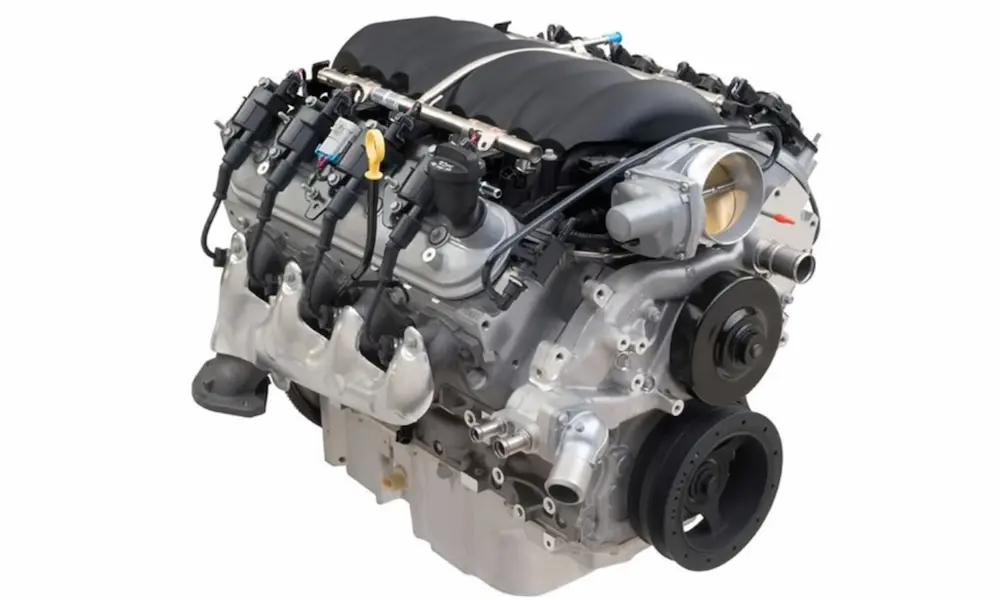
You’ve probably heard whispers about L5P delete kits promising huge power gains and better fuel economy for your Duramax. With prices running from $2,500 to $5,000 and claims of 150+ horsepower increases, it’s tempting to jump in. But there’s more to the story than just performance numbers.
This guide cuts through the confusion around L5P delete kits – what they include, how they work, the real performance benefits, and the significant legal considerations you can’t ignore. Whether you’re looking to boost power or solve reliability issues, understanding all aspects of delete kits is crucial before making this major modification.
What Is an L5P Delete Kit?
An L5P delete kit is a comprehensive modification package designed to remove or bypass emissions control systems on 2017-2023 GM Duramax L5P diesel engines. These kits target three main emissions components:
- Diesel Particulate Filter (DPF)
- Exhaust Gas Recirculation (EGR) system
- Diesel Exhaust Fluid (DEF) injection system
A complete kit isn’t just hardware – it requires specialized software tuning to make everything work together. Without proper tuning, removing emissions equipment will trigger check engine lights and potentially put your truck in limp mode.
Core Components of a Quality Delete Kit
| Component | Function |
|---|---|
| EGR Delete Plates | Block off exhaust gas recirculation pathway |
| DPF Delete Pipe | Replaces restrictive filter with straight pipe |
| Downpipe | Improves exhaust flow from turbocharger |
| ECM Unlock Tool | Allows reprogramming of factory computer |
| Custom Tuning | Software that optimizes engine for deleted setup |
| CAN Bus Plugs | Prevent communication errors with deleted components |
Premium kits from companies like SPETUNER include everything needed for a complete installation, while budget options might require sourcing additional components separately.
Understanding the ECM Unlock Process
The L5P Duramax uses GM’s E41 Engine Control Module with advanced encryption specifically designed to prevent unauthorized modifications. This makes the tuning aspect of delete kits more complex than previous Duramax generations.
How ECM Unlocking Works
Before any performance tuning can happen, the ECM must be “unlocked” using specialized hardware and software:
- HP Tuners’ MPVI3 interface connects to your truck’s diagnostic port
- Special unlock cables are installed in specific fuse locations (position 57 for 2017-2019 trucks, position 78 for 2020-2023)
- VCM Suite software executes the unlock process, which permanently modifies the ECM
- Once unlocked, custom calibrations can be loaded to disable emissions monitoring and optimize performance
This process typically requires 6-8 tuning credits and takes 30-60 minutes to complete. The unlock is permanent, meaning the ECM will remain open to custom tuning even if you return to stock later.
Top Delete Kit Manufacturers
The market for L5P delete kits has evolved significantly in recent years, with several key players emerging across different price points.
Premium Options
SPETUNER offers comprehensive kits priced between $3,299-$3,699 that emphasize plug-and-play convenience with pre-configured tuning solutions. Their approach focuses on complete packages with extensive customer support, making them ideal for first-time modifiers.
The Diesel Dudes represents the high-end segment with kits ranging from $4,499-$5,099. Their offerings include optional 5-inch exhaust systems and advanced Switch-On-The-Fly (SOTF) tuning packages that allow you to change power levels while driving.
Value-Oriented Choices
Tuner Depot provides competitive pricing between $3,258-$3,572, making them attractive for budget-conscious buyers who don’t need extensive installation support. Their kits include the same core components as premium competitors but with more basic online support.
SPELAB covers the broadest price range from $2,500-$4,000, offering various configuration options to meet different budgets. Their modular approach lets customers select specific components based on their needs.
Emerging Player
Great White North Diesel has gained recognition for their complete delete bundles priced between $3,200-$4,000. Their 2024-2025 L5P offerings demonstrate the evolution of delete technology, with sophisticated tuning that maintains certain sensors to prevent error codes.
Real-World Performance Benefits
The performance gains from L5P delete kits are substantial when properly installed and tuned. Let’s look at what real owners experience:
Power and Torque Gains
Dyno testing shows deleted L5P engines can achieve remarkable improvements:
- Stock L5P: 380 wheel horsepower / 740 lb-ft wheel torque
- Deleted L5P: 480-530 wheel horsepower / 1,000-1,200 lb-ft wheel torque
- Total Gains: 100-150 horsepower / 260-460 lb-ft torque
The most aggressive delete setups with supporting modifications can exceed 600 wheel horsepower, though these extreme configurations require careful attention to fuel delivery and transmission tuning.
Fuel Economy Improvements
Many owners report 2-4 MPG improvements after delete modifications, particularly during highway driving and towing. This efficiency boost comes from:
- Elimination of DPF regeneration cycles that consume extra fuel
- Removal of EGR that reduces combustion efficiency
- Optimized tuning that can better control fuel delivery
However, actual economy gains depend heavily on driving style and tune aggressiveness. Conservative delete tunes deliver the best efficiency, while race tunes may actually decrease fuel economy despite improved performance.
Reliability Enhancements
Delete modifications eliminate several common failure points:
- No more EGR cooler leaks or clogging
- Elimination of DPF restriction and regeneration issues
- Removal of complex DEF system components that can malfunction
Industry experts estimate that unmodified L5P trucks may experience EGR-related failures within 125,000 miles due to carbon buildup. By removing these components, delete modifications can potentially extend engine life and reduce maintenance costs.
The Legal Reality of Delete Kits
This is where we need to have a serious conversation about the most important aspect of delete kits – their legality.
Federal Law is Unambiguous
Under the Clean Air Act, removing or disabling emissions control equipment on any vehicle originally equipped with such systems is federally illegal. This prohibition applies regardless of whether the vehicle is used on public roads, private property, or for “off-road” purposes.
The EPA has intensified enforcement dramatically since 2017, with penalties that should make anyone think twice:
- Current maximum penalties: $124,426 per violation
- These can be assessed per vehicle modified
- Criminal charges possible for repeat offenders
Recent EPA actions have resulted in significant penalties for companies in the delete business:
| Company | Penalty | Year |
|---|---|---|
| Rudy’s Performance Parts | $1.6 million | 2024 |
| Xtreme Diesel Performance | $1.125 million | 2021 |
| Various smaller shops | $500,000+ each | 2021-2024 |
The National Highway Traffic Safety Administration has also begun cooperating with EPA on emissions enforcement actions, adding another layer of federal oversight.
State-Level Enforcement Varies
While federal law applies nationwide, enforcement intensity varies by state:
- CARB states (California, Colorado, New York, etc.) have the strictest enforcement
- Some states have implemented roadside inspection programs targeting modified diesels
- Certain jurisdictions have begun impounding vehicles found with deleted emissions systems
The expansion of CARB standards to 16 states has increased the geographic scope of strict emissions enforcement. Vehicles modified in non-CARB states can still face penalties when driven in CARB-compliant jurisdictions.
Installation Complexity and Requirements
Installing an L5P delete kit is not a simple weekend project. The process requires significant mechanical skill, specialized tools, and computer expertise.
Hardware Installation
The physical installation involves:
- Comprehensive preparation including battery disconnection and coolant draining
- Removal of the passenger-side fender liner for component access
- EGR cooler removal and block-off plate installation
- DPF removal and exhaust modification (often requiring cutting/welding)
- Downpipe replacement requiring turbocharger access
- Installation of various sensors and CAN bus plugs
This process typically takes 6-8 hours for experienced mechanics and potentially 10-12 hours for first-time installers. You’ll need a well-equipped garage with a lift or adequate jack stands, exhaust cutting tools, and a complete mechanic’s tool set.
Software Requirements
The tuning aspect requires:
- Windows-based laptop with reliable internet
- HP Tuners VCM Suite software and related dependencies
- MPVI3 interface device and cables
- Technical understanding of engine parameters
The actual unlock and tuning process demands patience and precision. One mistake can leave your truck inoperable or cause engine damage if parameters are set incorrectly.
Legal Alternatives Worth Considering
For those seeking performance improvements while maintaining legal compliance, several excellent options exist:
CARB-Approved Performance Tuners
Banks Power offers the Derringer tuning system with CARB E.O. approval, providing up to 80 horsepower gains while maintaining full emissions compliance. The system integrates with Banks’ iDash monitoring platform for comprehensive data.
Edge Products provides emissions-compliant tuning through their Evolution CTS3 platform, offering substantial power gains without removing factory emissions equipment. These handheld devices provide convenient programming with legal security.
Revolutionary EGR Filtration Solution
FASS EGR Solutions has introduced an ingenious approach to addressing L5P reliability concerns without illegal modifications. Their EGR Filter System removes 85% of particulate matter from the EGR stream before it circulates through the engine.
This system:
- Installs in 60-120 minutes
- Requires no tuning or ECM modifications
- Extends EGR component life by up to 6x
- Maintains full emissions compliance
- Uses a self-cleaning, auto-regenerating design
By addressing the root cause of emissions system failures—particulate matter buildup—this approach can save thousands in potential repair costs while keeping your truck legal.
Emissions-Intact Performance Potential
Modern emissions-intact tuning has reached sophisticated levels that challenge the assumption that deletion is necessary for substantial gains. Companies like PPEI and Hardway Performance have developed calibrations that can achieve 75-100 horsepower gains while maintaining factory emissions equipment.
The advantages of this approach include:
- Preserved warranty coverage
- Maintained dealer serviceability
- Protection of resale value
- No legal exposure
- Insurance coverage security
Making the Right Decision for Your Truck
With all this information, how do you decide what’s best for your L5P Duramax?
For Daily Drivers and Work Trucks
If you use your truck for daily transportation, business, or regular towing, legal compliance makes the most sense:
- Combine CARB-approved tuning with supporting modifications
- Add FASS EGR filtration to protect against system failures
- Consider upgraded intercoolers and transmission tuning for maximum legal performance
This approach provides meaningful performance enhancement without legal vulnerability, while maintaining dealer serviceability and warranty coverage.
For Performance Enthusiasts
For those primarily concerned with maximum performance while maintaining legality:
- Invest in the highest quality emissions-compliant tuning available
- Upgrade supporting systems (intake, exhaust, intercooler)
- Consider transmission improvements to handle increased power
- Install EGR filtration to prevent system failures
Today’s emissions-intact tunes can achieve impressive power levels without the legal and practical complications of delete modifications.
Understanding the Full Cost Equation
When comparing delete kits to legal alternatives, consider the total cost equation:
| Factor | Delete Kit | Legal Modifications |
|---|---|---|
| Initial Cost | $3,000-$5,000 | $1,500-$3,000 |
| Legal Risk | High | None |
| Warranty Status | Voided | Maintained |
| Dealer Serviceability | Compromised | Maintained |
| Resale Impact | Negative | Neutral/Positive |
| Insurance Implications | Potential issues | None |
The Future of L5P Performance
The performance gap between emissions-intact and deleted configurations continues to narrow as tuning technology advances. Companies are investing heavily in legal solutions that work within emissions constraints while delivering impressive gains.
Emissions system reliability continues improving with each generation, reducing the maintenance motivation for delete modifications. The L5P platform, designed with emissions equipment integration from the beginning, demonstrates fewer reliability issues than earlier retrofit systems.
For most users, the optimal approach combines emissions-compliant tuning with supporting modifications to achieve the desired balance of performance, reliability, and legal security.
The Bottom Line on L5P Delete Kits
L5P delete kits do deliver significant performance gains and can solve certain reliability concerns, but they come with serious legal risks that have only increased in recent years. For most truck owners, the performance benefits don’t outweigh the potential legal consequences, warranty implications, and resale complications.
Fortunately, today’s emissions-compliant alternatives provide substantial performance enhancement without these drawbacks. The combination of legal tuning and innovative solutions like EGR filtration offers a compelling path to improved performance and reliability while maintaining peace of mind.
Whatever path you choose, make your decision with full awareness of the performance benefits, installation requirements, and legal realities involved. Your L5P Duramax is a significant investment – protect it with informed choices about its modification.