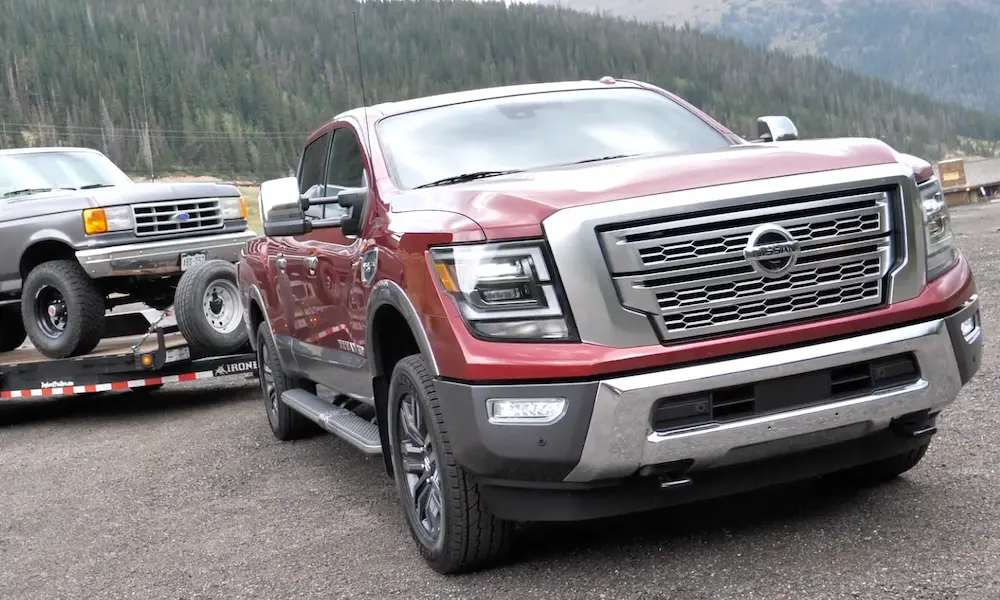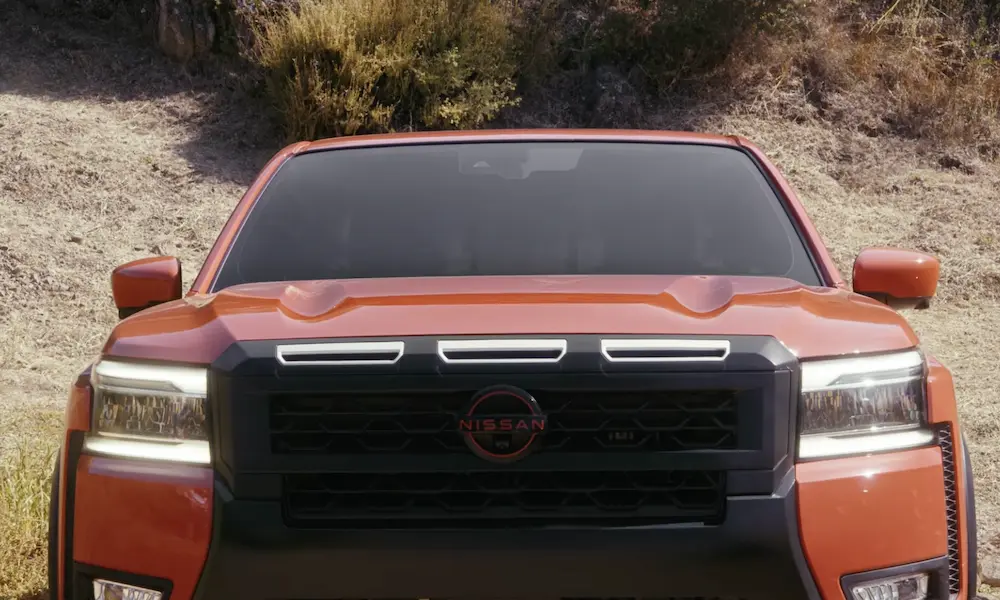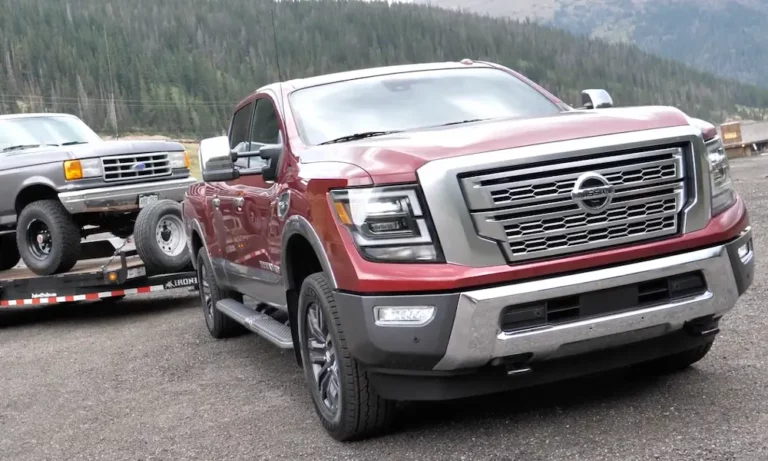
Picking up a used Nissan Titan sounds straightforward until you realize some years are genuinely bulletproof and others are expensive headaches waiting to happen. The right model year can get you a reliable workhorse that runs past 250,000 miles. The wrong one could drain your wallet fast. This guide breaks it all down so you can shop with confidence.
A Quick Look at Titan Generations
The Nissan Titan ran from 2004 through late 2024, splitting into two main generations and one major refresh. Understanding these eras makes the buying decision much easier.
First Generation (2004–2015) — A60 Platform:
Built on Nissan’s F-Alpha platform, the first-gen Titan used a fully boxed ladder frame, which gave it serious structural rigidity. Every model came with a 5.6-liter VK56DE V8 paired to a five-speed automatic.
Second Generation (2016–2019) — A61 Platform:
A complete redesign that introduced the “Endurance” V8, a seven-speed automatic, and an optional Cummins diesel in the XD variant.
Second-Gen Refresh (2020–2024):
The best version of the A61. More power, a nine-speed transmission, and a standard safety suite made this era the strongest the Titan ever was.
Here’s how the engine evolved across all years:
| Engine Generation | Model Years | Horsepower | Torque |
|---|---|---|---|
| VK56DE V8 Phase 1 | 2004–2007 | 305 hp | 379 lb-ft |
| VK56DE V8 Phase 2 | 2008–2015 | 317 hp | 385 lb-ft |
| Endurance V8 (A61) | 2016–2019 | 390 hp | 394 lb-ft |
| Endurance V8 (Refresh) | 2020–2024 | 400 hp | 413 lb-ft |
The Best Year for Nissan Titan: Top Picks
2022 and 2023 — The Absolute Best Years
If you want the best year for Nissan Titan based purely on data, look at 2022 and 2023.
The 2023 Nissan Titan ranked number one among large light-duty pickups on J.D. Power, scoring 88 out of 100 for quality and reliability. That score beat the Ram 1500 and Toyota Tundra. That’s not a small deal.
The 2022 model is equally impressive. It recorded zero complaints with the National Highway Traffic Safety Administration, which is genuinely rare for a full-size pickup truck.
Both years benefit from:
- The fully refined 400-horsepower Endurance V8
- A nine-speed automatic with resolved software issues
- Standard Safety Shield 360 across all trims
- Nissan’s five-year/100,000-mile bumper-to-bumper warranty coverage
If reliability matters most, these two years win.
2015 — The Best First-Gen Titan
For buyers who prefer a mechanically simpler truck without direct injection or complex driver-assist sensors, the 2015 Titan is the sweet spot.
It was the final year of the A60 platform, meaning it had eleven years of refinement baked in. KBB owners consistently describe the 2015 Titan as a tank, with many reporting 250,000-plus miles on basic maintenance alone.
The five-speed automatic and port-injected V8 in this truck are among the most durable combinations Nissan ever built. You won’t get modern tech, but you’ll get a truck that simply refuses to quit.
2014 — Best Value on a Budget
The 2014 Titan sits right behind the 2015 as an excellent buy. KBB owner reviews for the 2014 are overwhelmingly positive, and because it’s a year older, you’ll typically find it at a lower price on the used market.
The 2012–2015 period sits in what many call the “golden era” of the original platform. Annual repair costs for this era average around $555 versus the segment average of $752.
Nissan Titan Years to Avoid
Knowing the best year for Nissan Titan also means knowing which years to skip entirely. Some of these are clear lemons.
| Year to Avoid | Main Problem | What Breaks |
|---|---|---|
| 2004 | Cooling and drivetrain | Differential failure + transmission contamination |
| 2005 | Drivetrain and electrical | Rear axle failure + faulty navigation |
| 2008 | Engine and transmission | Intake plenum failure + rough shifting |
| 2016 | Redesign teething | Exhaust leaks + rough transmission |
| 2017 | Severe engine defects | Crankshaft failure + major alternator recalls |
| 2018 | Fuel system | Fuel pump failure + catalytic converter damage |
The 2004 model is the one to avoid most aggressively. Its rear axle lacked proper venting, which caused pressure buildup inside the differential housing during towing. That pressure pushed gear oil past the seals, starved the differential of lubrication, and caused catastrophic failure. On top of that, the factory radiator design allowed coolant to leak into the transmission lines, turning the fluid into what mechanics called a “strawberry milkshake.” That contamination destroyed transmission internals fast.
The 2017 model is nearly as bad, with documented crankshaft failures and major alternator recalls making it the most expensive year for repairs in the Titan’s history.
The Cummins Diesel: Skip It
The 2016–2019 Titan XD offered a 5.0-liter Cummins turbodiesel V8, and it sounded compelling on paper. In practice, it was a reliability disaster.
Here’s what went wrong:
| Issue | Impact |
|---|---|
| Crankshaft failure | Complete engine failure under 50,000 miles |
| Turbocharger failure | Loss of power; multiple replacements required |
| Bosch CP4.2 fuel pump | Metal debris contaminated the entire fuel system |
| DPF and EGR clogging | Limp mode during short trips or light use |
Nissan discontinued the Cummins diesel after 2019. That tells you everything you need to know. If you want a heavy-duty Titan XD, stick with a 2020 or newer model with the 5.6-liter gas V8.
Common Mechanical Issues Across All Years
Even in the best model years, a few recurring issues show up in the Titan. Knowing them helps you inspect before you buy.
Exhaust Manifold Cracking
This affects most 5.6-liter Titans regardless of generation. The cast factory manifolds expand and contract through extreme heat cycles, and they develop hairline cracks around 100,000 miles. You’ll hear it as a cold-start ticking noise that fades as the engine warms up.
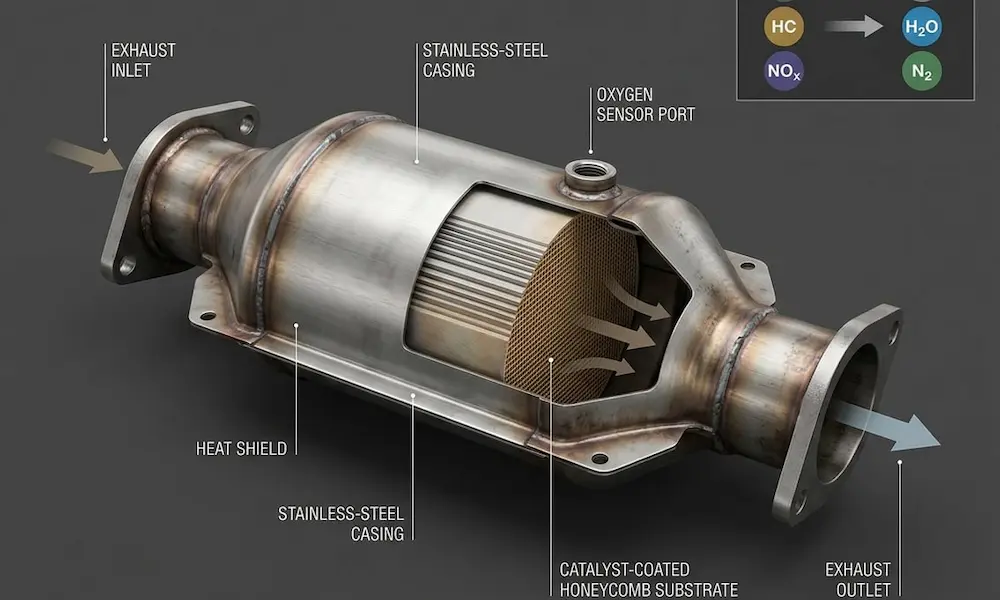
Don’t ignore it. A cracked manifold lets raw exhaust into the engine bay, skews oxygen sensor readings, and can eventually destroy catalytic converters. Many long-term owners swap the factory manifolds for aftermarket headers as a permanent fix.
Rear Axle Seal Leaks
While the severe axle failures of the 2004–2006 era are mostly history, rear axle seal leaks still appear in later models. Road debris and road salt can clog the axle vent, which builds pressure and forces fluid past the seals. Without fluid, the bearings overheat, which leads to vibration and uneven tire wear. If you’re in a salt belt state or you tow regularly, check that axle vent often. It’s an inexpensive thing to maintain.
Which Trim Level Makes the Most Sense?
| Trim | Best For | Highlights |
|---|---|---|
| S | No-frills utility | Gets the job done, nothing extra |
| SV | Best everyday value | Alloy wheels, power accessories, comfortable |
| Pro-4X | Off-road use | Bilstein shocks, locking rear differential, skid plates |
| SL | Daily comfort | Leather, premium audio, LED lighting |
| Platinum Reserve | Luxury truck buyers | Heated/cooled seats, wood trim, 20-inch wheels |
For most buyers, the SV trim is the smart pick. It covers the essentials without a big price premium. The Pro-4X holds its value well on the used market, so don’t expect a huge discount there. If you find a 2022 or 2023 SV in good condition, that’s likely the best version of the best year for Nissan Titan you can get.
Why Titan Depreciation Works in Your Favor
The Titan never matched the Ford F-150 or Toyota Tundra in brand recognition, which means it depreciates faster. The Titan XD alone can lose 64% of its value in five years.
For used buyers, that’s a genuine advantage. You can often pick up a three-to-five-year-old Titan with the identical mechanicals of a new model at tens of thousands less. Pair that with an average annual repair cost of $555 versus a segment average of $752, and the total cost of ownership becomes hard to argue with.
The Titan’s “old-school” approach — no turbos, no hybrid system — keeps service simple and parts affordable. That financial predictability is one of its most underrated qualities.
The Quick Decision Guide
Here’s how to pick your year based on what you actually need:
- Best overall reliability: 2022 or 2023 — zero NHTSA complaints, top J.D. Power score
- Best traditional workhorse: 2015 — fully refined first-gen platform, runs forever
- Best budget buy: 2014 — nearly as good as 2015 at a lower price
- Best heavy-duty gas option: 2020 or newer Titan XD with the 5.6L V8
- Years to avoid completely: 2004, 2005, 2017 — expensive mechanical failures are common
The Titan wrapped up production in November 2024 after 20 years. It leaves behind a legacy of straightforward V8 power and serious structural durability. Pick one of the right years, and you’ve got a truck that’ll keep earning its place in your driveway for a long time.