Ever glanced at your dashboard only to see that dreaded orange glow? When your BMW’s check engine light suddenly illuminates, it can trigger anything from mild concern to full-blown panic. But understanding what those mysterious codes actually mean can save you time, money, and unnecessary worry.
What Does a BMW Check Engine Light Actually Tell You?
Your BMW’s check engine light (sometimes labeled “Service Engine Soon”) is an early warning system that monitors your vehicle’s engine and emissions components. When something isn’t working correctly, your car’s onboard diagnostic system stores a specific trouble code that identifies the problem.
Unlike the vague warning itself, these codes are surprisingly specific. They can point to issues ranging from something as simple as a loose gas cap to more complex problems like failing oxygen sensors or catalytic converters.
How BMW Diagnostic Codes Work
BMW uses the standard OBD-II (On-Board Diagnostics) system that became mandatory for all vehicles sold in the US after 1996. These codes follow a specific format that helps identify the affected system:
- P Codes – Powertrain (engine, transmission, emissions)
- B Codes – Body systems (airbags, power seats)
- C Codes – Chassis components (brakes, steering)
- U Codes – Network communications issues
Each code consists of five characters. For example, in P0128:
- P = Powertrain system
- 0 = Generic code (1 would indicate a BMW-specific code)
- 1 = Fuel/air metering
- 28 = Specific issue (in this case, coolant thermostat problems)
Most Common BMW Check Engine Light Codes
P0171 – System Too Lean (Bank 1)
This common code means your engine is getting too much air and not enough fuel. Your BMW might idle roughly, hesitate during acceleration, or get worse fuel economy.
Common causes:
- Vacuum leaks in intake manifold or hoses
- Dirty or failing mass airflow sensor
- Clogged fuel injectors
- Failing fuel pump or low fuel pressure
- Faulty oxygen sensors
DIY fix difficulty: Moderate
Average repair cost: $100-$400 depending on the exact cause
P0128 – Thermostat Malfunction
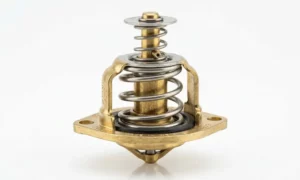
This code indicates your engine isn’t reaching proper operating temperature, usually because the thermostat is stuck open and can’t properly regulate coolant flow.
Common causes:
- Failed thermostat
- Low coolant level
- Faulty coolant temperature sensor
DIY fix difficulty: Moderate
Average repair cost: $250-$400
P0174 – System Too Rich (Bank 2)
When your BMW is burning too much fuel relative to air, you’ll get this code. You might notice black exhaust smoke, rough idle, or poor fuel economy.
Common causes:
- Leaking fuel injectors
- Failed oxygen sensors
- Faulty fuel pressure regulator
- Dirty air filter
DIY fix difficulty: Moderate to difficult
Average repair cost: $200-$600
P0420 – Catalytic Converter Efficiency Below Threshold
This code suggests your catalytic converter isn’t cleaning exhaust gases properly. You might not notice any symptoms beyond the warning light itself.
Common causes:
- Aging catalytic converter
- Engine misfires damaging the converter
- Exhaust leaks before or after the converter
- Faulty oxygen sensors giving false readings
DIY fix difficulty: Difficult
Average repair cost: $600-$2,500 (catalytic converters are expensive!)
P0300-P0306 – Engine Misfire Codes
These codes indicate one or more cylinders aren’t firing correctly. P0300 is a random/multiple cylinder misfire, while P0301-P0306 point to specific cylinders. You’ll notice rough running, poor acceleration, and possibly vibration.
Common causes:
- Worn spark plugs or ignition coils
- Fuel injector problems
- Low compression in affected cylinder
- Vacuum leaks
DIY fix difficulty: Easy to moderate
Average repair cost: $150-$500
How to Read BMW Check Engine Codes Yourself
Finding Your BMW’s OBD-II Port
Before you can read any codes, you’ll need to locate your BMW’s diagnostic port. This standardized 16-pin connector is typically located under the driver’s side dashboard, near where your left knee would be while seated. In some BMW models, it might be hidden behind a small removable panel.
Tools for Reading BMW Codes
You have several options for reading codes, with varying levels of functionality:
- Basic OBD-II Scanner ($20-$50)
- Reads generic P0xxx codes
- Typically can’t access BMW-specific codes
- Available at auto parts stores or online
- Bluetooth/WiFi OBD-II Adapter ($15-$50)
- Pairs with smartphone apps
- Provides real-time data and code reading
- Look for ones supporting BMW-specific protocols
- BMW-Specific Scan Tools ($100-$500)
- Read BMW-specific codes and data
- Access to more vehicle systems
- Some can perform service resets and coding
- Professional BMW Diagnostic Systems ($1,000+)
- Complete access to all vehicle systems
- Programming and coding capabilities
- Similar to what dealers use
For most DIYers, a mid-range Bluetooth adapter with a good BMW-compatible app like Carly, ISTA, or Bimmercode offers the best balance of capability and cost.
Understanding Code Urgency: When to Drive and When to Tow
Not all check engine lights require immediate attention. Here’s how to determine if you can continue driving:
Safe to Drive (Temporarily)
- Steady (not flashing) check engine light
- No noticeable performance issues
- No unusual sounds or smells
- No overheating or other warning lights
Stop Driving Immediately
- Flashing check engine light (indicates active misfire that can damage catalytic converter)
- Engine overheating warning
- Oil pressure warning light
- Significant loss of power or unusual noises
- Multiple warning lights activated simultaneously
According to the National Highway Traffic Safety Administration (NHTSA), ignoring a flashing check engine light can lead to catalytic converter damage costing thousands to repair.
DIY Troubleshooting Steps
Once you’ve retrieved the code, follow these steps to diagnose the problem:
- Research the specific code – Look up what your exact code means for BMWs specifically
- Check for simple causes first – Tighten gas cap, inspect for obvious vacuum leaks or disconnected hoses
- Look for service bulletins – Some issues are common enough that BMW has issued technical service bulletins
- Check related components – Many codes point to a system rather than a specific part
- Clear the code and test drive – Sometimes codes appear from temporary issues
BMW-Specific Diagnostic Quirks
BMWs have some unique diagnostic features compared to other vehicles:
Check Control Messages
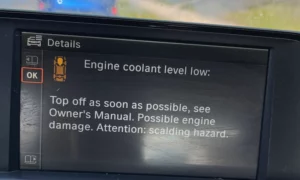
Beyond standard OBD-II codes, BMWs display Check Control (CC-ID) messages directly on your instrument cluster or iDrive screen. These often appear with a specific CC-ID number that identifies the issue.
For example:
- CC-ID 27: Engine oil level low
- CC-ID 29: Engine problem, power reduced
- CC-ID 31: Engine problem, increased emissions
Hidden Menus
Many BMWs have a hidden diagnostic menu accessible through the instrument cluster. By pressing and holding the trip reset button while turning the ignition on, you can access additional vehicle information and some basic diagnostic functions.
BMW-Specific Codes
While BMWs use standard OBD-II protocols, they also have many manufacturer-specific codes that typical scanners can’t read. These BMW-specific codes start with “P1xxx” and require BMW-compatible diagnostic equipment.
Most Reliable DIY Fixes for Common Codes
Replacing a Mass Air Flow (MAF) Sensor
A dirty or failing MAF sensor often triggers codes P0171 or P0174. It’s relatively easy to replace:
- Locate the sensor (typically between air filter box and intake)
- Disconnect the electrical connector
- Remove mounting screws (usually 2)
- Install new sensor
- Clear codes and test drive
Average cost: $150-$300 for parts
Time required: 30 minutes
Tools needed: Basic screwdrivers
Fixing Vacuum Leaks
Vacuum leaks commonly cause running issues and trigger lean mixture codes:
- With engine running, listen for hissing sounds
- Spray soapy water on suspected leak areas (bubbles will form at leaks)
- Check common failure points:
- Intake boot connections
- Vacuum hoses
- Valve cover gaskets
- PCV valve and hoses
Average cost: $10-$100 for parts
Time required: 1-3 hours
Tools needed: Basic hand tools, spray bottle with soapy water
Replacing Oxygen Sensors
Failed O2 sensors trigger numerous codes and affect efficiency:
- Identify the specific sensor location (pre-cat vs. post-cat)
- Use an O2 sensor socket to remove old sensor
- Apply anti-seize compound to threads of new sensor
- Install and connect new sensor
- Clear codes and test drive
Average cost: $50-$250 per sensor
Time required: 30-60 minutes
Tools needed: O2 sensor socket, ratchet, anti-seize compound
BMW Models Most Prone to Check Engine Light Issues
Based on owner reports and service data, certain BMW models tend to experience check engine light issues more frequently:
| Model | Common Issues | Typical Repair Range |
|---|---|---|
| E90 3-Series (2006-2011) | Valve cover gasket leaks, VANOS solenoids | $400-$1,200 |
| E60 5-Series (2004-2010) | Fuel pump failures, VANOS issues | $800-$2,000 |
| F30 3-Series (2012-2018) | Charge pipe failures, valve cover gaskets | $300-$900 |
| X5 E70 (2007-2013) | Vacuum leaks, VANOS solenoids | $500-$1,500 |
| N54 Engine (335i, 135i, etc.) | High-pressure fuel pump, wastegate rattles | $600-$2,500 |
The Cost Benefit of Early Diagnosis
Addressing check engine light issues promptly often prevents more serious and expensive problems:
| Initial Problem | Typical Early Fix Cost | Potential Damage if Ignored | Eventual Repair Cost |
|---|---|---|---|
| Oxygen Sensor | $250-$300 | Catalytic converter damage | $1,200-$2,500 |
| Minor vacuum leak | $50-$150 | Engine running lean, valvetrain damage | $1,500-$4,000 |
| Misfiring cylinder | $200-$400 | Catalytic converter damage, head gasket failure | $1,500-$3,500 |
| Low oil pressure | $100-$500 | Complete engine failure | $5,000-$15,000 |
Key Maintenance to Prevent Check Engine Light Issues
Preventive maintenance significantly reduces the likelihood of check engine light problems:
- Follow BMW-specific oil change intervals – Modern BMWs require synthetic oil and typically need changes every 7,500-10,000 miles
- Replace ignition components proactively – Consider replacing spark plugs around 60,000 miles even if they haven’t failed yet
- Address small leaks early – Oil leaks can damage sensitive electronics and rubber components
- Use quality fuel – BMWs are sensitive to fuel quality; using Top Tier gasoline helps prevent carbon buildup
- Keep software updated – Some check engine issues are resolved through software updates at the dealer
By staying on top of these maintenance items, you’ll experience fewer unexpected warnings and keep your BMW running properly for years to come.