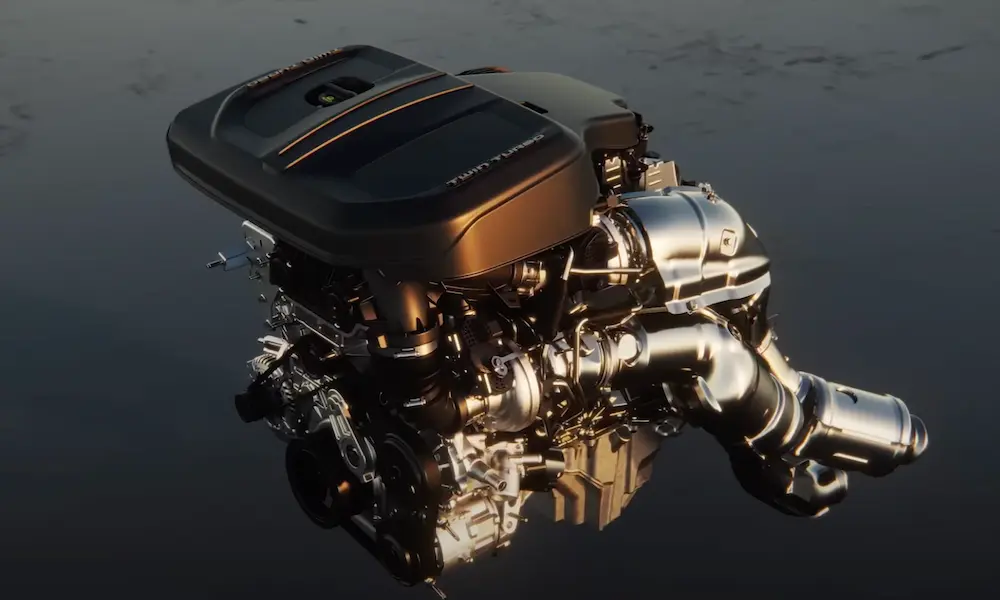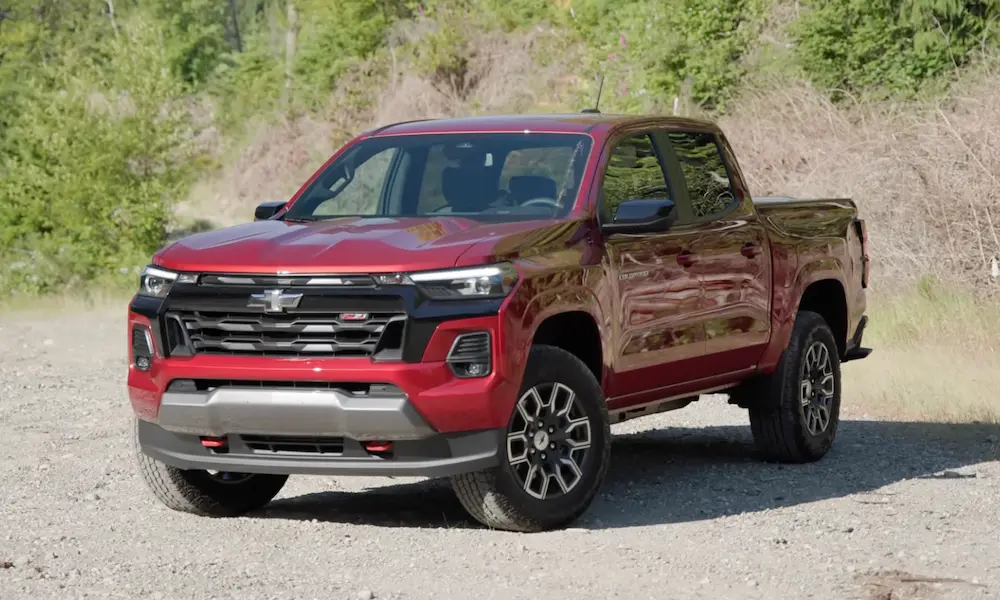
Got a misfire code, planning a rebuild, or just want to understand what’s happening under the hood of your Silverado or Tahoe? The Chevy 5.3 firing order is the starting point for all of it. Read through to the end — this covers diagnostics, cylinder layout, AFM headaches, and generational differences in plain language.
What Is the Chevy 5.3 Firing Order?
The Chevy 5.3 firing order is 1-8-7-2-6-5-4-3. That sequence applies to every generation of the 5.3-liter V8 — Gen III, Gen IV, and Gen V EcoTec3 — produced from 1999 through today.
This isn’t a random number string. Engineers designed it to:
- Spread power strokes evenly across the crankshaft
- Reduce torsional vibration
- Manage heat distribution across both cylinder banks
- Improve fuel efficiency and extend engine life
In a V8, the crankshaft completes two full rotations for all eight cylinders to fire once. That means a power stroke happens every 90 degrees of crankshaft rotation. The 1-8-7-2-6-5-4-3 sequence spaces those strokes diagonally across the engine block — front to rear, side to side — for smooth, balanced delivery.
Cylinder Layout: Where Are the Numbers?
Before the firing order makes sense, you need to know where each cylinder lives.
Bank 1 (Driver Side): Cylinders 1, 3, 5, 7 — odd numbers, front to rear
Bank 2 (Passenger Side): Cylinders 2, 4, 6, 8 — even numbers, front to rear
Cylinder 1 sits at the very front of the driver-side bank. That physical offset between banks matters when you’re chasing sensor codes or setting base timing.
This layout also controls your oxygen sensor diagnostics. The Bank 1, Sensor 1 oxygen sensor is upstream on the driver side — the side with cylinder 1. Bank 2 is the passenger side. Mix those up and you’ll replace the wrong sensor every time.
| Bank | Side | Cylinders | Front-to-Rear Order |
|---|---|---|---|
| Bank 1 | Driver | Odd | 1 → 3 → 5 → 7 |
| Bank 2 | Passenger | Even | 2 → 4 → 6 → 8 |
Why GM Changed the Firing Order From the Old Small-Block
The old Chevy small-block V8 — think pre-1997 engines — ran a firing order of 1-8-4-3-6-5-7-2. GM changed it for the modern LS-family engines, and the reason is worth understanding.
In the old sequence, cylinders 5 and 7 fired back-to-back. Both sit at the rear of the driver-side bank. That meant:
- Localized heat buildup at the rear of the block that the cooling system struggled to handle
- Intake reversion — adjacent cylinders competing for the same air charge, causing uneven fuel distribution
Professional drag racers figured this out first. They started swapping companion cylinder firing positions using custom camshafts. A “4/7 swap” separated those rear-cylinder firing events, moved the consecutive pair to the front of the engine near the water pump, and produced measurable horsepower gains with better bearing life.
GM took that racing knowledge and built it directly into the production engine. The modern 1-8-7-2-6-5-4-3 sequence combines a 4/7 swap and a 2/3 swap. The result is a sequence that fires diagonally across the block rather than clustering heat in one spot.
| Engine Platform | Era | Firing Order | Key Difference |
|---|---|---|---|
| Legacy Chevy V8 | Pre-1997 | 1-8-4-3-6-5-7-2 | Consecutive rear cylinders (5, 7) fire back-to-back |
| Modern 5.3L V8 | 1999–Present | 1-8-7-2-6-5-4-3 | Diagonal cross-block firing, balanced heat distribution |
How the Ignition System Delivers the Firing Sequence
Older V8s used a mechanical distributor — a spinning rotor inside a cap that physically passed voltage to each cylinder through long spark plug wires. Wear, moisture, and timing chain stretch all degraded accuracy over time.
The 5.3-liter uses a coil-on-plug (COP) ignition system. Each cylinder gets its own dedicated coil, mounted directly on the valve cover above the spark plug. The engine control module fires each coil individually, controlling timing on a per-cylinder basis.
To do that precisely, the ECM reads:
- Crankshaft position sensor — Early Gen III engines used a 24-tooth reluctor wheel. Gen IV and V engines upgraded to a 58-tooth wheel for much finer positional resolution
- Camshaft position sensor — Relocated to the front timing cover on Gen IV+ engines for improved feedback
That high-resolution data lets the ECM fire each coil at the exact millisecond needed to maintain the 1-8-7-2-6-5-4-3 sequence perfectly, even while adjusting timing for load, temperature, and knock prevention.
Active Fuel Management: How the 5.3 Becomes a 4-Cylinder
GM introduced Active Fuel Management (AFM) on Gen IV 5.3-liter engines to cut fuel consumption on the highway. The system deactivates four specific cylinders when torque demand is low.
The deactivated cylinders are always: 1, 4, 6, and 7.
That specific choice isn’t random. Shutting down those four leaves cylinders 8, 2, 5, and 3 active — still evenly spaced within the firing sequence, preventing rough vibration.
The hardware that makes this happen:
- Specially designed collapsible lifters on the four deactivated cylinders
- A Lifter Oil Manifold Assembly (LOMA) with electronically controlled solenoids
- Oil pressure routed to collapse the lifters, preventing the valves from opening
- Simultaneous cut of fuel injection and spark to those cylinders
The trapped exhaust gas inside a deactivated cylinder acts like an air spring, pushing back on the piston to reduce pumping losses.
The AFM Reliability Problem
The collapsible lifter design introduced a serious failure point. High-mileage AFM engines are notorious for:
- Lifter locking pins sticking or seizing
- Roller wheels destroying camshaft lobes when lifters fail to follow the lobe properly
- Excessive oil consumption from altered thermal and pressure dynamics
The aftermarket fix comes in two forms:
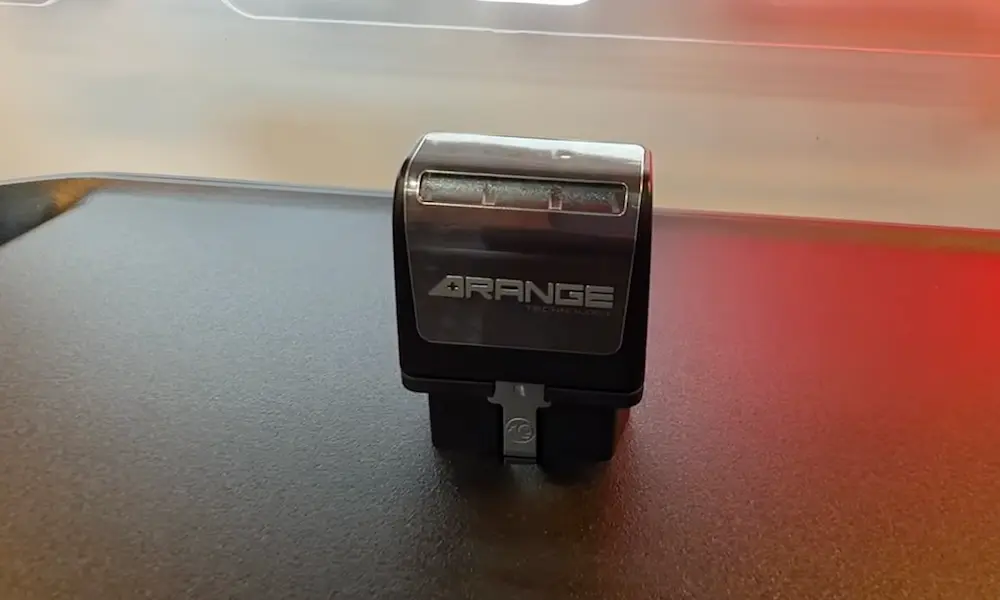
- Electronic disabler — Plugs into the OBD-II port and forces the ECM to stay in 8-cylinder mode. Fast, affordable, but the weak lifters stay in the engine.
- Mechanical delete — Remove the heads, swap out collapsible lifters for standard hydraulic rollers, replace the LOMA with a flat valley cover, and reprogram the ECM. This eliminates the problem entirely.
Dynamic Fuel Management: The Smarter Version
Gen V EcoTec3 engines replaced AFM with Dynamic Fuel Management (DFM). It’s a fundamentally different approach.
AFM is binary — either all 8 cylinders or the same 4. DFM is continuously variable. The system can choose from 17 distinct firing patterns, deactivating any combination of cylinders 80 times per second based on real-time load calculations.
| Feature | Active Fuel Management | Dynamic Fuel Management |
|---|---|---|
| System Type | Binary (8 or 4 cylinders) | Continuously variable |
| Deactivated Cylinders | Fixed: always 1, 4, 6, 7 | Any combination |
| Collapsible Lifters | 8 total (4 cylinders) | 16 total (all 8 cylinders) |
| Control Mechanism | Central LOMA | Individual per-cylinder solenoids |
| Firing Patterns | 2 | 17 |
Every DFM calculation still uses the 1-8-7-2-6-5-4-3 sequence as its base. The system simply skips specific firing events within that order. During standard testing, a DFM-equipped 5.3 operated below full 8-cylinder output for more than 60% of the test duration.
Decoding Misfire Codes Using the Firing Order
The firing order is your best diagnostic tool when misfire codes appear. The ECM monitors crankshaft acceleration after every firing event. A missed combustion event causes a microsecond slowdown — the ECM logs it as a misfire on that specific cylinder.
Codes P0301 through P0308 point directly to the physical cylinder number:
| Code | Cylinder | Location |
|---|---|---|
| P0300 | Multiple/Random | Systemic issue — check fuel pressure, MAF, vacuum leaks |
| P0301 | Cylinder 1 | Driver side, front |
| P0304 | Cylinder 4 | Passenger side, second from front |
| P0307 | Cylinder 7 | Driver side, rear |
Spark, Fuel, or Compression?
A single-cylinder misfire always traces back to one of three causes. Here’s how to work through them efficiently:
Check spark first. Swap the coil and plug wire from the misfiring cylinder to an adjacent healthy one. Clear codes and retest. If the misfire moves to the new cylinder location, the coil is bad. If it stays on the original cylinder, spark is fine.
Pro tip: A broken ground wire on the driver-side coil harness can knock out cylinders 1, 3, 5, and 7 simultaneously. If half your bank is misfiring, check the ground before replacing individual coils.
Check fuel next. A noid light in the injector harness confirms the ECM is commanding the injector to pulse. No pulse points to a wiring or ECM issue. Pulse present with a misfire suggests a clogged or failed injector.
Compression last. If spark and fuel are good, do a compression test and leak-down test. Zero compression on an AFM-equipped cylinder almost always means a collapsed lifter that’s holding a valve permanently shut. Pull the valve cover and watch the pushrod during cranking — if it doesn’t move, the lifter has failed.
Three Generations, One Firing Order
The 5.3-liter platform covers three distinct engineering generations. The firing order never changed, but nearly everything else did.
| Generation | Years | Block | Key Tech | Engine Codes |
|---|---|---|---|---|
| Gen III | 1999–2007 | Iron or Aluminum | Cathedral port heads, 24x reluctor, port injection | LM7, L59, LM4, L33 |
| Gen IV | 2005–2020 | Iron or Aluminum | AFM, 58x reluctor, variable valve timing | LH6, LC9, LY5, LMG |
| Gen V | 2014–Present | Aluminum only | Direct injection, DFM, variable valve timing | L83, L84, L8B |
Gen III engines are the simplest and most swap-friendly. No AFM, no collapsible lifters. The iron-block LM7 is particularly durable and widely used in engine swap builds.
Gen IV brought AFM and the upgraded reluctor wheel. The LC9 (aluminum block) and LY5 (iron block) are the most common variants. Watch for AFM lifter failures past 100,000 miles.
Gen V EcoTec3 switched to direct injection, spraying fuel directly into the combustion chamber at high pressure. Higher compression ratio, better efficiency, DFM instead of AFM — but parts aren’t interchangeable with older generations.
The LS4: The 5.3 That Went Sideways
Most 5.3-liter engines mount longitudinally in rear-wheel-drive trucks. The LS4 is the oddball exception — a transversely mounted, front-wheel-drive variant produced from 2005 to 2009 for vehicles like the Pontiac Grand Prix GXP, Chevrolet Impala SS, and Buick LaCrosse Super.
Fitting a V8 sideways into a V6 engine bay required some serious engineering compromises:
- Crankshaft shortened by 13mm to reduce overall engine length
- Starter relocated to the transmission housing — no room on the block
- Water pump moved off-axis via an offset manifold
- Intake manifold flipped so the throttle body sits over the transmission
- Metric 60-degree bellhousing pattern instead of standard V8 pattern
The 1-8-7-2-6-5-4-3 firing order was especially critical in this application. The smooth harmonic balance of the modern firing sequence prevented engine rocking that would accelerate wear on transverse motor mounts and CV joints. Despite all that engineering creativity, the LS4 still carried AFM hardware — and in a cramped transverse bay, fixing a collapsed lifter is a serious ordeal.
Maintenance That Protects the Firing Sequence
Good maintenance habits directly preserve the 1-8-7-2-6-5-4-3 sequence.
Spark plugs and coils: Use manufacturer-specified parts. The ECM measures ignition circuit resistance to calculate spark duration. Off-spec plugs throw that calculation off and can trigger phantom misfire codes even when combustion is fine. Always fully seat the coil boot onto the spark plug — a loose boot will arc to the nearest ground instead of firing the plug.
Oil changes on AFM/DFM engines: This is the big one. Degraded oil clogs the microscopic passages in the LOMA and inside the collapsible lifters. Once those passages restrict, the solenoids can’t deliver enough oil volume to engage or disengage the lifters correctly. They stick — and a stuck lifter means a dead cylinder in the firing order. Use high-quality full synthetic oil and stick to your change intervals. This is the single most effective step you can take to keep all eight cylinders firing reliably past 150,000 miles.