Your coolant reservoir is empty, but there’s not a single drop on your driveway. Confusing, right? The fluid didn’t just vanish — it’s going somewhere, and finding where could save your engine from serious damage. This guide breaks down every possible cause, from the sneaky to the catastrophic, so you can figure out exactly what’s happening under your hood.
Why Your Cooling System Should Never Lose Fluid
Your car’s cooling system is a completely sealed, closed loop. In theory, the fluid level should stay perfectly constant between service intervals. No evaporation, no consumption — just the same coolant cycling endlessly through your engine, radiator, and heater core.
So when your coolant reservoir empty but no leak situation appears, physics demands an explanation. The fluid is either:
- Escaping as invisible steam or vapor
- Leaking internally into the engine
- Hiding somewhere inside your dashboard
- Getting destroyed by chemical contamination
Let’s work through each one.
The Faulty Radiator Cap: The Simplest Culprit Nobody Checks First
Every pound of pressure added to your cooling system raises its boiling point by 3°F. A standard 15 PSI cap pushes the boiling point up to 257°F — way above what your engine normally reaches.
But when the cap’s spring weakens or the rubber gasket cracks, the system can’t hold that pressure. The boiling point drops back to normal. Your coolant starts boiling at regular operating temperatures and exits the system as invisible steam.
No puddle. No stain. Just a mysteriously empty reservoir.
Replacing and pressure-testing the radiator cap is the cheapest first step in any coolant loss diagnosis. A new cap costs under $20 and takes two minutes to swap.
Leaks That Evaporate Before Hitting the Ground
Not every leak makes a puddle. If coolant drips onto a scorching exhaust manifold or catalytic converter, it flashes to steam instantly. You’ll never see it.
The Water Pump Weep Hole
Your water pump has a built-in “weep hole” designed to signal seal failure. When the internal shaft seal starts going, coolant seeps out — but because the pump sits directly against the hot engine block, this small amount of fluid evaporates before reaching the ground. The only clue? A faint white chalky residue around the pump housing.
Turbocharged Engines
Turbochargers run at extreme temperatures — sometimes glowing red-hot under load. Any microscopic leak in the turbocharger coolant lines vaporizes the moment it escapes. Check the banjo bolt connections and coolant feed/return hoses if you drive a turbocharged vehicle.
Radiator Seam and Hose Fitting Leaks
Modern radiators use aluminum cores crimped onto plastic end tanks. Over time, the rubber seals between the plastic and metal degrade, creating a fine mist that evaporates instantly in airflow from the cooling fans. No drips, no puddle — just a slowly shrinking reservoir.
Pressurized vs. Non-Pressurized Reservoirs: Why It Matters for Diagnosis
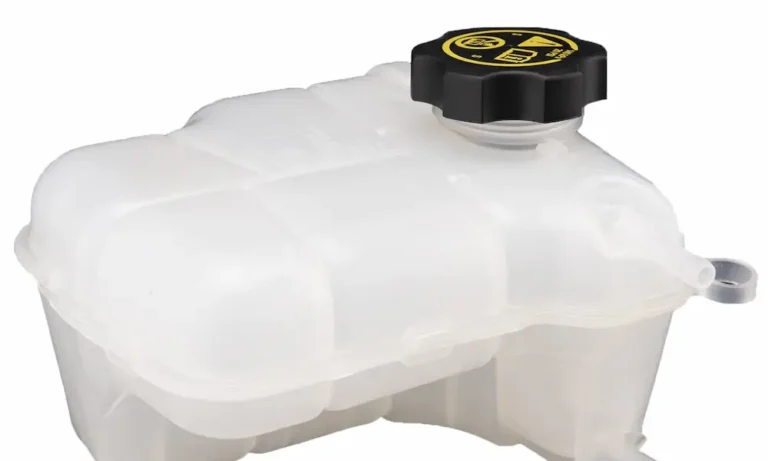
Before you start tracing leaks, you need to know which type of reservoir your car uses. These two designs fail differently.
| Feature | Pressurized Expansion Tank | Non-Pressurized Overflow Bottle |
|---|---|---|
| System Pressure | Operates at full system pressure | Atmospheric pressure only |
| Loop Integration | Active, in-line component | Open-loop receptacle |
| Function | Holds pressurized air for fluid expansion | Stores overflow, draws it back when cold |
| Common Failure | Hairline cracks that seal when cold | Clogged hoses preventing fluid return |
Plastic expansion tanks endure thousands of heat cycles. They develop microscopic cracks that only open when the system is hot and pressurized. Coolant seeps out as vapor, then the crack seals itself when the engine cools. The result? A dry engine bay, zero puddles, and an empty tank every morning.
Internal Engine Leaks: The Expensive End of the Spectrum
If you’ve checked everything external and still can’t find a source, the leak is probably inside the engine. Internal coolant leaks are the most destructive scenario — and they need immediate attention.
Blown Head Gasket
The head gasket seals the combustion chamber from the coolant passages. When it fails, two dangerous things happen:
- Combustion gases push into the cooling system, creating pressure spikes that can blow hoses off fittings
- Engine vacuum sucks coolant directly into the cylinders, where it vaporizes and exits through the exhaust as thick, sweet-smelling white smoke
If coolant mixes with engine oil, you’ll notice a frothy, milkshake-like substance on the dipstick. That contaminated oil has zero lubricating properties — your bearings start failing within hours.
Cracked Cylinder Head or Engine Block
Physical cracks in the cylinder head or block create a direct path for coolant to escape internally. These cracks often seal tightly when cold but open under heat and pressure — making them extremely difficult to catch without a proper pressure test or combustion leak test.
Common causes include thermal shock (adding cold water to an overheating engine) and insufficient freeze protection in winter climates.
Two Engineering Failures Worth Knowing About
Ford Duratec 3.5L/3.7L: The Hidden Internal Water Pump
Unlike most engines with an external, belt-driven water pump, the Ford Duratec V6 hides its water pump inside the timing cover, driven by the timing chain. Ford used this in the Edge, Explorer, and Lincoln MKX.
When the internal pump seal fails, coolant drains directly into the crankcase — mixing with the oil and destroying lubrication instantly. Owners often have no warning before catastrophic engine seizure. There’s no external drip, no puddle, no obvious symptom beyond an empty reservoir.
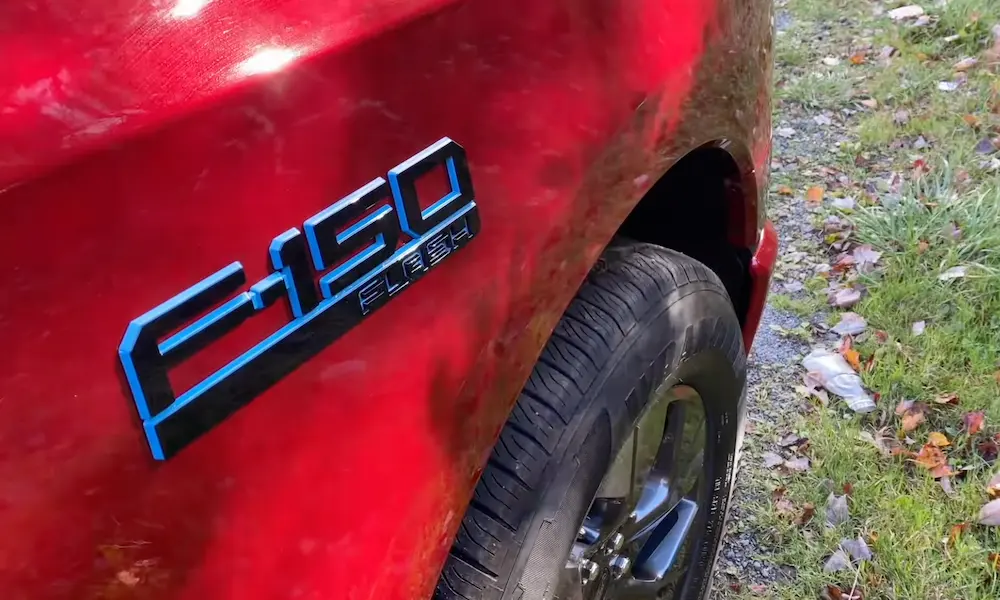
Ford EcoBoost 1.5L/2.0L: Coolant Intrusion by Design
This one’s even more alarming. Ford’s EcoBoost four-cylinder engines built between 2013 and 2019 suffer from a structural design flaw in the engine block’s open-deck architecture.
Engineers machined a narrow slit between adjacent cylinders to improve coolant flow. Under turbocharger boost, that thin metal bridge flexes, warps, and destroys the head gasket above it. Coolant floods cylinders 2 and 3.
Symptoms follow a brutal pattern:
- Coolant reservoir empties overnight
- Cold-start misfires every morning (P0301, P0302)
- Thick white smoke from the exhaust until the engine warms up
- The car runs fine midday, then repeats the cycle next morning
Ford’s Technical Service Bulletin 19-2346 addresses this. Simply replacing the head gasket doesn’t fix it — the block itself is compromised. The prescribed repair involves a complete engine replacement with a redesigned closed-deck block. A federal jury trial is currently scheduled for June 2026 to address consumer damages from this defect.
Your Heater Core Is Leaking Into the Cabin
Your heater core sits deep inside the dashboard — and when it leaks, coolant goes into your car instead of onto the ground. Watch for this specific combination of symptoms:
- Sweet, syrupy smell from the vents when the heat is on — ethylene glycol has a distinct sugary odor
- Greasy, persistent windshield fog that doesn’t clear with the defroster — chemical vapor coats the interior glass with a sticky film
- Wet, sweet-smelling carpet on the passenger side floor
- Weak heat output even when the temperature gauge reads normal (the fluid level dropped below the heater core inlet)
Don’t confuse this with a clogged A/C drain. A blocked drain also creates wet carpet, but that fluid is clear and odorless — not the colored, sweet-smelling coolant from a heater core failure.
Electrolysis: When Electricity Destroys Your Cooling System
Stray electrical current uses your coolant as a ground path when engine ground straps corrode or break. This turns your cooling system into a galvanic battery, physically stripping aluminum from the inside of your radiator and heater core.
The result is hundreds of microscopic pinholes that allow fluid to escape as vapor. You lose coolant continuously with no external drips.
Testing for electrolysis is simple:
- Start the engine and let it reach operating temperature
- Set your multimeter to DC voltage
- Touch the negative probe to the battery’s negative terminal
- Submerge the positive probe into the coolant at the radiator neck — don’t touch the metal sides
- A reading above 0.1 volts means stray current is actively damaging your system
- A reading of 0.3 volts or higher means your replacement radiator will fail within weeks if you don’t fix the ground first
Fix the broken ground strap or add supplementary braided grounds between the engine block, radiator, and chassis.
Diagnostic Tests That Find the Invisible
Cooling System Pressure Test
This test pressurizes the system while the engine is completely cold. Remove the cap, attach the pressure tester, pump to the cap’s rated PSI (don’t exceed it), and wait 20-30 minutes.
If the gauge drops but you find no external fluid anywhere — and the gauge spikes when you bump the starter — combustion gases are leaking into the water jacket. That confirms a blown head gasket or cracked block without disassembling anything.
Chemical Block (Combustion Leak) Test
This test detects exhaust gases bubbling through your coolant. A blue indicator fluid turns yellow when it contacts hydrocarbon-rich combustion gases. Blue means sealed. Yellow means internal breach.
One important note: if the coolant level is too high, liquid gets sucked into the tester and causes a false color change. Always check this before interpreting results.
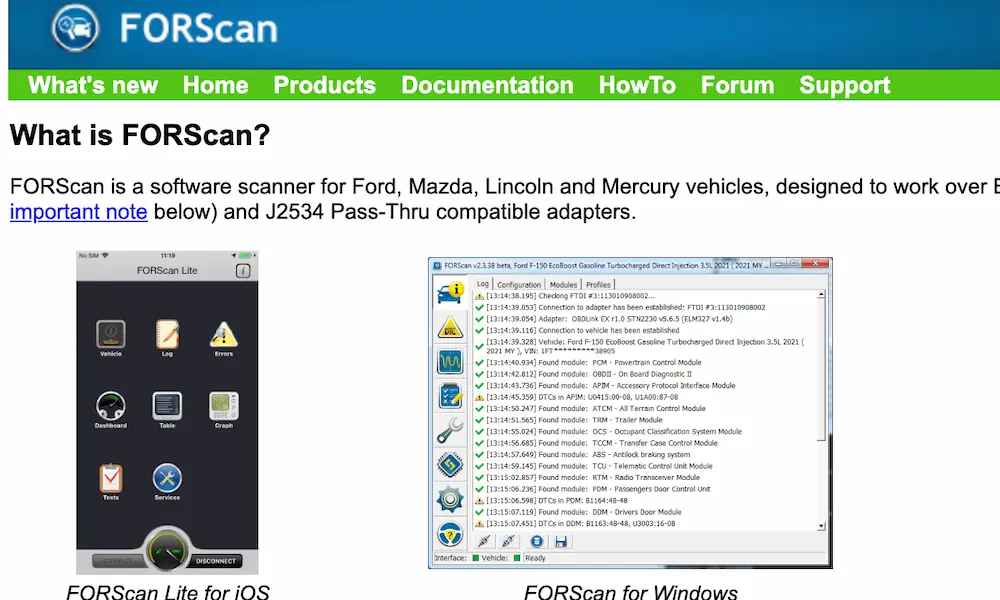
OBD-II Code Analysis
| Code | What It Means for Coolant Loss |
|---|---|
| P0300 | Random misfire — coolant likely pooling in cylinders overnight |
| P0301–P0312 | Cylinder-specific misfire — points to exact cylinder with fluid intrusion |
| P0217 | Engine over-temperature — often triggered by an empty system |
| P0128 | Thermostat or low fluid altering the engine’s thermal map |
Multiple codes together — especially a misfire plus an over-temperature — often trigger limp mode. Your PCM cuts power and maxes out the cooling fans to protect the heads.
Don’t Forget Your Catalytic Converter
If coolant entered your combustion chambers for any length of time, it traveled into your exhaust. Ethylene glycol bakes onto the catalytic converter’s ceramic honeycomb, poisoning the precious metal coating and spiking internal temperatures past 2,000°F. The substrate melts, collapses, and blocks exhaust flow.
Signs of a coolant-poisoned catalytic converter:
- Severe power loss, especially at highway speeds
- Rotten egg smell from the exhaust
- Random stalling
Replacing your engine without also replacing a contaminated catalytic converter means your new engine will suffocate on backpressure. Always flow-test the catalytic converter after any confirmed internal coolant leak.
Mixing the Wrong Coolant Makes Things Worse
There are three main coolant types — IAT (green), OAT (orange/red), and HOAT (various colors). Color means nothing — manufacturers add dye arbitrarily. You must read the chemical formulation on the bottle.
Mixing incompatible coolant types triggers an immediate chemical reaction. The corrosion inhibitors precipitate out of solution and form a thick gel that clogs the heater core and radiator tubes. Fluid can’t circulate, local boiling occurs, and pressure forces the remaining fluid out through the overflow — fast.
The fix requires a full pressurized chemical flush and usually a heater core replacement. Never top off a low reservoir by color — always match the chemistry.
Frequently Asked Questions
Does driving at high altitude affect a vehicle’s cooling system performance and fluid retention?
Yes. Atmospheric pressure drops as altitude increases, which naturally lowers the boiling point of your coolant. A weak radiator cap or marginal antifreeze mixture that works fine at sea level will allow fluid to boil and escape as vapor much faster at elevation.
Is it safe to use tap water to fill an empty reservoir in an emergency?
It’s acceptable in a genuine emergency to prevent overheating on the road — but fix it immediately after. Tap water contains minerals and chlorides that accelerate internal corrosion. Flush the entire system and refill with a proper distilled water and antifreeze mixture as soon as possible.
Will aftermarket liquid stop-leak additives permanently fix a micro-leak?
No. Stop-leak additives create a temporary scab using suspended particles, but they can’t fix cracked blocks or blown head gaskets. Worse, those particles frequently clump in the heater core and radiator, causing expensive clogs. Ford specifically warns against using these products in their technical service bulletins.
Can a clogged air conditioning drain tube be mistaken for a heater core leak?
Yes, this is a common diagnostic mistake. A blocked A/C drain also creates wet passenger-side carpet. The difference: A/C condensation is clear and odorless. Heater core coolant is sweet-smelling, colored, and slightly greasy to the touch.
Can a faulty water pump impeller cause overheating and fluid loss without a visible leak?
Absolutely. If the impeller blades corrode away or a plastic impeller cracks and spins freely on the shaft, the pump housing stays completely dry outside. But no fluid circulates inside, causing rapid boiling and steam loss through the overflow. The pump looks fine externally while failing completely internally.