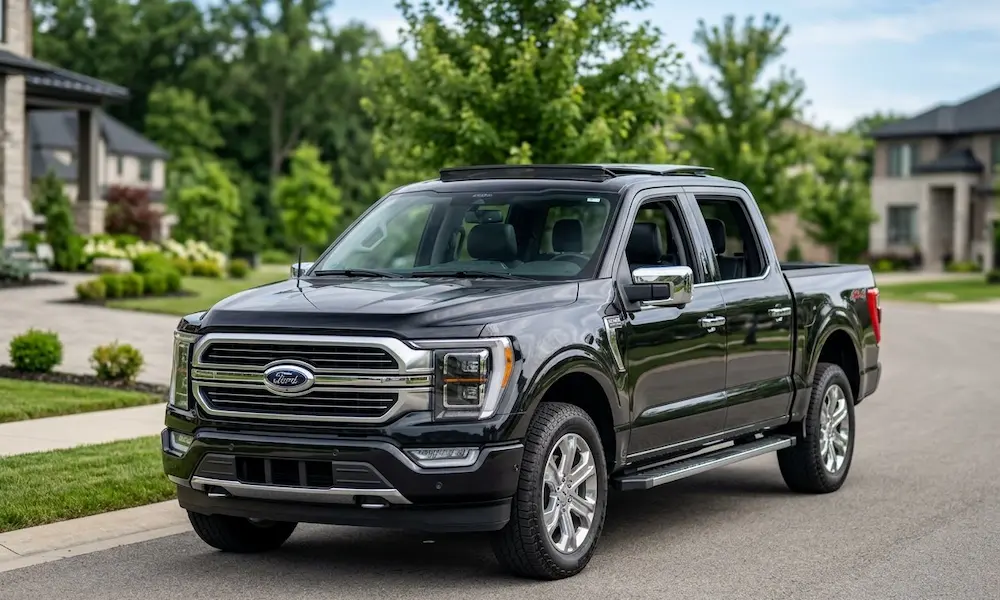
That clunking rattle on cold startup isn’t your F-150 being dramatic. It’s your cam phasers begging for attention. Ignore it long enough, and you’re looking at a destroyed engine and a bill that’ll make your eyes water. This guide covers everything you need to know about Ford F-150 cam phaser replacement — symptoms, costs, repairs, and how to avoid getting burned twice.
What Are Cam Phasers and Why Do They Fail?
Cam phasers are hydraulically actuated sprockets mounted on your camshafts. They use pressurized engine oil to advance or retard valve timing in real time. Ford uses them in both the 5.4-liter 3-valve Triton V8 and the 3.5-liter EcoBoost V6 to balance power, torque, and fuel efficiency.
Here’s where things go wrong.
When you shut off your engine, oil drains back into the pan. An internal spring-loaded locking pin holds the phaser in a fixed base-timing position until oil pressure returns at startup. The problem? That locking pin wears out. When it does, the phaser oscillates violently during those first few seconds before oil pressure builds. That’s the rattle you hear.
The Locking Pin Problem
The locking pin in early-generation phasers wasn’t built to handle the mechanical stress over thousands of heat cycles. Once the pin starts wearing, the phaser slaps against its housing every cold start. You get two to five seconds of metallic clattering, then silence once oil pressure arrives.
It sounds minor. It’s not.
Oil Degradation Makes It Worse
The 3.5-liter EcoBoost runs twin turbos. Those turbos cook your oil fast. Thermally degraded, sludge-filled oil can’t actuate the phasers properly. Combined with low oil pressure from extended drain intervals, you get a perfect storm of phaser destruction.
On the older 5.4-liter engines, the phasers sit at the highest point of the oiling circuit. Worn bearings bleed off pressure before oil even reaches the top of the engine. New phasers on a tired block fail fast for this exact reason.
Timing Chain Damage Follows
Failing phasers send violent shock loads through your timing chains. Chains stretch. Tensioners max out. Plastic guides shatter. Debris clogs the oil pickup. At that point, you’re not fixing phasers anymore — you’re shopping for a new engine.
Which F-150 Engines Are Affected?
| Engine | Years Affected | Primary Failure Mode |
|---|---|---|
| 5.4L 3-Valve Triton V8 | 2004–2010 | Composite tensioner seal blowout, oil pressure loss |
| 3.5L EcoBoost Gen 1 | 2011–2016 | Primary timing chain stretch from extended oil intervals |
| 3.5L EcoBoost Gen 2 | 2017–2020 | Locking pin metallurgical failure, cold-start rattle |
The Gen 2 3.5-liter EcoBoost is the most problematic. It affects high-value trucks including the Raptor, Limited, and Platinum trims from 2017 through 2020. Ford completely redesigned the VCT system for this engine generation, and it still failed at scale.
The 5.4-liter has its own unique headache. The composite timing chain tensioners use a thin rubber perimeter seal that frequently blows out, causing a massive internal oil leak behind the timing cover. That sudden pressure drop destroys phasers fast. Fixing this engine correctly means upgrading to cast-iron tensioners and installing a high-volume oil pump like the Melling M340HV.
Symptoms of a Failing Cam Phaser
Don’t wait for a warning light. Watch for these:
Cold Start Rattle
A loud, metallic diesel-like clatter from the front of the engine at startup. It lasts two to five seconds, then disappears. This is the first and most recognizable symptom.
Persistent Ticking at Idle
Once the rattle starts happening when the engine is fully warm, internal wear is severe. The phaser can no longer hold its commanded position even with full oil pressure.
Rough Idle and Stalling
The engine stumbles, hunts at idle, or stalls in traffic. Valve timing is off, and combustion efficiency suffers.
Loss of Power and Poor Fuel Economy
Noticeable drop in passing power and throttle response. Your fuel economy tanks too.
Check Engine Light
The PCM detects timing correlation errors and logs trouble codes.
Diagnostic Trouble Codes to Know
Your scan tool will tell you a lot. Here are the most common codes associated with cam phaser failure:
| DTC | Description | What It Likely Means |
|---|---|---|
| P0011 | Intake Cam Over-Advanced (Bank 1) | Phaser stuck advanced or sticking VCT solenoid |
| P0012 | Intake Cam Over-Retarded (Bank 1) | Low oil pressure or failing chain tensioner |
| P0014 | Exhaust Cam Over-Advanced (Bank 1) | Internal exhaust phaser failure |
| P0015 | Exhaust Cam Over-Retarded (Bank 1) | Exhaust phaser can’t return to base timing |
| P0016 | Crank/Cam Correlation (Bank 1 Sensor A) | Severe chain stretch or locking pin failure |
| P0017 | Crank/Cam Correlation (Bank 1 Sensor B) | Out-of-phase exhaust cam on Bank 1 |
| P0021 | Intake Cam Over-Advanced (Bank 2) | Sticking solenoid or worn phaser on driver’s side |
| P0022 | Intake Cam Over-Retarded (Bank 2) | Oil pressure loss preventing timing adjustment |
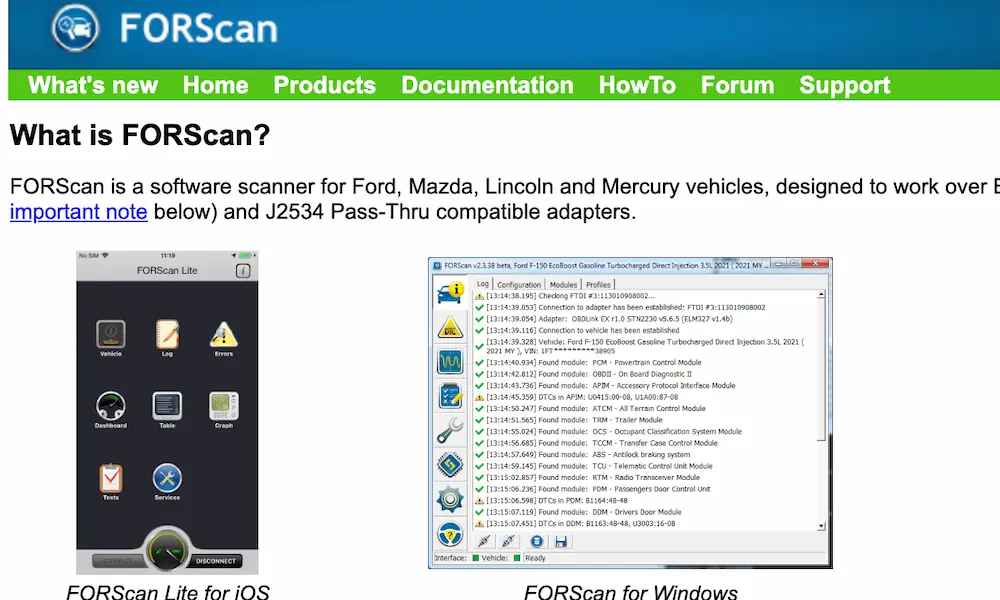
A proper diagnosis uses Ford’s Integrated Diagnostic System to monitor actual versus commanded camshaft position in real time. Codes alone don’t tell the whole story. A sticking VCT solenoid can throw the same codes as a dead phaser. Rule out the solenoid before approving a full timing job.
Ford’s Official Response: TSBs and Customer Satisfaction Programs
Ford issued Customer Satisfaction Program 21N03 to cover cam phaser replacement on 2017–2020 F-150s and related vehicles equipped with the Gen 2 3.5-liter EcoBoost. Before that, Ford pushed Field Service Action 21B10 — a PCM software update meant to reduce the rattle by adjusting oil pressure and startup timing parameters. For most owners with existing mechanical damage, the software fix did nothing.
The coverage under 21N03 was prorated by mileage:
| Mileage at Repair | Ford Pays | You Pay |
|---|---|---|
| Under 70,000 miles | 100% | 0% |
| 70,000–79,999 miles | 66% | 34% |
| 80,000–89,999 miles | 33% | 67% |
| 90,000+ miles | 0% | 100% |
Source: NHTSA documentation for Customer Satisfaction Program 21N03
The program expired January 1, 2023. If your truck is past that deadline and outside mileage coverage, the full repair bill is yours. Ford’s official position — stated in the TSB itself — was that the noise doesn’t affect safety or performance. Independent technicians and attorneys disagree loudly with that claim.
The Critical Parts Difference: HL3Z vs. ML3Z
This is the most important thing to understand about Ford F-150 cam phaser replacement.
The original defective phasers carry the HL3Z prefix:
- Intake: HL3Z-6256-CD
- Exhaust: HL3Z-6C525-CD
Ford redesigned the internals with a reinforced “cap over spring” locking pin architecture. These updated parts carry the ML3Z prefix:
- Intake: ML3Z-6256-A
- Exhaust: ML3Z-6C525-A
Installing the old HL3Z parts guarantees the same failure. The labor to replace cam phasers runs 11 to 17 hours. Putting cheap or wrong-generation parts in that job is an expensive mistake you’ll make twice. Check your invoice and confirm ML3Z parts are installed before you sign off.
During supply shortages, Ford permitted dealers to install HL3Z parts temporarily. This practice is widely criticized by engine builders for exactly the reason you’d expect — repeat failure is certain.
What Ford F-150 Cam Phaser Replacement Actually Costs
The labor is what destroys your wallet. Here’s what owners are actually paying:
| Vehicle | Dealership Cost | Independent Shop Cost |
|---|---|---|
| 2017–2020 F-150 3.5L EcoBoost | $4,500–$6,500 | $3,000–$4,500 |
| 2004–2010 F-150 5.4L 3-Valve | $3,500–$4,500 | $2,500–$3,500 |
| 2018–2020 Expedition 3.5L EcoBoost | $5,000–$7,000 | $3,500–$5,000 |
Parts alone for a complete OEM timing kit — including ML3Z phasers, chains, guides, tensioners, torque-to-yield bolts, water pump, VCT solenoids, and gaskets — runs $1,000 to $1,500. Labor rates range from $90 to $225 per hour depending on location and shop type.
Since the front cover comes off anyway, smart shops replace the water pump, thermostat, all timing chain guides, and VCT solenoids at the same time. Skipping those components to save money now risks another teardown later.
Skip the discount aftermarket parts. Cheap overseas phasers frequently fail within a few thousand miles due to poor metallurgy and sloppy tolerances. The labor cost is too high to gamble on inferior components.
The Lockout Option for 5.4-Liter Owners
If you own a 2004–2010 F-150 with the 5.4-liter 3-valve engine and the repair bill exceeds the truck’s value, cam phaser lockout kits from companies like Livernois Motorsports and WMS offer a practical alternative.
These billet aluminum inserts mechanically freeze the phaser in the fully advanced position. No moving parts. No hydraulic dependency. No rattling. The phaser becomes a solid timing gear, permanently immune to oil pressure problems.
The trade-off is real though. Your PCM will detect that the camshafts aren’t moving as commanded and throw codes, triggering limp mode. You need a custom ECU tune uploaded via an SCT X4 or similar OBD-II device to disable VCT monitoring and remap fuel and ignition tables.
You’ll also lose top-end horsepower above 5,000 RPM. For a work truck that spends its life hauling at lower RPMs, that’s usually an acceptable compromise for long-term reliability at a fraction of the OEM replacement cost.
The Legal Side: Class Actions and What They Mean for You
Multiple class action lawsuits against Ford allege the company knew about cam phaser and timing system defects before these trucks were sold. Plaintiffs argue Ford concealed the engineering vulnerabilities to protect sales and avoid recall costs.
The legal arguments center on the Magnuson-Moss Warranty Act, breach of implied warranty, and state consumer fraud statutes. Courts have ruled that technical expert testimony on engineering failures can proceed, clearing the path for detailed mechanical evidence before juries.
The core consumer argument is straightforward: the defect almost always manifests just outside the factory 60,000-mile powertrain warranty. Customer Satisfaction Program 21N03 expired in January 2023. Owners who missed that window or exceeded the mileage thresholds now carry the full repair cost for what plaintiffs call a known factory defect.
If your F-150 suffered cam phaser failure and Ford hasn’t covered it, consulting a lemon law or consumer protection attorney costs nothing upfront and could recover repair expenses. Document everything — repair orders, invoices, dealer communications, and any TSB numbers referenced.
How to Protect Your Engine Right Now
Prevention beats a $5,000 repair bill every time. Here’s what actually helps:
- Change your oil every 5,000 miles with full synthetic. Don’t trust the factory oil life monitor on these engines. The EcoBoost turbos cook oil fast.
- Don’t ignore the cold-start rattle. Two to five seconds of rattling is your warning window. Acting early costs far less than acting after chains and guides fail.
- Confirm ML3Z part numbers on your invoice. If a shop or dealer installs HL3Z phasers, you’ll be back in 20,000 miles.
- Replace surrounding components simultaneously. Water pump, timing chain guides, tensioners, and VCT solenoids all become accessible during this job. Replace them now or pay the teardown labor again later.
- Avoid cheap aftermarket parts. The only safe option is genuine Ford OEM updated hardware meeting TSB 23-2143 specifications.
The rattle is a mechanical countdown. The question isn’t whether you’ll deal with this issue — it’s whether you’ll deal with it before or after the engine destroys itself.