Got a Ford with a rough idle, a shaking steering wheel, and a check engine light that won’t quit? The Ford P0300 code is one of the trickiest codes to crack — but it’s fixable. This guide breaks down every cause, every fix, and the one diagnostic trick most people skip. Read it before you spend a dime.
What Ford P0300 Actually Means
The P0300 code means your Ford’s computer detected misfires across multiple cylinders — not just one. That’s what makes it frustrating. It’s not pointing at a single broken part. It’s telling you something foundational is wrong.
Here’s how your Ford catches it:
Your crankshaft position sensor watches for tiny speed changes in the crankshaft. Every good combustion event gives the crank a small acceleration. When a cylinder misfires, that acceleration disappears. The computer notices, logs it, and starts counting.
Miss enough combustion events, and the check engine light turns on steady. Miss a lot of them fast enough to threaten the catalytic converter, and that light flashes. A flashing check engine light isn’t dramatic — it’s a genuine emergency. Pull over. Stop driving. Raw fuel dumping into a hot catalytic converter can melt it completely, and replacement costs several thousand dollars.
Ford P0300 vs. Related Misfire Codes
| Code | What It Means | Where to Look First |
|---|---|---|
| P0300 | Random/multiple cylinder misfire | Fuel pressure, vacuum leaks, PCM |
| P0301–P0308 | Single cylinder misfire | Specific plug, coil, or injector |
| P0316 | Misfire within first 1,000 RPM at startup | Leaking injectors or carbon on valves |
| P0300 + P0171 | Random misfire plus lean Bank 1 | Intake manifold leak or MAF sensor |
Your Ignition System Is the First Place to Look
Around 40% of Ford P0300 cases trace back to the ignition system. That includes spark plugs, coils, and the rubber boots connecting them.
Spark Plugs Wear Faster Than You Think
Ford lists a 100,000-mile replacement interval. In reality — especially in turbocharged EcoBoost engines — plugs degrade much sooner. As the electrodes wear down, the gap widens. A wider gap demands more voltage to fire. Under heavy load like towing or hard acceleration, the coil can’t deliver enough juice. Misfire.
Worse, a cracked porcelain insulator lets high voltage bleed to the engine block instead of jumping the gap. You won’t see it with your eyes. But you’ll feel it as a sharp, random misfire that comes and goes.
Ignition Coils Fail Under Heat
Ford’s coil-on-plug units — used in the F-150, Explorer, and Mustang — degrade as their epoxy insulation breaks down. The 5.0L V8 is known to show coil degradation around 70,000 miles. A failing coil might idle fine but drop out completely during a highway pass.
If your valve cover gaskets leak, oil pools in the plug wells. That oil soaks the rubber ignition boot, and the spark finds an easier path — straight through the side of the boot to the cylinder head. Technicians call this carbon tracking. Look for white or black streaks on the boot.
Ignition Component Quick Reference
| Component | Failure Mode | Symptom | How to Check |
|---|---|---|---|
| Spark plug | Electrode erosion, gap too wide | Hesitation under load | Gap gauge, visual inspection |
| Ignition coil | Internal short circuit | Jerking or rev-limiter feeling | Oscilloscope or Mode 06 counters |
| Ignition boot | Oil saturation, carbon tracking | Rough idle after oil leak or engine wash | Check for oil in plug wells, white tracks on boot |
| Wiring harness | Frayed insulation, loose pins | Random multi-cylinder dropout | Multimeter resistance test |
Fuel Delivery and Vacuum Leaks
If the ignition checks out, look at fuel and air next.
Low Fuel Pressure Affects Every Cylinder
Your Ford’s fuel system needs to hold 35 to 60 PSI at idle to atomize fuel properly. A worn fuel pump or clogged filter drops that pressure. Every cylinder runs lean. That lean condition triggers P0300 across the board.
The Ford Focus with the 1.6L engine has a known vulnerability to injector clogs from low-quality fuel or microscopic debris. A clogged injector doesn’t go dead — it shifts from a fine mist to a stream. Poor atomization means incomplete combustion. More misfires.
Vacuum Leaks Are Sneaky
Unmetered air sneaking past the mass airflow sensor throws off the air-to-fuel ratio. The F-150 and Expedition are particularly prone to this. Intake manifold gaskets crack from thermal cycling, and PCV hoses get brittle over time.
Here’s the giveaway: vacuum leaks are worst at idle. Once RPMs rise, the extra air becomes proportionally less significant and the rough idle smooths out. A smoke test — pumping mineral oil vapor into the intake — exposes hidden leaks in seconds.
Fuel and Air System Specs
| Parameter | Target Range | Common Ford Failure Point |
|---|---|---|
| Fuel pressure (port injection) | 35–60 PSI at idle | Failing pump in Escape, Edge models |
| Air-to-fuel ratio | 14.7:1 stoichiometric | Vacuum leaks in F-150 intake manifold |
| Short-term fuel trim | -5% to +5% | Contaminated MAF sensor |
| Injector resistance | 12–16 ohms | Coil winding failure in high-mileage Focus |
EcoBoost Engines Have Two Problems Nobody Talks About
If you’ve got an EcoBoost motor and you’re chasing P0300, you need to know about carbon buildup and intercooler moisture. Both are EcoBoost-specific and both are frequently missed.
Carbon Builds Up on the Intake Valves
Traditional port-injected engines spray fuel into the intake port, which constantly washes the valves clean. EcoBoost engines use direct injection — fuel goes straight into the combustion chamber. The valves never get that cleaning wash.
Over tens of thousands of miles, oily vapors from the crankcase ventilation system bake onto the hot intake valves. These deposits restrict airflow and wreck the turbulence needed for a clean burn. The result? Chronic misfires, especially on cold starts.
The fix is walnut shell blasting — a technique where a technician blasts crushed walnut media through the intake ports to strip the carbon off. Do this every 50,000 to 70,000 miles.
The F-150 Intercooler Moisture Problem
In humid climates, the charge air cooler on the F-150 EcoBoost can collect liquid water from condensation. During steady highway cruising, that water just sits there. The moment you floor it to pass someone, the surge of airflow gulps that pooled water straight into the engine. Instant violent misfire. Flashing check engine light. Limp mode.
The solution involves cleaning the intercooler and installing an oil catch can to stop the oily sludge from trapping moisture in the first place.
EcoBoost Maintenance Schedule
| Service | Interval | Why It Matters |
|---|---|---|
| Walnut blasting (intake valves) | Every 50,000–70,000 miles | Clears carbon that chokes airflow |
| Spark plug replacement | Every 30,000–45,000 miles | High boost burns through electrodes faster |
| Intercooler cleaning | Annually or every 15,000 miles | Prevents moisture gulp misfires |
| MAP sensor cleaning | Every oil change | Oil vapors foul the sensor readings |
Mechanical Problems That Look Like Electrical Ones
If new plugs, coils, and injectors didn’t fix the P0300, the engine itself might be failing internally.
Low Compression on Multiple Cylinders
Combustion requires compression. Worn piston rings, leaking valves, or a blown head gasket all reduce cylinder pressure. Even if the spark and fuel are perfect, the mixture won’t fire correctly without adequate compression. When several cylinders suffer marginal wear simultaneously, the misfires appear random — and the computer logs P0300.
Coolant Intrusion in 2.0L EcoBoost Engines
The 2.0L EcoBoost in the Ford Edge, Escape, and Fusion has a documented design flaw. Coolant can seep past the head gasket into the combustion chambers after shutdown. On the next startup, liquid in the cylinders prevents proper firing and causes rough idle and misfire codes. If you push through it, you risk hydraulic lock — the piston hits the liquid, the connecting rod bends, and the engine is destroyed. TSB 19-2346 covers this issue and often requires replacing the entire engine long block.
Timing Chain Stretch
A stretched timing chain shifts valve timing just enough to hurt combustion efficiency across all cylinders. The engine’s computer can compensate — but only to a point. V6 Ford engines often rattle on cold starts when the chain tensioners are failing. That rattle is your warning. Ignore it, and P0300 follows.
Mode 06: The Diagnostic Tool Most People Skip
Standard code readers give you a P0300 and nothing else. OBD-II Mode 06 gives you the raw data behind the code — including individual misfire counts per cylinder, per drive cycle.
Ford uses Test ID $53 for misfire monitoring. Pull that data and you might see Cylinder 4 with 150 recorded misfires while every other cylinder shows zero. That’s not random — that’s a coil or plug issue on a specific cylinder that hasn’t yet triggered a cylinder-specific code.
Mode 06 also verifies your repair. After replacing spark plugs, take the vehicle for a test drive and watch the misfire counters in real time. If they stay at zero under the same conditions that previously caused the fault, you’ve actually fixed the problem.
Mode 06 Misfire Test IDs for Ford Vehicles
| Test ID | Component ID | What It Reads |
|---|---|---|
| TID $53 | CID $01 | Cylinder 1 misfire count |
| TID $53 | CID $02 | Cylinder 2 misfire count |
| TID $53 | CID $03 | Cylinder 3 misfire count |
| TID $53 | CID $04 | Cylinder 4 misfire count |
| TID $53 | CID $0A | Cylinder 10 (Ford V10 Triton) |
The Crankshaft Relearn Most Technicians Forget
This one step causes more phantom P0300 codes than almost anything else. After replacing a crankshaft position sensor, updating the PCM software, or swapping a timing chain, Ford’s computer needs to re-learn the natural physical imperfections of your specific crankshaft.
This is called the Misfire Monitor Neutral Profile Correction. Without it, the PCM misreads a tiny wobble in the reluctor wheel as a misfire. You’ll get P0300 on a mechanically perfect engine.
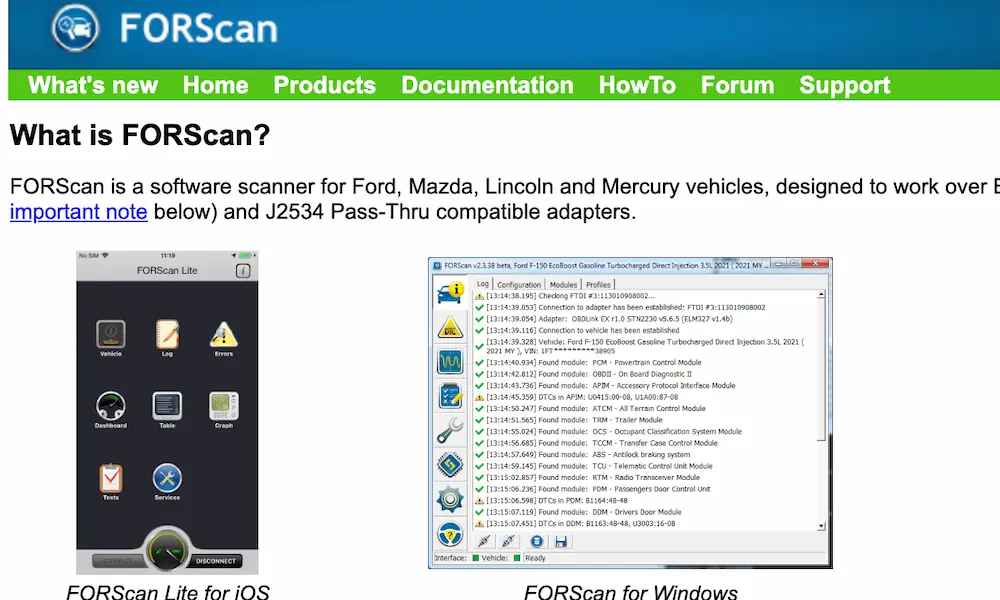
The procedure is straightforward: warm the engine to operating temperature, use a scan tool to initiate the test, then perform a snap throttle — a quick rev to high RPM followed by a return to idle. During the deceleration phase, the PCM records the crankshaft’s vibration signature and stores it as normal.
When You Must Perform the Relearn
| Triggering Event | Why It’s Required |
|---|---|
| Crankshaft sensor replacement | New sensor has different electrical sensitivity |
| PCM reprogramming or reflash | New software doesn’t have the old vibration profile |
| Timing chain replacement | Changes the rotational harmonics of the assembly |
| Flywheel or balancer swap | Alters mass and balance of the crankshaft |
Ford TSBs and Recalls Covering P0300
Ford has acknowledged several manufacturing defects that cause P0300 without any worn parts. Check these before assuming you need a repair.
TSB 22-2464 covers 2021–2022 Mustangs with the 5.0L engine. The PCM software was too sensitive to engine vibrations, triggering P0300 with no actual driveability problem. The fix is a software reflash — no parts needed.
TSB 19-2384 covers 2016–2017 F-150 trucks with the 2.7L EcoBoost. Improperly manufactured valve guides allowed oil into the combustion chambers, fouling plugs and triggering rough idle and P0300. This repair requires replacing both cylinder heads — a major job.
Recall 18S32 affects 2012–2018 Ford Focus models. A stuck-open canister purge valve can cause misfires and rough running. The fix involves replacing the purge valve and reprogramming the PCM.
Major Ford P0300 Service Actions at a Glance
| TSB / Recall | Affected Vehicles | Root Cause | Fix |
|---|---|---|---|
| 19-2346 | 2015–2019 multi-model (2.0L EcoBoost) | Coolant seeping into cylinders | Replace engine long block |
| 22-2464 | 2021–2022 Mustang 5.0L | PCM software sensitivity error | Reprogram PCM |
| 19-2384 | 2016–2017 F-150 2.7L EcoBoost | Faulty cylinder head valve guides | Replace both cylinder heads |
| 19-2286 | 2019 F-150 Limited 3.5L EcoBoost HO | Improperly assembled muffler | Replace muffler assembly |
| 18S32 (Recall) | 2012–2018 Ford Focus | Stuck-open canister purge valve | Replace valve, reprogram PCM |
The Right Way to Diagnose Ford P0300 Step by Step
Don’t guess. Don’t throw parts at it. Work through this in order.
Step 1 — Read the freeze frame data. A misfire at 600 RPM when the engine is cold points toward vacuum leaks or idle fuel pressure. A misfire at 3,000 RPM under load points toward ignition coils and spark plug gaps.
Step 2 — Do a visual inspection. Look for frayed wiring near coils, oil in plug wells, cracked vacuum lines, and hissing noises from the intake. Run a smoke test if anything’s unclear.
Step 3 — Pull Mode 06 data. Check individual cylinder misfire counts. A single cylinder with high counts tells you exactly where to focus.
Step 4 — Use the coil swap test. Move the coil from the misfiring cylinder to a neighboring one. If the misfire follows the coil, replace the coil. If it stays put, inspect the spark plug — a wet plug means fuel or coolant intrusion, a white plug means a lean condition.
Step 5 — Check fuel pressure live. A dropping fuel pressure under load confirms a pump or filter issue.
Step 6 — Test compression last. Only move to a compression or leak-down test after the ignition and fuel systems are cleared. It’s labor-intensive — don’t start there.
Keep P0300 From Coming Back
Prevention is genuinely cheaper than diagnosis. Here’s what actually works:
- Use full synthetic oil and change it every 5,000 miles. This prevents the timing chain stretch and sludge buildup that triggers random misfires.
- Buy Top Tier gasoline. The detergent additives keep injectors clean in Focus and Fusion engines over the long haul.
- Install an oil catch can on your EcoBoost. It catches the oily vapor before it reaches the intake valves. Less buildup means longer intervals between walnut blasting.
- Check plug condition at 40,000 miles on turbocharged motors. Don’t wait for Ford’s 100,000-mile recommendation. Boost pressure eats electrodes faster.
- Address oil leaks immediately. A leaking valve cover gasket doesn’t just make a mess — it soaks your ignition boots and starts the clock on your next misfire diagnosis.
The Ford P0300 looks overwhelming at first. But it follows a logical pattern. Work through the systems in order, use the data your car is already giving you, and you’ll find the answer without replacing half the engine on a hunch.