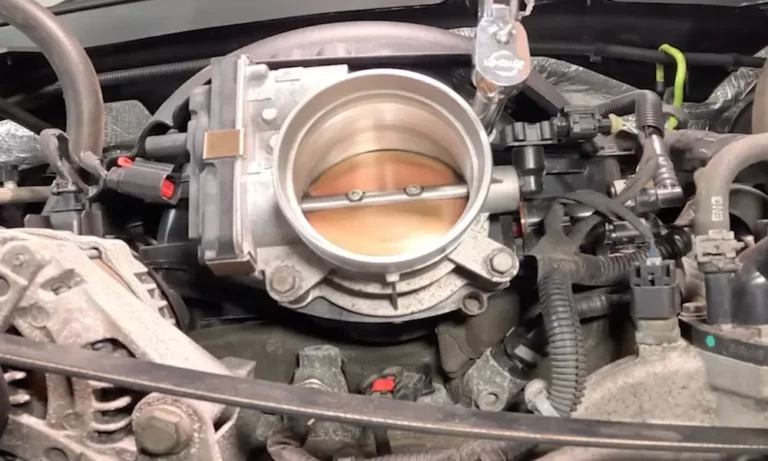
Is your GM vehicle running rough after cleaning or replacing the throttle body? You might be stuck in that frustrating loop of attempting throttle body relearn procedures with no success. When the standard methods don’t work, it’s time to dig deeper into what’s causing the issue. This guide will walk you through why relearn procedures fail and how to get your vehicle running smoothly again.
Why Your GM Throttle Body Relearn Procedure Isn’t Working
There’s nothing more annoying than following all the steps and still having issues. Let’s break down the most common roadblocks.
Faulty Sensors Blocking the Process
The throttle body relearn procedure relies heavily on accurate sensor readings. Two critical sensors often cause problems:
- Throttle Position Sensor (TPS): This tracks the position of your throttle plate
- Accelerator Pedal Position Sensor (APPS): This monitors how far you’re pressing the gas pedal
When either sensor malfunctions, your Engine Control Module (ECM) can’t properly calibrate the throttle body. These sensor issues frequently trigger trouble codes like P0122 (TPS Circuit Low Input) or P0223 (TPS Circuit High Input).
Electronic Control Module Issues
Sometimes the problem isn’t with the throttle body itself but with the brain of your vehicle. Your ECM might have:
- Corrupted data
- Outdated programming
- Internal electronic faults
In these cases, the ECM can’t properly process and store the new throttle body calibration data, causing relearn attempts to fail repeatedly.
Physical Throttle Body Problems
Your throttle body contains mechanical components that can wear out or get dirty:
- Reduction gears
- DC motor components
- Throttle plate and housing
When these parts develop excessive play or get gunked up with carbon, the ECM struggles to accurately control throttle plate movement. This mechanical imprecision makes successful relearning nearly impossible.
The Correct GM Throttle Body Relearn Procedure
Before assuming something’s broken, make sure you’re following the right procedure. GM’s standard method is specific and timing-sensitive.
Basic Procedure That Works for Most GM Vehicles
- Start with the engine completely warmed up
- Turn off all accessories (A/C, radio, lights)
- Set the parking brake and put transmission in Park
- Start the engine and let it idle for exactly 3 minutes without touching the accelerator
- Turn the ignition off and wait at least 60 seconds
- Restart the engine and let it idle for another 3 minutes
- The idle speed should stabilize, indicating successful relearn
If this doesn’t work, your vehicle might need the drive cycle method.
Drive Cycle Method for Stubborn Cases
Some GM vehicles need actual driving to complete the relearn process:
- Complete the basic idle procedure first
- Drive the vehicle at speeds above 45 mph
- Perform several gentle acceleration and deceleration cycles
- Return to idle for another 3 minutes
| Vehicle Type | Recommended Relearn Method |
|---|---|
| Pre-2006 GM | Basic idle procedure usually sufficient |
| 2006+ GM with electronic throttle | May need drive cycle method |
| Trucks and SUVs | Often require longer idle periods (5+ minutes) |
How to Troubleshoot Failed Relearn Procedures
When standard procedures don’t work, it’s time for systematic troubleshooting.
Check for Diagnostic Trouble Codes
Your first step should be connecting a scan tool to check for trouble codes:
- Plug a scanner into your OBD-II port
- Look specifically for P-codes in ranges:
- P0120-P0129 (Throttle/Pedal Position Sensor codes)
- P0220-P0229 (Throttle/Pedal Position Sensor B codes)
- P2100-P2135 (Throttle Actuator Control codes)
Any codes present can point to exactly what’s preventing your relearn procedure from working.
Test Your Sensors
Testing your throttle position and accelerator pedal sensors can reveal hidden problems:
- Use a scan tool that displays live data
- Monitor TPS voltage while slowly opening and closing the throttle
- Look for smooth, consistent voltage changes between 0.5V (closed) and 4.5V (open)
- Check for drops, spikes, or erratic readings that indicate sensor problems
You can also test wiring by inspecting connections for corrosion, damage, or looseness.
Clean the Throttle Body Properly
Carbon buildup is a common culprit:
- Disconnect the negative battery terminal
- Remove the air intake duct
- Use a proper throttle body cleaner (never brake cleaner)
- Clean the throttle plate and bore without forcing the plate open
- Look for scratches or physical damage while cleaning
- Reassemble and attempt the relearn procedure again
Advanced Troubleshooting When Basic Methods Fail
Sometimes you need to dig deeper with more sophisticated approaches.
Use a Professional Scan Tool
Basic code readers often can’t perform forced relearn procedures. Professional-grade scan tools can:
- Directly communicate with the throttle body module
- Force calibration when manual methods fail
- Display real-time data showing desired vs. actual throttle positions
Tools like the Autel MaxiDas or Foxwell NT809 have specific GM throttle body relearn capabilities that can overcome stubborn cases.
Reset the ECM Memory
Sometimes a clean slate helps:
- Disconnect the negative battery terminal
- Press and hold the brake pedal for 30 seconds to drain residual power
- Leave disconnected for at least 30 minutes (some techs recommend overnight)
- Reconnect the battery and attempt the relearn procedure again
This removes adaptive memory that might be preventing successful relearns.
Check for Technical Service Bulletins
GM has issued several service bulletins about throttle body issues:
| Vehicle Model | Common Issue | TSB Number |
|---|---|---|
| 2009-2013 Chevy/GMC Trucks | Hesitation/Stalling | PIP5197D |
| 2007-2012 GM SUVs | Reduced Power Mode | 12-06-01-009 |
| Multiple models with 5.3L engine | Rough idle after cleaning | PIP4568B |
These bulletins often contain model-specific troubleshooting steps not found in general resources.
Component Replacement Considerations
If troubleshooting points to faulty components, replacement might be necessary.
Throttle Body Replacement Tips
When replacing the throttle body:
- Verify the exact part number matches your vehicle
- Don’t assume aftermarket parts will work like OEM
- Inspect the replacement before installation for any shipping damage
- Ensure all electrical connections are fully seated
- Always perform the relearn procedure after installation
Some replacement throttle bodies come pre-calibrated while others don’t—know which you’re dealing with.
ECM Reprogramming
In severe cases, the ECM itself needs attention:
- Only dealerships and specialized shops have the equipment to reprogram GM ECMs
- Programming requires the latest software updates from GM
- After reprogramming, several other systems may need calibration
This is typically the last resort when all other methods fail.
Preventive Measures for the Future
Once you’ve solved your current issue, prevent it from happening again.
Proper Maintenance Schedule
Regular maintenance can prevent many throttle body problems:
- Clean the throttle body every 30,000 miles
- Use only approved throttle body cleaners
- Inspect for carbon buildup during routine service
- Check electrical connections for corrosion
What to Avoid
Some common practices can create throttle body problems:
- Don’t use excessive force when cleaning
- Avoid non-approved cleaning chemicals
- Never disconnect the battery without being prepared to perform relearn procedures
- Don’t ignore check engine lights that might indicate early throttle body issues
The electronic throttle bodies in modern GM vehicles are sophisticated components that require careful handling. By understanding why relearn procedures fail and following this systematic approach to troubleshooting, you can avoid expensive repairs and get your vehicle running smoothly again.