Wondering what type of gas to put in your Jeep Cherokee? You’ve come to the right place. This guide covers everything you need to know about jeep Cherokee gas type requirements across different models and years. We’ll break down what your Cherokee needs at the pump and why using the right fuel matters for performance and engine longevity.
Jeep Cherokee Fuel Requirements by Engine Type
Different Cherokee models have different fuel needs based on their engines. Here’s what you need to know at a glance:
3.6L Pentastar V6 and 2.4L Tigershark I4 Engines
The most common engines in Jeep Cherokee base models (including Laredo and Latitude trims) run perfectly well on regular 87-octane unleaded gasoline.
Jeep specifically states that using higher-octane fuels in these engines offers no performance benefits. The 3.6L V6 has a compression ratio of 10.0:1, which engineers optimized for regular unleaded fuel. The 2.4L Tigershark follows the same 87-octane recommendation.
If you’re driving a Cherokee with one of these engines, save your money at the pump and stick with regular gas.
2.0L Turbocharged I4 Engine
If you own a Cherokee with the 2.0L turbocharged four-cylinder (common in Trailhawk and Overland trims), things get a bit more interesting. This is where the jeep Cherokee gas type recommendations have some flexibility:
- Minimum requirement: 87-octane regular unleaded
- Recommended for optimal performance: 91-octane premium unleaded
The official Jeep owner’s manual permits 87-octane, but recommends 91-octane for “optimum performance and fuel economy.” This isn’t just marketing—there’s real science behind it.
The turbocharger creates higher cylinder pressures, increasing the risk of engine knock. While modern knock sensors will protect your engine by adjusting timing, this comes at a performance cost. Tests show the 2.0L turbo produces about 270 hp on 91 octane versus 240 hp on 87 octane—that’s a significant difference you’ll feel behind the wheel.
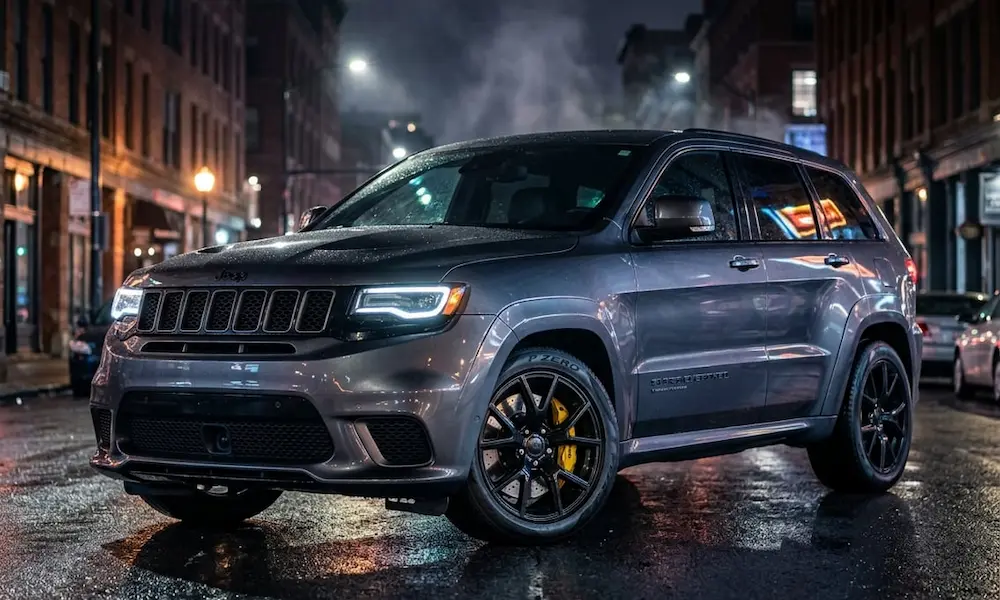
5.7L HEMI V8 (Grand Cherokee)
For Grand Cherokee owners with the 5.7L HEMI V8, Jeep recommends 89-octane mid-grade fuel, especially when towing or carrying heavy loads. While 87-octane is acceptable for light-duty driving, mid-grade helps prevent knock under more demanding conditions.
Does Using Premium Gas Really Matter for Turbocharged Cherokees?
This question divides Cherokee owners with turbocharged engines. Let’s look at what real-world experience tells us.
Performance Benefits of Premium Fuel
In turbocharged engines, higher-octane fuel allows for optimal ignition timing, which translates to:
- Better power delivery (up to 15% more torque in some driving conditions)
- Improved fuel economy (7-10% better highway MPG according to owner testing)
- Smoother acceleration, especially under load
A 2019 Cherokee Overland with the 2.0L turbo averaged 26 MPG on regular versus 29 MPG on premium during highway driving. That efficiency gain can offset some of the added cost of premium fuel.
Engine Health and Longevity
Using regular fuel in a turbocharged engine designed for premium won’t immediately damage your Cherokee, but there are long-term considerations:
- Regular fuel can lead to more carbon buildup on intake valves
- Service records show higher turbocharger failure rates in vehicles consistently run on lower-octane fuel
- A study found turbo engines running on suboptimal fuel experienced 3-5% faster wear rates over 100,000 miles
A case study of a 2019 Cherokee at the 100,000-mile mark revealed that premium fuel users had about 0.5mm less carbon buildup on intake valves compared to those who used regular exclusively.
Fuel Efficiency by Engine and Drivetrain
Fuel type affects not just performance but efficiency too. Here’s what you can expect across various Cherokee configurations:
| Engine | Drivetrain | City MPG | Highway MPG | Combined MPG |
|---|---|---|---|---|
| 3.6L V6 | RWD (4×2) | 19 | 26 | 22 |
| 2.0L Turbo | AWD (4×4) | 20 | 27 | 23 |
| 5.7L V8 | AWD (4×4) | 14 | 22 | 17 |
The 2.0L turbo actually delivers better fuel economy than the standard V6 when run on premium fuel, especially in all-wheel drive configurations. It produces about 6.6 tons of CO₂ annually versus 7.2 tons for the V8 Grand Cherokee.
Cherokee Fuel Requirements Through the Generations
The Jeep Cherokee has evolved significantly over the years, and so have its fuel requirements.
Early XJ Generation (1996-2001)
The classic 4.0L AMC Straight-6 engine in the XJ Cherokee required 87-octane regular unleaded despite its robust cast-iron block construction. With a modest compression ratio of 8.8:1, these engines prioritized durability over efficiency, managing about 14 MPG combined.
KL Generation (2014-2023)
The more recent KL Cherokee introduced the 2.0L Turbo and 3.2L Pentastar V6 engines. This generation marked Jeep’s shift toward turbocharged engines with dual fuel recommendations, reflecting industry trends that balance performance objectives with fuel cost considerations.
2025 Revamp and Future Models
The upcoming sixth-generation Cherokee, based on Stellantis’ STLA Large Transverse platform, is expected to debut with a 1.6L turbo hybrid powertrain. Early specifications suggest 91-octane requirements to maximize the hybrid system’s projected 375 hp output.
What Jeep Cherokee Owners Actually Use: Community Insights
A 2020 survey of Cherokee owners with the 2.0L Turbo found some interesting patterns:
- 62% used premium 91-octane fuel exclusively
- 28% alternated between premium and regular based on driving conditions
- 10% used regular 87-octane exclusively
Those who stuck with premium cited smoother acceleration and fewer computer-induced power reductions as their main reasons. Those who used regular exclusively didn’t report mechanical problems but acknowledged getting 5-7% lower fuel economy.
One owner on a Reddit discussion thread noted: “I can feel the difference when I switch to 87. The engine hesitates more during acceleration. With 91, power delivery is much smoother, especially when merging or passing.”
Practical Fuel Recommendations for Cherokee Owners
Based on all the data and owner experiences, here are practical recommendations for choosing the right jeep Cherokee gas type:
For Non-Turbocharged Engines (3.6L V6, 2.4L I4)
- Best choice: 87-octane regular unleaded
- No benefit to using higher grades
- Can save hundreds of dollars annually by avoiding premium fuel
For Turbocharged Engines (2.0L I4)
- Everyday driving: 87-octane is acceptable per the manual
- For best performance: 91-octane premium unleaded
- Compromise approach: Use premium during hot weather, when towing, or for long highway trips; regular is fine for short commutes
For HEMI V8 (Grand Cherokee)
- Light duty: 87-octane regular is adequate
- Towing or heavy loads: 89-octane mid-grade recommended
- Mountain driving: Consider premium for challenging terrain
Can You Mix Gas Types in Your Jeep Cherokee?
Yes, it’s safe to mix different octane fuels in your Cherokee. The ECU (engine control unit) will adjust to the lowest octane level in your tank. This means:
- If you normally use premium but need to add regular in a pinch, your engine will automatically adjust
- When transitioning from regular to premium, you’ll need to go through several tanks before experiencing the full benefits of the higher octane
The National Highway Traffic Safety Administration has validated that modern engines can safely handle mixed octane levels, though consistent fuel quality is best for long-term performance.
Ethanol Content and Your Cherokee
Modern Cherokees are designed to run on gasoline with up to 10% ethanol (E10), which is standard at most U.S. pumps. However:
- E15 (15% ethanol) should be avoided unless your owner’s manual specifically permits it
- Higher ethanol blends like E85 are not compatible with standard Jeep engines
- Ethanol contains less energy by volume than gasoline, so higher ethanol content can reduce fuel economy by 3-5%
Best Practices for Fueling Your Jeep Cherokee
To keep your Cherokee running at its best:
- Consult your owner’s manual for the specific recommendation for your model
- Use fuel from reputable gas stations with high turnover
- Consider using premium for the first few tanks in a brand new turbocharged Cherokee
- If you notice engine knock or hesitation with a particular fuel, try a higher grade
What About Fuel Additives?
Jeep engines generally don’t require additional fuel additives if you’re using quality gasoline from major brands. These already contain detergents and stabilizers. However:
- If storing your vehicle for extended periods, a fuel stabilizer can prevent gasoline degradation
- For vehicles with over 75,000 miles, occasional use of a fuel system cleaner may help remove carbon deposits
The Bottom Line on Jeep Cherokee Gas Type
The jeep Cherokee gas type decision boils down to your specific engine and how you use your vehicle:
- Non-turbo engines: Use regular 87-octane and save your money
- Turbocharged engines: Consider premium for best performance or a mix based on driving conditions
- Heavy duty use: Err on the side of higher octane when pushing your vehicle hard
By matching your fuel choice to your driving needs, you’ll optimize both performance and long-term reliability of your Jeep Cherokee.