That “Service Shifter” warning flashing on your Jeep Cherokee dashboard isn’t just annoying—it’s your vehicle screaming that something’s wrong with the transmission shifter system. Don’t panic. This issue affects thousands of Cherokee owners, and the fix is often simpler (and cheaper) than you think. Let’s break down what’s happening, why it happens, and how to get your Jeep back to normal.
What Triggers the Jeep Cherokee Service Shifter Warning?
The “Service Shifter” message appears when your Cherokee’s Electronic Shift Module (ESM) can’t communicate properly with the transmission control system. Unlike old-school shifters with cables, your Cherokee uses a “shift-by-wire” setup where the shifter sends digital signals to tell the transmission what gear you want.
When this signal gets interrupted or garbled, the system throws up the warning. You’ll typically see:
- The text “Service Shifter” on your dashboard display
- All the gear indicator lights (P, R, N, D) illuminating at once
- The gear display going completely dark
- Inability to shift gears or get out of Park
The kicker? This problem often happens randomly. You might start your Jeep one morning and everything’s fine. Drive over a bump, and suddenly all the lights go haywire. Restart the vehicle, and it might clear itself. This intermittent behavior is your first clue about what’s actually broken.
Why the 2014-2018 Models Have a Specific Problem
If you’re driving a 2014-2018 Jeep Cherokee, you’re dealing with a known design flaw. The culprit is the shifter jumper wiring harness—the little cable connecting your shifter bezel to the vehicle’s main harness.
Here’s what happens: Every time you shift gears or hit a pothole, the wires inside the connector move slightly against their terminals. This microscopic movement (called “fretting”) wears away the protective coating on the metal pins. Over time, corrosion builds up, and the electrical connection degrades.
Fiat Chrysler acknowledged this issue in Technical Service Bulletin (TSB) 08-054-18, which specifically addresses the “Service Shifter” problem in 2015-2018 Cherokee models. The fix? Replace both the wiring harness and the shifter bezel with updated parts.
The placement of the cup holders next to the shifter makes things worse. One spilled coffee can seep into the bezel, corrode the circuit board, and trigger the same symptoms. Even without spills, the cabin temperature swings from freezing to scorching can crack solder joints on the bezel’s circuit board.
Common Diagnostic Codes You’ll See
When you scan your Cherokee with an OBD-II reader, you’ll typically find these codes:
For 2014-2018 Models:
- U1465-00: Implausible Driver Shift Request Signal Received (the shifter signal is bouncing or illogical)
- P1C86-1D: PRNDL Display Circuit Current Out of Range (the gear indicator lights aren’t getting proper power)
- U0103: Lost Communication with Gear Shift Module (complete signal blackout)
For 2019+ Models:
- U1267: Often points to internal shifter assembly failure or auxiliary battery issues
These codes tell you exactly where the problem lives—and whether you need a $40 harness or a $600 shifter assembly.
The 2019+ Cherokee Has Different Issues
Jeep redesigned some components for the 2019 model year refresh, which changed the failure pattern. Instead of wiring harness problems, newer Cherokees suffer from:
Internal Shifter Assembly Failures
The position sensors or microcontroller inside the main shifter base can fail. When they do, you’ll need to replace the entire shifter assembly—a pricier repair than the early model harness swap.
Auxiliary Battery Drama
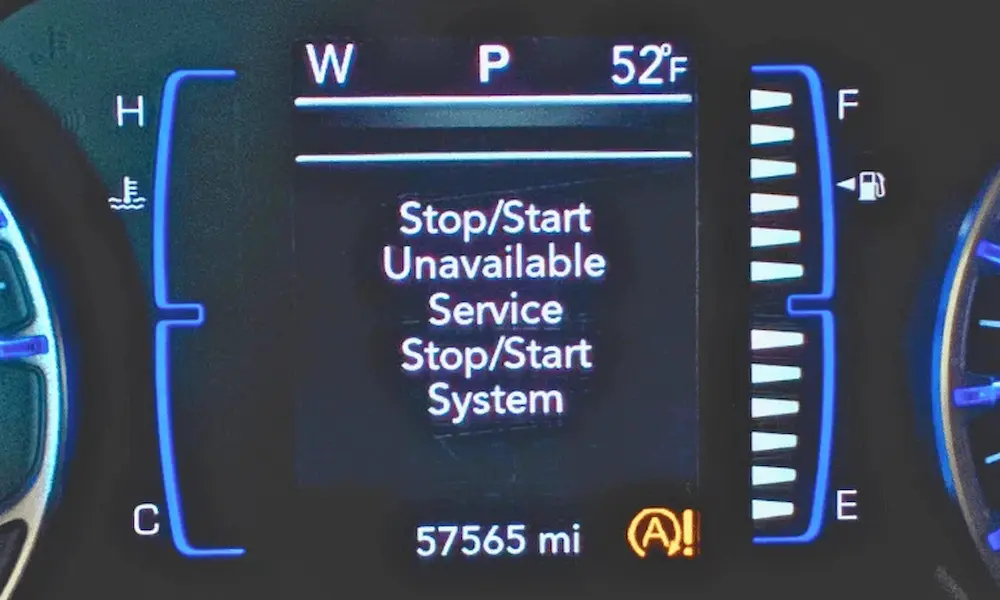
Here’s where it gets interesting. 2019+ Cherokees with Engine Stop/Start systems have two batteries: a main 12V battery and a smaller auxiliary battery. When that aux battery starts dying, it drags down the entire electrical system.
The shifter module is extremely voltage-sensitive. If the system voltage dips below about 10.5 volts during a Start/Stop event, the Electronic Shift Module can brown out and fail to initialize. This triggers the “Service Shifter” error even though nothing is mechanically broken.
Many 2019+ owners have solved their “Service Shifter” ghosts simply by replacing the auxiliary battery—a $100 fix instead of a $1,000 shifter replacement.
How to Diagnose Your Specific Problem
Before you throw parts at the problem, run through this diagnostic sequence:
Step 1: Check Your Battery Health
Start with the simplest possibility. Corroded battery terminals or a weak battery can cause all sorts of electrical weirdness.
- Clean any corrosion off the battery terminals
- Load test your main battery (most auto parts stores do this free)
- If you have a 2019+ model with Stop/Start: Disconnect the main battery and test the auxiliary battery independently. If it reads below 12.4 volts or fails a load test, replace it before doing anything else
Step 2: Pull and Inspect the Fuses
Two critical fuses power your shifter system:
- Under-hood fuse box: Check Fuse F28 (Transmission Shifter Module) and F39 (TCM)
- Interior fuse panel: Check the “Shifter” or “Body Module” fuses (often F22, but verify in your owner’s manual)
Pull Fuse F39 and leave it out for 15 minutes. This forces the Transmission Control Module to completely reboot and clear any stuck logic states. Reinstall the fuse and start the vehicle. If the warning clears and stays gone for weeks, you had a software glitch. If it comes back immediately, you’ve got a hardware problem.
Step 3: Scan for Diagnostic Codes
Use an OBD-II scanner that can read “U” (Network) and “P” (Powertrain) codes. The specific codes tell you exactly which repair path to follow:
| Code | What It Means | Next Step |
|---|---|---|
| U1465 or P1C86 | Wiring harness/bezel issue | Replace harness and bezel (cheap fix) |
| U0103 | Power loss or dead module | Check fuses and battery voltage |
| U1267 | Internal assembly or battery fault | Test aux battery (2019+) or replace assembly |
Step 4: Visual Inspection
Pop off the shifter boot and bezel (instructions below) and look for:
- Wires pinched where the bezel snaps into the console
- Sticky residue from spilled drinks
- Tension on the harness when you move the shifter to different positions
- Corroded or discolored connector pins
The Fix for 2014-2018 Models: Bezel and Harness Replacement
For the vast majority of 2014-2018 Cherokee owners, the permanent fix is replacing two inexpensive parts. This is a straightforward DIY job that takes 30-60 minutes.
What You Need
- Shifter Jumper Wiring Harness: Part number 68413957AA (the updated, improved version)
- Shifter Bezel: Part number 5YD27LS5AA (tan), 5YD271X9AA (black), or similar depending on your trim level
- Plastic trim removal tools
- Socket set or wrench for the shifter knob
Total parts cost: $80-150 if you buy OEM parts, less for aftermarket.
How to Replace the Bezel and Harness
Safety first: Disconnect your negative battery terminal before starting. This prevents accidental airbag deployment.
Remove the shifter knob:
- Pry off the top cap showing the gear diagram using a plastic trim tool
- You’ll find a locking nut or set screw underneath—loosen it
- Pull the knob firmly straight up (keep your face to the side in case it pops off suddenly)
Remove the console trim:
- Use your plastic pry tool to gently wedge under the outer edge of the shifter boot/bezel
- Work around the perimeter to release the plastic clips (don’t force it—find all the clips first)
- Lift the bezel assembly up and over the shift lever shaft
Disconnect and replace:
- Locate the connector where the bezel harness plugs into the vehicle harness
- Press the locking tab and disconnect
- Remove the old bezel and harness completely
- Connect your new harness to the new bezel, then to the vehicle harness
- Critical step: Route the new harness with some slack. When the bezel snaps back in place, the wire should loop naturally without being pulled tight when you shift to Drive
Reassemble:
- Snap the bezel back into the console trim
- Reinstall the shifter knob
- Reconnect the battery
- Start the vehicle and verify all gear indicators work properly
In most cases, everything works immediately. If you still see the warning, use your OBD-II scanner to clear any stored codes.
The Fix for 2019+ Models: Assembly or Battery Replacement
If you’ve got a newer Cherokee and the bezel/harness swap doesn’t apply (or doesn’t work), you’re looking at one of two scenarios:
Replace the Auxiliary Battery First
Before spending $800 on a new shifter assembly, replace that aux battery if you have the Stop/Start system. Seriously. The number of forum posts where this solved the problem is staggering. The battery typically lives under the hood near the main battery and costs $80-120.
Full Shifter Assembly Replacement
If the battery doesn’t fix it, you need the complete shifter unit (part number 6ZC801A5AA or 5106196AF, depending on your exact model year).
This repair is more involved:
- You’ll need to remove the center console to access the mounting bolts
- The shifter base bolts to the floor with four bolts
- There’s a main electrical connector and sometimes a park-lock cable to disconnect
- After installation, the new module may need “Proxi Alignment” using dealer-level software to calibrate the Park and Drive positions
Unless you have access to software like AlfaOBD or JScan, you’ll probably want a dealer or experienced independent shop to handle this one.
What This Repair Actually Costs
Here’s the real-world breakdown:
| Repair Type | Parts Cost | Labor (if you pay someone) | Total |
|---|---|---|---|
| DIY wiring harness only | $20-40 | $0 | $20-40 |
| DIY bezel + harness kit | $80-150 | $0 | $80-150 |
| Shop bezel + harness | $150 | $200-300 | $350-450 |
| Auxiliary battery replacement | $80-120 | $50-100 | $130-220 |
| Full shifter assembly (independent shop) | $250-400 | $150-250 | $400-650 |
| Full shifter assembly (dealer) | $500-600 | $300-400 | $800-1,000+ |
Warranty Coverage
If your Cherokee is still under warranty, this should be covered—but there’s nuance:
- Basic warranty (3 years/36,000 miles): Fully covered, no questions
- Powertrain warranty (5 years/60,000 miles): This gets murky. Some dealers classify the shifter as “electrical” rather than “powertrain,” but since you literally can’t move without it, many owners have successfully argued for coverage
- Just out of warranty? Mention TSB 08-054-18 to your dealer. Since it’s a documented design defect, they might offer goodwill coverage or a reduced-cost repair
This Isn’t the Same as the Grand Cherokee Recall
You might’ve heard about a big Jeep shifter recall and wondered if it applies to your Cherokee. It doesn’t—but here’s why the confusion exists.
The 2014-2015 Grand Cherokee (WK2 platform) used a “monostable” shifter design where the lever always returned to the center position after you moved it. There were no physical detents for Park, Reverse, Neutral, or Drive. You had to rely completely on the indicator lights to know what gear you were in.
This terrible design led to drivers exiting their vehicles thinking they were in Park when they were actually in Neutral or Drive. The resulting “rollaway” incidents, including the tragic death of actor Anton Yelchin, prompted a massive recall (S27/NHTSA 16V-240). The fix was a software update that automatically shifts to Park if you open the door with your seatbelt unbuffered.
Your Cherokee (KL platform) uses a different “polystable” shifter with actual positions and tactile feedback. The “Service Shifter” issue is a connectivity problem, not a rollaway safety risk like the Grand Cherokee.
| Feature | Cherokee (KL) | Grand Cherokee (WK2) |
|---|---|---|
| Affected years | 2014-2023 | 2014-2015 (monostable) |
| Shifter type | Polystable (physical positions) | Monostable (always centers) |
| Primary issue | Wiring/connectivity failure | Confusing user interface |
| Main symptom | “Service Shifter” warning | Vehicle rolling away after driver exit |
| Fix | Replace bezel/harness or assembly | Software update (Auto Park) |
| Safety risk | Loss of shift control/stuck in Park | Rollover/runover accidents |
Bottom line: If you see “Service Shifter” on your Cherokee, you’re not dealing with the recall issue. Don’t let a dealer confuse the two.
Quick Preventive Tips
You can’t completely prevent this issue (it’s a design flaw, after all), but you can reduce your risk:
Keep liquids away from the shifter. Use the front cup holders or put a lid on your drinks. One spilled coffee can kill your bezel.
Don’t rest your hand on the shifter knob. The constant downward pressure and subtle movement accelerates the harness fretting.
Watch for early warning signs. If you notice the gear indicator lights flickering occasionally, or if the shifter feels “sticky” when moving between gears, address it before you get stranded in a parking lot unable to shift out of Park.
If you have a 2019+ model with Stop/Start, replace your auxiliary battery every 3-4 years as preventive maintenance. It’s cheap insurance against a mysterious “Service Shifter” error.
The Bottom Line on Jeep Cherokee Service Shifter Issues
The “Service Shifter” warning looks scary, but it’s usually a straightforward fix—especially if you’ve got a 2014-2018 model. Don’t let a dealer quote you $1,200 for a full transmission shifter assembly when all you need is an $80 bezel and harness kit.
Run through the diagnostic steps, check those codes, and match your repair to your specific model year. For early Cherokees, it’s almost always the wiring harness. For newer ones, test that auxiliary battery before you spend big money on parts.
The good news? Once you replace the failed component with the updated parts, the problem typically doesn’t come back. The redesigned harness (68413957AA) fixes the tension issue that caused the original to fail, and a fresh auxiliary battery gives your electrical system the voltage stability it needs.
Got a 2014-2018 Cherokee with all the PRNDL lights going crazy? You’re probably 30 minutes and $100 away from fixing it yourself. Got a 2019+ with intermittent shifter errors? Test that aux battery before you do anything else. Either way, you’re not looking at a transmission rebuild—just a specific, fixable electrical issue.