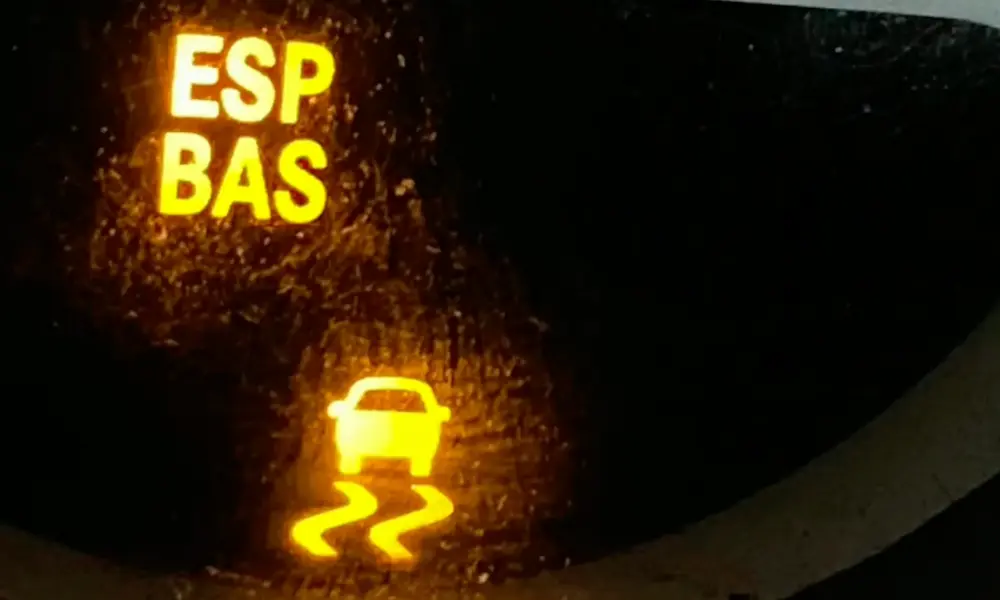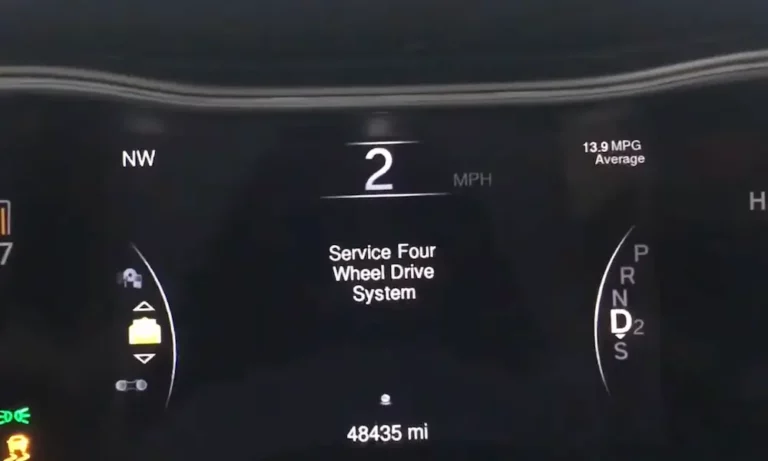
That “Service 4WD System” warning just lit up your dash, and now you’re wondering if you’re looking at a $50 fix or a $5,000 nightmare. Here’s the thing: the answer depends entirely on which Jeep you’re driving. Let’s break down what’s really going on and how to fix it without getting ripped off.
Why Your Jeep’s 4WD Warning Light Came On
Your Jeep isn’t one-size-fits-all when it comes to four-wheel drive. The Cherokee uses a completely different system than the Grand Cherokee, which is nothing like the Wrangler. That’s why the same warning light can mean a $20 fuse issue on one model and a catastrophic transmission failure on another.
The jeep service 4 wheel drive light triggers when your vehicle’s computer detects a mismatch between what it commanded the drivetrain to do and what actually happened. Sometimes it’s a genuine mechanical failure. Other times, it’s just a corroded wire or a loose connection playing tricks on the sensors.
Cherokee Owners: This Could Be Serious
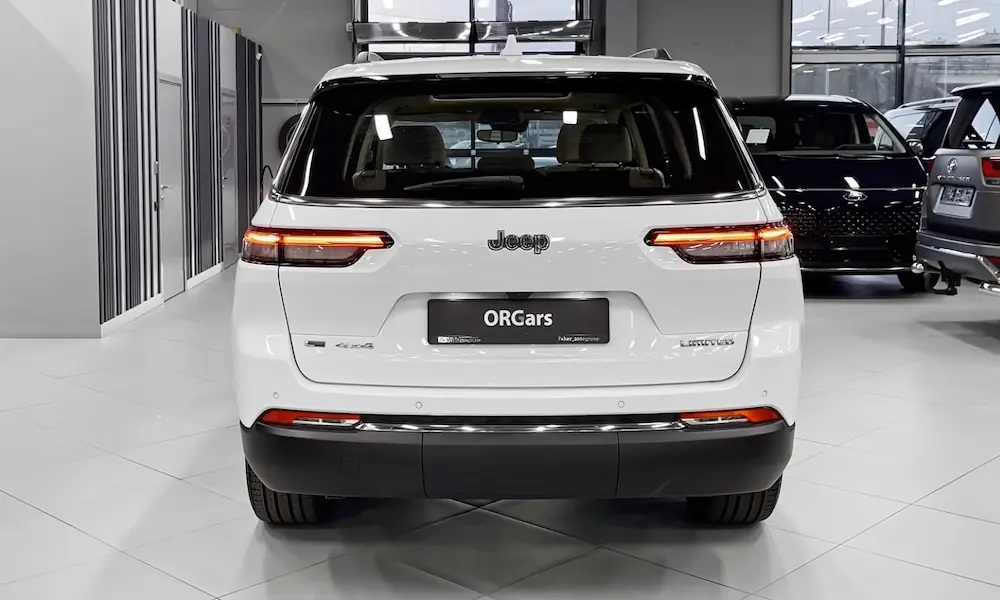
If you’re driving a 2014-2023 Cherokee (KL), don’t ignore this warning. The Cherokee’s Power Transfer Unit (PTU) has a documented history of catastrophic failures that start with this exact warning light.
The PTU sits between your transmission and rear driveshaft. Inside, there’s a set of splines that connect everything together. When these splines wear down or strip completely, you lose the connection between your engine and wheels. The scary part? Your Park gear locks the transmission, not the wheels. If those splines fail, your vehicle can roll away even when parked.
Warning signs you’re heading for PTU failure:
- Grinding or clunking noises from under the hood
- Clicking sounds when turning corners
- Fluid leaking from the front-center of the vehicle
- Loss of power or hesitation when accelerating
If you’re hearing these noises along with the jeep service 4 wheel drive light, get it checked immediately. Don’t wait.
The Cherokee’s PTU Actuator Problem
Not every Cherokee 4WD warning means your PTU is dying. Sometimes it’s just the electric motor that engages the system.
Your Cherokee has a motor bolted to the PTU that physically connects the rear driveshaft when you need four-wheel drive. This motor either gets obstructed by internal damage or simply wears out. When it fails, you’ll see diagnostic code C14A7-97, which specifically means “PTU Motor – Component Obstructed.”
The system tries three times to engage. If it fails all three attempts, it locks you into front-wheel drive and keeps that warning light on permanently.
Here’s the frustrating part: dealers often quote $3,000+ to replace the entire PTU when sometimes you just need the $600 actuator motor. If they’re diagnosing C14A7, ask specifically if they tested the motor separately before condemning the whole unit.
Check the Wiring First
Before spending thousands, check the wiring harness that connects to your PTU. It’s mounted low in the engine bay where it gets blasted with road salt, water, and debris.
Code C1496 (PTU Motor Position Performance) often comes from corroded connector pins, not actual PTU damage. Jeep even released a technical service bulletin (TSB 21-008-16) to update the software because early versions were too sensitive to minor signal fluctuations.
Pop the hood and locate the PTU on the passenger side near the transmission. Follow the wires from the actuator motor to the connector. Look for:
- Green corrosion on the pins
- Moisture inside the connector boot
- Frayed wires near the exhaust heat shield
- Loose or backed-out connector
A $200 wiring repair beats a $3,000 PTU replacement every time.
Grand Cherokee: It’s Probably Not Mechanical
If you’re driving a 2011-2022 Grand Cherokee (WK2), take a breath. Your jeep service 4 wheel drive light is most likely an electronic hiccup, not a mechanical meltdown.
The Grand Cherokee uses a traditional transfer case with an electronically controlled actuator. The system is heavily dependent on precise voltage signals from position sensors. When those signals drift even slightly, the computer freaks out.
The N23 Recall Ghost
Here’s something most owners don’t know: if you got the N23 recall update (which fixed a cracked circuit board issue), the “fix” made your system hypersensitive to sensor voltage.
The updated software aggressively monitors the transfer case position sensor. If it sees any signal noise—even from normal wear on the sensor’s internal tracks—it assumes the worst and disables your 4WD system. Code C140F (Transfer Case Range Position Sensor Erratic Performance) became epidemic after this recall.
The temporary fix: Pull fuse F77 (2011-2013 models) or F94 (2014+ models) from your fuse box for 30 seconds. This forces a hard reset of the Transfer Case Control Module. Your 4WD will probably work again, at least for a while.
This confirms the issue is software calibration, not hardware failure. But if the light keeps coming back every few days, you’re looking at either a worn transfer case actuator motor or a failing Transfer Case Control Module (TCCM).
Transfer Case Actuator Replacement
The actuator motor bolts to the outside of your transfer case. Inside it, there’s a rotary position sensor that uses resistive tracks (like a volume knob). Over time, these tracks wear out and create dead spots.
When the sensor hits a dead spot during a shift, the voltage signal drops to zero. The computer thinks something catastrophic happened and triggers the warning.
Replacing just the actuator motor typically costs $700-$1,300 at an independent shop. Dealers often quote $3,000+ because they want to replace the entire transfer case. Unless there’s grinding noise coming from the case itself, that’s overkill.
Wrangler and Gladiator: Check These Three Things First
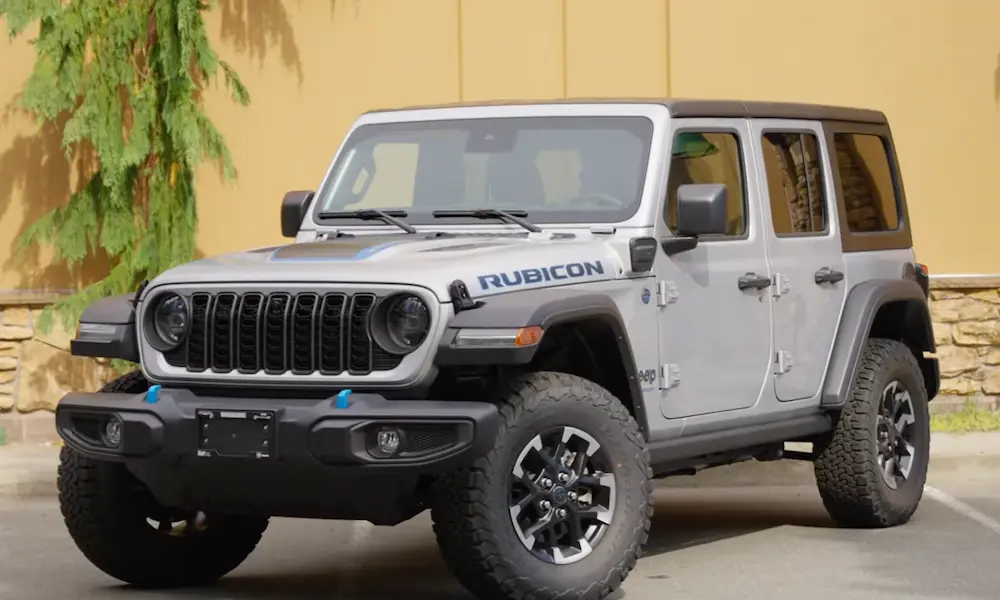
The JL Wrangler and JT Gladiator brought modern electronics to the legendary platform. Unfortunately, they also brought modern electrical problems.
1. Reseat Every Fuse
Early JL production (2018-2020) had a widespread quality control issue: fuses weren’t fully seated at the factory. Vibration causes them to lose contact, triggering random electrical warnings including the jeep service 4 wheel drive light.
Open your fuse box (passenger side of the engine bay) and firmly press down on every single fuse. You’ll probably find several sitting high. Fuses F101 and F100 are the critical ones for the 4WD and stability control systems.
This takes five minutes and costs nothing. Do it before anything else.
2. The Front Axle Disconnect Drama
Your JL has a Front Axle Disconnect (FAD) system that physically separates the axle shafts when you’re in 2WD. An electric actuator on the passenger side axle engages and disengages the connection.
When you shift into 4H, two things must happen simultaneously: the transfer case engages the front driveshaft, and the FAD connects the axle shafts. If the FAD fails to engage within the programmed time window, you get the warning light.
The FAD actuator lives on your axle, fully exposed to rocks and water. If you recently went through deep water, moisture in the FAD connector is your likely culprit. The connector is waterproof when new, but the seal degrades over time.
Locate the FAD actuator on the passenger side of your front axle (it’s a round motor with a single electrical connector). Disconnect it, spray electrical contact cleaner into both sides, let it dry, and reconnect. If the light goes away, you just saved yourself a $400 actuator replacement.
3. Transfer Case Position Sensor
Even though you have a manual shift lever, your computer still needs to know where it’s positioned. Code C1403 is the dominant fault code for JL 4WD issues.
This code means the position sensor says one thing, but the wheel speed sensors are telling a different story. For example, if the front wheels are clearly being powered but the sensor reports “2WD,” the system throws a fault.
Jeep’s technical service bulletin for C1403 specifically tells technicians to inspect connector XY230A for corrosion or loose pins before replacing the sensor. Find that connector (it’s near where the wiring harness runs along the transmission tunnel) and check it first.
The wiring harness can also get too close to the exhaust and melt, or chafe against the driveshaft if a retaining clip broke. Look for damaged insulation anywhere the harness is exposed.
The Hidden Battery Problem
Here’s something that trips up even experienced mechanics: every Jeep 4WD control module is extremely voltage-sensitive. A weak battery can trigger the jeep service 4 wheel drive light even when nothing is mechanically wrong.
The Dual Battery Trap
If your Jeep has Electronic Stop/Start, it uses two batteries: a main AGM battery and a smaller auxiliary battery. On the JL, the aux battery is buried under the fuse box or in the fender well.
The aux battery typically fails before the main battery. Because they’re connected in parallel when running, a dead aux battery constantly drains the main battery and stresses your alternator.
During engine cranking, voltage drops significantly. If your battery system is weak, voltage can dip below 10V. The Transfer Case Control Module and Drivetrain Control Module need stable voltage to initialize properly. If voltage drops too low during startup, they fail to boot correctly or lose communication with other modules.
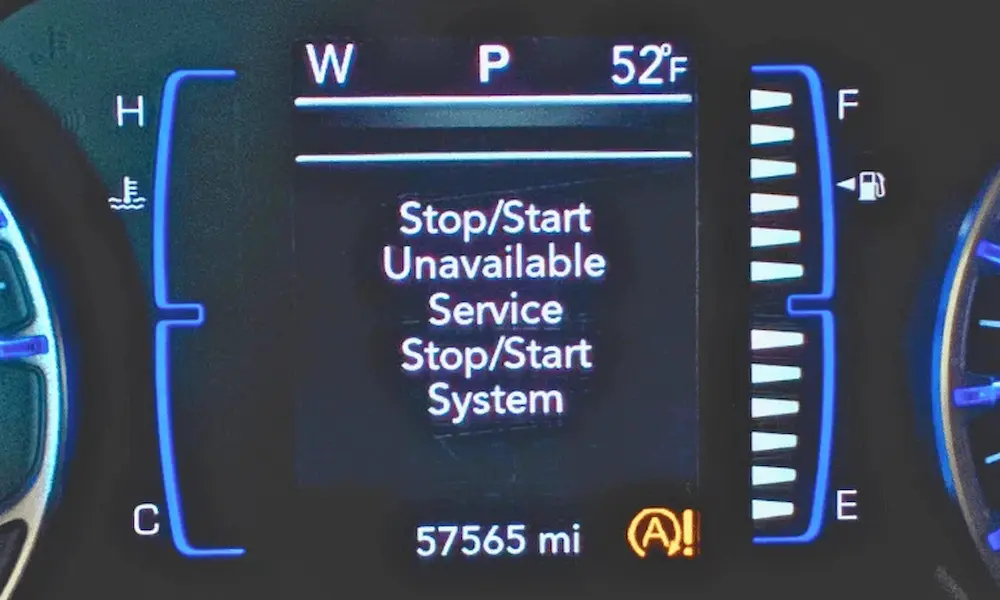
The diagnostic clue: If your jeep service 4 wheel drive light appears alongside “Service Stop/Start System” or your instrument cluster flickers during startup, it’s your batteries—not your drivetrain.
Get a load test on both batteries. Don’t just check voltage with the engine off; that tells you nothing. You need to see how the batteries perform under load.
What the Codes Actually Mean
When you plug in a scan tool, these are the codes you’ll see and what they really indicate:
| Code | What It Means | Which Jeep | Real Cause |
|---|---|---|---|
| C140F | Transfer case position sensor acting erratic | Grand Cherokee WK2 | Usually N23 recall software being too sensitive or worn actuator tracks |
| C1403 | Transfer case position sensor performance issue | Wrangler JL | Bad sensor, damaged wiring near exhaust, or loose connector |
| C14A7 | PTU motor blocked or obstructed | Cherokee KL | Internal PTU damage or failed actuator motor |
| P1720 | Speed sensor doesn’t match reality | Cherokee KL | Critical: PTU splines may have stripped |
| U0102 | Lost communication with transfer case module | All models | Dead battery, blown fuse, or corroded connector |
| C1496 | PTU motor position error | Cherokee KL | Wiring harness corrosion (check connector pins) |
If you’re seeing P1720 on a Cherokee, stop driving immediately. That code means your transmission output speed doesn’t match your wheel speed, which indicates the splines inside the PTU may have failed. You could lose all propulsion or have a rollaway situation.
The Reset Procedure Everyone Should Try
Before you authorize any expensive repairs, run through this reset sequence:
Step 1: Turn off your Jeep and remove the key.
Step 2: Open the fuse box and firmly press down on every fuse and relay. You’re checking for loose connections.
Step 3: Disconnect the negative battery terminal (on JL/JT models, disconnect BOTH batteries—main and auxiliary).
Step 4: Wait 30 full minutes. This isn’t optional. The modules need time to fully discharge their capacitors.
Step 5: Reconnect the battery and start the vehicle. Don’t touch anything for the first 30 seconds. Let the modules boot up and talk to each other.
Step 6: With the engine running, shift through 2WD, 4H, and back to 2WD (or whatever applies to your model). Listen and feel for the engagement.
If the light stays off, you just fixed it. If it comes back within a few miles, you have a real problem that needs diagnosis.
What Repairs Actually Cost
Here’s what you’re looking at if parts actually need replacement:
Cherokee (KL):
- PTU replacement: $1,500-$2,500 (independent) or $3,000-$4,000 (dealer)
- PTU actuator motor only: $400-$600 (independent) or $800-$1,200 (dealer)
- Wiring harness repair: $200-$400 (independent) or $300-$600 (dealer)
Grand Cherokee (WK2):
- Transfer case actuator motor: $700-$1,300 (independent) or $1,500-$2,000 (dealer)
- Transfer Case Control Module: $600-$900 (independent) or $1,200-$1,500 (dealer)
- Complete transfer case: $2,000-$3,000 (independent) or $4,000+ (dealer)
Wrangler/Gladiator (JL/JT):
- Front Axle Disconnect actuator: $300-$450 (independent) or $600-$800 (dealer)
- Transfer case position sensor: $150-$250 (independent) or $400-$600 (dealer)
- Auxiliary battery replacement: $150-$200 (independent) or $300-$400 (dealer)
Software updates and TSB flashes typically cost $150-$200 at the dealer. Independent shops can’t access Jeep’s proprietary software, so you’ll need the dealer for those.
Dealer vs. Independent Shop
Go to the dealer when:
- You need software updates or TSB flashes
- Your vehicle is still under warranty
- You’re dealing with a recall-related issue (like the N23 follow-up)
- You need a “Proxi Alignment” after module replacement (introduces the new module to your vehicle’s network)
Go to an independent shop when:
- You need mechanical replacements (actuator motors, transfer cases, PTUs)
- You want to save 40-50% on parts by using remanufactured components
- The diagnosis is clear and repair is straightforward
- You want a second opinion on dealer recommendations
DIY when:
- Checking and reseating fuses
- Inspecting connectors for corrosion
- Performing the reset procedure
- Replacing easily accessible modules like the TCCM (if it’s plug-and-play on your model)
Skip internal PTU or transfer case work unless you have significant mechanical experience and proper tools. Those jobs require subframe removal and precise torque specifications.
The Jeep-Specific Fuses You Need to Know
Different models hide the critical 4WD fuses in different locations. Here’s your quick reference:
Cherokee (KL) – Under-hood Power Distribution Center:
- F10 (20A): PTU and Drivetrain Control – this is the main fuse for your PTU motor
- F84 (30A): Left electric parking brake
- F94 (30A): Right electric parking brake
Grand Cherokee (WK2) – Under-hood TIPM/PDC:
- F77 (10A): Drivetrain Control Module on 2011-2013 models (the “magic fuse” for C140F code resets)
- F94 (10A): Transfer Case Module on 2014+ models
- Check the drivetrain relay for clicking/function
Wrangler (JL) – Passenger side engine bay PDC:
- F101 (30A Pink): Drivetrain Control Module – notorious for being loose from the factory
- F100 (30A Pink): Electronic Stability Control Module – ESC talks to 4WD constantly
- F45 (10A): Spare/Module Power – check seating
Don’t Fall for These Repair Scams
“We need to replace the transfer case because the actuator failed.”
Unless there’s grinding noise from inside the case itself, you don’t need the whole thing. The actuator bolts to the outside and can be replaced separately for a fraction of the cost.
“The computer needs to be reprogrammed, and we need to replace it.”
Modules rarely need replacement due to software issues. Jeep releases TSB updates specifically to fix software bugs. Ask if there’s an applicable TSB before agreeing to module replacement.
“Your PTU is making noise, so we recommend replacing it.”
Some PTU noise is normal, especially in Active Drive II systems on cold startups. If it’s a brief whir that goes away after 5-10 seconds, that’s the disconnect mechanism cycling. Actual PTU failure sounds like grinding metal or produces constant clunking.
“You need a new wiring harness for the whole vehicle.”
Harness damage is almost always localized to one section. A good shop will repair the damaged section, not quote you $2,000 for a complete harness replacement.
Trust Your Gut
If your Jeep is driving normally—smooth shifts, no weird noises, engaging into 4WD when you test it manually—but the light won’t go away, you’re probably dealing with a sensor or electrical issue, not mechanical failure.
Conversely, if you’re hearing grinding noises, feeling vibrations, or noticing fluid leaks alongside the jeep service 4 wheel drive light, those are mechanical symptoms that need immediate attention.
Get multiple opinions on expensive repairs. A dealership service advisor gets paid to sell parts. An independent Jeep specialist who works on these systems daily often sees patterns the dealer techs miss.
The jeep service 4 wheel drive light doesn’t automatically mean catastrophe. But it also shouldn’t be ignored. Start with the free checks—fuses, battery load test, visual inspection of connectors. If those don’t solve it, proper diagnosis with a quality scan tool will pinpoint the actual problem.
Your Jeep’s trying to tell you something specific. Listen to what it’s actually saying instead of assuming the worst. Half the time, it’s something simple that takes minutes to fix.