Is your GM vehicle idling too high or too low after a throttle body service? You might need to perform a throttle body relearn procedure. This crucial step helps your car’s computer adapt to changes in the throttle body, whether it’s been cleaned or replaced. I’ll walk you through everything you need to know about this often-overlooked but essential maintenance task.
What Is a Throttle Body Relearn?
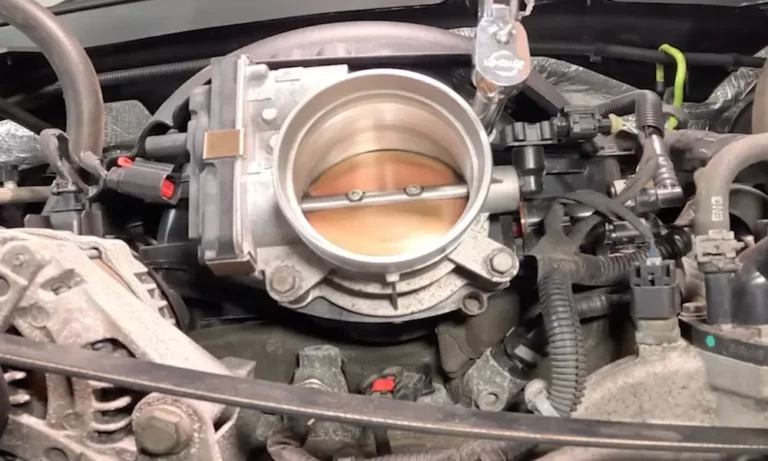
A throttle body relearn is a calibration process that teaches your GM vehicle’s Engine Control Module (ECM) how to properly control airflow through your newly serviced throttle body. Modern GM vehicles use electronic throttle control systems (also called drive-by-wire) that eliminate traditional throttle cables in favor of electronic sensors and motors.
When you clean or replace a throttle body, the ECM’s stored values no longer match the component’s current condition. Without a proper relearn, you might experience:
- High or unstable idle (1200-2000 RPM)
- Hesitation when accelerating
- Poor fuel economy (up to 12% worse in city driving)
- Check engine lights
Why Your GM Vehicle Needs a Throttle Body Relearn
Your throttle body accumulates carbon deposits over time at a rate of about 0.03-0.05mm per 10,000 miles under typical driving conditions. These deposits come primarily from crankcase ventilation hydrocarbons.
Your car’s ECM gradually adapts to these changes by adjusting the throttle blade’s resting position. This is part of what mechanics call the “idle air control learn” process. When you clean these deposits away or install a new throttle body, the ECM’s stored values suddenly become incorrect.
Think of it like this: Your car’s computer has memorized how to work with a throttle body that’s a bit dirty. When you clean it, that “memory” is now wrong, and the computer needs to learn the new normal.
Types of GM Throttle Body Relearn Procedures
There are two main approaches to relearning a GM throttle body: manual methods and scan tool methods.
Manual Relearn Method
This approach requires no special tools and works for about 93% of GM models from 2007-2018:
- Initial Idle Phase: Start the engine with the transmission in Park (or Neutral for manual transmissions). Let it idle for 3 minutes (180 seconds) without using accessories like A/C or radio. During this time, the ECM begins recording a new baseline for the throttle position sensor voltage.
- ECM Memory Reset: Turn the ignition OFF for exactly 60 seconds. This allows the non-volatile memory to save the new learned values.
- Validation Phase: Restart the engine and monitor idle for another 3 minutes. If successful, the RPM should stabilize within 50 RPM of the specification.
After completing these steps, take your vehicle for a 15-minute drive that includes:
- Three accelerations up to 45 MPH with closed-throttle decelerations
- Two extended idles longer than 2 minutes
- A final 5-minute stationary idle
This drive cycle helps the ECM fine-tune its throttle control parameters in various operating conditions.
Scan Tool Relearn Method
For more precise calibration, professional mechanics use J-2534-compliant diagnostic tools like the GM Tech2 or aftermarket options like the Autel DS708. These tools provide several advantages:
| Tool Feature | What It Does | Benefit |
|---|---|---|
| Throttle Sweep Test | Verifies blade movement from 0-100% | Ensures smooth operation throughout range |
| Idle Airflow Reset | Forces ECM to discard old fuel trim data | Creates clean slate for new learning |
| TP Sensor Relearn | Maps new voltage curve for throttle position sensor | Improves throttle response accuracy |
Using a scan tool typically completes the relearn process 37% faster than manual methods because it directly accesses the ECM memory addresses instead of waiting for the computer to learn naturally.
Model-Specific Variations
Not all GM vehicles follow exactly the same relearn procedure. Here are some important variations:
2014-2018 Silverado/Sierra 5.3L (L83)
These trucks require a forced idle stabilization using a scan tool after throttle body replacement to prevent P16A1 “Throttle Performance” error codes.
2007-2013 GMT900 SUVs (6.0L)
These vehicles need 3 consecutive drive cycles with coolant temperature above 85°C before the ECM fully accepts the new values.
2019+ T1 Trucks
Newer GM trucks incorporate a “pedal dance” sequence:
- Turn ignition ON but don’t start the engine
- Press accelerator to the floor within 5 seconds
- Release pedal completely within 10 seconds
- Repeat the press-release cycle 3 times
Common Problems and Troubleshooting
If your relearn procedure doesn’t fix your idle issues, consider these possible causes:
High Idle (1200-2000 RPM)
- Most likely cause (72% of cases): Incomplete ECM adaptation – try repeating the relearn procedure
- Second most common (23%): Throttle blade sticking due to improper cleaning – check that the throttle plate moves freely
- Less common (5%): Faulty throttle position sensor – may need replacement
Low or Erratic Idle
- Most common (68%): Vacuum leaks introduced during service – check all hoses and gaskets
- Also common (22%): Failed idle air control valve – may require replacement
- Less common (10%): Corrupted ECM software – might need reprogramming
Advanced Troubleshooting Steps
If standard relearn procedures fail, follow this troubleshooting sequence:
- Verify your battery voltage is above 12.6V during the procedure
- Check for diagnostic trouble codes (DTCs) in the P0121-P2135 range using a scan tool
- Compare desired throttle position to actual position – a difference greater than 8% suggests mechanical binding
- Test voltage on the accelerator pedal position sensor and throttle position sensor circuits
- For persistent issues, the ECM might need updated calibration files from a dealer
Important GM Service Bulletins
GM has released several technical service bulletins (TSBs) about throttle body relearn procedures:
- PIP4578 (revised 2017): Requires an Idle Learn Reset after throttle body cleaning on Gen IV/Gen V V8 engines to prevent P0507 “Idle RPM Higher Than Expected” codes
- #16-NA-069: Introduces a 45-minute extended drive cycle requirement for 2016-2018 Colorado/Canyon 3.6L models that exhibit surge after throttle service
DIY or Professional Service?
The average costs associated with throttle body services reveal why many choose to DIY:
| Procedure | Average Shop Labor | Parts Cost | Typical Total |
|---|---|---|---|
| Manual Relearn Only | 0.7 hours ($98) | $0 | $98 |
| Scan Tool Relearn | 0.3 hours ($42) + tool fee | $45 | $127 |
| Throttle Body Replacement + Relearn | 1.2 hours ($168) | $285 | $489 |
Many DIYers can safely perform throttle body cleaning and manual relearn procedures, saving significant money compared to dealer service.
Step-by-Step DIY Throttle Body Cleaning and Relearn
If you want to clean your throttle body yourself, here’s how to do it properly:
- Gather supplies: You’ll need throttle body cleaner spray, microfiber cloths, basic hand tools, and safety glasses.
- Preparation:
- Ensure the engine is completely cool
- Disconnect the negative battery terminal
- Locate your throttle body (typically attached to the intake manifold)
- Remove the throttle body:
- Disconnect the electrical connector
- Remove the air intake duct
- Loosen and remove the mounting bolts (usually 10mm)
- Carefully remove the throttle body
- Clean thoroughly:
- Spray throttle body cleaner on the throttle plate and housing
- Gently clean with a microfiber cloth, being careful not to damage the throttle plate
- Pay special attention to carbon buildup around the edges
- Let it dry completely before reinstallation
- Reinstall and perform relearn:
- Replace the throttle body gasket if removed more than three times
- Torque mounting bolts to 10 Nm (about 89 inch-pounds)
- Reconnect electrical connectors and intake duct
- Reconnect the battery
- Follow the relearn procedure detailed earlier
Fuel Economy Impact
A properly executed throttle body relearn should restore your GM vehicle’s EPA-rated fuel efficiency within three drive cycles. When the relearn is skipped or performed incorrectly, many owners report:
- 9-12% worse fuel economy in city driving
- 5-7% reduction in highway efficiency
- Up to 18% increased consumption during cold starts
This makes the relearn procedure not just a performance issue but an economic one as well.
Additional Resources
For visual learners, these resources provide excellent supplementary information:
- YouTube throttle body relearn tutorial with step-by-step instructions
- NHTSA service bulletin with official GM troubleshooting steps
By properly maintaining your throttle body and performing the relearn procedure when needed, you’ll ensure optimal performance, fuel economy, and longevity for your GM vehicle. The small investment of time saves both money and frustration in the long run.