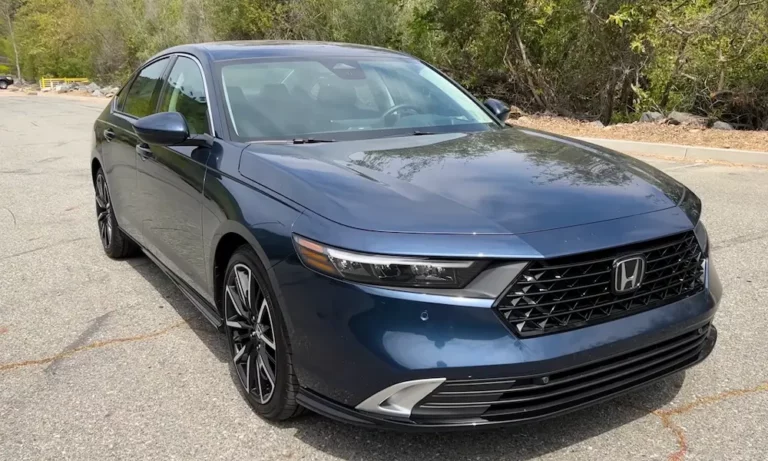
Your Honda Accord window won’t roll down — and now you’re stuck driving with a sealed cabin in the middle of summer. Before you panic or hand over your wallet at a dealership, there’s a good chance you can pinpoint this problem yourself. This guide walks you through every likely cause, from a simple button press to a broken cable inside your door.
Check This First Before Anything Else
Seriously — do this before touching a single tool.
The child safety lock button on your driver’s master switch panel cuts power to every window except the driver’s. It’s shockingly easy to bump it with your elbow or a bag. Press it, then try your windows again.
Also check:
- Are your dome lights, radio, or dash dimming? That points to a dead battery or bad alternator — not your window.
- Try restarting the engine. This reboots the window control modules and can clear minor software glitches.
- Is ice or packed snow jammed in the window slot? Clear it before running the motor.
These basic checks resolve a surprising number of window complaints without any repair.
Listen to What Your Door Is Telling You
Your ears are your best diagnostic tool here. Press the window switch and listen carefully.
| Sound From Door | What It Means |
|---|---|
| Complete silence | Electrical failure — no power reaching the motor |
| A single faint click | Relay is working but motor is dead or jammed |
| Grinding or scraping noise | Mechanical failure — broken cable or regulator |
| Motor whirring freely | Stripped plastic gears inside the motor spool |
This acoustic test from AutoZone narrows your diagnosis instantly. No noise means chase the electrical circuit. Grinding means open the door panel.
Check Your Fuses First — It Takes 2 Minutes
A blown fuse cuts power to the motor entirely. That’s why your window goes dead silent.
Honda Accords use multiple fuse boxes. Here’s where the window fuses live depending on your model year:
2003–2007 Honda Accord Power Window Fuses
| Fuse Box | Fuse # | Amp | Circuit |
|---|---|---|---|
| Passenger Compartment | 24 | 20A | Left Rear Window |
| Passenger Compartment | 25 | 20A | Right Rear Window |
| Passenger Compartment | 26 | 20A | Right Front Window |
| Passenger Compartment | 27 | 20A | Driver’s Window |
| Under Hood | 23 | 50A | Main Window Feed |
2025 Honda Accord Power Window Fuses
| Fuse Box | Fuse # | Amp | Circuit |
|---|---|---|---|
| Under Dashboard | 1 | 20A | Driver Side Window |
| Under Dashboard | 2 | 20A | Passenger Side Window |
| Under Dashboard | 3 | 20A | Rear Right Window |
| Under Dashboard | 4 | 20A | Rear Left Window |
| Under Hood | 2 | 60A | Primary Feed to Interior Box |
Source: Honda TechInfo – 2025 Accord Fuses
Pull the relevant fuse and look for a broken or scorched filament. Replace it with the exact same amperage. But here’s the catch — if the new fuse blows again, your motor is drawing too much current. That means a mechanical or electrical problem is lurking underneath.
The 3 Most Common Reasons a Honda Accord Window Won’t Roll Down
1. Broken Window Regulator (Most Common)
The window regulator is the mechanical framework inside your door. Most Honda Accords use a cable-driven regulator — a braided steel cable looped through pulleys and wound onto a motor spool. Over time, that cable frays, snaps, and jams.
When it fails, you’ll hear:
- A sharp grinding noise
- A fast clicking or whirring as the motor spins with no resistance
The plastic glass mounts are another weak point. Heat and UV exposure make them brittle. When they shatter, the glass can drop straight to the bottom of the door panel. That’s not just an inconvenience — it’s a security problem.
What causes it faster: Slamming doors repeatedly, cold climates that freeze the seals, and road salt corroding the cables all accelerate regulator failure.
2. Dead Window Motor
The motor drives the regulator spool. Inside it, small carbon brushes transfer current to a spinning commutator. Those brushes grind down over thousands of cycles. Eventually they stop making contact — and you get total silence.
A motor can also develop dead spots on the commutator. If the motor stops in one of those spots, it won’t start again when you press the switch. Try the door slam method (explained below) — sometimes a sharp vibration jolts it off the dead spot.
Dry window tracks also kill motors prematurely. When the glass binds in dirty or stiff channels, the motor pulls more current to overcome the friction. That extra heat degrades the wiring insulation and strips the plastic gears inside the motor.
3. Failed Master Switch or Wiring Harness
Modern Honda Accords don’t use simple on/off switches. The driver’s master switch acts as a Body CAN network node — it sends digital signals to individual control modules in each door.
A classic sign of a failing master switch: passenger windows work fine from their own door buttons but don’t respond from the driver’s panel. Moisture from rain or spilled drinks can destroy the switch’s internal circuitry.
The wiring harness in the door jamb is another hidden culprit. Every time you open and close the door, the wire bundle flexes through a rubber boot. On high-mileage Accords, those wires work-harden and snap internally. The insulation looks intact, but the copper inside is broken. The symptom is infuriatingly intermittent — it may work or fail depending on the exact door angle.
How to Test the Electrical Circuit Properly
If your fuses are fine, pull the door panel and test the motor connector directly with a multimeter.
Here’s the right way to do it:
- Back-probe the motor’s electrical connector (keep it plugged in)
- Press the switch down — you should read ~12 volts
- Press the switch up — voltage should reverse polarity (display shows negative)
Critical: Test this under load — with the motor still connected. A nearly broken wire can still pass a continuity beep on your multimeter even though it can’t carry actual current. Voltage testing under load is the only reliable method.
- Voltage reverses correctly → Motor is bad, everything else is fine
- No voltage at the connector → Problem is in the wiring, harness, or master switch
Your Window Is Stuck Open — Quick Temporary Fixes
If your window is stuck down and it’s about to rain, try these before the repair:
Door slam method: Hold the switch firmly in the “up” position and slam the car door hard. The impact can knock a stuck motor armature off a dead spot just enough to spin.
Glass palming method: Press both palms flat against the glass (one inside, one outside) and squeeze while a second person holds the switch up. Reducing the friction load sometimes lets a weak motor close the window.
These aren’t permanent fixes, but they’ll seal your car until you get the part.
Why Your Window Keeps Reversing Halfway Up
This one confuses a lot of Accord owners. You press the button, the window rises, then it automatically drops back down halfway. It feels like an electrical failure — but it’s usually dirty window tracks.
Your Accord has an anti-pinch safety system. It monitors how much current the motor draws. When friction in the tracks mimics the resistance of a trapped object, the system assumes something is caught and reverses the window automatically.
The fix: Clean and lubricate the run channels.
- Use dry film synthetic fluoropolymer spray for felt-lined channels — it leaves no wet residue to attract dirt
- Use silicone spray on bare rubber seals
- Never use petroleum-based grease — it mixes with dust and forms an abrasive sludge that accelerates failure
How to do it properly:
- Roll the window all the way down
- Scrub both vertical channels with a soft brush
- Vacuum out the loose debris
- Wipe with a lightly damp cloth and let dry
- Apply a short burst of lubricant down both channels
- Cycle the window up and down 3–4 times to spread the film
- Wipe excess off the glass
Do this once a year and you’ll extend your motor’s life significantly. T1A Auto has a solid breakdown of lubricant selection if you want to go deeper.
How to Reset the Power Window After a Repair
Replace the battery, pull a fuse, or swap the regulator — and your window’s auto-function stops working. The control module loses its memory of where the top and bottom limits are.
Without a reset, the window may roll up and immediately bounce back down, because the module doesn’t recognize the closed position.
Manual reset sequence (no scan tool needed):
- Turn ignition to ON (engine off)
- Press the switch down to fully lower the window
- Open the driver’s door and keep it open
- Turn ignition OFF
- Press and hold the switch down
- While holding it, turn ignition back ON
- Release the switch
- Repeat steps 4–7 three more times (four total cycles)
- Each step must happen within 5 seconds or the sequence resets
- Wait 1 second after the final release
- Test: the auto one-touch function should now be dead — that confirms the wipe worked
- Press the switch to lower the window fully
- Pull the switch up to auto-up and hold it for 1 full second after the glass hits the top
- Release — auto-functions are now recalibrated
If the sequence fails repeatedly, pull the interior window fuse with the ignition off, cycle the ignition on and off, reinstall the fuse, then go straight to steps 12–13.
What a Repair Will Cost You
Here’s a realistic breakdown of what you’re looking at in the US market:
| Component | Low Cost | High Cost | Notes |
|---|---|---|---|
| Window Regulator + Motor Assembly | $70 | $450 | Older Accords are cheaper; 2020+ can exceed $400 |
| Motor Only | $26 | $110 | Requires separating from old regulator — more labor |
| Master Window Switch | $114 | $790 | High variance due to complex multiplex circuitry in newer models |
| Passenger/Rear Switch | $20 | $75 | Simpler switches, more affordable |
| Track Lubricant | $5 | $15 | Annual maintenance — worth every cent |
Pro tip: Always replace the motor and regulator together as a single assembly. Pairing a new motor with worn cables is asking for a second failure within months.
Labor at a shop runs between $149–$269 per door. Total professional repair on a newer Accord typically lands between $744 and $940 all in.
Diagnostic Trouble Codes to Know
If you have a scan tool or access to one at a parts store, the Honda B-CAN network logs specific fault codes for window failures:
| Code | Meaning |
|---|---|
| B1125 / B1126 | Driver’s power window motor pulse malfunction |
| B1130 | Front passenger window motor pulse malfunction |
| B1127–B1129 | Door lock switch or wiring short |
These codes save hours of manual wire probing by pointing directly at the failed circuit.
A Honda Accord window that won’t roll down usually comes down to one of four things: a bypassed safety lock, a blown fuse, a snapped regulator cable, or a dead motor. Work through each step systematically, listen to what your door tells you, and you’ll pinpoint the exact problem without guessing or replacing parts you don’t need.