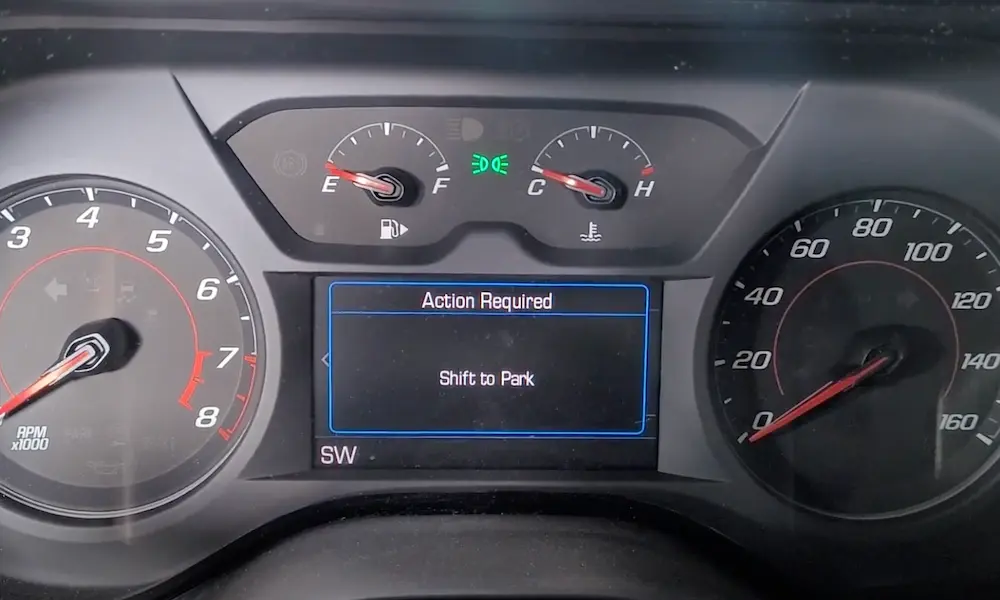
Your L5P just hit limp mode, and the dashboard’s screaming at you. Maybe you’ve got a P2463 code, or the truck just won’t clean itself no matter how far you drive. This guide walks you through every method to force regen on a Duramax L5P — from the dashboard button to professional scan tools — plus the mechanical traps that’ll stop a regen dead in its tracks.
What’s Actually Happening Inside Your DPF
Your L5P’s exhaust system is a four-stage chain. Raw exhaust hits the diesel oxidation catalyst first, then passes through the selective catalytic reduction unit where diesel exhaust fluid kills nitrogen oxides. Finally, everything flows into the diesel particulate filter, which physically traps solid black carbon soot.
Here’s the problem: that filter fills up. When it does, exhaust backs up, power drops, and your truck starts making your life miserable.
Regeneration burns that soot off by pushing exhaust temps above 1,000°F. When driving conditions don’t create enough heat naturally, soot keeps piling up until the system demands manual help.
Soot vs. Ash: Know the Difference
Soot burns away during regeneration. Ash doesn’t. Ash is the leftover residue from burned engine oil and mineral deposits, and it permanently reduces your filter’s capacity over time. More ash means more frequent regens. Eventually, the filter needs physical cleaning or full replacement — no scan tool fixes that.
Your Soot Load Thresholds at a Glance
The L5P’s engine control module tracks soot as a percentage. Here’s exactly what each level means for you:
| Soot Load % | System Status | What You Should Do |
|---|---|---|
| 0% – 50% | Normal operation | Nothing. Keep driving normally. |
| 50% – 90% | Soot building, regen pending | Highway driving helps. ECM handles it. |
| 90% – 100% | Nearing capacity | Dashboard regen prompt may appear. Take it. |
| 115% | Critical — warning message displays | Sustained highway driving above 50 mph, or use a scan tool. |
| 140% | P2463 sets. Limp mode activates. | Scan tool forced regen is the only option. |
| 140%+ | Potential filter damage | Physical removal, professional cleaning, or replacement. |
The jump from warning to limp mode happens fast. Once you hit 140%, driving regens are disabled by the software. You need a tool.
Three Types of Regeneration on the L5P
Passive Regen
This is the best-case scenario. When you’re towing heavy loads, climbing grades, or cruising the interstate, exhaust temps naturally climb above 800°F and burn soot off on their own. No extra fuel burned. No dashboard warnings. No scan tool needed.
City driving kills passive regen. If your truck rarely sees highway speeds, soot accumulates faster than it clears.
Active Regen
When passive regen doesn’t happen often enough, the ECM steps in and commands an active regen automatically. It fires the ninth injector — a hydrocarbon dosing valve mounted in the exhaust stream — which sprays raw diesel into the oxidation catalyst. That creates a controlled burn, spiking temps to 1,000–1,300°F and torching the soot.
Active regens need 20–40 minutes of driving above 50 mph to complete. You’ll notice:
- Higher idle when you stop
- A sharp exhaust smell
- The cooling fan kicking hard
Don’t shut the engine off mid-regen. Partially burned soot hardens into tar-like deposits that resist future cleaning and accelerate limp mode.
Forced Stationary Regen
This is what you’re here for. A forced regen commands the ECM to run the active regen thermal cycle while the truck sits still. Because there’s no airflow from driving, the heat underneath your truck gets intense fast. This method requires either the dashboard DIC menu or a bi-directional scan tool to initiate safely.
Native Dashboard Regen: Using the Driver Information Center
Some L5P trims let you trigger a regen directly from the dashboard — no scan tool required. But the window is narrow.
This option only appears when soot load hits approximately 90% capacity. Miss that window, and it disappears. If the filter keeps clogging without a highway drive, the dashboard option locks out entirely to prevent fire risks.
Safety Checks Before You Start
The ECM won’t accept the command unless these conditions are met:
- Park outdoors on flat, non-combustible ground with at least 10 feet of clearance from walls, buildings, dry grass, or debris — exhaust temps exceed 1,000°F and can ignite materials near the tailpipe
- Transmission in Park, parking brake firmly engaged
- Fuel tank at ⅛ full or more
- Engine coolant temperature above 160°F
- No active check engine light — any active DTC will abort the process
Step-by-Step Dashboard Regen Procedure
| Step | Action | Why It Matters |
|---|---|---|
| 1 | Park outdoors, 10+ ft from combustibles | Radiant heat can ignite nearby materials |
| 2 | Transmission in Park, parking brake on, ⅛ tank fuel | Prevents movement; ensures fuel supply for ninth injector |
| 3 | Confirm coolant temp above 160°F, no check engine light | Cold engine or active DTCs will cancel the command |
| 4 | Navigate DIC to “Exhaust Cleaning” under Settings | Accesses the software trigger |
| 5 | Hold the checkmark button (or trip stem on base models) for 1 second | Signals intent to ECM |
| 6 | Select “Yes” or “Accept” on the safety warning screen | If it jumps back to the menu, a safety condition failed |
| 7 | Press and hold the Exhaust Brake Switch for 3+ seconds | Final mechanical confirmation — releasing early triggers “Exhaust Brake On” |
| 8 | Step outside, maintain visual on the truck | Engine RPM climbs, cooling fan runs at full blast — this is normal |
| 9 | Wait up to 30 minutes for cycle to complete | Don’t interrupt it |
| 10 | Let exhaust cool 5–10 minutes before driving | Prevents thermal shock to superheated components |
Open the hood during the cycle to help dissipate engine bay heat. The sound is loud — think jet turbine. That’s completely normal for the L5P platform.
If an emergency happens, pressing the brake pedal or turning the ignition off instantly aborts the cycle.
How to Force Regen on Duramax L5P With a Scan Tool
When the dashboard option is gone or the truck is already in limp mode, a bi-directional scan tool is your only path forward. The tool sends a digital override command through the OBD-II port, forcing the ECM to trigger the ninth injector and climb to high idle.
Popular tools that work on the L5P include:
- In-cab monitors: Edge Insight CTS3, Banks iDash SuperGauge
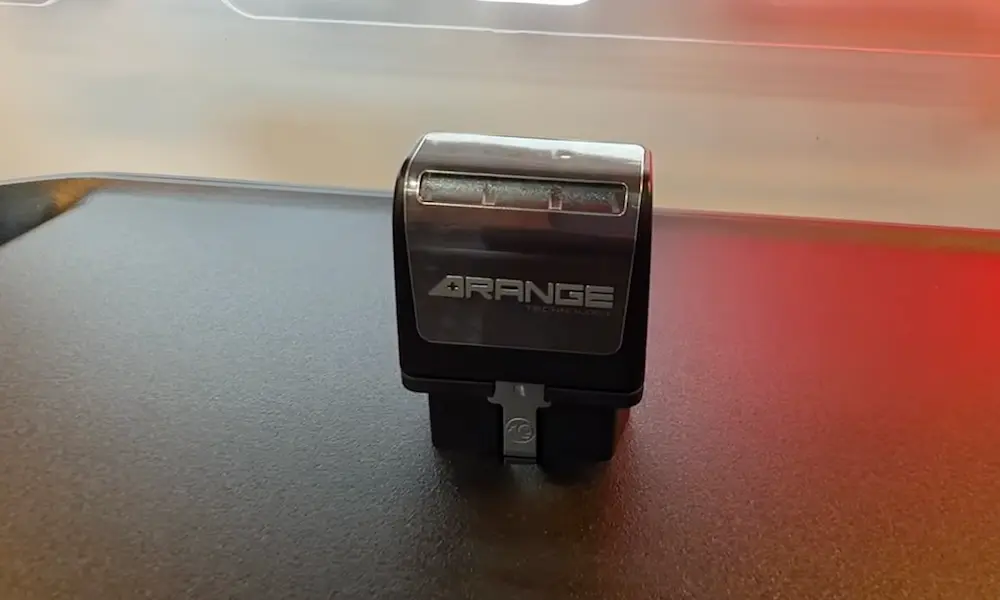
- Wireless dongles: EZ LYNK Auto Agent
- Pro tablets: Autel MK808K-BT or MS906 Pro, Snap-on TRITON-D10, Topdon ArtiDiag900BT, CanDo LD Mobile
Edge Insight CTS3 and Banks iDash
These in-cab monitors stay plugged into the OBD-II port and let you monitor live soot percentages daily.
Edge CTS3: Navigate to Diagnostics → Special Functions → Severe Service Operations. Check live soot percentage and confirm no active codes. Accept the safety warnings, and the ECM ramps to ~2,000 RPM. Watch the soot percentage fall on the live data screen.
Banks iDash: Use the physical buttons to open Diagnostics → Stationary Regen. After the cycle completes, the screen explicitly displays “Stationary Regen Ended” and returns to your gauge layout automatically.
Both cycles take 20–40 minutes. Keep everyone away from the tailpipe.
EZ LYNK Auto Agent
The EZ LYNK uses a wireless Bluetooth/Wi-Fi dongle and a smartphone app. Before initiating, open the hood — the L5P engine bay needs airflow during stationary regens.
In the app, go to Functions → Stationary DeSoot / DPF Regeneration. The app walks you through a checklist: oil level, coolant level, adequate fuel, parking brake on, distance from combustibles. Tap Continue, and the system takes automated control of RPM and thermal management.
Autel, Snap-on, and Topdon Professional Tools
In a shop environment, run a full pre-scan first. Check the differential pressure sensor voltage and confirm whether P2463 is active. If soot load shows 100% or higher with P2463 set, a forced regen is the correct manufacturer-approved path.
Navigate to Service → Special Functions → Engine Control Module → DPF Regeneration. Acknowledge the safety prerequisites. The tool commands high idle, and the cycle runs 30–60 minutes for heavily clogged commercial trucks. After completion, clear all stored DTCs including P2463 and perform a test drive to confirm limp mode has lifted.
Cracking the Limp Mode Lockout: E41 vs. Global B
This is where year matters. The strategy for forcing a regen on a truck in limp mode changes completely based on the ECM architecture.
2017–2019 Trucks: The E41 Lockout
Early L5P trucks use the E41 ECM architecture with aggressive lockout logic. If the truck is in limp mode, the ECM blocks standard regen commands entirely — your scan tool returns “Conditions Not Met” even with everything set up correctly.
The workaround is a precise sequence: use the scan tool to clear all active emissions codes. The instant the check engine light goes off, you have a small window — sometimes just a few minutes — before the ECM re-polls the pressure sensor, sees the filter is still restricted, and re-triggers limp mode. Clear the codes and immediately command the forced regen before the lockout reactivates. Once the command is accepted and RPM climbs, the software override holds.
2020+ Trucks: Global B Cybersecurity
Starting in 2020, GM’s Vehicle Intelligence Platform added military-grade encryption to the CAN bus network. Older or un-updated scan tools simply won’t connect to the ECM. Your tool needs current firmware with explicit Global B protocol support. If the tool can’t handshake with the network, it can’t command anything — full stop.
Hardware Failures That Block Regen
A scan tool can’t fix broken hardware. If your truck keeps failing regens or aborts mid-cycle, check these components.
Ninth Injector Failures
The ninth injector (GM Part #12717296) sits in the exhaust stream and gets baked. Carbon buildup clogs the nozzle tip over time, stopping fuel flow into the oxidation catalyst. The ECM commands a regen, nothing burns, temps never rise, and the cycle times out.
Diagnosis is simple: watch live exhaust gas temperatures during an attempted regen. If temps don’t climb well above normal operating range within five minutes, the ninth injector is suspect. Replacement requires a specialized fuel line removal tool and IQA programming to calibrate the new injector’s flow rate.
Injector Balance Rates
If an engine injector is over-fueling a cylinder, it dumps excessive soot into the exhaust stream and overwhelms the DPF constantly. Check balance rates on your scan tool at idle. Healthy L5P injectors stay within ±4 mm³. Anything beyond ±6 mm³ means that injector is compromised and needs replacement — it’ll keep destroying your filter otherwise.
Exhaust Gas Temperature and Pressure Sensor Issues
EGT sensors control ninth injector dosing. A sensor reading too low causes over-fueling and white smoke. A sensor reading too high causes the ECM to cut fueling and abort the regen immediately.
The differential pressure sensor lines also clog with hardened soot or get physically damaged. A clogged line reports artificially high restriction, triggering a false P2463 and unnecessary limp mode even on a clean filter. Codes P2452 and P2453 point directly to differential pressure sensor failures.
DEF System Interdependencies
If your DEF system throws a critical fault — P207F, P20EE, crystallized reductant injector, failed tank heater — the ECM disables all regeneration. It won’t create intense exhaust heat with downstream chemical treatment offline. Fix the DEF fault first, clear the codes, then proceed with the regen.
Keeping Your DPF Healthy Long-Term
Forced regen is reactive. These habits keep you out of limp mode in the first place:
- Drive highway miles weekly. Aim for at least 30 consecutive minutes above highway speeds. Short city trips never let the exhaust system reach passive regen temps.
- Stop unnecessary idling. The DPF can’t self-clean at idle — it only generates dense, wet soot that packs the filter faster.
- Never kill the engine mid-regen. Let active cycles finish. Interrupting them repeatedly is the single biggest cause of sudden limp mode events.
- Use quality fuel additives. Products from Hot Shot’s Secret help maintain the fuel system and ninth injector.
- Run low-ash engine oil. Regular oil burns and leaves non-combustible ash in the filter. That ash can’t be regenerated away — it permanently reduces filter capacity until the unit needs professional cleaning or replacement.
Master these basics, and your L5P’s aftertreatment system stays manageable — no surprise limp modes, no unnecessary scan tool sessions, and no early DPF replacement bills.