That dreaded check engine light just popped on in your Hyundai, and a quick scan revealed the code P0420. Your heart sinks as you wonder what it means for your wallet. You’re right to be concerned—this common issue affects thousands of Hyundai owners each year, particularly in models from 2012 onward. But don’t panic just yet.
In this guide, I’ll walk you through everything you need to know about the P0420 code in Hyundai vehicles—from what it means and how to diagnose it properly to your repair options and potential costs. Whether you’re driving a Tucson, Santa Fe, Accent, or Elantra, this information will help you make informed decisions about your vehicle.
What Does the P0420 Code Actually Mean?
When your Hyundai displays the P0420 code, it’s telling you there’s a problem with the “Catalyst System Efficiency Below Threshold (Bank 1).” In plain English, your catalytic converter isn’t cleaning exhaust gases efficiently enough.
How Your Catalytic Converter Works
Your catalytic converter is essentially an air purifier for your car’s exhaust. It transforms harmful gases into less toxic substances before they exit your tailpipe:
- Converts nitrogen oxides (NOx) into nitrogen
- Changes carbon monoxide (CO) into carbon dioxide (CO2)
- Transforms unburned hydrocarbons into CO2 and water
The system relies on two oxygen sensors—one before the catalytic converter (upstream) and one after it (downstream). When working properly, these sensors should show different readings. The upstream sensor typically fluctuates as it reads the varying oxygen content in the exhaust, while the downstream sensor should show more stable readings, indicating the converter is doing its job.
When both sensors show similar patterns, your car’s computer determines the catalytic converter isn’t working efficiently enough and triggers the P0420 code.
Common Symptoms of a P0420 Code
Beyond just the check engine light, you might notice several symptoms when your Hyundai has a P0420 code:
- Reduced fuel economy: Many owners report a 10-15% drop in MPG
- Sluggish acceleration: Especially noticeable when climbing hills or merging onto highways
- Struggle to maintain speed: Your engine might labor to keep highway speeds
- Rotten egg smell: A sulfur odor from the exhaust can indicate converter problems
- Failed emissions tests: Your vehicle won’t pass required inspections with this code
Hyundai Models Most Affected by P0420
While the P0420 code can appear in any Hyundai with a catalytic converter, certain models seem particularly prone to this issue.
High-Risk Hyundai Models
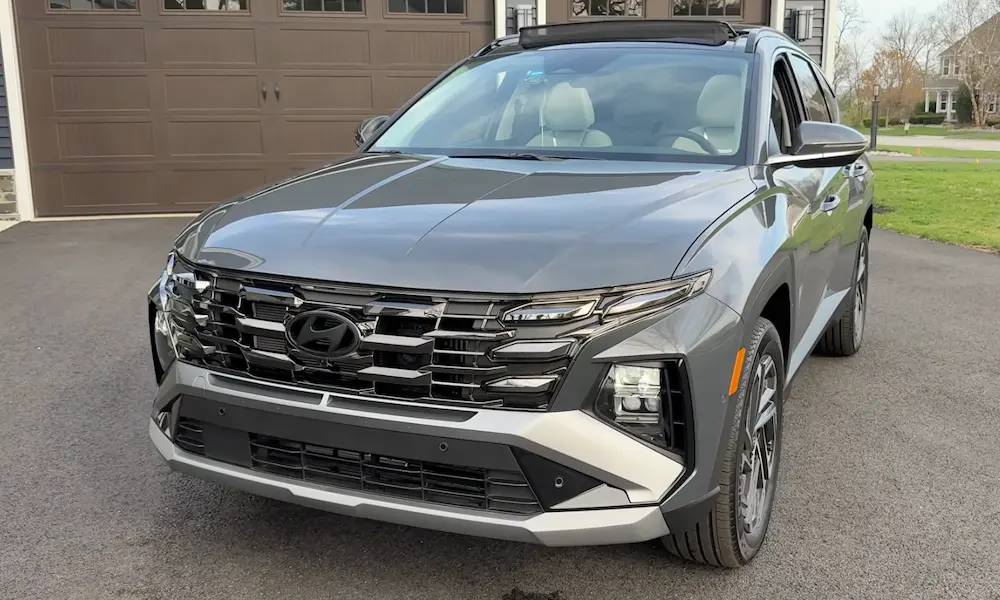
- 2019 Hyundai Tucson (2.0L GDI engine): So common that Hyundai issued Technical Service Bulletin (TSB) 20-FL-010H specifically addressing this issue
- Santa Fe Sport (2013-2016): Particularly those with the 2.4L GDI engines
- Hyundai Accent (2014-2016): These models show exceptionally high P0420 failure rates, often between 80,000-120,000 miles
- Models with 2.0L GDI engines: Found in many Tucson, Elantra, and Veloster models
Why These Engines Are Vulnerable
The 2.0L GDI (Gasoline Direct Injection) engine appears especially susceptible to P0420 codes. These engines often develop:
- Carbon buildup: The direct injection system can lead to carbon deposits
- Oil consumption issues: Many owners report burning 1 quart every 1,000-2,500 miles
- Catalyst contamination: Oil vapors travel through the exhaust system and coat the catalyst elements
This oil consumption creates a snowball effect—the oil contaminates the catalytic converter, reducing its efficiency and triggering the P0420 code.
How to Properly Diagnose a P0420 Code
Before spending money on an expensive catalytic converter, it’s crucial to properly diagnose the issue. Misdiagnosis is common and can lead to unnecessary repairs.
Step 1: Check for Additional Codes
The P0420 code is often a symptom of another problem rather than the root cause. Look for:
- Misfire codes (P0300-P0306): These indicate combustion problems that can damage converters
- Fuel system codes: Problems with fuel pressure or injectors can cause rich conditions
- Air/fuel mixture codes: Imbalances in the air/fuel ratio affect converter efficiency
Step 2: Analyze Oxygen Sensor Data
Using an OBD-II scanner with live data capabilities:
- Compare upstream (Bank 1, Sensor 1) and downstream (Bank 1, Sensor 2) oxygen sensor readings
- A properly functioning downstream sensor should show relatively stable voltage (0.1-0.9 volts)
- The upstream sensor should fluctuate more dramatically
- If both sensors show identical patterns, the catalytic converter is likely failing
Step 3: Check for Exhaust Leaks
Exhaust leaks before the downstream oxygen sensor can introduce outside air and trigger false P0420 codes:
- Inspect exhaust manifolds for cracks
- Check gaskets and connections for proper sealing
- Listen for ticking or hissing sounds that might indicate leaks
Step 4: Perform a Temperature Test
A simple but effective test involves measuring temperatures at the converter:
- Drive the vehicle until it reaches operating temperature
- Use an infrared thermometer to measure temperature at converter inlet
- Measure temperature at converter outlet
- A properly functioning converter should be 100-200°F hotter at the outlet
- Similar or lower outlet temperatures indicate converter failure
Root Causes of P0420 Codes in Hyundais
Understanding what causes P0420 codes helps prevent recurrence after repairs.
Engine Misfires
Misfires are the most damaging condition for catalytic converters. When cylinders misfire:
- Unburned fuel enters the exhaust system
- This fuel burns inside the catalytic converter
- Excessive heat damages or melts the catalyst substrate
Common misfire causes in Hyundais include worn spark plugs, failing ignition coils, and fuel injector problems.
Fuel System Issues
Problems with the fuel system can create conditions that overwhelm the catalytic converter:
- Faulty fuel pressure regulators cause rich fuel mixtures
- Rich conditions send excess fuel to the converter
- Fuel contamination damages the catalyst material
Oil Consumption
As mentioned earlier, excessive oil consumption is common in certain Hyundai engines:
- Oil burning creates vapors that contaminate the converter
- The precious metals in the converter become coated and less effective
- The contamination is often progressive and irreversible
Repair Options and Costs
Once you’ve properly diagnosed the issue, you have several repair options with varying costs.
Oxygen Sensor Replacement
Often the most cost-effective first step:
- Cost range: $150-500 per sensor including labor
- Labor time: 1-2 hours depending on sensor location
- Success rate: High if the code is triggered by a faulty sensor rather than actual converter issues
The downstream sensor (Bank 1, Sensor 2) is most commonly the culprit as it operates in harsher conditions.
Exhaust System Repairs
If leaks are causing false readings:
- Cost range: $100-600 depending on location and extent
- Common repair points: Exhaust manifold gaskets, pipe connections, heat shields
- DIY potential: Moderate, depending on the specific issue
Catalytic Converter Replacement
The most expensive but definitive solution:
| Hyundai Model | OEM Converter Cost | Labor Cost | Total Range |
|---|---|---|---|
| Sonata | $2,015-2,168 | $86-127 | $2,101-2,295 |
| Accent | $1,800-2,100 | $80-120 | $1,880-2,220 |
| Tucson | $1,900-2,300 | $90-150 | $1,990-2,450 |
Aftermarket options can reduce costs significantly:
- Universal converters: $200-400
- Direct-fit aftermarket: $300-1,000
- CARB-certified converters: Required in California and some other states, typically more expensive
Alternative Solutions
Some less conventional approaches include:
- Catalytic converter cleaners: Products like Cataclean show limited effectiveness for genuine P0420 codes but might help with mild contamination
- Oxygen sensor spacers: These modify sensor readings to prevent code triggering but don’t fix the underlying issue and may not be legal in all areas
Warranty Coverage for P0420 Repairs
Before paying out of pocket, check if your Hyundai qualifies for warranty coverage.
Federal Emissions Warranty
All Hyundai vehicles include federally mandated emissions warranty covering:
- Catalytic converters for 8 years or 80,000 miles
- Engine control modules and onboard diagnostic systems
- Applies to all owners, not just original purchasers
For warranty coverage, the failure must result from manufacturing defects rather than maintenance neglect or damage from other issues.
Hyundai Technical Service Bulletins
Vehicles covered by specific TSBs may receive repairs under warranty even if other warranty periods have expired:
- 2019 Tucson TSB 20-FL-010H: Authorizes both catalytic converter replacement and ECM updates
- Santa Fe Sport TSB 16-FL-004: Covers similar P0420 and P0171 codes
- TSB repairs: Typically include both parts and labor at no cost to the owner
Goodwill Warranty Extensions
Hyundai has shown willingness to provide “goodwill” warranty extensions for vehicles slightly outside normal parameters:
- Vehicles just over 80,000 miles or 8 years might still qualify
- Maintenance history and specific circumstances factor into decisions
- Contact Hyundai customer service directly to inquire about assistance
The Repair-or-Replace Decision
For older Hyundais, P0420 codes can create difficult financial decisions.
Consider Your Vehicle’s Value
A $2,000+ catalytic converter replacement on a vehicle worth $8,000-12,000 represents a significant percentage of the car’s value. Consider:
- Current vehicle market value
- Your planned ownership duration
- Other needed repairs
- Local emissions testing requirements
Long-Term Implications
Ignoring P0420 codes can lead to:
- Further performance deterioration
- Damage to other emissions components
- Inability to register your vehicle in states requiring emissions testing
- Potential environmental impact
Real-World P0420 Repair Experiences
Many Hyundai owners have shared their P0420 repair journeys online:
- A 2019 Tucson owner with 33,000 miles had their catalytic converter replaced under warranty after the dealer confirmed the code
- A 2014 Accent owner at 110,000 miles paid $1,950 for converter replacement after attempting oxygen sensor replacement
- A Santa Fe owner with 89,000 miles received “goodwill” warranty coverage despite being slightly over the 80,000-mile limit
The P0420 code is a complex issue requiring careful diagnosis and consideration of multiple factors. While catalytic converter replacement offers the most definitive solution, proper diagnosis can often identify less expensive alternatives. Understanding your warranty coverage and Hyundai’s Technical Service Bulletins can significantly reduce out-of-pocket expenses for qualifying vehicles.
Remember that prevention through proper maintenance remains the most cost-effective approach to avoiding P0420 codes and ensuring your Hyundai’s long-term reliability.