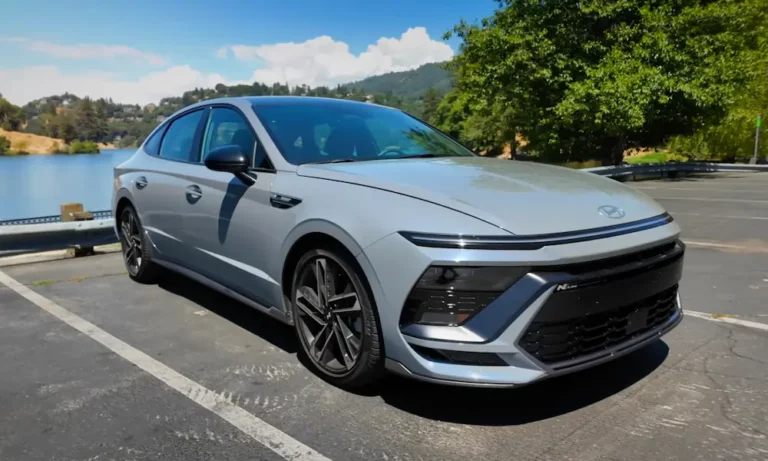
Got a scratch, a chip, or a panel that needs repainting? You need your exact Hyundai paint code before you buy anything. Grab the wrong color and you’re looking at a mismatched repair that’s worse than the original damage. This guide shows you exactly where to find your code, how to read it, and what to do when the sticker’s gone.
Where Is the Hyundai Paint Code Location?
For most Hyundai vehicles made from 1997 to today, the paint code lives on the driver’s side door jamb. Open your front driver’s door and look at the vertical pillar behind it — that’s the B-pillar.
You’ll spot a white or silver sticker called the Vehicle Certification Label. Scan it for the word “PAINT” or “COLOR.” The two or three-character code sits right next to it.
That’s your paint code. Done.
Models that use this location include the Accent, Elantra, Santa Fe, Sonata, Tucson, Palisade, Kona, and the Ioniq series.
What Does a Hyundai Paint Code Look Like?
Hyundai uses a short alphanumeric format — usually two or three characters. It’s a mix of letters and numbers.
Here are some real examples:
| Paint Code | Color Name | Finish Type |
|---|---|---|
| SWP | Snow White Pearl | Pearl |
| MZH | Phantom Black | Metallic |
| PAE | Hyper White | Solid |
| R2T | Shimmering Silver Pearl | Pearl |
| YP5 | Intense Blue Metallic | Metallic |
| W6H | White Tricoat | Tri-coat |
Older Hyundais from the ’90s and early 2000s used two-character codes like “EB” (Ebony Black) or “JA” (Shine Red on older Elantras). Modern vehicles shifted to three characters to handle the wider range of finishes available today.
Watch Out for Code Variants — They’re the Same Color
You might see two different codes that look like they disagree. Don’t panic. Hyundai’s system includes suffix variants that point to the exact same paint formula.
| Base Code | Variant Code | Color Name |
|---|---|---|
| S3 | S3B | Phantom Black / Twilight Black Metallic |
| W8 | WW8 | Quartz White Pearl Tricoat |
| PR | PR2 | Scarlet Red Pearl |
| Y8 | Y8S | Symphony Silver Metallic |
| P3 | P3G | Harbor Gray Metallic |
If your parts catalog shows “S3” and your sticker shows “S3B,” don’t stress. Use either one — you’ll get the right color.
Don’t Trust the Color Name
“Phantom Black” sounds specific. It’s not. Hyundai’s marketing team wrote that name to sell cars. Technicians mix paint using the code, not the name.
Here’s the real problem. The same color name can appear across multiple model years with slightly different formulas underneath. A “Radiant Silver Metallic” from 2010 and a “Radiant Silver Metallic” from 2020 can have a different metallic flake size or a different undertone entirely. They look close. But side by side on a car, a mismatch is obvious.
Use the code. Ignore the name.
How to Read the Door Jamb Sticker Correctly
The Vehicle Certification Label packs a lot of information into a small space. It’s easy to grab the wrong number. Here’s what you’re looking at:
- Top section — Manufacturer name and the vehicle’s month and year of manufacture
- Middle section — Weight ratings and U.S. Department of Transportation compliance statements
- Lower or right section — Build codes, including paint and trim
The two fields people confuse most are PAINT and TRIM.
- PAINT = exterior body color code
- TRIM (sometimes shown as “TRM”) = interior upholstery and plastic color code
These are completely different formulas. If you accidentally use the trim code to order exterior paint, your color will be flat-out wrong. Look specifically for the field labeled “PAINT” or “COLOR” before writing anything down.
Paint Code Locations for Older Hyundai Models
The B-pillar wasn’t always the standard. On older Hyundais, you need to look in the engine compartment.
| Hyundai Model | Era | Paint Code Location |
|---|---|---|
| Excel | Legacy | Center firewall (engine bay) |
| Scoupe | Legacy | Center firewall (engine bay) |
| Early Sonata | Legacy | Front of radiator core support |
| All standard models | 1997–present | Driver’s side door jamb |
Engine bay labels are notoriously hard to read after years of heat, oil spray, and degreaser chemicals. If the label is gone or unreadable, move straight to the VIN lookup method below.
What If the Sticker Is Missing or Damaged?
This happens. The door gets replaced. The car was in a collision. The sticker got painted over or peeled off. You still have options.
Use the VIN at a Dealership
Your 17-digit Vehicle Identification Number doesn’t contain the paint code inside it — but it unlocks the factory build sheet that does. The VIN’s strict regulatory structure leaves no room for paint data in the character string itself, but every VIN connects to a manufacturer database that records the exact color applied on the assembly line.
Take your VIN to any authorized Hyundai dealership’s parts department. They’ll pull up your vehicle’s Electronic Parts Catalog and give you the exact paint code. It’s free, it’s fast, and it’s accurate.
Free online VIN decoders can tell you the model year, assembly plant, and engine type. They don’t have access to proprietary build sheet data — so they won’t give you the paint code. You need the dealership for that.
Kia and Genesis Use the Same System
Hyundai, Kia, and Genesis all share the same corporate structure, platforms, and manufacturing logic. Finding the paint code works identically across all three brands.
Kia: The paint code is on the driver’s side door jamb. The format is the same two-to-three character system. Many colors are shared directly between Kia and Hyundai — “SWP” means Snow White Pearl on both a Sorento and a Sonata. Same formula, same result.
Genesis: Whether it’s a G80 sedan or a GV80 SUV, the paint code is on the Vehicle Certification Label inside the driver’s door jamb. The premium marketing names change — “Uyuni White” (UYH), “Vik Black” (PH3), “Savile Silver” (SSR) — but the three-character code structure doesn’t.
How Hyundai Compares to Other Brands
Hyundai’s door jamb location is genuinely one of the more user-friendly setups in the industry. Compare that to what technicians deal with elsewhere:
| Manufacturer | Paint Code Location | Format |
|---|---|---|
| Hyundai / Kia / Genesis | Driver’s side door jamb | 2–3 characters |
| Toyota / Lexus | Driver’s side door jamb | 3 characters |
| Ford / Lincoln | Driver’s side door jamb | 2 characters |
| Honda / Acura | Driver’s side door jamb | 4–7 characters |
| GM (Chevy, Buick, Cadillac) | Glove box or spare tire well | 4–6 characters |
| Volkswagen / Audi | Trunk floor under spare tire | 3–4 characters |
| BMW / Mini | Under hood or strut tower | 3 characters |
GM owners sometimes dig through their trunk before finding anything. Audi owners pull up the trunk mat. Hyundai owners open the door and look left. It’s a straightforward system.
Using Your Paint Code: What You Actually Need
Finding the code is step one. Getting the repair right is step two. Modern Hyundai paint is a multi-layer system, and the code only covers one of those layers.
Here’s what the factory finish actually looks like:
- Primer — Bonds to bare metal. If your chip goes this deep (gray or black layer showing), you need primer before color.
- Basecoat — This is what your paint code describes. It holds all the color, metal flake, and pearl effects. It dries flat and dull on its own.
- Clearcoat — The shiny protective layer on top. Without it, your repair looks wrong even if the color is correct.
A common mistake is applying the basecoat, noticing it looks flat, and assuming the paint code was wrong. The code was fine. The clearcoat was just missing.
Tri-coat Colors Need Extra Steps
Some Hyundai whites and special finishes are tri-coats — three separate layers that build the final visual effect. Codes like WW8 (Quartz White Pearl Tricoat), WC9 (Hyper White Tricoat), and W6H (White Tricoat) require you to apply a solid base, then a separate pearl mid-coat, then clearcoat. Skip the mid-coat and the color won’t match, no matter how carefully you mixed the formula.
The Peeling Paint Issue on White Models (2010–2018)
If you own a white Hyundai from roughly 2010 to 2018, be aware of a documented clearcoat delamination problem on certain models. Paint peels off in large sheets, particularly in high-UV southern states. Touch-up paint won’t fix this — the underlying adhesion has failed. Those panels need full stripping and repainting. Hyundai issued extended warranty coverage for specific VIN ranges affected by this defect. Cross-reference your VIN with the dealer before spending money on touch-up materials.
Quick Checklist: Finding Your Hyundai Paint Code
- ✅ Open the driver’s front door
- ✅ Look at the B-pillar (vertical panel directly behind the door)
- ✅ Find the Vehicle Certification Label (white or silver sticker)
- ✅ Locate the field labeled “PAINT” or “COLOR”
- ✅ Write down the 2–3 character code next to it
- ✅ If no sticker exists, take the VIN to a Hyundai dealership parts department
Your paint code is the only number that gets you the right color. Everything else — the name, the shade description, the year — is background noise.