Having transmission troubles with your Hyundai Santa Fe? You’re facing one of the most frustrating issues that can plague these otherwise popular SUVs. Transmission problems can leave you stranded, cost thousands to repair, and create serious safety concerns. I’ll walk you through the major issues affecting different model years, how to identify warning signs, and what your options are if you’re experiencing these problems.
The 2024 Santa Fe DCT Crisis: A Major Safety Recall
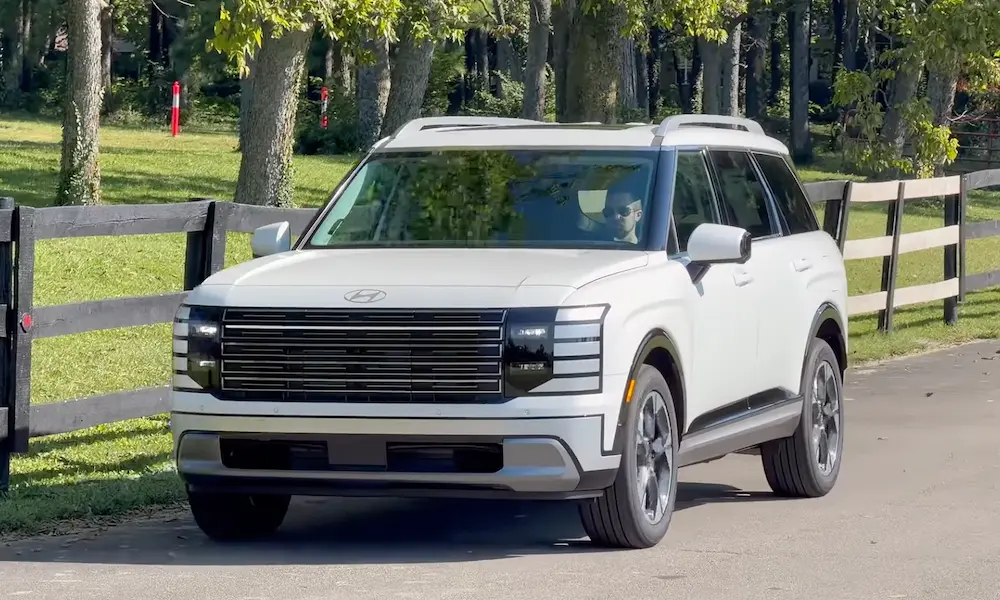
The 2024 Hyundai Santa Fe has experienced perhaps the most severe transmission problems in the model’s history. Hyundai issued a recall covering all 12,349 gas-powered Santa Fe models produced through July 2, 2024, due to a critical software error in the 8-speed dual-clutch transmission (DCT).
The problem is serious enough that Hyundai documented 45 rollaway incidents in just a 24-day period in June 2024. In these cases, vehicles rolled away despite being shifted into park, creating dangerous situations for owners.
“I heard unusual grinding sounds from my brand-new Santa Fe, and the dealership confirmed total transmission failure at just 27 miles,” one owner reported.
The issue stems from a transmission control unit software bug that can cause clutches to engage incorrectly during normal operation. This can damage both the transmission case and the parking pawl mechanism, leading to:
- Complete transmission failures
- Vehicles rolling away when parked
- Unusual grinding or clicking sounds
- Transmission replacement needs at extremely low mileage
Hyundai’s solution involves a software update and, in many cases, complete transmission replacement. However, the problem was so severe that Hyundai has decided to abandon the DCT entirely for the 2026 model year, returning to a conventional 8-speed torque-converter automatic.
2021-2022 Models: The Oil Pump Failure Problem
If you own a 2021-2022 Santa Fe with the dual-clutch transmission, you face a different but equally serious issue. Hyundai recalled 53,142 vehicles from these model years due to electric oil pump failures within the 8-speed DCT.
When the electric oil pump fails inside the transmission, oil pressure is completely lost. This forces the transmission into neutral, leaving you unable to drive the vehicle—often with little warning.
Signs of this particular problem include:
- Dashboard warning displaying “stop safely immediately”
- Sudden loss of power while driving
- Inability to shift properly
- Vehicle becoming immobilized without warning
According to technical service bulletins, dealers need to inspect and potentially replace the entire transmission, as well as update the transmission control unit software.
Common Transmission Problems Across All Santa Fe Model Years
Beyond the specific recalls, Santa Fe models across different years have exhibited several common transmission issues:
Slipping Gears
This is one of the most frequently reported problems. You’ll notice the transmission unexpectedly shifting in and out of gear, especially during acceleration. Your engine may rev higher without corresponding speed increase.
The most common causes include:
- Low transmission fluid levels
- Worn transmission components
- Faulty shift solenoids
Delayed Shifting
If you press the accelerator and experience a noticeable lag before the vehicle responds or changes gears, you’re facing delayed shifting issues. This problem typically stems from:
- Degraded transmission fluid
- Malfunctioning transmission control modules
- Faulty sensors
One owner reported: “My 2017 Santa Fe hesitates for nearly two seconds when I try to accelerate from a stop. The dealership says it’s ‘normal behavior’ but it feels dangerous when trying to enter traffic.”
Strange Noises During Operation
Pay close attention to any unusual sounds coming from your Santa Fe’s transmission. Transmission problems often announce themselves through:
- Grinding during gear changes
- Whining sounds at specific speeds
- Clunking noises when shifting from park to drive
- Rattling sounds when idling
Transmission Fluid Leaks
Red or brownish fluid puddling under your vehicle is a clear warning sign. Transmission fluid leaks are particularly concerning because they:
- Lead to low fluid levels and inadequate lubrication
- Cause overheating of transmission components
- Eventually result in complete transmission failure
- Can occur at connection points, seals, or from cracks in the transmission case
Warning Signs You Shouldn’t Ignore
Your Santa Fe will typically give you warning signs before catastrophic transmission failure occurs. Being proactive can save you thousands in repair costs. Watch for:
- Dashboard Warning Lights: Pay special attention to any transmission-related warning lights or messages.
- Burning Smells: If you detect a burning odor from the engine compartment, particularly after driving, this could indicate overheating transmission fluid.
- Fluid Color Changes: Healthy transmission fluid is bright red and clear. If your fluid is dark, cloudy, or smells burnt, it’s deteriorated and needs changing.
- Unusual Vibrations: Shaking or vibrating during shifts often indicates worn transmission mounts or internal problems.
- Unexpected Noises: New noises during specific driving scenarios (acceleration, deceleration, or idle) often point to transmission issues.
| Warning Sign | What It Likely Means | Urgency Level |
|---|---|---|
| Vehicle rolls in park | Damaged parking pawl or DCT software issue | Immediate – Safety Hazard |
| Grinding noises | Internal transmission damage | High – Repair Soon |
| Delayed shifting | Control module or fluid issues | Medium – Schedule Service |
| Transmission fluid leak | Seal failure or damaged case | High – Repair Soon |
| Burning smell | Overheating transmission | High – Stop Driving |
Santa Fe Transmission Reliability by Model Year
Not all Santa Fe model years are equally affected by transmission problems. Here’s a breakdown of reliability by generation:
2024 Models (Current Generation)
Verdict: Avoid
The DCT-equipped 2024 models have experienced widespread transmission failures resulting in a major recall. The problem is so severe that Hyundai is abandoning this transmission design entirely for future models.
2021-2022 Models
Verdict: Exercise Caution
These years experienced significant issues with oil pump failures in the DCT transmission. While a recall addresses the problem, many owners still report ongoing concerns. The 2021 model in particular has a high rate of reported transmission failures.
2019-2020 Models
Verdict: Generally More Reliable
These years feature more conventional automatic transmissions and tend to have fewer catastrophic failures. However, some owners still report shift hesitation and occasional slipping.
2017 Models
Verdict: Mixed Reliability
The 2017 Santa Fe is known for transmission hesitation issues, particularly during acceleration. While not as severe as newer DCT problems, these can still affect drivability and safety.
Steps to Take If You Experience Transmission Problems
If your Santa Fe is showing signs of transmission trouble, here’s what you should do:
1. Check for Active Recalls
First, verify if your vehicle is under any transmission-related recalls by entering your VIN on Hyundai’s recall website. If it is, schedule service immediately at your dealership to have the recall work performed at no cost.
2. Use the Parking Brake
This is especially important for 2024 model owners. Always use your parking brake when parking your vehicle, even on level ground, to prevent potential rollaway incidents.
3. Document Everything
Keep detailed records of:
- All symptoms you experience
- Dates and times problems occur
- Service visits and what was done
- Communications with the dealership
This documentation is crucial if you need to pursue warranty coverage or potential lemon law claims.
4. Get a Professional Diagnosis
Have your vehicle inspected by a qualified technician at a Hyundai dealership or a trusted transmission specialist. Don’t continue driving if you notice severe symptoms like grinding noises, burning smells, or fluid leaks.
5. Know Your Warranty Coverage
Hyundai typically provides:
- 5-year/60,000-mile basic warranty
- 10-year/100,000-mile powertrain warranty (for original owners)
Most transmission issues should be covered under the powertrain warranty if you’re within these limits.
The Future of Santa Fe Transmissions
After the significant problems with the dual-clutch transmission, Hyundai has made a major change. Starting with the 2026 model year, the Santa Fe will return to using a conventional 8-speed automatic transmission with a torque converter.
This is good news for future buyers, as torque-converter automatics have proven more reliable and durable in Hyundai’s lineup compared to the problematic dual-clutch design.
Why Hyundai’s DCT Has Been So Problematic
The dual-clutch transmission was originally chosen for its potential fuel economy and performance benefits. However, it seems Hyundai struggled with reliability in real-world conditions.
DCTs are inherently more complex than conventional automatics, using two separate clutches for odd and even gears. This complexity creates more potential failure points, particularly in the electronic control systems.
The electric oil pump used in these transmissions proved especially vulnerable, with complete failures leaving owners stranded. According to technical analysis, the design didn’t provide adequate lubrication and cooling under all operating conditions.