Your Ford’s check engine light is on, you’ve scanned the code, and now you’re staring at “P0174 — System Too Lean, Bank 2.” Don’t panic. This code is one of the most common Ford diagnostic trouble codes out there, and it’s almost always fixable without replacing half your engine. This guide walks you through exactly what it means, why it happens, and how to diagnose it correctly the first time.
What Does Ford P0174 Actually Mean?
Ford P0174 means your engine’s powertrain control module (PCM) detected too much oxygen in the exhaust on Bank 2. In plain terms, your engine is burning more air than fuel on one side.
The PCM constantly monitors the air-fuel ratio through upstream oxygen sensors. The ideal ratio is 14.7 parts air to 1 part fuel. When the mixture tips too far toward air, the PCM tries to compensate by adding more fuel. If it can’t correct the imbalance — and the long-term fuel trim climbs above +15% to +35% — it stores P0174 and lights the MIL.
This isn’t just a nuisance light. A lean-running engine burns hotter, which can destroy exhaust valves, melt pistons, and torch your catalytic converter. More on that shortly.
How Fuel Trim Tells the Story
Fuel trim is the PCM’s way of fine-tuning the air-fuel mixture in real time. There are two types you need to know:
- Short-Term Fuel Trim (STFT): Reacts instantly to oxygen sensor data. Fluctuates multiple times per second.
- Long-Term Fuel Trim (LTFT): A learned adjustment the PCM stores over time to handle gradual engine changes.
When LTFT on Bank 2 stays stubbornly high, P0174 sets. Here’s a quick reference:
| Fuel Trim Parameter | Healthy Range | P0174 Trigger |
|---|---|---|
| Short-Term Fuel Trim (STFT) | -5% to +5% | High positive spikes |
| Long-Term Fuel Trim (LTFT) | 1% to 2% | +15% to +35% (Bank 2) |
| Total Fuel Trim (STFT + LTFT) | Under 10% | Above 25% |
| Upstream O2 Sensor Voltage | 0.1V – 0.9V (oscillating) | Stuck below 0.45V |
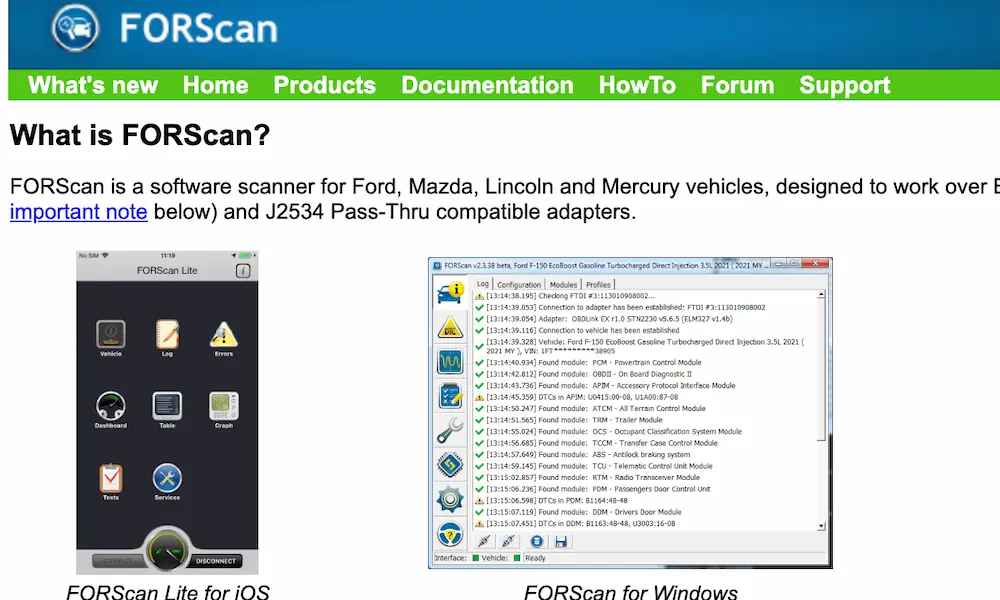
Reading live fuel trim data with a scan tool gives you the fastest clue about what’s wrong before you touch a single bolt.
Where Exactly Is Bank 2 on Your Ford?
This trips up a lot of people. Bank 1 always contains Cylinder 1. Bank 2 is the opposite side. But which side that is physically depends on how your engine sits in the bay.
| Ford Engine Setup | Bank 1 Location | Bank 2 Location | Common Models |
|---|---|---|---|
| Longitudinal V8 | Passenger side | Driver side | F-150, Mustang, Expedition |
| Longitudinal V6 | Passenger side | Driver side | Ranger, older Mustang |
| Transverse V6 | Firewall side (rear) | Radiator side (front) | Explorer, Edge, Escape, Flex |
| Inline 4-cylinder | Only one bank | N/A | Focus, Fusion, Escape (I4) |
If you’re working on a transverse V6 Ford Explorer, Bank 2 sits closest to the radiator — the front of the engine compartment. Mix that up and you’ll replace the wrong sensor. Ask us how many people find that out the hard way.
The Three Reasons Your Ford Throws P0174
The P0174 code almost always comes from one of three directions: air sneaking in where it shouldn’t, a sensor lying about how much air is entering, or not enough fuel getting through.
Vacuum Leaks: The #1 Culprit
A vacuum leak lets air enter the intake manifold after the MAF sensor. The PCM never sees that air, so it doesn’t add the matching fuel. The result? Extra oxygen in the exhaust, and P0174 sets.
On Ford’s 5.4L and 4.6L Triton V8 engines, the PCV elbow at the rear of the intake manifold is a notorious weak spot. It cracks from heat and oil vapor exposure. You’ll often hear it as a faint hiss at idle.
Intake manifold gaskets are another common leak source — especially on engines with plastic manifolds. Cold starts often make the leak worse before the metal expands and temporarily seals the gap.
Quick test: If your fuel trims are high at idle but drop toward zero at 2,500 RPM, you’ve almost certainly got a vacuum leak. The leaking air volume stays constant, but at higher RPM it becomes a tiny fraction of total airflow.
Dirty or Failing MAF Sensor
The MAF sensor measures incoming air mass by monitoring current through a heated platinum wire. Dust, oil from a wet aftermarket air filter, or just age can coat that wire and slow its response.
A dirty MAF under-reports airflow. The PCM thinks less air is coming in, commands less fuel, and the mixture goes lean. Unlike a vacuum leak, a dirty MAF usually gets worse at higher RPM when airflow increases and the sensor can’t keep up.
Fuel Delivery Problems
If the air side checks out, the fuel side is your next stop. A clogged injector on Bank 2 — especially in EcoBoost direct-injection engines — can cause a lean condition on just one bank. Carbon buildup on direct-injection injectors is a well-documented issue.
System-wide problems like a failing fuel pump or clogged fuel filter usually trigger both P0171 and P0174 at the same time, rather than just one bank.
How to Diagnose Ford P0174 the Right Way
Skipping straight to parts replacement is expensive and usually wrong. Follow this sequence instead.
Step 1: Read Freeze Frame Data
Your scan tool captures the conditions when the code set. Check engine load, RPM, and coolant temp. A fault that appeared at idle points toward a vacuum leak. One that appeared under load suggests the MAF or fuel system.
Step 2: Watch Live Fuel Trims at Different RPMs
- High trims at idle, normal at 2,500 RPM → vacuum leak
- Normal at idle, worse under load → dirty MAF or fuel delivery issue
- High across all RPM ranges → suspect fuel pressure (pump or filter)
This single test narrows your diagnosis dramatically without spending a dime.
Step 3: Run a Smoke Test
A smoke machine pushes pressurized mineral oil vapor into the intake while the engine is off. Any crack in a PCV hose, intake gasket, or vacuum line reveals itself instantly as escaping smoke. It’s the gold standard for finding vacuum leaks.
No smoke machine? You can use the propane enrichment method — carefully introduce unlit propane around suspected leak areas. If RPM rises, you’ve found the leak. It’s old-school but it works.
Step 4: Clean the MAF Sensor First
Before you buy a new one, clean it. It’s a $10–$20 fix and takes 30 minutes.
Here’s how to do it right:
- Let the engine cool completely first
- Disconnect the harness — pull the connector, not the wires
- Remove the sensor with a Torx or Phillips driver
- Spray 10–15 short bursts of dedicated MAF sensor cleaner from 4–6 inches away
- Don’t touch the wire — your skin oils can skew the sensor’s readings permanently
- Let it air-dry for at least 30–60 minutes before reinstalling
Never use carb cleaner or brake cleaner. Those leave residue and can melt the housing.
Step 5: Don’t Just Replace the O2 Sensor
The oxygen sensor is a reporter, not usually the cause. If the engine is actually lean, the O2 sensor is doing its job. A quick confirmation: watch the upstream O2 voltage. It should oscillate between 0.1V and 0.9V. If it spikes high during a snap-throttle test, the sensor is fine. The engine is just genuinely running lean.
Ford-Specific TSBs You Should Know About
Ford has issued several Technical Service Bulletins that cover P0174. Check these before ordering parts.
TSB 21-2443 — 2019–2020 F-150 5.0L Coyote V8: No mechanical fault. The PCM software is just too sensitive. Fix is a reprogramming via Ford IDS.
TSB 20-2324 — 2018 F-150 2.7L EcoBoost: P0174 shows up alongside misfire codes. Traced to direct injection injectors failing to maintain proper flow. The fix involves PCM reprogramming and potentially replacing all six high-pressure injectors and fuel tubes.
TSB 23-2195 — 3.3L Engine MIL with P0171: Covers the 3.3L Duratec with a stored P0171 in PCM — worth reviewing if your Explorer or Ranger uses this engine.
Ford Expedition and F-150 5.4L Triton: The PCV hose assembly failure is so common it’s practically expected. Replace the whole assembly, not just the elbow. The rest of the rubber is just as brittle.
Ford Ranger 4.0L SOHC V6: Intake manifold gaskets are known to shrink in cold weather, creating a leak that often seals itself once the engine warms up. That’s why the code might not show in a warm shop environment.
What Happens If You Ignore Ford P0174
Running lean long-term is genuinely expensive. Here’s what’s at stake:
- Exhaust valves burn: The extra heat pits and melts valve edges, killing compression
- Pistons soften and melt: Lean misfires send unburned fuel into the exhaust, which ignites inside the catalytic converter
- Catalytic converter melts internally: Replacing a cat on a Ford truck runs $1,500–$3,000
- NOx emissions spike: Lean engines produce more nitrogen oxides, which fail emissions tests and harm air quality
- Fuel economy drops: You burn more fuel chasing a mixture the PCM can’t correct
A $10 can of MAF cleaner or a $60 PCV elbow can prevent a $3,000 repair. The math isn’t complicated.
What Does It Cost to Fix Ford P0174?
Costs vary by cause and location. Here’s a realistic range:
| Repair | Estimated Cost | Labor Time |
|---|---|---|
| Diagnostic scan + smoke test | $120 – $185 | 1.0 – 1.5 hrs |
| PCV hose/elbow replacement | $60 – $160 | 0.5 – 1.0 hr |
| MAF sensor cleaning (DIY) | $10 – $20 | 0.5 hr |
| MAF sensor replacement | $160 – $350 | 0.5 hr |
| O2 sensor replacement | $220 – $450 | 1.0 – 1.5 hrs |
| Intake manifold gasket replacement | $580 – $1,250 | 4.0 – 6.0 hrs |
| Fuel pump replacement | $650 – $1,200 | 2.5 – 4.0 hrs |
| PCM reprogramming | $100 – $220 | 0.5 – 1.0 hr |
For context, a 2014 Ford Expedition intake manifold gasket replacement averages $1,036–$1,219. A 2023 Expedition runs slightly lower thanks to the 3.5L EcoBoost’s more accessible intake design.
Start with the cheap fixes. Clean the MAF, check the PCV system, and run a smoke test before you authorize anything expensive. Ford P0174 is almost always solvable — you just have to work through the problem in the right order.