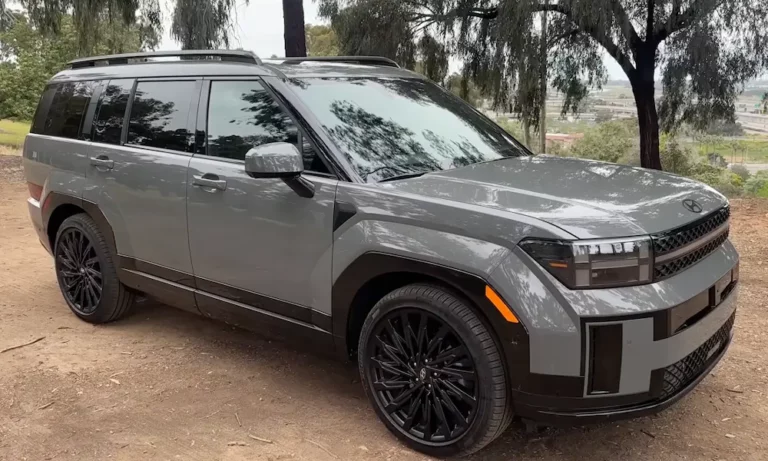
Thinking about buying a Hyundai Santa Fe or already own one? You might’ve heard whispers about transmission problems plaguing these popular SUVs. The truth is, Hyundai has issued several significant transmission recalls for the Santa Fe, with the most serious affecting the 2024 models equipped with an 8-speed dual-clutch transmission (DCT). Let’s break down what’s happening, how it affects you, and what steps you should take if your vehicle is among those affected.
The Major Transmission Recalls Explained
2024 Santa Fe: The 100% Defect Rate Recall
The most alarming recall (officially labeled Recall 263) affects 12,349 units of the 2024 Hyundai Santa Fe manufactured between April 23, 2024, and July 2, 2024. What makes this recall particularly concerning is its 100% estimated defect rate – meaning every single one of these vehicles has the issue.
The culprit? Faulty Transmission Control Unit (TCU) software that can accidentally engage the parking pawl while you’re driving. This causes the transmission to essentially damage itself during normal operation and creates a dangerous rollaway risk.
Signs your vehicle might be affected include:
- Strange noises when shifting into park
- Difficulty shifting into park
- Unexpected vehicle movement
- Visible damage to the transmission housing
Hyundai has confirmed 45 separate rollaway incidents in the U.S. between June 3-27, 2024, directly linked to this software defect.
2021-2022 Santa Fe: Oil Pump Failure
An earlier recall (Recall 236) affected 53,142 vehicles, including 2021-2022 Santa Fe models with the 8-speed DCT. This issue involves a high-pressure electric oil pump that can malfunction, triggering an improper fail-safe mode that results in complete loss of driving power.
If you experience multiple warning lights suddenly illuminating followed by total transmission disengagement, this could be the issue. The NHTSA campaign number for this recall is 22V-746.
Why These Transmission Problems Are Happening
The Fundamental DCT Design Flaw
The recurring issues with Hyundai’s 8-speed dual-clutch transmission stem from applying DCT technology to mainstream SUVs. DCTs were originally designed for performance vehicles, not family SUVs.
These transmissions excel in high-performance, consistent-load applications but struggle with:
- Stop-and-go traffic causing excessive clutch wear
- Low-speed maneuvering requiring precise clutch control
- Parking operations where timing is critical
Software Integration Failures
The recall documentation reveals that the TCU software contained logic errors that could cause:
- Inadvertent clutch engagement during parking
- Improper fail-safe activation during oil pump malfunctions
- Inconsistent response to driver inputs at low speeds
One YouTube channel, “Car Confections,” documented one of the most publicized cases, experiencing two complete transmission failures in their 2024 Santa Fe within just 2,500 miles. Hyundai ultimately repurchased their vehicle for analysis.
What Hyundai Is Doing About It
The DCT Elimination Plan
In a dramatic response to these issues, Hyundai has decided to completely abandon the dual-clutch transmission in the Santa Fe starting with the 2026 model year. They’ll replace it with a conventional 8-speed torque converter automatic transmission for vehicles equipped with the turbocharged 2.5-liter engine.
This strategic pivot shows that Hyundai recognizes the fundamental mismatch between DCT technology and mainstream SUV applications.
Current Recall Remedies
For the 2024 Santa Fe (Recall 263):
- TCU software update changing ROM ID versions from “NS2” to “NS3”
- Complete transmission inspection for physical damage
- Full transmission replacement if damage is found
For 2021-2022 models (Recall 236):
- Oil pump inspection and replacement
- Software updates to improve fail-safe mode operation
- Transmission replacement when necessary
How to Check If Your Santa Fe Is Affected
- Locate your Vehicle Identification Number (VIN) – it’s on your registration, insurance card, or visible through the windshield on the driver’s side dashboard
- Visit Hyundai’s recall verification site and enter your VIN
- You can also check directly on the NHTSA website
Alternatively, call Hyundai Customer Service at 855-371-9460 and provide your VIN to check your recall status.
What to Do If Your Vehicle Is Affected
Immediate Safety Steps
If your 2024 Santa Fe is among the affected models:
- Use the electronic parking brake (EPB) when parking until the recall is completed
- Be alert for any unusual transmission behavior
- Schedule service immediately with your dealer
- Document any symptoms or issues for warranty claims
For 2021-2022 owners:
- Be aware of oil pump failure symptoms: multiple warning lights followed by power loss
- If you experience warning lights, try to safely pull over as soon as possible
- Verify your recall completion status if you haven’t already had the work done
During the Repair Process
The dealer should:
- Perform a comprehensive diagnostic check
- Update the TCU software
- Inspect the transmission for physical damage
- Replace the entire transmission if damage is found
For severely affected vehicles, expect the repair to take several days, as complete transmission replacement is a major job. Federal regulations require dealers to provide a loaner vehicle if parts aren’t immediately available.
Real Owner Experiences With the Recall
Many Santa Fe owners have shared their experiences with these transmission issues. Common reports include:
- Transmission failures occurring with as little as 27-50 miles on the odometer
- Multiple transmission replacements in single vehicles before the recall was announced
- Complete transmission housing damage requiring full unit replacement
One owner on Reddit shared: “I was driving on the highway when multiple warning lights came on. Within 30 seconds, my car completely lost power. Scariest driving experience of my life.” This matches the documented pattern of oil pump failure in 2021-2022 models.
Transmission Reliability Comparison Table
| Model Year | Transmission Type | Known Issues | Recall Status | Reliability Rating |
|---|---|---|---|---|
| 2024 | 8-speed DCT | TCU software fault, potential mechanical damage | Active recall #263 | Poor (100% defect rate) |
| 2021-2022 | 8-speed DCT | Oil pump failure, loss of drive power | Active recall #236 | Below average |
| 2024-2025 Hybrid | 6-speed automatic | No major recalls | No active recalls | Good |
| 2026 (Planned) | 8-speed torque converter | N/A – Not yet released | N/A | Expected improvement |
Santa Fe DCT Failure Warning Signs
| Warning Sign | What It Means | Urgency Level |
|---|---|---|
| Multiple warning lights | Imminent transmission failure | High – Pull over safely |
| Unusual noise when shifting to park | Potential parking pawl damage | High – Get serviced immediately |
| Vehicle rolls when in park | Parking pawl failure | High – Use parking brake & service immediately |
| Hesitation when shifting | Early sign of transmission issues | Medium – Schedule service soon |
| Transmission fluid leaks | Potential housing damage | High – Service immediately |
Buyer Advice for Different Model Years
For Current 2024 Santa Fe Owners
- Get the recall completed immediately
- Consider using the Lemon Law if you’ve experienced multiple repair attempts
- Keep detailed service records for any future warranty claims
- Consider trading for a hybrid model (which uses a different transmission) if problems persist
For 2021-2022 Santa Fe Owners
- Verify completion of Recall 236 through VIN lookup
- Be vigilant about warning signs of oil pump failure
- Consider extended warranty coverage if your factory warranty is nearing expiration
For Prospective Buyers
- 2024 Model Year: Verify recall completion before purchase and get documentation
- 2025 Model Year: Research any carry-over issues from 2024 production
- 2026 Model Year: Consider waiting for the new torque converter transmission
- Alternative: Santa Fe Hybrid models use a different transmission technology unaffected by DCT recalls
The Legal and Regulatory Response
The National Highway Traffic Safety Administration (NHTSA) has been closely involved in these recalls. Their investigation timeline for the 2024 Santa Fe issue shows how quickly the problem escalated:
- June 18, 2024: North American Safety Office identified emerging trend of unintended vehicle movement
- June 21, 2024: Technical Review Committee notified Hyundai
- July 2, 2024: Hyundai confirmed TCU software as primary cause
- July 3, 2024: Decision to conduct formal safety recall
These rapid actions suggest the severity of the issue was immediately apparent to regulators. The NHTSA campaign number for the 2024 recall is 24V-529.
Extended Warranty Considerations
While not directly related to the transmission recalls, Hyundai has implemented broader warranty extensions through class action settlements addressing engine defects in Theta II engines. The settlement extends powertrain warranties to lifetime coverage for engine short block assemblies and provides comprehensive reimbursement programs for out-of-pocket repair expenses.
If you’re concerned about potential future transmission issues, explore:
- Hyundai’s extended warranty options
- Third-party warranty providers with specific transmission coverage
- Trading in for a model with the more reliable hybrid powertrain
The Future of Santa Fe Transmissions
Hyundai’s decision to revert to conventional automatic transmissions for the 2026 Santa Fe represents a significant admission that the DCT technology was problematic in this application. The conventional 8-speed torque converter automatic is a proven technology with decades of refinement.
This change affects only the turbocharged 2.5-liter engine configuration, as the hybrid variant already uses a different 6-speed automatic transmission that hasn’t experienced similar issues.
While this change should improve reliability for future models, current owners will need to stay vigilant about getting their recalls completed and monitoring their vehicles for any signs of transmission problems.
What Makes the DCT Different from Conventional Automatics
To understand why these problems are occurring, it helps to know how a dual-clutch transmission differs from a conventional automatic:
Dual-Clutch Transmission (DCT):
- Uses two separate clutches for odd and even gears
- Relies heavily on electronics and software to function properly
- Provides sportier, more direct power delivery
- Generally more efficient but less forgiving of software errors
Conventional Automatic (Torque Converter):
- Uses fluid coupling instead of clutches
- More mechanical, less reliant on software
- Smoother, more forgiving in stop-and-go traffic
- Proven technology with decades of development
The DCT’s complexity makes it particularly vulnerable to software issues like those in the 2024 Santa Fe recall.
Taking Action to Protect Yourself
If you own an affected Santa Fe and have experienced multiple repair attempts or extended downtime due to these transmission issues, you may have additional rights under state lemon laws. These laws vary by state but generally apply when:
- Your vehicle has been in the shop multiple times for the same issue
- Your vehicle has been out of service for a significant number of days
- The problem substantially impairs the vehicle’s use, value, or safety
Document everything related to your transmission issues, including:
- Dates and descriptions of problems
- Communications with the dealer and Hyundai
- Repair orders and invoices
- Periods when the vehicle was unusable
This documentation will be vital if you need to pursue a lemon law claim or other remedy.
The Hyundai Santa Fe transmission recalls represent one of the most significant automotive safety issues in recent years. By staying informed and taking prompt action, you can protect yourself and your investment while navigating these challenges.