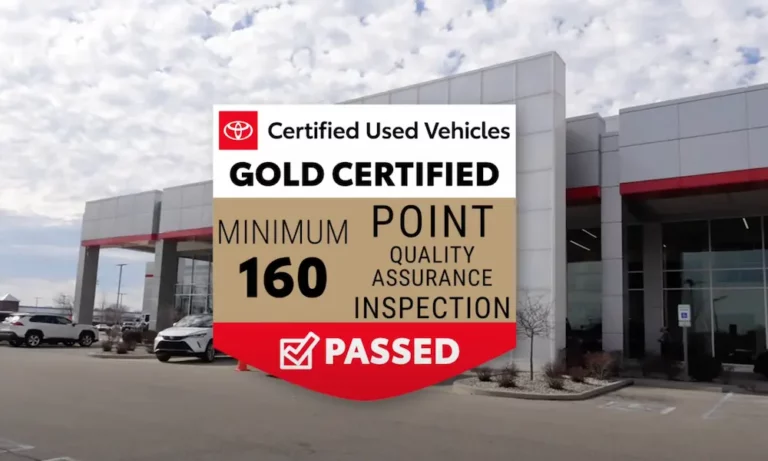
Looking at that “certified pre-owned” sticker on a Toyota might have you wondering if it’s just marketing hype or actually worth the extra cash. Toyota’s Gold Certified program promises the cream of the used-car crop—but is it really worth paying more when regular used Toyotas are known for reliability anyway?
What Exactly Is Toyota Gold Certified?
Toyota’s Gold Certified program represents their premium tier of pre-owned vehicles. Think of it as Toyota’s way of saying “we’ve thoroughly vetted this car and stand behind it.”
For a vehicle to earn Gold Certification, it must:
- Be less than 6 years old
- Have fewer than 85,000 miles
- Pass a comprehensive 160-point inspection
- Have a clean vehicle history report
These strict requirements ensure only the best used Toyotas make the cut. Unlike regular used cars that might hide potential problems, Gold Certified vehicles undergo meticulous examination by Toyota-trained technicians who verify everything from engine performance to interior condition.
The Gold Certified Warranty Package
The warranty coverage is where Gold Certified vehicles really shine compared to typical used cars. When you buy Gold Certified, you’re getting:
- 12-month/12,000-mile Limited Comprehensive Warranty (covers most vehicle components)
- 7-year/100,000-mile Limited Powertrain Warranty (measured from original purchase date)
- 24-hour roadside assistance for 7 years/100,000 miles
- Free CARFAX Vehicle History Report
This extensive warranty package offers significant protection against unexpected repair costs. The powertrain warranty covers major components like the engine, transmission, and drivetrain—typically the most expensive parts to repair.
Gold vs. Silver: Toyota’s Two-Tier Certification
Toyota offers two certification levels, and understanding the differences helps determine if Gold is worth the premium:
| Feature | Gold Certified | Silver Certified |
|---|---|---|
| Age Limit | Up to 6 years old | Up to 10 years old |
| Mileage Limit | Under 85,000 miles | 60,000-125,000 miles |
| Inspection Points | 160-point inspection | 136-point inspection |
| Comprehensive Warranty | 12-month/12,000-mile | None |
| Powertrain Warranty | 7-year/100,000-mile | 12-month/12,000-mile only |
| Roadside Assistance | 7 years/100,000 miles | 1 year/12,000 miles |
While Silver Certified offers some benefits, Gold Certified provides substantially more protection. The comprehensive warranty alone—covering hundreds of components beyond just the powertrain—represents significant value.
The Price Premium: How Much More Will You Pay?
The enhanced warranty and rigorous inspection process come at a cost. On average, Gold Certified Toyota vehicles cost approximately $4,595 more than comparable non-certified models. This premium reflects the additional inspection, reconditioning, and warranty coverage.
However, when compared to buying new, you’re still coming out ahead. Consumer Reports found that certified pre-owned vehicles generally experience about 14% fewer problems than non-certified used cars, with approximately 12% higher owner satisfaction rates.
When Gold Certification Makes Financial Sense
Not every situation warrants paying the Gold Certified premium. Here’s when it makes the most sense:
Sweet Spot: 3-6 Year Old Toyotas
The best value comes from purchasing Gold Certified vehicles that have already exhausted their original factory warranty. New Toyotas typically come with a 3-year/36,000-mile basic warranty, so buying a certified Toyota that’s 3-6 years old provides maximum benefit from the additional warranty coverage.
As one Toyota owner shared on Reddit: “I purchased a 2023 (used with 5k miles) 4Runner TRD Sport, which saved me almost $5k compared to buying new and they added 2 years onto the warranty being it was a Certified Used model.”
Long-Term Ownership Plans
If you plan to keep your Toyota for several years, the extended powertrain warranty and roadside assistance provide ongoing protection that justifies the initial premium. The 7-year/100,000-mile powertrain coverage offers peace of mind for major component failures.
Reasonable Price Premium
Experts suggest that a Gold Certified vehicle represents good value when priced within approximately 3% of a comparable non-certified model. If the dealer is charging significantly more, the value proposition diminishes.
When to Skip Gold Certification
Gold Certification isn’t always worth the extra cost:
Nearly New Vehicles
If you’re buying a Toyota that’s still covered by its original factory warranty, the overlapping coverage means you’re essentially paying twice for the same protection during those initial years.
Toyota’s Natural Reliability
Toyota vehicles consistently rank among the most reliable brands according to J.D. Power’s Vehicle Dependability Study. Even without certification, Toyotas typically offer above-average reliability compared to other brands.
Excessive Price Premium
If dealers are charging substantially more than the 3% guideline for certification, the additional cost might outweigh the benefits. Always compare prices against non-certified alternatives to ensure you’re getting fair value.
Financing Benefits of Gold Certification
An often-overlooked advantage of Gold Certified vehicles is access to preferential financing. Toyota often extends new-car financing rates to certified pre-owned vehicles, which can mean significant savings compared to typical used car interest rates.
This financing advantage can sometimes offset much of the price premium. For example, a 2% lower interest rate on a $25,000 car loan for 60 months can save over $1,300 in interest—reducing the effective cost of certification.
The Inspection Process: What Gets Checked?
The 160-point inspection is comprehensive, covering virtually every aspect of the vehicle:
- Engine components and performance
- Transmission and drivetrain
- Suspension and steering
- Braking system
- Electrical systems and electronics
- Interior components and amenities
- Exterior condition
- Undercarriage inspection
Any components that don’t meet Toyota’s standards are either repaired or replaced with genuine Toyota parts before certification. This thorough reconditioning process ensures the vehicle performs like it should, minimizing the chance of unexpected issues.
Real-World Value: The Hidden Benefits
Beyond the warranty coverage, Gold Certified vehicles offer several intangible benefits:
Transferable Warranty
Unlike some extended warranties, Toyota’s certified warranty can be transferred to subsequent owners at no cost. This enhances your vehicle’s resale value if you decide to sell before the warranty expires.
Higher Resale Value
Certified pre-owned vehicles typically command higher resale values than non-certified counterparts, partially offsetting the initial premium paid.
Fewer Headaches
The comprehensive inspection process filters out problem vehicles. According to Edmunds, certified vehicles are less likely to have hidden issues that might emerge after purchase.
Making Your Decision: Is Gold Certification Worth It?
To determine if Toyota Gold Certification is worth it for your situation, consider these factors:
- Vehicle age and mileage: Maximum value comes from vehicles that have exceeded their original warranty but still have significant life left.
- Price difference: Compare the certified premium against non-certified alternatives. Is it within the 3% guideline?
- Ownership timeline: Longer ownership periods maximize the value of extended warranty coverage.
- Risk tolerance: How comfortable are you handling unexpected repairs? Gold Certification essentially transfers that risk to Toyota.
- Financing options: Factor in the potential interest savings from preferential financing rates.
The Bottom Line on Toyota Gold Certification
Toyota Gold Certification offers substantial value for many used car buyers, particularly those seeking the sweet spot of a 3-6 year old vehicle they plan to keep for several years. The comprehensive warranty package, thorough inspection process, and preferential financing create a compelling package that often justifies the premium.
However, it’s not the right choice for everyone. Those buying nearly-new vehicles or planning short-term ownership might find better value in non-certified alternatives.
Ultimately, Gold Certification delivers what many car buyers value most: peace of mind. Knowing your vehicle has been thoroughly inspected by Toyota technicians and is backed by extensive warranty coverage allows you to enjoy your purchase without the nagging worry that comes with many used car purchases.