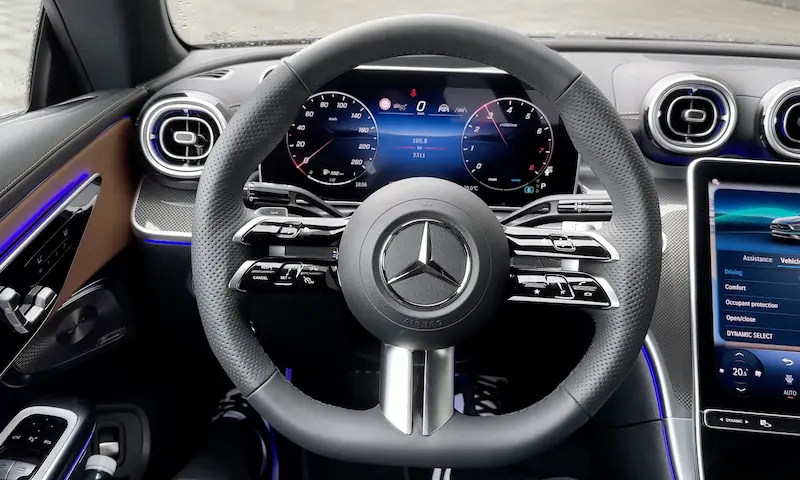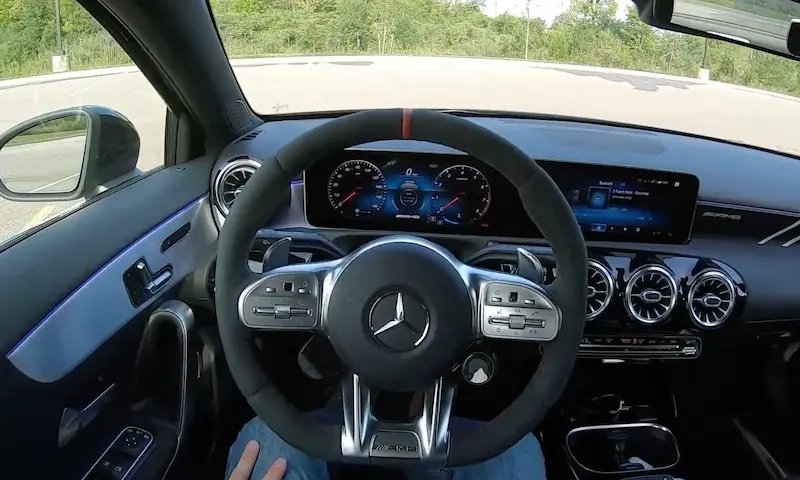
You’re cruising along in your Mercedes when suddenly a warning flashes on your dashboard: “Stop Vehicle Leave Engine Running.” Your heart skips a beat. Is your car about to break down? Do you need to pull over immediately? And why on earth would it tell you to leave the engine running?
This warning is actually your Mercedes trying to protect itself from a potential electrical system failure. Let’s break down what this alert really means, why it happens, and exactly what you should do when you see it.
What Does “Stop Vehicle Leave Engine Running” Actually Mean?
When your Mercedes displays this warning, it’s detecting that your vehicle’s battery voltage has dropped below the safe threshold (typically under 12.5 volts). This is your car’s way of saying: “My battery is dangerously low, but if you keep the engine running, the alternator can recharge it enough to get you home.”
The warning serves as a protective mechanism to prevent complete battery discharge that could leave you stranded. Modern Mercedes vehicles are packed with sophisticated electronics that require consistent power – when that power drops too low, your vehicle enters a self-preservation mode.
You might see variations of this message depending on your specific model:
- “Stop Vehicle Shift to P Leave Engine Running”
- “12 Volt Battery See Operator’s Manual”
- “Stop Vehicle See Operator Manual” (usually in red – indicating higher urgency)
Primary Causes of the Warning
Battery Problems
Aging Battery
The most common culprit is simply battery age. Mercedes vehicles typically use AGM (Absorbed Glass Mat) batteries that:
- Generally last 3-5 years before needing replacement
- Don’t handle deep discharge cycles as well as traditional batteries
- Can fail suddenly without much warning
If your Mercedes is more than 3 years old and you’re seeing this warning, there’s a good chance your battery is ready for retirement.
Battery Terminal Corrosion
Even a perfectly good battery can trigger this warning if its connections are compromised. Corrosion on battery terminals creates resistance that prevents proper charging and power delivery.
Signs of corrosion include:
- White, blue, or greenish powder around the terminals
- Visible rust or damage to the connectors
- Loose connection between cables and terminals
Charging System Issues
Faulty Alternator
The alternator generates electricity to recharge your battery while driving. When it fails, your battery drains even while the engine runs.
Common alternator failure symptoms include:
- Dimming headlights that brighten when you rev the engine
- Multiple electrical system failures
- Battery warning light appearing before the “Stop Vehicle” message
- Charging voltage below 13.5V with the engine running
Voltage Regulator Problems
Many Mercedes models have the voltage regulator built into the alternator. This component controls the charging output and prevents overcharging or undercharging of the battery.
When the voltage regulator fails, you might notice:
- Inconsistent electrical performance
- Flickering dashboard lights
- Charging system output that varies dramatically with engine RPM
Auxiliary Battery Failure
Many modern Mercedes models have an auxiliary battery that supports:
- Start-stop technology
- Various electrical systems during engine-off periods
- Critical functions if the main battery fails
When the auxiliary battery fails, you’ll typically notice:
- The ECO start-stop function stops working
- The ECO button on the dashboard remains yellow instead of green
- Multiple electrical warnings on the dashboard
Immediate Actions to Take
When You See the Warning
-
Don’t panic! This warning is designed to give you time to react before a complete failure.
-
Find a safe place to pull over – but don’t turn off your engine.
-
Let the engine idle for 10-20 minutes. This allows the alternator time to recharge the battery.
-
Turn off non-essential electrical systems like heated seats, high fan settings, and audio to reduce the electrical load.
-
Plan your route carefully. Try to drive directly to a service facility or home without turning off the engine.
If the warning disappears after idling, you can continue driving, but should still have your electrical system checked as soon as possible.
If You Must Turn Off Your Engine
Be aware that once you shut off your engine, there’s a significant risk the car won’t restart. If you absolutely must turn off your engine:
- Have jumper cables or a jump starter ready
- Park where roadside assistance can easily reach you
- Consider leaving someone with the vehicle while it’s running if you need to make a brief stop
Diagnostic Steps and Solutions
Basic Diagnostics You Can Perform
Visual Inspection
- Check battery terminals for corrosion and tight connections
- Look for any damaged wires near the battery
- Inspect the alternator belt for proper tension and condition
Voltage Testing
With a multimeter, you can quickly check your electrical system:
| Test Condition | Healthy Reading | Problem Indicator |
|---|---|---|
| Engine off (battery) | 12.2-12.6V | Below 12.0V |
| Engine running at idle | 13.5-14.5V | Below 13.0V or above 15.0V |
| Under load (headlights on) | Should maintain above 13.0V | Drops below 12.5V |
Battery Age Check
Most Mercedes batteries have a date code stamped on them. If your battery is more than 4 years old, it’s likely due for replacement regardless of other factors.
Professional Diagnostics
For accurate diagnosis, Mercedes vehicles require specialized equipment:
- Mercedes-specific diagnostic scanner that can access the Battery Management System (BMS) and other control modules
- Load testing to evaluate the battery’s performance under simulated driving conditions
- Parasitic draw testing to identify if any components are draining the battery when the vehicle is off
Solutions Based on Root Causes
Battery Replacement
If your battery is the culprit, replacement is straightforward but requires specific procedures:
-
Select the correct battery specification. Mercedes vehicles require AGM batteries with exact specifications for your model.
-
Battery registration is mandatory. After replacement, the new battery must be “registered” to the vehicle’s computer system. This tells the charging system how to properly charge the new battery.
Professional battery registration typically costs $75-150 at a dealership or independent shop. Without registration, your new battery may:
- Not charge properly
- Fail prematurely
- Trigger the same warning again
Battery costs for Mercedes models typically range from $200-$400 depending on the specific model requirements.
Charging System Repair
If diagnostic testing reveals alternator or voltage regulator issues:
Alternator Replacement
- Cost typically ranges from $500-$1,200 depending on your specific model
- Requires specialized tools to access in many Mercedes models
- Should include testing of related electrical components
Voltage Regulator Replacement
- Often requires complete alternator replacement in modern Mercedes models
- Some older models allow separate voltage regulator replacement
- Professional diagnosis is essential to determine the exact component needed
Auxiliary Battery Service
If the auxiliary battery is identified as the problem:
-
The auxiliary battery is generally located under the hood, under the passenger seat, or in the trunk depending on your model.
-
Replacement is more straightforward than main battery service and typically costs $50-$150 plus labor.
-
Unlike the main battery, auxiliary battery replacement usually doesn’t require registration or coding.
Preventive Maintenance to Avoid Future Issues
Regular Electrical System Checks
Annual Battery Testing
Having your battery and charging system tested annually can prevent unexpected failures. Many auto parts stores offer free battery testing.
Terminal Maintenance
Cleaning battery terminals with a wire brush and applying a terminal protectant can prevent many electrical problems. This simple maintenance takes about 10 minutes and costs under $10 for supplies.
Driving Habits Matter
Short trips don’t allow your battery to fully recharge. If you primarily drive short distances:
- Take a 20-minute highway drive weekly
- Consider using a battery maintainer when parked for extended periods
- Be especially vigilant about battery health in extreme temperatures
Best Practices for Mercedes Electrical Systems
Limit Accessory Use When Engine is Off
Modern Mercedes vehicles have extensive comfort features that can drain your battery quickly. Limit using these systems with the engine off:
- Climate control
- Seat heaters/ventilation
- Audio system
- Navigation
Address Warning Signs Early
Don’t ignore these early warning signs of electrical problems:
- Vehicle taking longer to start
- Lights dimming momentarily
- Start-stop system becoming inconsistent
- Intermittent electrical glitches
Mercedes Models Most Affected by This Warning
While this warning can appear in virtually any Mercedes model with modern electronics, it’s particularly common in:
- C-Class (W205) 2015-2021
- E-Class (W213) 2017-present
- GLC-Class 2016-present
- S-Class (W222) 2014-2020
- A-Class (W177) 2018-present
The prevalence tends to increase with vehicles equipped with:
- Start-stop technology
- Advanced driver assistance systems
- Multiple electronic control units
Understanding Battery Technology in Modern Mercedes
Mercedes-Benz predominantly uses AGM (Absorbed Glass Mat) batteries in modern vehicles due to their superior performance with sophisticated electronics. Unlike traditional flooded lead-acid batteries, AGM batteries:
- Provide consistent power even when partially discharged
- Handle the frequent charging cycles of start-stop systems better
- Resist vibration damage more effectively
- Have lower internal resistance for faster charging
This advanced technology comes with specific requirements:
- AGM batteries require different charging profiles than traditional batteries
- They can be damaged by conventional chargers not designed for AGM
- They tend to fail more suddenly when they reach end-of-life
Cost Considerations for Fixing This Warning
| Solution | DIY Cost | Professional Cost | Notes |
|---|---|---|---|
| Battery Replacement + Registration | $200-400 | $300-600 | Registration equipment adds significant cost for DIY |
| Alternator Replacement | $300-500 | $600-1,200 | Labor costs vary significantly by model |
| Auxiliary Battery Replacement | $50-150 | $150-300 | Relatively straightforward on most models |
| Terminal Cleaning | $10 | $50-100 | One of the simplest and most effective preventive measures |
Technical Background: Mercedes Electrical Architecture
Modern Mercedes vehicles employ a complex electrical architecture with:
- CAN bus networks that allow components to communicate
- Battery Management Systems (BMS) that monitor battery health
- Energy management systems that prioritize electrical loads when voltage drops
- Multiple control modules that each have specific voltage requirements
This sophisticated system is designed to protect itself by:
- First shutting down non-essential functions when voltage drops
- Displaying warnings when problems are detected
- Finally entering a protective mode that prioritizes engine operation
When your Mercedes displays “Stop Vehicle Leave Engine Running,” it’s the system’s way of protecting critical components while giving you an opportunity to reach safety before more severe electrical failures occur.