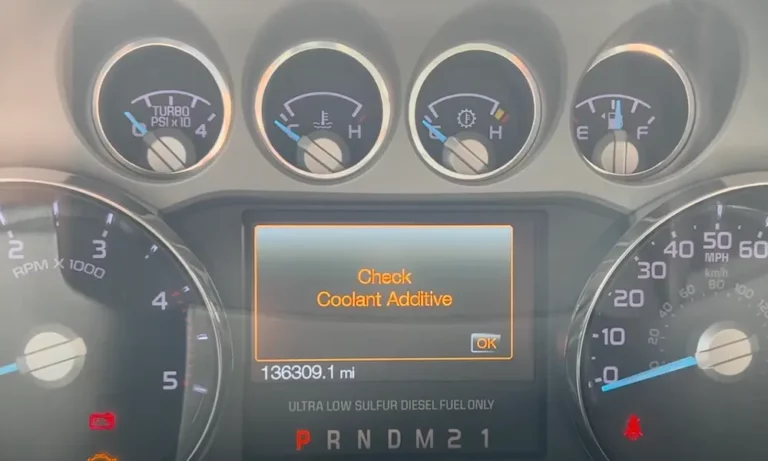
Ever glanced at your Ford truck’s dashboard and noticed a “Check Coolant Additive” message staring back at you? Before you panic or rush to the dealership, here’s what you need to know: this isn’t an emergency warning. It’s actually just a maintenance reminder that pops up every 600 engine hours (roughly 15,000-20,000 miles) on Ford PowerStroke diesel trucks.
This message doesn’t mean you’re leaking coolant or that your engine’s about to overheat. Instead, it’s Ford’s way of reminding you to check on some important chemical additives in your cooling system that help protect your engine. Let’s break down what this message means and exactly what you need to do about it.
What Does “Check Coolant Additive” Actually Mean?
The “Check Coolant Additive” warning is specifically programmed for Ford diesel trucks with PowerStroke engines (including 6.0L, 6.4L, 6.7L, and 7.3L models). Unlike warning lights that indicate immediate problems, this message is simply reminding you to test your coolant’s protective properties.
Your diesel engine’s coolant contains special chemical additives—primarily nitrites and molybdates—that protect against:
- Corrosion of metal components
- Cavitation (the formation of damaging bubbles in the coolant)
- Scale buildup in the cooling system
These protective chemicals naturally break down over time, which is why Ford has programmed this reminder into your truck.
Why Your Diesel Engine Needs Special Coolant Additives
Diesel engines run hotter and under more pressure than gasoline engines. This creates a harsh environment inside your cooling system that requires special protection.
The additives in diesel-specific coolant create a protective film on metal surfaces that prevents acids from eating away at your engine’s components. Without these additives, you could face:
- Corroded water pumps
- Damaged cylinder liners
- Clogged radiators
- Premature cooling system failure
Replacing these components can cost thousands of dollars, which is why this seemingly minor maintenance reminder is actually pretty important.
How to Check Your Coolant Additives
Checking your coolant additives is simpler than you might think. Here’s a step-by-step process:
Step 1: Gather the Right Testing Supplies
You’ll need specific test strips designed for diesel coolant. Generic coolant testers won’t measure the nitrite and molybdate levels properly. Look for:
- Ford Rotunda part #328-00001
- Fleetguard 3-way test strips
- ACU2050-3 series test strips
These can be purchased from Ford dealerships, diesel parts suppliers, or online retailers.
Step 2: Test Your Coolant Properly
- Make sure your engine is COOL before testing
- Locate your coolant reservoir or radiator cap (never open when hot!)
- Dip the test strip into the coolant for just one second
- Remove and shake off any excess coolant
- Wait 45 seconds for the colors to develop
- Compare the colored pads on the strip to the chart provided with your test kit
The test will measure three important elements:
- Freeze protection (glycol concentration)
- pH level (acidity/alkalinity)
- Nitrite/molybdate levels (corrosion protection)
Step 3: Interpret Your Test Results
Here’s what your test results mean:
| Test Parameter | Good Range | Action Needed If: |
|---|---|---|
| Nitrite Level | 300-1500 ppm | Below 300 ppm: Add VC-8 additive |
| Freeze Protection | -34°F to -5°F | Outside range: Service coolant |
| pH Level | 8.0-10.0 | Below 8.0: Service coolant |
For most Ford diesel owners, the nitrite level is the measurement that typically triggers the need for additive.
Adding Coolant Additive to Your Ford Diesel
If your test shows nitrite levels below 300 ppm, you’ll need to add Motorcraft VC-8 Diesel Cooling System Additive. This product is specifically formulated for Ford diesel engines and contains the exact chemicals your cooling system needs.
Dosage Guidelines
The recommended dosage for VC-8 is 4 fluid ounces per gallon of cooling system capacity. Here’s a quick reference chart:
| Engine Model | Cooling System Capacity | VC-8 Amount Needed |
|---|---|---|
| 7.3L PowerStroke | ~7 gallons | 28 fluid ounces |
| 6.0L PowerStroke | ~7.5 gallons | 30 fluid ounces |
| 6.4L PowerStroke | ~8 gallons | 32 fluid ounces |
| 6.7L PowerStroke | ~8 gallons | 32 fluid ounces |
Note: These are approximate capacities. Check your owner’s manual for the exact capacity of your specific vehicle.
How to Add VC-8 Additive
- Ensure your engine is cool
- Locate the coolant reservoir
- Remove the cap carefully
- Pour in the correct amount of VC-8 additive
- Replace the cap securely
- Start the engine and let it run for 10-15 minutes to circulate the additive
VC-8 is dyed yellow so it won’t change your coolant’s color, making it easy to distinguish from other fluids.
Maintenance Schedule for Ford Diesel Coolant Additives
Ford recommends different testing intervals depending on your engine model:
- 7.3L Engines: Add coolant additive every 15,000 miles when using green Motorcraft coolant
- 6.0L Engines: Test coolant quality every 15,000 miles and add additive as needed
- 6.4L Engines: Test coolant quality every 20,000 miles and add additive as needed
- 6.7L Engines: Test coolant quality according to the dashboard reminder schedule
These intervals are the minimum recommendation. If you regularly tow heavy loads or operate in severe conditions, consider testing more frequently.
How to Reset the “Check Coolant Additive” Message
After testing your coolant and adding additives if needed, you’ll want to reset the message. The reset process varies slightly by model year, but most follow this pattern:
- Press the OK button on your steering wheel controls
- Use the arrow keys to navigate to Settings
- Select Vehicle, then Maintenance
- Choose Coolant
- Press and hold OK until the system resets
The message should clear immediately, and the counter will reset for another 600 engine hours.
Common Mistakes to Avoid with Diesel Coolant Maintenance
Don’t Just Add Regular Coolant
The warning specifically refers to chemical additives, not coolant level. Adding more coolant without checking the nitrite levels won’t solve the issue. In fact, it could dilute the existing additives further.
Don’t Use Non-Diesel Additives
Standard coolant additives meant for gasoline engines won’t provide the protection your diesel engine needs. Always use Ford-approved products like Motorcraft VC-8, which meets Ford specification ESN-M99B169-A.
Don’t Ignore the Warning
While it’s not an emergency warning, ignoring depleted coolant additives can lead to expensive cooling system damage over time. The cost of test strips and additive is minimal compared to replacing a damaged water pump or cylinder head.
Don’t Test from the Overflow Tank Only
For the most accurate results, it’s best to sample coolant directly from the cooling system when possible, not just from the overflow tank. The overflow tank may not always have the same concentration of additives as the main system.
Signs Your Coolant System Needs More Than Just Additives
While the “Check Coolant Additive” message is typically just a maintenance reminder, sometimes your cooling system might have other issues. Watch for these warning signs that indicate more serious problems:
- Engine overheating
- Visible coolant leaks under the vehicle
- White exhaust smoke
- Sweetish smell from the engine compartment
- Engine oil that looks milky or has droplets of water
- Coolant with a rusty color or floating particles
If you notice any of these symptoms, have your cooling system professionally inspected right away.
The Benefits of Proper Coolant Additive Maintenance
Taking a few minutes to test your coolant and add the appropriate additives when needed offers significant benefits:
- Extends engine life by preventing corrosion
- Helps maintain optimal engine temperature
- Prevents expensive cooling system repairs
- Improves fuel efficiency by keeping the engine running at ideal temperatures
- Maintains warranty compliance for newer vehicles
The “Check Coolant Additive” message might seem like just another maintenance item to deal with, but it’s actually an important part of keeping your Ford diesel engine running strong for hundreds of thousands of miles.
Properly maintained coolant additives provide crucial protection for your engine’s cooling system components, helping to prevent costly repairs and keeping your truck running reliably. With the simple testing and maintenance steps outlined above, you can easily handle this maintenance item yourself and keep your Ford diesel in top condition.