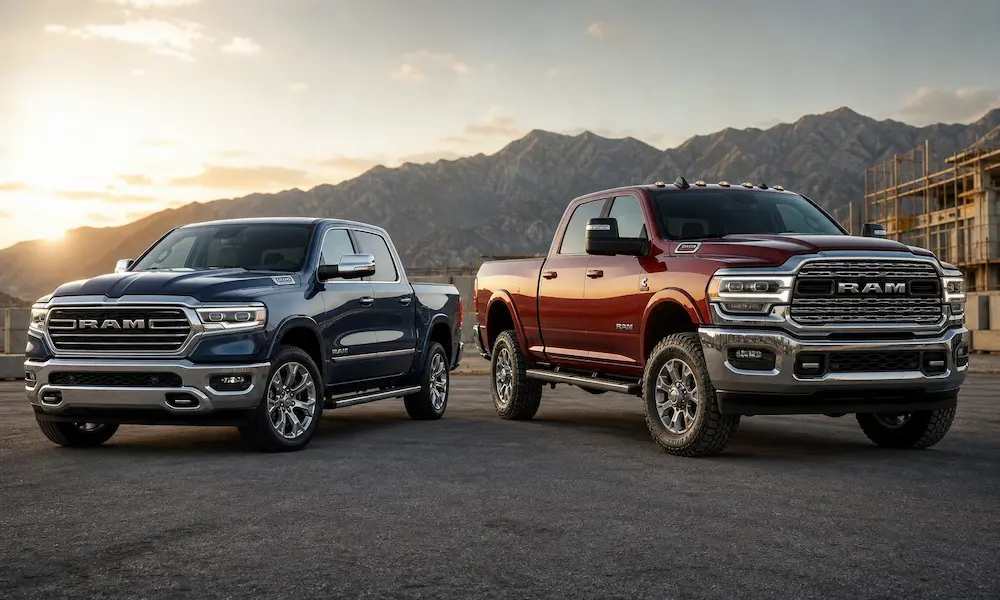
You’ve got a Ram 1500, and somewhere between the owner’s manual and the dealer’s recommendations, you’re confused about when to actually service it. You’re not imagining things—there’s a serious gap between what the book says and what your truck actually needs. Let’s cut through the marketing fluff and talk about the Ram 1500 service schedule that’ll keep your truck running past 200,000 miles.
Why Your Ram 1500 Service Schedule Isn’t One-Size-Fits-All
Here’s the thing: Ram doesn’t publish one service schedule—they publish two. There’s “Normal” duty and “Severe” duty, and if you think you’re in the normal category, you’re probably wrong.
You’re in severe duty if you:
- Tow anything regularly (even a small trailer)
- Drive less than 10 miles per trip
- Idle for extended periods
- Live where it gets really hot or really cold
- Drive on dirt roads or in dusty conditions
Sound familiar? That’s most Ram owners. The severe duty Ram 1500 service schedule cuts most intervals in half, and ignoring this distinction is how you end up with a $6,000 transmission rebuild at 80,000 miles.
Engine Oil: The OCIS System Is Smarter Than You Think
Your Ram uses an Oil Change Indicator System (OCIS) that monitors actual engine conditions—not just mileage. It tracks cold starts, idle time, engine load, and temperature. The system can tell you to change oil anywhere from 3,500 miles to 10,000 miles depending on how you drive.
What Oil Your Engine Actually Needs
For 2025 Hurricane 3.0L Engines:
- Standard Output (SO): 0W-20 synthetic (7.5 quarts)
- High Output (HO): 0W-40 synthetic (7.5 quarts)
Don’t mix these up. The HO engine runs higher boost pressure and needs the thicker 0W-40 to protect the turbocharger bearings. Some SO owners towing heavy have reported low oil pressure warnings with 0W-20 under extreme heat, but Ram customer care has been strict about sticking to factory specs for warranty reasons.
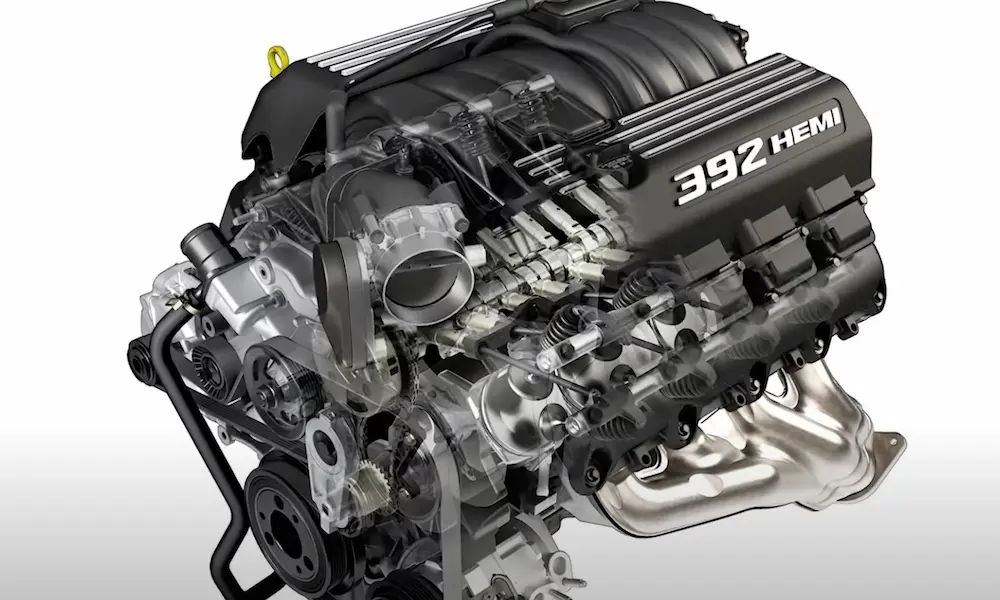
For 5.7L HEMI V8:
Use 5W-20 synthetic only (7.0 quarts). This isn’t negotiable. The Multi-Displacement System (MDS) uses oil pressure to deactivate cylinders, and it’s calibrated for 5W-20’s flow rate. Use thicker oil and you’ll get the infamous “HEMI tick” from lifter failure.
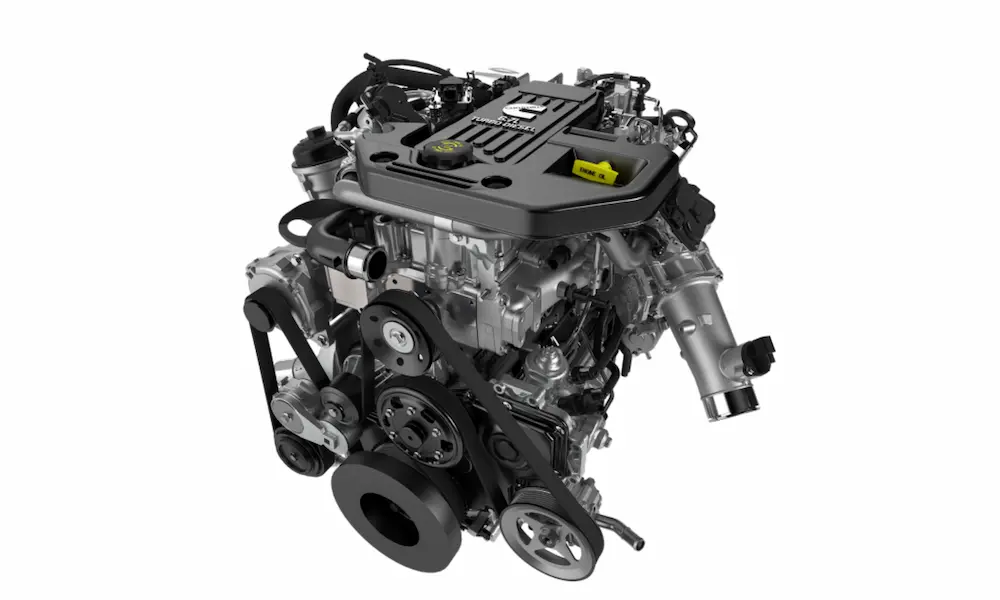
For 3.0L EcoDiesel V6:
5W-40 diesel synthetic (10.5 quarts). The thick viscosity fights fuel dilution during DPF regeneration cycles. Change it every 6,500-8,000 miles despite what the manual says—soot loading is real.
How to Reset the Oil Change Indicator
After your oil change, you’ve got to manually reset the system:
Method 1 (All Models):
- Turn ignition to ON (don’t start engine)
- Slowly press accelerator pedal to the floor three times within 10 seconds
- Turn ignition off
Method 2 (Digital Cluster):
Navigate to Vehicle Info > Oil Life using steering wheel controls, then hold OK button.
Air Filters: Don’t Trust the 30,000-Mile Myth
The official Ram 1500 service schedule says 30,000 miles for the engine air filter. That’s for highway commuters in clean air. If you drive in dusty conditions, that filter is your turbocharger’s only protection against sandblasting.
Check it at every oil change. A restricted filter forces the turbo to spin harder to make boost, creating excess heat and shortening its life.
The cabin air filter (behind the glovebox) is easier to ignore but shouldn’t be. It’s rated for 20,000-30,000 miles, but in high-pollen areas or if you notice weak airflow, change it annually.
To access it on 2019+ models:
- Open glovebox and disconnect the damper cord on the right side
- Squeeze the top tabs and drop the glovebox down
- Pull out the old filter and slide in the new one
The EcoDiesel Fuel Filter Crisis You Need to Know About
If you’ve got a 3.0L EcoDiesel, this is critical. Following NHTSA Safety Recall Z46 regarding high-pressure fuel pump failures, the fuel filter maintenance has completely changed.
The CP4.2 fuel pump was failing and sending metal shavings through the entire fuel system—destroying injectors, rails, and costing $10,000+ to repair. Ram’s fix includes a revised pump, but the new maintenance protocol is intense:
- Drain the water separator at every oil change
- Replace the fuel filter every 10,000 miles (down from 30,000)
This isn’t a suggestion. Water contamination is the number one killer of diesel fuel pumps. The filter is a cartridge style (Mopar 68436631AA) located on the frame rail. You’ll need a 28mm socket, and don’t over-torque the plastic cap when you reinstall it.
Transmission: The “Lifetime” Fluid That Isn’t
Here’s where Ram’s marketing and engineering reality clash hard. The ZF 8-speed transmission is often listed as “filled for life” in owner’s manuals. But ZF themselves—the people who built it—recommend fluid changes at 60,000-80,000 miles.
Why “Lifetime” Is a Lie
Transmission fluid doesn’t just lubricate—it’s hydraulic fluid for shifting and coolant for the torque converter. Over time, heat breaks down the viscosity and the clutch packs shed friction material that clogs valve body screens. This causes delayed shifts and “flaring” between gears.
If you tow, change the fluid at 60,000 miles. If you don’t, you can push it to 100,000 miles, but that’s the ceiling.
The Service Is Complicated
You can’t just drain and fill this transmission. The entire oil pan must be replaced because the filter is integrated into it. The refill process uses a thermal bypass valve, and the fluid level must be checked with the engine running and the trans fluid temperature between 86°F and 122°F.
Use only Mopar 8 & 9 Speed ATF (68218925AB) or ZF Lifeguard Fluid 8. It’s green. Don’t use generic red ATF—you’ll get torque converter shudder.
Transfer Case and Differential Fluids: Know Your Model
This is where things get confusing because Ram uses different transfer cases depending on trim level, and the fluids are not interchangeable.
Transfer Cases (BorgWarner Units)
| Model | Type | Fluid | Capacity |
|---|---|---|---|
| BW 48-11 / 48-12 | Part-Time 4WD | Mopar 68089195AA (BW44 fluid) | ~1.9 qt |
| BW 48-13 | Full-Time/On-Demand | Specific TC fluid for wet clutch | ~1.9 qt |
Check your VIN or the tag on the transfer case. Using ATF+4 in a unit that requires BW44 fluid will cause immediate damage.
Service interval: Inspect at 30,000 miles, change at 60,000 miles if towing, or 120,000 miles for normal duty.
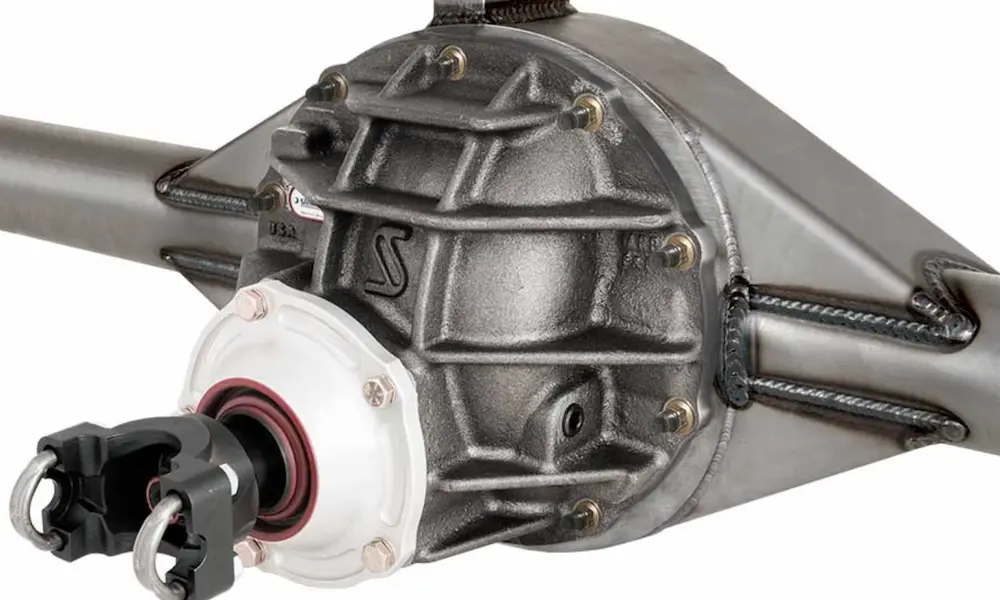
Differential Fluids
- Front axle: 75W-85 synthetic
- Rear axle: 75W-140 synthetic
If you’ve got a limited-slip rear differential, the fluid must contain friction modifier additive or the clutches will chatter during turns.
Critical for towing: If you regularly tow heavy loads, change the rear differential fluid every 30,000 miles. The heat from towing degrades the fluid fast, and neglecting this service causes bearing whine and eventual failure.
Cooling System: Don’t Mix Your Coolants
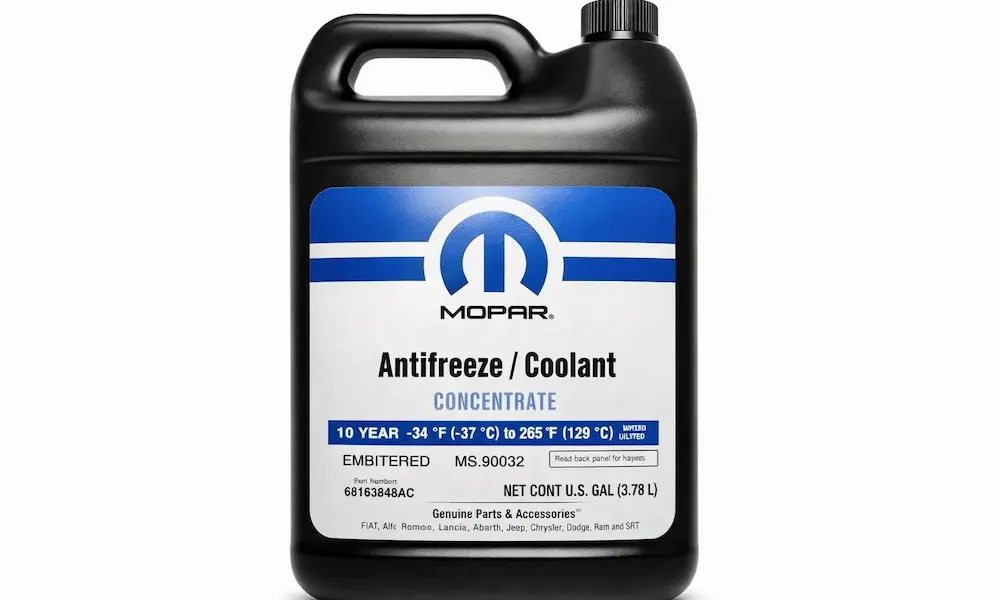
Ram uses OAT (Organic Acid Technology) coolant—it’s purple and rated for 10 years or 150,000 miles. It might shift to pink or light orange over time; that’s normal.
What’s not normal is mixing it with other coolant types. If you mix OAT with HOAT (orange) or IAT (green) coolants, they chemically react and form a gel that clogs your heater core and radiator. Always verify the MS-12106 specification before adding coolant.
Brake Fluid: The Hidden Safety Issue
Brake fluid absorbs water from the atmosphere through microscopic pores in rubber hoses. Once the water content hits 3%, the boiling point drops dangerously low, and you risk vapor lock—complete loss of brakes.
Flush brake fluid every 2 years or 30,000 miles, whichever comes first. This is time-based, not mileage-based.
If you tow frequently, upgrade from DOT 3 to DOT 4 fluid. It has a higher boiling point and resists fade during long descents.
Spark Plugs: Different Engines, Different Schedules
5.7L HEMI V8: 16 spark plugs (dual-plug design), replace at 100,000 miles. They’re iridium-tipped and expensive, but they last.
3.0L Hurricane I6 (Standard Output): Replace at 100,000 miles under normal conditions.
3.0L Hurricane I6 (High Output): Replace at 60,000 miles. The higher cylinder pressures from boost erode the electrode gap faster. Don’t push this interval—misfires under boost will destroy your catalytic converters.
Also replace the PCV valve at 100,000 miles. A stuck PCV valve causes seal leaks and excessive oil consumption.
Rust Belt Survival: The Corrosion Schedule
If you live where they salt the roads (Chicago, Northeast, anywhere it snows), you need an additional maintenance item: annual undercoating.
Road salts create an electrolyte that accelerates rust. Hard rubberized undercoatings can trap moisture and make it worse. Instead, use lanolin-based products like Woolwax or Fluid Film applied annually in the fall.
These oil-based coatings stay soft, creep into frame rails and seams, and are self-healing if scratched. Regular undercarriage washing is good, but use high-volume, low-pressure water to avoid forcing salt into sealed bearings.
Your Complete Ram 1500 Service Schedule at a Glance
| Miles | Normal Duty | Severe Duty/Towing |
|---|---|---|
| Every 5,000-7,500 | Change oil per OCIS | Change oil (mandatory), inspect air filter |
| 10,000 | Drain diesel water separator | Replace diesel fuel filter |
| Every oil change | Lube chassis if applicable | Inspect suspension, brakes, CV boots |
| 12,000-15,000 | Inspect cabin filter | Replace cabin filter |
| 20,000 | Inspect front suspension | Check suspension torque, air ride operation |
| 30,000 | Replace engine air filter | Replace air filter, change rear diff fluid |
| 30,000 / 2 years | Flush brake fluid | Flush brake fluid (upgrade to DOT 4) |
| 60,000 | Inspect transmission fluid | Change transmission fluid & pan |
| 60,000 | Inspect transfer case | Change transfer case fluid |
| 60,000 | — | Replace spark plugs (Hurricane HO) |
| 100,000 | Replace spark plugs, PCV valve | Replace spark plugs, PCV valve |
| 100,000 | Test coolant pH | Flush coolant |
| 150,000 | Replace accessory belt, flush coolant | Replace belt & tensioner, flush coolant |
| Annually (Fall) | Inspect undercarriage | Apply rust protection |
The Bottom Line on Ram 1500 Maintenance
The official Ram 1500 service schedule is designed to get your truck through the warranty period. If you want it to last 200,000+ miles, you need to follow the severe duty schedule—especially for transmission, differential, and diesel fuel system maintenance.
The most expensive mistake? Trusting “lifetime” fluid claims. The ZF transmission needs service at 60,000-100,000 miles depending on use. The EcoDiesel fuel filter is now a 10,000-mile item post-recall. And if you’re towing anything regularly, you’re in severe duty whether you admit it or not.
Your Ram is a $50,000-$80,000 investment. Treat the maintenance schedule like the engineering document it is, not a suggestion, and you’ll get your money’s worth out of every mile.