Your RAM 1500 just dropped to the ground overnight. You’re staring at a dashboard warning that says “Service Air Suspension,” and you’re wondering if this is going to drain your wallet. Here’s what’s actually happening with your truck and how to fix it without getting ripped off.
Why RAM Air Suspension Systems Keep Failing
RAM’s four-corner air suspension looked great on paper when it launched in 2013. It promised smooth rides, automatic load-leveling, and adjustable height. What RAM didn’t advertise? The multiple failure points that’ll leave you stranded.
The system uses compressed air instead of traditional coil springs. Air springs (basically rubber balloons) hold up each corner of your truck. A compressor pumps air into these springs, while sensors tell the computer how high your truck should sit. When everything works, it’s fantastic. When it doesn’t, you’re looking at repair bills that make used car shopping seem reasonable.
The Real Problem Nobody Talks About
Moisture is your air suspension’s worst enemy. Your truck sucks in regular humid air, and that moisture doesn’t magically disappear. The air dryer that’s supposed to remove it eventually fails. Then you’ve got water droplets floating around in your system, causing rust, freezing in cold weather, and slowly destroying every component it touches.
Air Leaks: The Number One Killer
If your truck sags on one side overnight, you’ve got air leaks. These are the most common RAM 1500 air suspension problems you’ll face.
The rubber air springs crack over time. They flex thousands of times as you drive, hitting potholes and speed bumps. Road salt and debris beat them up from underneath. Eventually, they develop small cracks that let air escape.
You’ll notice these symptoms:
- One corner sits lower than the others
- Hissing sounds near the wheels
- Truck takes forever to adjust height
- Warning lights on your dashboard
How to Find the Leak
Grab a spray bottle and mix dish soap with water. Spray it on your air springs, air lines, and connections while someone watches for bubbles. You’ll see them form where air escapes. Pay special attention to the accordion-style folds in the air springs – that’s where cracks typically start.
Check the connections behind your right rear wheel. That’s where your compressor lives, and it’s got multiple air line connections that can leak.
Here’s the kicker: air leaks don’t just affect that one corner. They force your compressor to work overtime maintaining pressure. That overwork kills your compressor, which costs way more to replace than fixing the original leak.
Compressor Failure: When Things Get Expensive
Your air suspension compressor sits behind the right rear wheel, pumping air into the system. When it’s working properly, you barely hear it. When it’s dying, it sounds like a wounded animal.
Compressor failures usually happen because of air leaks making them work too hard. The unit runs constantly trying to maintain pressure, overheats, and eventually burns out. Moisture contamination speeds up this process by causing internal rust and valve failures.
What Compressor Failure Sounds Like
You’ll hear loud grinding, clicking, or rattling from the rear passenger side. The compressor might run continuously without stopping. Your truck might sit at ride height for a while, then suddenly drop to the bump stops when the compressor can’t keep up anymore.
Replacement costs hurt:
- Aftermarket compressor: $400-800
- OEM dealer part: $1,200-2,000
- Remanufactured unit: $400-600
Labor adds another $200-400 depending on where you go. The compressor isn’t terribly difficult to access, but you’re paying for diagnostic time and the technician’s knowledge.
Cold Weather Failures: Alaska Edition
If you live anywhere cold, buckle up. RAM air suspension systems absolutely hate temperatures below 40°F. The moisture that’s been building up in your system freezes solid, blocking valves and seizing up your compressor.
Cold weather failures follow a predictable pattern. You park your truck overnight when it’s cold. Morning comes, and your RAM is sitting on its bump stops with angry warning lights glaring at you.
The Temporary Fix That’s Not Really a Fix
Here’s what dealerships won’t tell you upfront: pulling fuses F17 or F50 and warming up your truck might get you moving again. But you haven’t fixed anything. You’ve just thawed the ice that was blocking everything.
The moisture is still in your system. Next cold night, you’re doing this dance again. Some Alaska owners report complete system failures requiring thousands in repairs after one harsh winter.
Your air dryer should remove moisture before it causes problems. But these dryers wear out, and RAM doesn’t exactly make checking them part of routine maintenance.
Height Sensor Codes and Software Updates
Recent RAM models (2022-2023) throw height sensor codes like confetti. You’ll see codes like C151E-2A, C1522-2A, C1526-2A, and C152A-2A pop up on your scanner. These codes say your height sensors are “stuck.”
Plot twist: your sensors probably aren’t broken. RAM issued Technical Service Bulletin 08-152-24 addressing these codes with software updates, not hardware replacement.
The Air Suspension Control Module (ASCM) needs reprogramming. This takes about 15 minutes at the dealership with their wiTECH diagnostic system. If your dealer tries selling you new sensors without checking for software updates first, find a different dealer.
Communication Errors That Kill Your System
U-codes like U013200 (Lost Communication with ASCM) shut down your entire suspension system. Your backup camera might stop working. Multiple warning messages flood your dashboard. You can’t adjust ride height anymore.
TSB 08-175-21 covers these communication problems for 2019-2022 models. Sometimes it’s software. Sometimes it’s corroded wiring. Sometimes it’s the ASCM itself going bad.
The valve block (also called the air suspension manifold) causes random lowering to bump stops. This usually happens overnight when your truck sits. New valve blocks cost $250, but you can find used ones on eBay for $60-250. It’s a relatively cheap fix if that’s your only problem.
Real-World Repair Costs (No BS Edition)
Let’s talk money. Here’s what you’re actually spending when RAM 1500 air suspension problems hit:
| Component | Aftermarket | OEM Dealer | Used/Rebuilt |
|---|---|---|---|
| Single air spring | $150-300 | $800-1,200 | $50-150 |
| Compressor assembly | $400-800 | $1,200-2,000 | $400-600 |
| Height sensor | $100-200 | $200-400 | $75-150 |
| Valve block | $150-250 | $250-400 | $60-250 |
| Complete system | $1,500-2,500 | $3,000-5,000 | N/A |
These prices don’t include labor. Dealerships charge $150-200 per hour. Independent shops run $100-150 per hour. Diagnostic fees range from $120-250, though most shops apply this toward repairs.
The Math That Makes You Cry
Let’s say you’ve got a leaking air spring ($300), a dying compressor ($800), and two bad height sensors ($400). You’re at $1,500 in parts alone. Add labor, and you’re pushing $2,500-3,000.
At that point, you need to ask yourself a serious question: do you keep throwing money at this system, or do you convert to regular coil springs?
Converting to Coil Springs: The Nuclear Option
Many RAM owners eventually say “enough” and convert to conventional coil springs. You’re replacing the entire air suspension with traditional struts and coils. No more compressor. No more air springs. No more moisture problems.
Complete conversion kits run $500-800 for DIY installation. Professional installation costs $1,200-2,000 total. Companies like Strutmasters, Monroe, and Arnott make kits specifically for RAM 1500s.
What You Lose vs. What You Gain
You lose:
- Automatic load-leveling
- Adjustable ride height
- That smooth air suspension ride (though the difference is less than you’d think)
You gain:
- Bulletproof reliability
- Zero ongoing maintenance
- No cold weather failures
- Ride quality comparable to non-air-equipped RAMs
The Monroe conversion uses parts 90028C1 (front right strut), 90028C2 (front left strut), and 90028C3 (rear components). Installation takes 4-8 hours for experienced techs. The kits include electronic bypass modules that eliminate dashboard warning lights.
Is it worth it? If you’re facing your first major air suspension failure on a truck with over 80,000 miles, absolutely. The conversion costs roughly the same as repairing your air suspension, but you never deal with these problems again.
Preventive Maintenance That Actually Works
You can’t prevent air suspension failure entirely – the system has fundamental design flaws. But you can catch problems early and extend your system’s life.
Monthly Visual Inspections
Walk around your truck and look at all four corners. They should sit level. If one corner sags, you’ve got a leak starting. Don’t wait for warning lights.
Listen for hissing sounds near the wheels when your truck adjusts height. That’s air escaping somewhere. Find it now before it kills your compressor.
Check the area behind your right rear wheel where your compressor lives. Look for oil stains (your compressor is leaking), disconnected air lines, or obvious damage.
The Soapy Water Test
This is the best diagnostic tool you’ve got without spending hundreds on scan tools. Mix dish soap with water in a spray bottle. Spray every air fitting, connection, and air spring surface while someone watches for bubbles.
Do this test every oil change. Finding a small leak early costs $100-200 to fix. Ignoring it until your compressor dies costs $1,500+.
Diagnostic Tools for Serious Troubleshooting
Basic OBD-II scanners read suspension codes, but they can’t test individual components. For real diagnostics, you need manufacturer-specific software.
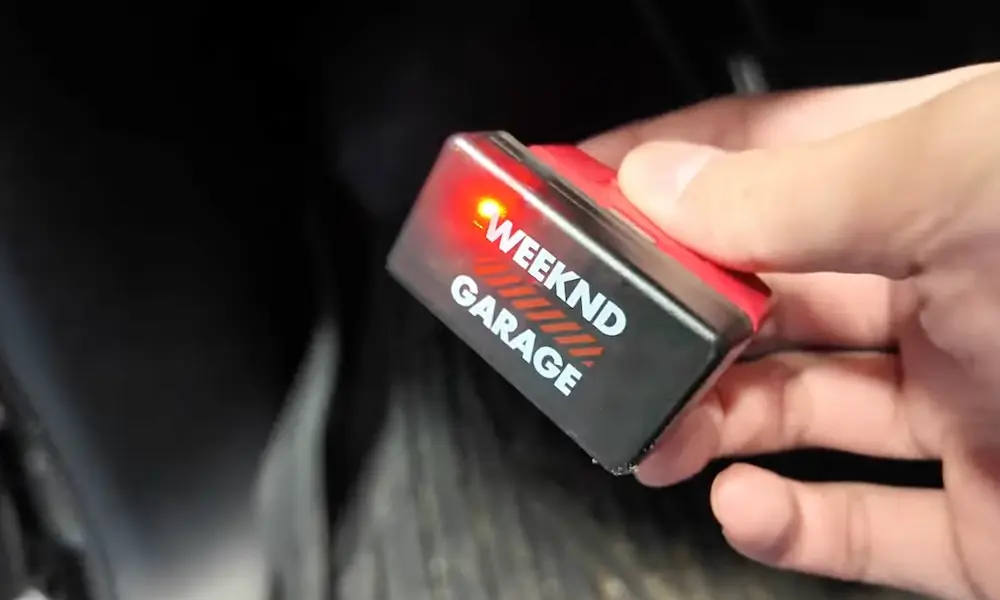
AlfaOBD with an OBDLink MX+ adapter gives you access to air suspension functions. You can raise and lower individual corners, monitor system pressure, and run component tests. For 2018+ trucks, you’ll need a security gateway bypass module for full access.
Dealerships use wiTECH diagnostic systems. These provide the most comprehensive testing and can reprogram your ASCM with software updates. Independent shops might have access to similar professional-grade systems.
Making the Right Decision for Your RAM
Here’s the truth: RAM 1500 air suspension problems aren’t isolated defects. They’re inherent design limitations in moisture management and component durability.
If you’re experiencing your first failure and your truck has under 60,000 miles, fix it. Find the leak, replace the damaged component, and hope you get lucky with the rest of the system.
If you’re past 80,000 miles or facing multiple failures, convert to coil springs. The $1,200-2,000 conversion cost equals what you’d spend repairing the air system, but you’re done forever. No more midnight tow trucks because your suspension froze. No more $800 compressors every 50,000 miles.
For cold climate owners, conversion isn’t optional – it’s inevitable. The moisture contamination problem is unfixable without completely redesigning the system. Every winter is another roll of the dice on whether you’ll wake up to a truck on bump stops.
The air suspension provides a marginally smoother ride when it works. But that luxury isn’t worth the reliability headaches, repair costs, and uncertainty of whether your truck will start tomorrow morning at normal ride height. RAM’s traditional coil spring suspension is bulletproof by comparison, and honestly, the ride quality difference is minimal on most road surfaces.
Your RAM is a capable truck that’ll run forever if you eliminate its biggest weak point. Don’t let pride or sunk costs keep you throwing money at a fundamentally flawed system. Fix it once properly, or convert and move on with your life.