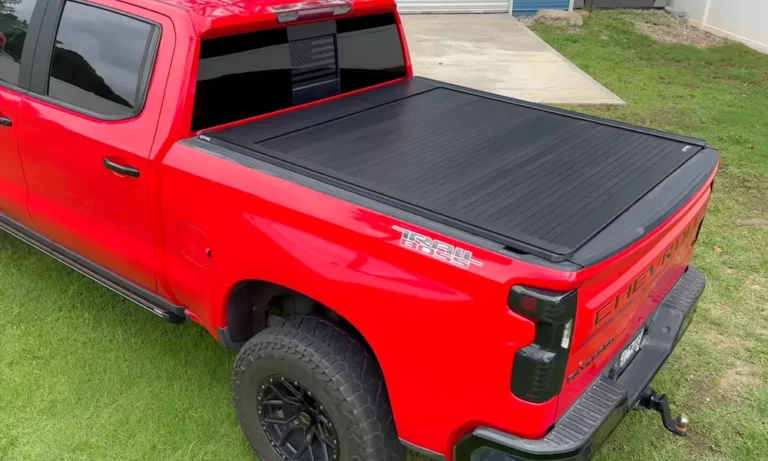
You’ve seen trucks cruising with sleek bed covers and wondered: will this actually save me money at the pump? It’s a fair question, especially when gas prices spike. The answer isn’t as simple as yes or no—it depends on how you drive, what you buy, and what your truck’s already doing with the air flowing over it. Let’s break down the science, the testing, and the real-world results so you can decide if it’s worth the investment.
The Physics of Air and Your Truck Bed
When your truck barrels down the highway, air doesn’t politely flow around it. Instead, it crashes into the front, scrambles over the cab, and creates chaos in the bed. This isn’t just turbulence—it’s wasted energy your engine has to fight against.
Here’s the twist: your open truck bed might already be smarter than you think. When air hits the sharp edge behind your cab, it doesn’t tumble into the bed like water into a bucket. It creates a spinning vortex—a cushion of rotating air trapped in the bed. This locked vortex acts like an invisible cover, letting high-speed air skip over the bed instead of slamming into every surface.
Think of it like a protective bubble. The tailgate keeps this bubble contained. That’s why dropping your tailgate actually hurts fuel economy—you’ve just popped the bubble and let chaos spill out behind your truck.
Short Beds vs. Long Beds: Size Matters
Not all truck beds handle airflow equally:
- Short beds (5.5 feet): The air vortex stays stable and tight. The virtual cover works beautifully on its own.
- Long beds (8 feet): The vortex gets wobbly. Air has time to crash down into the bed floor, creating drag. This is where physical tonneau covers show the biggest gains.
Your truck’s geometry determines how much a cover will help. Crew cabs with short beds? The benefit is minimal. Single cabs with 8-foot beds? Now we’re talking.
What the Wind Tunnel Actually Proved
Entertainment science and rigorous testing don’t always agree. The MythBusters episode claimed tonneau covers were useless, but controlled wind tunnel studies tell a different story.
The SEMA Wind Tunnel Study
The Specialty Equipment Market Association tested 13 different tonneau covers on four full-size trucks at the A2 Wind Tunnel in North Carolina. Real trucks, real covers, real measurements:
| Truck Model | Bed Length | Best Drag Reduction |
|---|---|---|
| 2007 GMC Sierra | 6.5 ft | 7.5% |
| 2006 Ford F-150 | 6.5 ft | 7.8% |
| 2006 Dodge Ram 1500 | 6.5 ft | 6.2% |
| 2006 Ford F-150 | 5.5 ft | 5.7% |
Every single configuration reduced drag. The average improvement was 5.73%. That translates to roughly 1.8% better fuel economy at highway speeds.
Not massive, but it’s real. And it’s repeatable.
Why MythBusters Got It Wrong
The TV show relied on road testing with a single old truck. Road tests introduce variables wind tunnels eliminate—bumpy pavement, gusting crosswinds, inconsistent throttle application. Their conclusion that mesh tailgates were best? That’s an artifact of their specific test truck’s geometry, not a universal truth.
Modern trucks are engineered with tailgate spoilers that work with the separation bubble. Cutting holes in that system with mesh destroys the careful aerodynamic balance.
Hard vs. Soft Covers: The Weight Problem
Aerodynamics isn’t the whole story. You’re adding weight to your truck, and weight fights against you every time you accelerate or climb a hill.
Cover Types Compared
| Cover Type | Weight | Drag Reduction | Best For |
|---|---|---|---|
| Soft vinyl roll-up | 25-40 lbs | 5-6% | Daily drivers, mixed use |
| Hard folding aluminum | 60-90 lbs | 6-7% | Highway commuters |
| Fiberglass lid | 90-150 lbs | 7-8% | Long-distance haulers |
Soft covers offer the best return on investment. They’re light enough that the rolling resistance penalty is tiny, but they still smooth airflow. The downside? They can flutter at high speeds if not tensioned properly, creating drag instead of reducing it.
Hard fiberglass covers are perfectly smooth and deliver maximum aerodynamic gain. But they’re heavy. That extra 100-150 pounds kills fuel economy in stop-and-go traffic. You’re carrying the equivalent of an extra passenger everywhere you go.
The Flutter Factor
Cheap vinyl covers flap in the wind like a tarp. That flapping steals energy from your forward motion. Quality covers use tension systems to stay drum-tight at 75 mph. If you go soft, don’t go cheap.
Electric Trucks Change Everything
Internal combustion engines waste 70-80% of fuel energy as heat. Electric motors waste only 10%. That means aerodynamic improvements matter more in EVs—there’s less waste to hide behind.
Tesla Cybertruck: The Extreme Case
The Cybertruck’s tonneau cover isn’t optional—it’s the roof continuing down to the tailgate. Opening it creates a massive cavity that acts like an air brake.
Real-world testing showed:
- Cover closed: 295 miles of range
- Cover open at 75 mph: 225-250 miles
That’s a 10% range penalty. For the Cybertruck, the tonneau cover is mandatory equipment.
Ford F-150 Lightning: The Non-Event
The F-150 Lightning keeps the traditional truck shape. Highway loop testing showed zero measurable difference between cover-on and cover-off at 70 mph: 2.0 mi/kWh either way.
Why? That separation bubble in the bed is doing its job perfectly. The Lightning’s aerodynamics are already optimized. Adding a cover is like painting racing stripes—it looks purposeful but doesn’t change performance.
Rivian R1T: Same Story
User testing on the R1T showed 1.80 mi/kWh open versus 1.79 mi/kWh closed—statistical noise. Drop the tailgate, though? Efficiency tanks to 1.73 mi/kWh. The tailgate matters. The cover doesn’t.
Modern Tailgates Are Engineering Marvels
Look at the top of your truck’s tailgate. See that wide, flat plastic shelf? That’s not a styling choice—it’s a detachment spoiler.
This shelf forces air to separate cleanly from the truck instead of wrapping around and creating suction on the tailgate face. Combined with the cab roof spoiler (where your third brake light lives), modern trucks manage airflow without aftermarket help.
Twenty years ago, tailgates were dumb slabs of steel. The gains from adding a cover were bigger because the baseline aerodynamics were terrible. Today’s trucks are so refined that you’re polishing an already smooth system.
The Mesh Tailgate Myth
Stop buying mesh tailgate nets. Seriously.
The solid tailgate creates pressure inside the bed that pushes against the back of the cab, canceling some drag. A mesh gate lets air bleed through, dropping that pressure and increasing the pressure difference between front and rear. Wind tunnel data consistently shows mesh gates hurt efficiency on modern trucks.
The Money Question: Will You Actually Save Cash?
Let’s math this out for a typical scenario:
Average Daily Driver
- Baseline: 18 mpg
- Annual mileage: 15,000 miles
- Highway driving: 60%
- Fuel price: $3.50/gallon
- Effective efficiency gain: 1.08% (derated for mixed driving)
Annual fuel cost without cover: $2,916
Annual fuel cost with cover: $2,884
Annual savings: $32
If you bought a soft cover for $300, you’ll break even in 9.3 years. A $1,000 hard cover? You’re looking at 31 years before it pays for itself.
Commercial Fleet Truck
- Annual mileage: 60,000 miles
- Highway driving: 90%
- Effective gain: 1.6%
Annual savings: $184
Payback on soft cover: 1.6 years
For high-mileage fleet vehicles, tonneau covers make financial sense. For your weekend warrior? Not so much.
When Tonneau Covers Actually Help
Don’t buy a tonneau cover to save gas. Buy it for these reasons:
Security and Weather Protection
Your tools and gear stay dry and out of sight. That’s worth $300 on its own.
You Drive Highway Miles
If you’re commuting 100 miles daily at 70+ mph, the aerodynamic benefit is measurable. It won’t change your life, but it’s real.
You Have a Long Bed
Eight-foot beds see bigger gains than short beds because the natural air vortex is less stable.
You Want the Look
Covered beds look cleaner and more finished. Aesthetics count.
When They Don’t Matter
City Driving Dominates Your Routine
Aerodynamic drag is negligible at 35 mph. Rolling resistance and stop-and-go acceleration dominate. The weight penalty of the cover probably cancels any aero benefit.
You Haul Tall Cargo Frequently
If you’re constantly loading plywood or furniture, a cover becomes a hassle you’ll remove and never reinstall.
You Own a Modern Short-Bed Truck
The F-150, Silverado, and Ram already nail the aerodynamics on 5.5-foot beds. You’re refining a system that’s already optimized.
The Verdict: It’s Complicated
Does a tonneau cover improve gas mileage? Yes—by about 1-2% in real-world highway driving. That’s confirmed by wind tunnel testing and CFD simulations.
Will you notice at the pump? Barely. You’ll save maybe a gallon every other fill-up.
Should you buy one? If you want dry, secure cargo space and you like the look, absolutely. The fuel savings are a bonus, not the reason.
Modern trucks already create an effective “virtual tonneau cover” with that spinning air vortex in the bed. Tailgate spoilers and cab aerodynamics have gotten so good that adding a physical cover is like fine-tuning a system that’s already dialed in.
Your best bet? Go with a lightweight soft roll-up if you want one. It won’t hurt efficiency, might help a tiny bit at highway speeds, and you’ll actually use it because it’s not a 150-pound fiberglass anchor in your bed.
The tonneau cover isn’t a magic fuel-saving hack. It’s a useful accessory with a modest side benefit. Buy it for what it does best—protecting your stuff—and enjoy the marginal efficiency improvement as a small bonus.