Your car’s dash lights up with that dreaded amber glow—the check engine light. If you’re driving a Nissan, that little icon is actually a doorway to understanding what’s happening under the hood. Don’t panic! With the right knowledge, you can decode these signals and make informed decisions about your vehicle’s health.
What Are Nissan Check Engine Light Codes?
Nissan check engine light codes are standardized messages your car’s computer system generates when it detects a problem. Think of them as your car’s way of telling you “Hey, something’s not quite right here.”
These codes follow a specific pattern—a letter followed by four numbers. The letter tells you which system has the issue:
- P codes: Powertrain (engine and transmission)
- B codes: Body systems (airbags, power seats)
- C codes: Chassis components (steering, brakes)
- U codes: Network communication issues
The first number after the letter indicates whether it’s a generic code (0) or a Nissan-specific code (1). The remaining digits pinpoint the exact nature of the problem.
How to Retrieve Nissan Check Engine Light Codes
Using an OBD-II Scanner
The simplest method requires an OBD-II scanner—a device you can purchase online or at auto parts stores for $20-100:
- Locate your car’s OBD-II port (usually under the dashboard near the steering column)
- Plug in the scanner
- Turn the ignition to the “ON” position without starting the engine
- The scanner will communicate with your car’s computer
- Follow the scanner’s menu to read the codes
Many OBD-II scanners now connect to smartphone apps, making the process even more straightforward.
DIY Method for Newer Nissans
Don’t have a scanner? Some newer Nissans let you retrieve codes using just the accelerator pedal:
- Turn the key to “ON” (don’t start the engine)
- Wait 3 seconds
- Press and release the gas pedal 5 times within 5 seconds
- Wait 7 seconds
- Press and hold the gas pedal for 10 seconds until the check engine light starts flashing
- Count the flashes to determine the code
Manual Method for Older Nissans (Pre-2000)
Older Nissans have a different procedure that varies by engine type:
For 4-cylinder engines:
- Locate the ECU (usually under the passenger’s seat or dash)
- Find the diagnostic mode selector screw
- Turn it fully clockwise, wait 5 seconds, then turn counterclockwise
- Count the flashes on your dashboard
For V6 engines:
- Find the ECU diagnostic switch
- Switch to “DIAGNOSTIC” position
- Turn ignition “ON” without starting
- Count the flashing pattern
Common Nissan Check Engine Light Codes and Their Meanings
P0101-P0199: Air and Fuel Measurement Codes
- P0101: Mass Airflow Sensor performance issue
This typically means your MAF sensor can’t accurately measure incoming air. It’s often caused by vacuum leaks or a dirty/failing sensor. - P0128: Coolant temperature below normal
Your engine isn’t warming up properly—usually due to a stuck-open thermostat. - P0171: System too lean (Bank 1)
Your engine is receiving too much air or not enough fuel. Common causes include vacuum leaks, dirty fuel injectors, or a failing oxygen sensor.
P0300-P0399: Ignition System Codes
- P0300: Random/Multiple cylinder misfire
Multiple cylinders are misfiring, causing your engine to run roughly. Check for worn spark plugs, bad ignition coils, or fuel delivery issues. - P0335: Crankshaft position sensor circuit malfunction
Your engine can’t properly determine crankshaft position, which affects timing. This sensor often fails suddenly on Nissans.
P0400-P0499: Emission Control Codes
- P0420: Catalyst system efficiency below threshold
Your catalytic converter isn’t working efficiently. This could mean your converter is failing or there’s an upstream issue affecting it. - P0442: EVAP system leak detected (small)
Your evaporative emissions system has a small leak, often caused by a loose gas cap or damaged vapor lines.
Nissan-Specific Codes (P1xxx)
- P1111: Camshaft position actuator intake malfunction
This Nissan-specific code indicates a problem with the variable valve timing system. - P1148: Closed loop control inoperative
Your engine can’t properly balance the air-fuel mixture using oxygen sensor data.
Common Causes of Nissan Check Engine Lights
Loose Gas Cap
It might seem minor, but a loose gas cap is one of the most common check engine light triggers. Your fuel system is pressurized, and when that cap isn’t tight, the system detects a vapor leak.
Quick fix: Remove and firmly reattach your gas cap until it clicks. The light may take several driving cycles to reset.
Failing Oxygen Sensors
Your Nissan has multiple oxygen sensors that monitor exhaust gases. These sensors naturally degrade over time (typically 80,000-100,000 miles).
Symptoms: Poor fuel economy, rough idle, and hesitation during acceleration.
Mass Airflow Sensor Issues
The MAF sensor measures air entering your engine. When it gets dirty or fails, it sends incorrect data to your engine computer.
Symptoms: Stalling, hard starting, hesitation during acceleration, and erratic idle.
DIY maintenance: You can clean a dirty MAF sensor with specialized MAF sensor cleaner (never touch the sensor element).
Catalytic Converter Problems
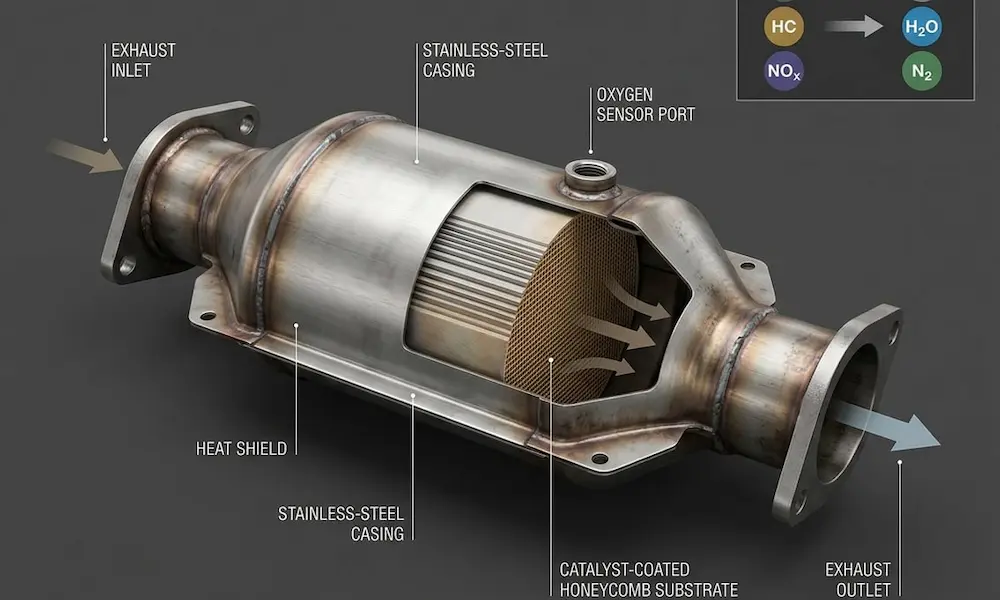
The catalytic converter reduces harmful emissions. They typically last the life of the vehicle but can fail due to age or upstream engine issues.
Symptoms: Reduced performance, lower fuel economy, sulfur smell, and excessive heat under the vehicle.
Ignition System Failures
Spark plugs, ignition coils, and associated wiring are common failure points in Nissans.
Symptoms: Engine misfire, rough idle, hard starting, and reduced power.
Using Nissan Check Engine Codes for Troubleshooting
Reading the Codes is Just Step One
Remember that diagnostic codes point to the system that has a problem—not necessarily the exact part that needs replacement. For example, a code for “oxygen sensor circuit malfunction” could mean:
- The sensor itself is bad
- There’s a broken wire in the circuit
- There’s a problem with the connector
- The engine computer has an issue
What to Do After Reading Codes
- Research the specific code for your Nissan model
- Look for patterns if multiple codes appear
- Check for Technical Service Bulletins (TSBs) related to your code
- Start with simple fixes like checking connections and replacing common wear items
When Codes Return After Clearing
If your check engine light returns quickly after clearing the codes, that confirms there’s an active problem—not just a one-time glitch.
Tool Comparison: What You Need for Nissan Diagnostics
| Tool Type | Price Range | Capabilities | Best For |
|---|---|---|---|
| Basic Code Reader | $20-50 | Reads and clears basic codes | DIY beginners |
| Bluetooth OBD Adapter | $15-40 | Connects to smartphone apps | Tech-savvy owners |
| Mid-Range Scanner | $60-150 | Reads codes, shows live data | Serious DIYers |
| Professional Scanner | $300+ | Full system diagnostics, programming | Mechanics |
Preventive Maintenance to Avoid Check Engine Lights
Regular maintenance dramatically reduces check engine light occurrences. For Nissans specifically:
- Replace spark plugs at recommended intervals (typically 60,000-105,000 miles depending on model)
- Check and clean MAF sensors yearly
- Inspect for vacuum leaks around intake manifold gaskets and hoses
- Use quality fuel from reputable stations
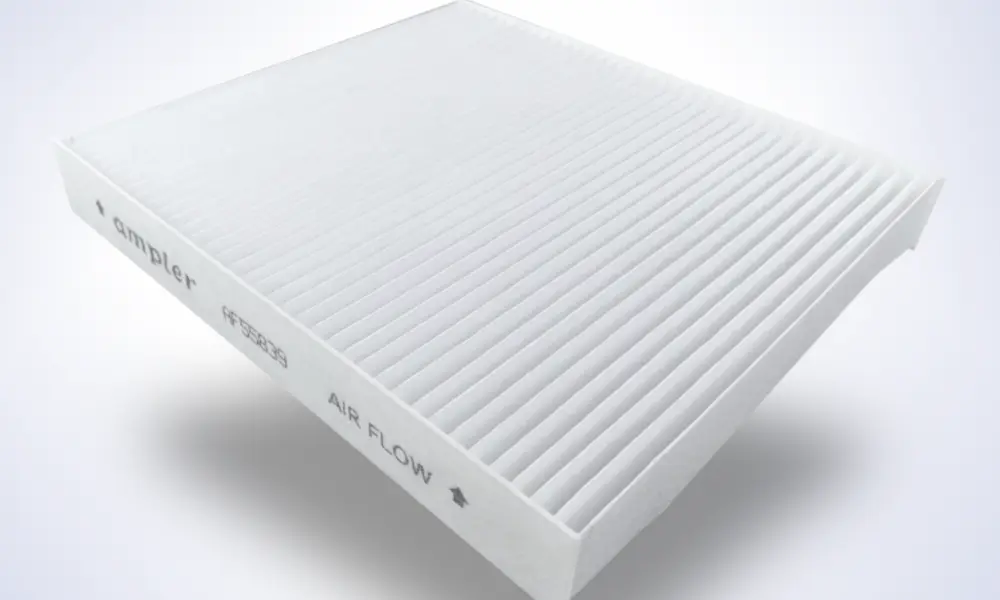
- Replace air filters regularly (dirty filters affect MAF sensor readings)
- Check for damaged wiring harnesses (rodent damage is surprisingly common)
Understanding Nissan’s On-Board Diagnostic Systems
Nissan vehicles have evolved through different diagnostic systems:
- Pre-1996 models: Used Nissan’s proprietary system with manual flash code retrieval
- 1996 and newer: Use standardized OBD-II systems required by federal law
- Latest models: Feature enhanced diagnostics with more detailed freeze frame data
The newer your Nissan, the more sophisticated its self-diagnostic capabilities. Modern Nissans can detect subtle issues before they become noticeable to drivers.
Code Clearing and Reset Procedures
After fixing an issue, you’ll want to clear the code to reset the check engine light:
Using a Scanner
- Connect your scanner
- Navigate to “Clear Codes” or similar option
- Confirm the action
Without a Scanner
- Disconnect the negative battery terminal
- Press the horn for 30 seconds (discharges remaining power)
- Wait 15 minutes before reconnecting the battery
Note that disconnecting the battery may reset other systems in your car, including radio presets and adaptive transmission learning.
When Check Engine Codes Indicate Serious Problems
Some codes require immediate attention:
- Flashing check engine light: Indicates active, severe misfiring that can damage your catalytic converter
- Codes related to oil pressure: Could signal critical engine damage
- Multiple transmission-related codes: May indicate internal transmission problems
In these cases, it’s best to limit driving and consult a professional mechanic with Nissan experience.
Beyond Generic Codes: Understanding Nissan-Specific Issues
Certain Nissan models have known issues that trigger specific codes:
- Altima/Sentra CVT transmissions (2007-2013): Watch for P0868, P0967 codes
- Nissan VQ35/VQ37 V6 engines: P0021/P0011 codes often indicate timing chain issues
- Rogue and Juke models: P0101 frequently indicates a failing MAF sensor
Knowing these patterns can help you spot potential problems early.
Accessing Enhanced Diagnostic Information
For more detailed diagnostics beyond basic codes:
- Nissan CONSULT: Nissan’s proprietary diagnostic system used by dealers
- Freeze frame data: Shows engine conditions when the fault occurred
- Live data streams: Real-time sensor readings help pinpoint intermittent issues
While professional tools provide the most data, some advanced consumer scanners now offer similar capabilities at a fraction of the price.
Conclusion
Understanding Nissan check engine light codes empowers you to make informed decisions about your vehicle. While some issues require professional help, many common problems can be identified and often fixed with basic tools and knowledge.
Remember that these codes are your car’s way of communicating—pay attention to them early to avoid more expensive repairs down the road. With the right approach, you can use these diagnostic codes to keep your Nissan running smoothly for years to come.