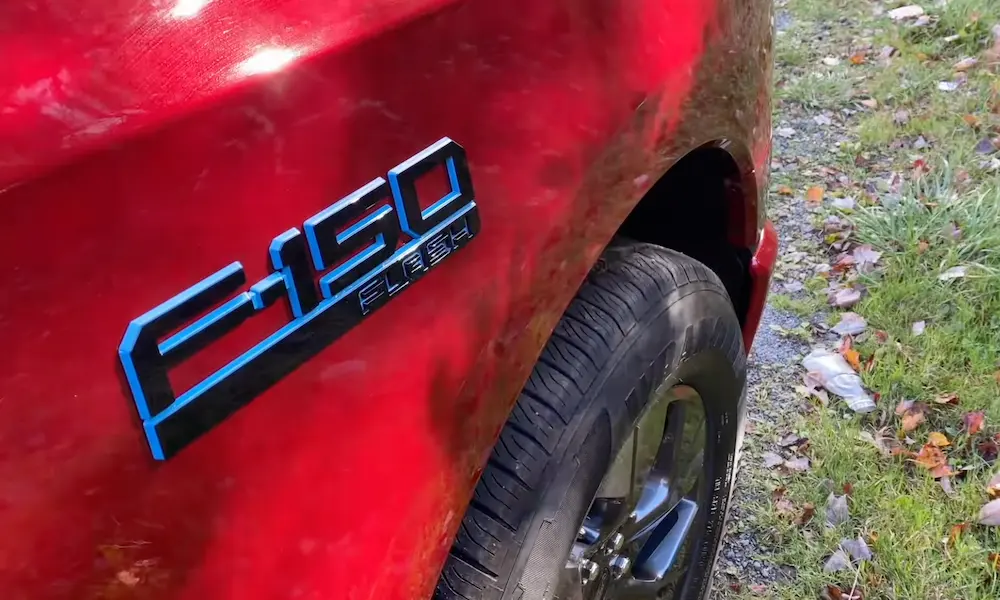
Your Ford F150’s check engine light just came on, and now you’re wondering what’s wrong with your truck. Don’t worry – understanding these warning signals isn’t as complicated as it seems. With the right knowledge, you can decode what your truck is trying to tell you and potentially save hundreds in unnecessary repair costs.
What Makes Your F150’s Check Engine Light Turn On
Your Ford F150 uses an onboard computer system that constantly monitors engine performance, emissions, and other critical systems. When something goes wrong, the computer stores a specific code and turns on the check engine light to alert you.
These codes aren’t random – they’re standardized messages that identify exactly what’s malfunctioning in your truck. For F150s built after 1996, they follow a standard format called OBD-II (On-Board Diagnostics II).
How to Retrieve Check Engine Light Codes
Getting the codes from your F150 is easier than you might think. Here are three methods:
Using an OBD-II Scanner
The simplest way to retrieve codes is with an OBD-II scanner:
- Locate your truck’s diagnostic port (usually under the dashboard on the driver’s side)
- Plug in the scanner
- Turn your ignition to the “ON” position without starting the engine
- Follow your scanner’s instructions to read the codes
Basic code readers start around $25, while more advanced scanners with additional features can cost $100+. Many auto parts stores will read your codes for free.
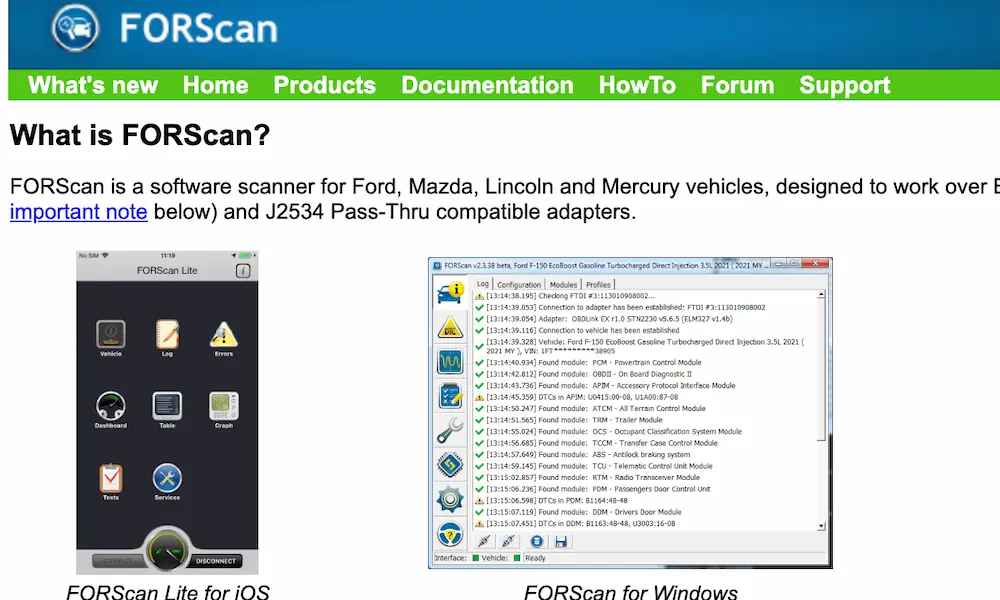
Using FORScan Software
For more detailed diagnostics:
- Purchase an ELM327 or compatible OBD-II adapter (USB or Bluetooth)
- Download the FORScan software to your laptop
- Connect the adapter to your F150’s OBD port and your computer
- Use the software to retrieve and interpret codes
This method gives you access to more Ford-specific data than generic scanners.
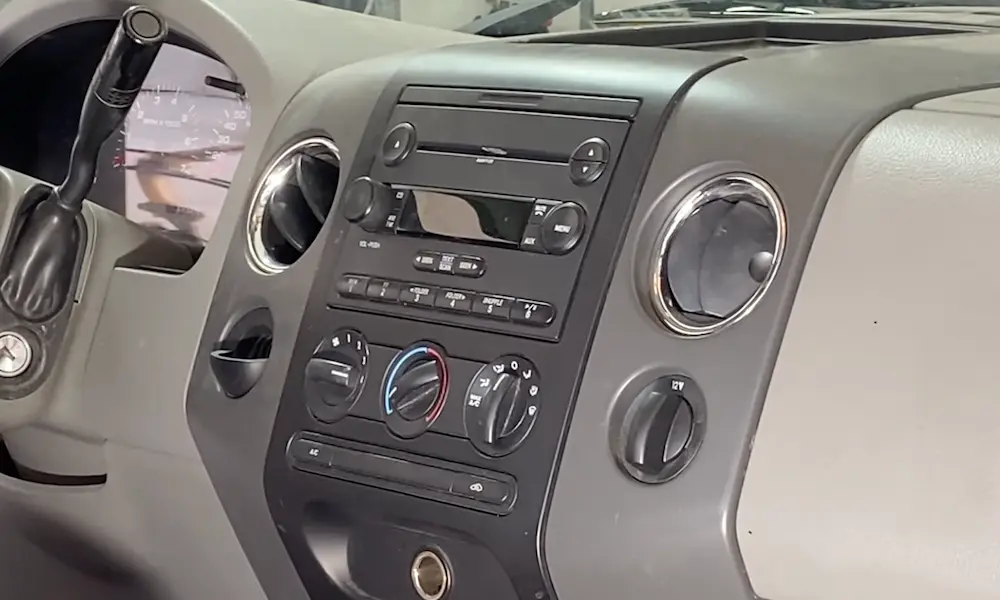
Using Your F150’s Built-in Test Mode
Some F150 models allow you to access codes through the dashboard:
- Hold the Select/Reset button on your instrument cluster
- Turn the ignition to RUN (without starting the engine)
- Continue holding the button for about 5 seconds until “tESt” appears
- Release the button within 3 seconds
- Press the button again to navigate through options until you reach “dtc” to view codes
Common Ford F150 Check Engine Light Codes and Their Meanings
Here’s a breakdown of the most common codes you might encounter:
P0171 and P0174: System Too Lean
What it means: Your engine is getting too much air or not enough fuel.
Common causes:
- Vacuum leaks in the intake manifold
- Dirty or failing mass airflow sensor
- Fuel pressure regulator issues
- Clogged fuel injectors
- Exhaust leaks before the oxygen sensors
Severity: Medium – can cause poor performance and reduced fuel economy if left unrepaired.
P0300-P0308: Cylinder Misfire Detected
What it means: One or more cylinders aren’t firing properly. P0300 indicates random misfires, while P0301-P0308 specify which cylinder is misfiring.
Common causes:
- Worn spark plugs
- Bad ignition coils
- Low fuel pressure
- Vacuum leaks
- Valve or timing issues
Severity: High – continuous misfiring can damage your catalytic converter and should be fixed promptly.
P0420: Catalytic Converter Efficiency Below Threshold
What it means: Your catalytic converter isn’t cleaning exhaust gases efficiently enough.
Common causes:
- Aging catalytic converter
- Engine misfires damaging the converter
- Exhaust leaks
- Faulty oxygen sensors
Severity: Medium – won’t cause immediate driving issues but must be fixed to pass emissions tests.
P0299: Turbocharger Underboost Condition
What it means: Your EcoBoost engine’s turbocharger isn’t generating enough boost pressure.
Common causes:
- Boost leaks in charge pipes or intercooler
- Faulty wastegate or actuator
- Clogged air filter
- Sticking variable geometry turbo components
Severity: Medium-High – reduces power and efficiency.
Diagnostic Table: Ford F150 Engine Codes
| Code Range | System | Common Examples | Typical Severity |
|---|---|---|---|
| P0xxx | Generic Powertrain | P0171, P0300, P0420 | Varies |
| P1xxx | Manufacturer-Specific Powertrain | P1000 (OBD-II monitor readiness) | Usually Lower |
| B0xxx | Body Systems | B0001 (Driver airbag circuit) | Safety Critical |
| C0xxx | Chassis Systems | C0035 (Left front wheel speed sensor) | Medium |
| U0xxx | Network Communications | U0101 (Lost communication with TCM) | Medium-High |
Simple Fixes You Can Try First
Before heading to the mechanic, these simple checks might solve your problem:
1. Check Your Gas Cap
A loose or damaged gas cap is a surprisingly common cause of check engine lights. The fuel system is pressurized, and a poor seal can trigger the light.
Fix: Tighten your gas cap until it clicks. If the cap is damaged, replace it (about $15-25).
2. Inspect Your Air Filter
A clogged air filter restricts airflow and can cause performance issues and trigger codes like P0171/P0174.
Fix: Remove and inspect your air filter. If it’s dirty, replace it (about $15-30).
3. Clean Your Mass Airflow Sensor
The MAF sensor measures air entering the engine, and when dirty, it sends incorrect data to your engine computer.
Fix:
- Disconnect your battery
- Remove the sensor (usually attached to the air intake tube)
- Spray it with MAF sensor cleaner ($5-10)
- Let it dry completely before reinstalling
4. Check for Loose Connections
Inspect visible electrical connections around your engine, particularly near sensors.
Fix: Ensure all connectors are fully seated and free of corrosion or damage.
Addressing More Complex Issues
Some codes require more technical knowledge or specialized tools:
Fixing Oxygen Sensor Problems
Codes: P0130-P0167
Oxygen sensors monitor exhaust gases and help regulate the air-fuel mixture. They commonly fail with age.
DIY Difficulty: Moderate
Tools Needed: Oxygen sensor socket, ratchet, anti-seize compound
Parts Cost: $40-150 per sensor
Procedure:
- Identify which sensor needs replacement (your code will specify)
- Locate the sensor in your exhaust system
- Disconnect the electrical connector
- Remove using an oxygen sensor socket
- Apply anti-seize to threads of new sensor
- Install and reconnect
Dealing with Misfires
Codes: P0300-P0308
DIY Difficulty: Moderate
Tools Needed: Socket set, spark plug socket, gap tool
Parts Cost: $25-50 for spark plugs, $40-80 per ignition coil
Procedure:
- Identify the misfiring cylinder(s)
- Remove the corresponding ignition coil
- Remove and inspect the spark plug
- Replace with properly gapped new plug
- If problems persist, replace the ignition coil
When to Reset Your Check Engine Light
After fixing the problem, you can reset your check engine light in several ways:
- Use an OBD-II scanner with a clear codes function
- Disconnect the battery for 15 minutes (but this will reset all your radio presets and other settings)
- Drive normally after repairs – the light should turn off after several drive cycles if the problem is fixed
Important: Resetting the light without fixing the underlying issue will only cause it to return once the system runs its tests again. In most states, vehicles with active check engine lights will fail emissions testing.
Ford F150-Specific Issues to Watch For
Certain model years and engines have known issues that often trigger check engine lights:
EcoBoost Engine Concerns
- 2011-2014 3.5L EcoBoost: Carbon buildup on intake valves can cause misfires and rough idle
- 2013-2016 1.6/2.0L EcoBoost: Coolant leaks from the cylinder head can trigger overheating warnings
- 2013-2019 2.7L EcoBoost: Timing chain stretch issues on some early models
5.0L Coyote V8 Issues
- 2011-2017 models: Oil consumption issues can trigger low oil pressure warnings
- 2018+ models: Some owners report coolant consumption problems that can lead to overheating codes
5.4L Triton V8 Problems (Older Models)
- 2004-2008 models: Spark plug ejection issues
- All years: Cam phaser and timing chain problems that trigger timing-related codes
The Bottom Line on F150 Check Engine Lights
Your Ford F150’s check engine light is a helpful tool, not just an annoyance. By understanding the codes and taking appropriate action, you can:
- Save money by addressing small problems before they become expensive repairs
- Keep your truck running efficiently and reliably
- Make informed decisions about DIY repairs versus professional help
- Avoid being taken advantage of at repair shops
With the information in this guide, you’re equipped to decode what your F150 is telling you through its check engine light. Whether you tackle the repairs yourself or take it to a professional, you now have the knowledge to approach the situation with confidence.
Remember that some problems are simple fixes you can handle yourself, while others require professional diagnostic equipment and expertise. The key is identifying which category your specific issue falls into and proceeding accordingly.