Is your Nissan Sentra blowing warm air on a scorching summer day? You’re probably dealing with low refrigerant. This guide walks you through everything you need to know — from finding the service port to reading pressure gauges correctly. Stick around, because skipping even one step can damage your compressor or void your repair.
What’s Actually Happening When Your AC Stops Cooling
Your Sentra’s AC doesn’t create cold air. It moves heat out of the cabin by cycling refrigerant through a closed loop. The refrigerant absorbs heat inside the cabin and dumps it outside through the condenser.
When refrigerant levels drop, the system loses its capacity to absorb heat. The result? Warm or lukewarm air coming from your vents — even with the AC cranked to full blast.
Here’s the key thing most people miss: the AC system is sealed. If refrigerant is low, there’s a leak somewhere. Recharging without fixing the leak just buys you time.
Signs Your Nissan Sentra Needs a Recharge
Don’t just assume it’s refrigerant. Watch for these specific symptoms first:
- Weak or warm airflow from the dashboard vents, especially on hot days
- Compressor clutch cycling rapidly — clicking on and off every few seconds instead of running steadily
- AC compressor won’t engage at all — the system shuts it down to prevent dry-running damage
- Hissing sounds near the dashboard or engine bay while AC is running
- Takes forever to cool the cabin after sitting in the sun
If the compressor clutch keeps cycling erratically, that’s your low-pressure safety switch doing its job — protecting the compressor from running without refrigerant and lubricating oil.
Don’t Assume It’s Just Low Refrigerant
Before you buy a recharge kit, rule out these other common causes:
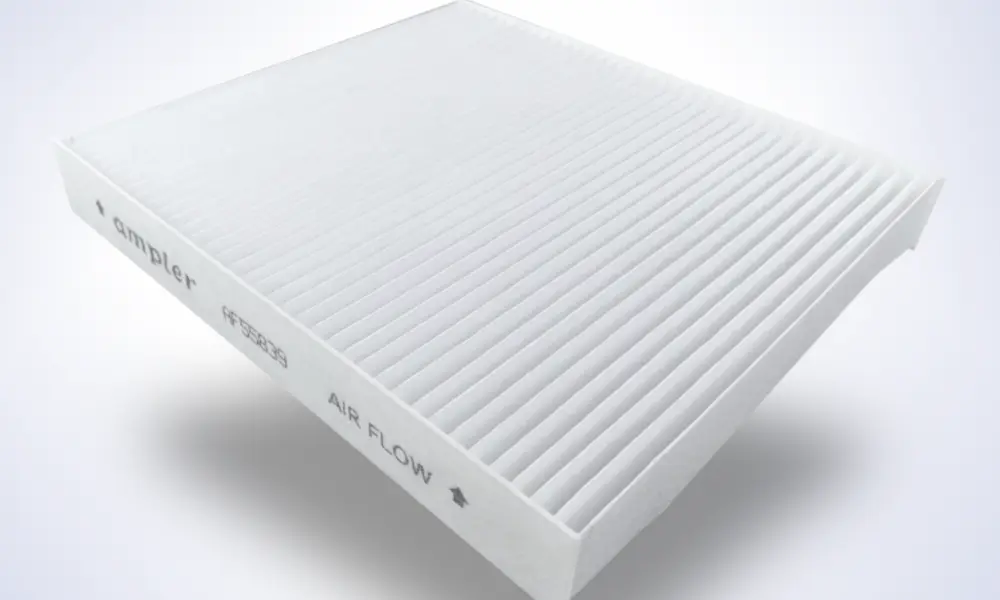
- Clogged cabin air filter — a dirty filter mimics low refrigerant symptoms completely
- Failed condenser fan — if the fan behind the radiator isn’t spinning, your AC only works at highway speeds
- Dead compressor — clutch engages but no pressure builds
- Blown fuse or bad relay — the compressor never receives power
- Blocked condenser fins — packed with bugs or debris, heat can’t escape
A blocked condenser or failed cooling fan will make your AC blow hot air even with a perfectly charged system. Fix the actual problem first.
Which Refrigerant Does Your Nissan Sentra Use?
This is critical. Using the wrong refrigerant destroys your system.
| Nissan Sentra Model Years | Refrigerant Type | Lubricant Oil |
|---|---|---|
| 2007–2012 (MR20DE / QR25DE) | R-134a (HFC-134a) | PAG 46 |
| 2013 (MRA8DE 1.8L) | R-134a (HFC-134a) | PAG 46 |
| 2014–2019 (MRA8DE / MR16DDT) | R-134a (HFC-134a) | PAG 46 |
| 2020–Present (MR20DD 2.0L) | R-1234yf (HFO-1234yf) | PAG YF / POE |
The 2020 Nissan Sentra switched to R-1234yf — a newer refrigerant with a global warming potential of just 3, compared to R-134a’s staggering 1,400+. The two refrigerants are mechanically incompatible. Their service ports are physically different sizes so you can’t accidentally mix them.
Always check the sticker under your hood. It lists the exact refrigerant type and system capacity.
What Refrigerant Cans You Can Legally Buy
Here’s something most DIY guides skip entirely: federal law governs what you can purchase.
Under EPA refrigerant sales restrictions, uncertified consumers can only legally buy small containers of 2 pounds or less designed for motor vehicle AC systems. Bulk refrigerant requires EPA Section 609 certification.
Also — your old puncture-style recharge tools are now obsolete. Since 2018, the EPA has required all small refrigerant cans to have self-sealing valves. These work like a tire valve — the can seals itself when you disconnect the hose, so unused refrigerant doesn’t vent into the atmosphere. Old-style tap equipment won’t fit modern cans.
If you’re in California, expect to pay a $10 deposit per can at the register — refunded when you return the empty.
How to Find the Low-Pressure Service Port
Only use the low-pressure port. Connecting to the high-pressure port with a retail can is genuinely dangerous — system backpressure can cause the can to rupture violently.
The ports are sized differently on purpose. Your retail hose connector physically won’t fit the high-pressure port.
Finding the low-side port by generation:
- 2007–2012 Sentra (6th gen): Look on the passenger side of the engine bay, near the strut tower. Find the larger diameter aluminum suction line — the port is on that tube.
- 2013–2019 Sentra (7th gen): The low-pressure AC line runs along the passenger side of the engine bay between the firewall and compressor.
- 2020–Present Sentra (8th gen): Similar passenger-side location near the firewall — but remember, this system needs R-1234yf and different equipment entirely.
The port has a plastic cap — usually black, blue, or gray — often stamped with the letter “L”. Remove the cap, wipe the fitting clean with a rag, then connect your hose.
Reading Pressure Correctly: The Temperature Chart You Need
This is where most DIY recharges go sideways. Pressure in your AC system changes with outdoor temperature. There’s no single “correct” number — it’s a moving target.
Never recharge when it’s below 65°F outside. The system won’t build enough pressure to give you an accurate reading.
| Ambient Temp (°F) | Target Low-Side PSI (R-134a) | Target Low-Side PSI (R-1234yf) |
|---|---|---|
| 65°F | 25–35 PSI | 28–38 PSI |
| 70°F | 35–40 PSI | 33–43 PSI |
| 75°F | 35–45 PSI | 38–48 PSI |
| 80°F | 40–50 PSI | 43–48 PSI |
| 85°F | 45–55 PSI | 49–58 PSI |
| 90°F | 45–55 PSI | 49–58 PSI |
| 95°F | 50–55 PSI | 53–58 PSI |
Overcharging is just as damaging as undercharging. Too much refrigerant floods liquid back into the compressor — and since liquids don’t compress, the pistons shatter. Stop adding refrigerant the moment you hit your target pressure range.
Step-by-Step: How to Recharge Nissan Sentra AC System
Here’s the actual process, in order:
What you’ll need:
- Correct refrigerant can (R-134a or R-1234yf — match your year)
- Compatible recharge hose with pressure gauge (self-sealing compatible)
- Safety goggles
- Heavy work gloves
- Thermometer (optional but helpful)
Step 1 — Gear up first. Put on your goggles and gloves before touching anything. Refrigerant causes instant frostbite on contact with skin.
Step 2 — Run the engine and max out the AC. Start the car, set AC to max cool, fan on high, windows down. Let it run for a few minutes to stabilize.
Step 3 — Connect to the low-side port. Remove the dust cap, wipe the fitting clean, press the hose coupler down firmly until it clicks.
Step 4 — Read baseline pressure. Check your gauge before adding anything. If it reads zero, stop — your system has a major leak and is completely empty. Adding refrigerant won’t fix that.
Step 5 — Check the compressor clutch. Look at the center of the compressor pulley. If the center hub isn’t spinning with the pulley, the clutch isn’t engaging. That’s normal on a severely low system — it should engage once pressure builds above ~25 PSI.
Step 6 — Add refrigerant in short bursts. Squeeze the trigger for 5–10 seconds, then pause. Watch the gauge. Add slowly. Don’t rush this.
Step 7 — Stop at your target pressure. Cross-reference your gauge reading with the temperature chart above. Once you’re in the target range, stop immediately.
Step 8 — Check vent temperature. Stick a thermometer in the center vent. A properly charged system should blow air in the high 30s to high 40s (°F). Much warmer than that? Something else is wrong.
Step 9 — Disconnect and cap the port. Pull the hose coupler off. The self-sealing can keeps unused refrigerant inside. Check that the dust cap’s rubber O-ring is intact, then thread it back on.
Why a “Top-Off” Has Real Limits
Adding refrigerant from a can is a legitimate short-term fix. But it has a hard ceiling on what it can tell you.
A single low-side gauge can’t measure total refrigerant mass in your system. Pressure swings with humidity, engine RPM, and airflow — so you’re estimating, not measuring precisely. It’s easy to think you’re in range when you’re actually overcharged.
Professional service uses a recovery machine on both ports simultaneously, then pulls a deep vacuum for 30–45 minutes to remove moisture and confirm there are no leaks. After that, it charges by exact weight — accurate to fractions of an ounce. That’s the only way to guarantee the system is right.
If your Sentra loses refrigerant again within one season, budget for a proper leak repair and full professional recharge. Topping off a leaking system repeatedly just releases refrigerant into the atmosphere — which is both wasteful and federally prohibited.
Don’t Forget the Receiver-Drier Rule
If you or a shop replaced any AC component — condenser, compressor, lines — the receiver-drier must be replaced too. Once the sealed system is opened to air, the desiccant inside the drier saturates with moisture almost immediately. A saturated drier can’t protect your system from the corrosive acids that form when moisture mixes with refrigerant under heat and pressure. That acid will eat your compressor from the inside out.
It’s a cheap part. Don’t skip it.