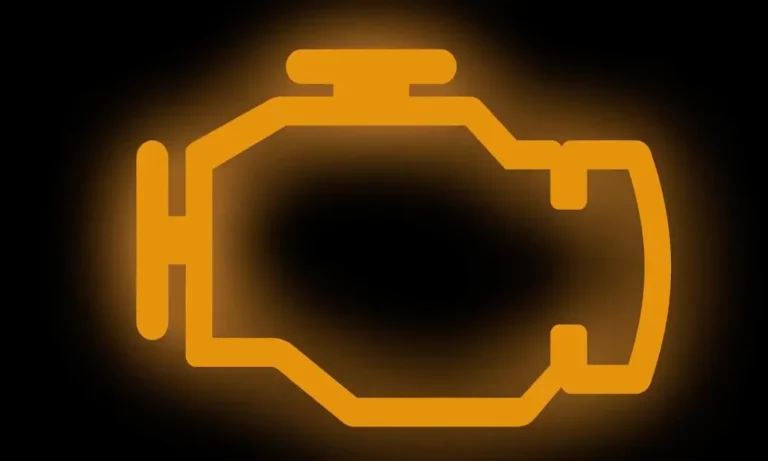
That blinking light on your dashboard isn’t being dramatic — it’s your car’s version of a panic button. If your service engine soon light is blinking, you’ve got a serious problem that can turn a cheap fix into a very expensive one fast. Here’s everything you need to know, broken down simply.
Blinking vs. Steady: These Are Not the Same Thing
A lot of drivers see any dashboard warning light and think, “I’ll deal with it later.” That works for a steady service engine soon light. It doesn’t work for a blinking one.
Here’s the core difference:
| Alert State | What It Means | Risk Level | What You Should Do |
|---|---|---|---|
| Steady Light | Emissions fault detected | Low to moderate | Schedule service within a few days |
| Blinking Light | Active misfire, fuel dumping into exhaust | Critical | Stop driving immediately |
A steady light usually means something like a loose gas cap or a worn oxygen sensor. Your car runs fine, but it’s not happy. A blinking service engine soon light, though, means your engine is misfiring right now — and unburned fuel is pouring into your exhaust system every second you keep driving.
That distinction matters a lot for your wallet.
Why a Blinking Light Is an Emergency
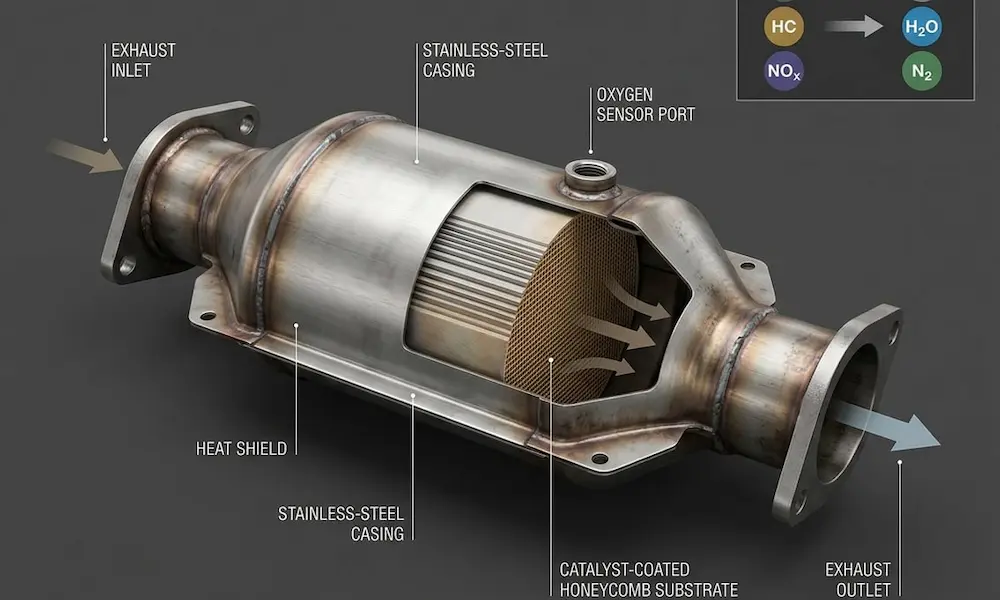
When an engine misfires, the cylinder fails to ignite its air-fuel mixture. That raw, unburned fuel flows directly into your catalytic converter — a component that runs at extremely high temperatures under normal conditions.
Once unburned fuel hits that hot converter, it ignites inside the unit itself. That secondary combustion pushes internal temperatures way past what the ceramic substrate can handle. The honeycomb structure inside starts to melt and collapse, blocking exhaust flow entirely.
The result? Your engine can stall, overheat, or push superheated gases back into the intake. In worst-case scenarios, it can cause a fire.
The OBD-II system — the diagnostic standard used in all cars built after 1996 — established the blinking light specifically to tell you this is happening right now, not at some vague point in the future.
What You Should Do the Moment the Light Blinks
Don’t ignore it. Don’t finish your errand. Don’t assume it’ll sort itself out.
Here’s exactly what to do:
- Ease off the accelerator immediately — reducing throttle cuts the amount of fuel entering the misfiring cylinder
- Avoid high-load situations — no hills, no highway passing, no hard acceleration
- Find a safe spot to pull over — a parking lot or shoulder works fine
- Turn the engine off
- Call for a tow — even if the light stops blinking after a restart, the fault is still there
That last point is critical. Driving even a short distance with a blinking service engine soon light can turn a $200 repair into a $2,500 catalytic converter replacement.
What “Limp Mode” Means (And Why It’s Not a Green Light to Keep Driving)
Many modern vehicles have a built-in software failsafe called Limp Mode. When the ECM (engine control module) detects a severe misfire, it deliberately limits engine RPM, retards ignition timing, or cuts fuel to the affected cylinder to reduce damage.
You’ll feel it. The car will feel sluggish and slow. That’s intentional.
Limp mode buys you a short window to get off the road safely — it’s not permission to keep driving normally. If your car drops into limp mode, get it towed. Don’t push it through traffic.
The Most Common Causes of a Blinking Service Engine Soon Light
A blinking service engine soon light always points to a misfire. But misfires have several different causes.
Worn Spark Plugs
Spark plugs wear down over time. As the gap between the electrodes widens, the ignition coil needs more voltage to fire across it. Eventually, the coil can’t keep up — and a misfire happens.
| Spark Plug Type | Typical Lifespan | Notes |
|---|---|---|
| Copper | 20,000 – 30,000 miles | Cheap, wears fast |
| Platinum | 60,000 – 100,000 miles | Good middle ground |
| Iridium/Ruthenium | 100,000+ miles | Best for turbocharged engines |
Replacing plugs at 60,000 miles — rather than waiting for the maximum rating — prevents the voltage stress that causes coil failure and downstream misfires.
Failing Ignition Coils
Modern Coil-on-Plug (COP) systems give each cylinder its own ignition coil. These coils take a beating from heat and vibration. When the internal insulation breaks down, the spark arcs to the cylinder head instead of the plug.
You’ll often feel this as a jerking sensation during acceleration — exactly when the coil is under the most demand.
Lean Fuel Conditions
A “lean” mixture has too much air and not enough fuel. If it’s lean enough, the spark plug can’t ignite the mixture at all — misfire.
Common causes include:
- Vacuum leaks — cracked intake boots or disconnected hoses let unmetered air into the engine
- Dirty or failing MAF sensor — sends wrong data to the ECM, causing incorrect fuel delivery
- Weak fuel pump or clogged filter — starves the engine of fuel under load
Clogged or Failed Fuel Injectors
Injectors can fail two ways. First, carbon deposits from low-quality fuel clog the nozzle and disrupt the spray pattern. Second, the internal solenoid can burn out electrically — meaning the injector doesn’t open at all, leaving that cylinder dead.
A dead cylinder almost always triggers an immediate blinking service engine soon light.
The Diagnostic Codes Behind a Blinking Light
When your service engine soon light blinks, your car stores a Diagnostic Trouble Code (DTC). These codes tell a technician where to start.
The P0300 series covers misfires:
| Code | Meaning | What It Suggests |
|---|---|---|
| P0300 | Random/Multiple Cylinder Misfire | Systemic issue — fuel pressure, vacuum leak, or PCM |
| P0301–P0312 | Specific Cylinder Misfire | Isolated issue — coil, plug, or injector on that cylinder |
| P0316 | Misfire on Startup | Misfire during first 1,000 revolutions after starting |
A P0300 code is harder to fix than a specific cylinder code because it points to a system-wide problem. If you see P0300 alongside P0302, cylinder 2 is the main offender — but the misfire is spreading.
Freeze Frame Data: The Hidden Clue
Beyond the code itself, your car stores “Freeze Frame” data — a snapshot of engine conditions at the exact moment the misfire occurred. A technician will check:
- Engine load — misfires only under hard acceleration often point to weak coils or fuel starvation
- Engine temperature — cold-start misfires can indicate a leaking head gasket letting coolant into the combustion chamber
- Fuel trim values — high numbers mean the ECM is compensating for a lean condition, often caused by a vacuum leak or failing MAF sensor
How a Technician Actually Diagnoses This
Good technicians don’t just swap parts blindly. They follow a logical process:
- Pull codes — retrieve P0300-series codes plus any supporting codes like P0171 or P0174 (system too lean)
- Check live data — watch real-time misfire counters to see which cylinder misfires and when
- Swap components — move the coil from the suspect cylinder to a known-good one. If the misfire moves, the coil is the problem. If it stays, check the plug or injector
- Smoke test — a smoke machine finds even pinhole-sized vacuum leaks that cause lean misfires
- Fuel pressure test — confirms the pump delivers enough pressure under load
- Compression or leak-down test — rules out internal engine damage like a burnt valve or blown head gasket
What Repairs Actually Cost
Here’s the honest truth about repair costs — and why waiting always makes it worse.
| Component | I4 Engine | V6/V8 Engine | Labor Intensity |
|---|---|---|---|
| Spark Plugs (Full Set) | $100 – $250 | $250 – $500+ | Moderate |
| Ignition Coil (Single) | $150 – $350 | $200 – $450 | Low to Moderate |
| Ignition Coils (Full Set) | $300 – $900 | $450 – $1,700 | High |
| Catalytic Converter | $1,500 – $2,500 | $2,000 – $4,000+ | Very High |
| Diagnostic Scan | $75 – $200 | $75 – $200 | Low |
On a four-cylinder engine, changing spark plugs takes about 30 minutes. On a V6 with rear cylinders buried under the intake manifold, reaching those plugs can add 2–4 hours of labor at $80–$200 per hour. Labor alone can cost more than the parts.
That’s why staying on top of ignition maintenance on a V6 or V8 matters so much.
“Service Engine Soon” vs. “Check Engine” — Does the Label Matter?
Different brands use different labels, and that creates real confusion.
Nissan uses “Service Engine Soon” specifically for emissions faults — it’s their version of the standard MIL (Malfunction Indicator Lamp). If a Nissan’s SES light blinks, it carries the same urgency as a flashing check engine icon on any other brand.
BMW separates the two. Their “Service Engine Soon” light often signals a scheduled maintenance reminder, while a dedicated engine-shaped icon serves as the actual emissions fault warning. Always check your manual if you drive a BMW.
Ford and GM have historically used “Service Engine Soon” as the primary MIL for emissions faults. A blinking service engine soon light on these vehicles is the same emergency signal.
Regardless of what your dashboard says — if it’s blinking, it’s urgent.
One More Thing: State Inspections and Emissions Laws
If you live in a state with emissions testing, a blinking (or even steady) service engine soon light is an automatic inspection failure. Clearing the code doesn’t fix this — the car needs to complete several “readiness cycles” after the repair to prove the fault is genuinely resolved.
And if you’re in California or another CARB state, your replacement catalytic converter must be CARB-compliant. That can push converter costs significantly higher than in non-CARB states — sometimes more than double. Installing a non-compliant part is illegal and will fail your smog check.
The bottom line is simple: a service engine soon light blinking is your car telling you to stop, not slow down. The faster you respond, the cheaper the fix.