Ever wondered why some Toyota Corollas hit 300,000 miles while others struggle at 150,000? The difference often boils down to one thing: following the right service schedule. A well-maintained Corolla can be your reliable companion for years, saving you thousands in unexpected repairs and maintaining strong resale value. Let’s dive into everything you need to know about keeping your Toyota Corolla running at its best.
Why Your Toyota Corolla Service Schedule Matters
Your Corolla’s engine runs on intricate systems that need proper care. Skip an oil change, and you’re risking accelerated internal wear on precision components. Delay a coolant flush, and you might face overheating issues down the road.
Regular maintenance isn’t just about preventing breakdowns—it’s about catching small issues before they become major problems. For example, a routine brake inspection might reveal early signs of brake-line corrosion that could be fixed inexpensively before it becomes a safety hazard.
Studies show that properly maintained vehicles can use up to 15% less fuel, giving you significant savings at the pump over time.
Core Toyota Corolla Maintenance Milestones
Toyota organizes maintenance in 5,000-mile increments, with more comprehensive services due at key mileage markers. Here’s what to expect:
| Mileage | Key Services | What You Need to Know |
|---|---|---|
| 5,000 miles | Oil change, tire rotation, multi-point inspection | Basic maintenance to keep things running smoothly |
| 10,000 miles | Repeat 5k services, cabin air filter check | Toyota synthetic oil allows 10k intervals under normal conditions |
| 15,000 miles | Add brake, steering, cooling system inspections | Critical safety checks to catch early wear |
| 30,000 miles | Engine air filter replacement, transmission inspection | Helps maintain fuel economy and shifts |
| 60,000 miles | Spark plug replacement, CVT fluid service, coolant check | Major service milestone for long-term reliability |
| 100,000 miles | Coolant replacement, drive belt service | Long-life components that finally need attention |
Essential Oil and Filter Services
Engine Oil Requirements
Your Toyota Corolla needs the right oil at the right intervals—this is non-negotiable for engine longevity.
Modern Corollas (2014+) use:
- Oil type: 0W-20 or 0W-16 full synthetic oil
- Normal driving: Change every 10,000 miles or 12 months
- Severe conditions: Change every 5,000 miles (frequent short trips, extreme temperatures, dusty conditions)
Using conventional oil instead of synthetic can void your warranty and reduce engine protection, so stick with Toyota’s recommendations.
Essential Filters
Keep these filter changes on your radar:
- Oil filter: Replace with every oil change to maintain clean oil circulation
- Engine air filter: Every 30,000 miles (15,000 in dusty areas)
- Cabin air filter: Every 15,000-30,000 miles (sooner in areas with high pollen or pollution)
A clogged air filter can reduce your fuel economy by up to 10%, so this simple maintenance item pays for itself.
Fluid Maintenance Schedule
Proper fluid maintenance is crucial but often overlooked. Follow this schedule to protect your Corolla’s systems:
| Fluid Type | Initial Service | Follow-up Interval | Purpose |
|---|---|---|---|
| Engine coolant (pink S-LLC) | 100,000 miles/10 years | Every 50,000 miles/5 years after | Prevents overheating, corrosion |
| CVT fluid (Toyota FE) | 60,000 miles | 40,000-60,000 miles thereafter | Ensures smooth shifts, cools transmission |
| Brake fluid (DOT 3/4) | 36 months | Every 3 years | Maintains stopping power, prevents corrosion |
| Manual transmission fluid | 60,000 miles | 60,000 miles | Protects gear surfaces |
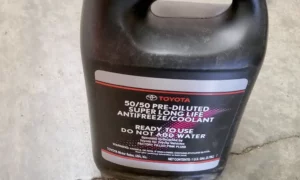
The pink Super Long Life Coolant used in Corollas is specially formulated to provide extended protection, but it’s not immortal. Missing the 100,000-mile replacement can lead to radiator damage.
Ignition and Emissions Components
These systems keep your Corolla running efficiently and cleanly:
- Spark plugs: Replace iridium plugs at 60,000 miles for gas models (120,000 miles for hybrids)
- PCV valve: Inspect at 60,000 miles, replace if deteriorated
- Fuel cap gasket: Check during 30,000-mile service to prevent “check engine” lights
- Oxygen sensors: Typically last 100,000+ miles but are covered under emissions warranty for 8 years/80,000 miles
Spark plugs that are left too long can cause misfiring, reduced fuel economy, and even catalytic converter damage, so don’t skip this service.
Brake System Maintenance
Your safety depends on properly functioning brakes:
- Brake pads/shoes: Visual inspection every 5,000 miles, detailed check at 15,000 miles
- Brake fluid: Complete flush every 3 years (every 2 years under severe conditions)
- Brake rotors/drums: Measure thickness during 30,000-mile services
- Brake lines: Check for corrosion or leaks at 15,000-mile intervals
According to NHTSA, worn brake components contribute to thousands of accidents annually, making this one maintenance item you shouldn’t delay.
Tire Care and Rotation
Proper tire maintenance extends tire life and ensures safety:
- Rotate tires every 5,000 miles
- Check pressure monthly (including spare)
- Inspect tread depth during rotation (replace under 4/32″)
- Alignment check recommended annually or if uneven wear appears
Rotating your tires regularly can extend their life by up to 20%, saving you hundreds of dollars over time.
Hybrid Corolla Special Considerations
If you drive a Corolla Hybrid (2016-2025), there are additional maintenance items to track:
| Component | Service Interval | Special Notes |
|---|---|---|
| Hybrid coolant (engine & inverter) | 150,000 miles/9 years | Separate cooling systems |
| HV battery cooling fan filter | Inspect at 15k, replace at 30k | Critical for battery temperature control |
| Hybrid transmission fluid | 100,000 miles | Uses specialized fluid |
The hybrid battery cooling system is especially important—a clogged filter can lead to overheating and shortened battery life. This is one area where preventive maintenance really pays off.
Model Year Variations in Maintenance
Toyota has evolved the Corolla’s maintenance needs over the years:
- Pre-2010 models: Used conventional 5W-30 oil with 5,000-mile change intervals
- 2010-2013: Transitioned to 0W-20 synthetic but kept 5,000-mile intervals
- 2014 and newer: Extended to 10,000-mile oil change intervals with synthetic
- Manual transmission models: Need gear oil inspection at 30,000 miles, replacement at 60,000
- 2020+ Hybrids: Follow 10,000-mile/12-month oil change schedule (whichever comes first)
If you own an older Corolla, don’t apply newer service intervals—follow the schedule in your specific owner’s manual.
ToyotaCare Coverage and Extensions
New Corolla purchases include complimentary maintenance through ToyotaCare:
- Standard coverage: 2 years/25,000 miles of no-cost scheduled maintenance
- What’s included: All factory-recommended services (oil changes, inspections, fluid top-offs)
- Extension options: ToyotaCare Plus can extend coverage to 4-5 years/45,000-75,000 miles
The ToyotaCare program provides significant savings in the first years of ownership and helps establish proper maintenance habits.
DIY vs. Professional Maintenance
While some maintenance tasks are DIY-friendly, others require dealer expertise:
DIY-Friendly Tasks:
- Air filter replacements
- Wiper blade changes
- Tire pressure checks
- Fluid level inspections
Leave to the Pros:
- Transmission fluid services
- Hybrid system maintenance
- Coolant exchanges
- Anything requiring diagnostic computers
Toyota recommends dealer service for warranty compliance and access to Toyota-specific tools and training. Having a complete dealer service history also adds value when selling your Corolla.
Maintenance for Special Driving Conditions
Toyota designates “severe service” conditions that require more frequent maintenance:
- Frequent short trips (less than 5 miles)
- Driving in extremely hot or cold weather
- Extensive idling or low-speed driving
- Driving on unpaved or dusty roads
- Towing or carrying heavy loads
Under these conditions:
- Change oil every 5,000 miles instead of 10,000
- Replace air filters twice as often
- Flush brake fluid every 2 years instead of 3
- Inspect suspension components at every service
Living in a dusty region or making primarily short trips can accelerate wear on your Corolla’s systems, so adjust your service schedule accordingly.
Cost-Saving Maintenance Strategies
Strategic maintenance can save you money while preserving your Corolla’s condition:
- Bundle services: Combine related services (like all fluid changes) to save on labor
- Use prepaid maintenance plans: Save 10-15% over paying as you go
- Keep detailed records: Makes warranty claims smoother and increases resale value
- Address warning signs immediately: A $200 repair now might prevent a $2,000 repair later
- Use genuine parts for critical systems: Aftermarket might save money upfront but can cost more long-term
The average well-maintained Corolla can reach 250,000+ miles before needing major repairs, making proper maintenance a worthwhile investment.
The Ultimate Corolla Maintenance Checklist
Monthly owner checks:
- Tire pressure and visual inspection
- Oil level check
- Coolant level check
- All lights functioning
- Windshield washer fluid topped off
Every 5,000 miles:
- Oil change with filter (if on 5k schedule)
- Tire rotation
- Multi-point inspection
Every 10,000 miles:
- Oil and filter change (standard schedule)
- Cabin filter inspection
Every 30,000 miles:
- All fluids checked
- Engine air filter replacement
- Fuel system inspection
- Brake service
Every 60,000 miles:
- Spark plug replacement
- Transmission service
- Drive belt inspection
Every 100,000 miles:
- Coolant replacement
- Belt replacement if needed
- Major systems inspection
Advanced Maintenance for High-Mileage Corollas
As your Corolla passes 100,000 miles, consider these additional services:
- Valve cover gasket inspection: Prevent oil leaks before they start
- Suspension bushings check: Replace worn components before they affect alignment
- Fuel injector cleaning: Ensures proper combustion and performance
- Water pump evaluation: Proactive replacement can prevent overheating
- Battery load testing: Even Toyota’s reliable batteries eventually need replacement
A 200,000+ mile Corolla can still deliver reliable service with proactive maintenance. Many owners report reaching 300,000 miles with nothing more than vigilant adherence to scheduled maintenance.
Technology and Maintenance Reminders
Modern Corollas come equipped with smart maintenance reminder systems:
- Maintenance Required Light: Based on mileage, not condition
- Oil Life Monitor: Calculates change intervals based on driving conditions
- Toyota app integration: Schedule service and track maintenance history
These systems are helpful reminders, but the owner’s manual still provides the definitive maintenance schedule for your specific model year and trim.
Service Records and Documentation
Maintaining complete service records provides multiple benefits:
- Warranty validation (especially important for powertrain coverage)
- Higher resale value (documented maintenance can add hundreds to your car’s value)
- Troubleshooting assistance (seeing patterns in service history)
- Peace of mind knowing exactly what’s been done
Use a digital maintenance tracker or Toyota’s online owner portal to keep all records in one place.
Your Toyota Corolla service schedule isn’t just a recommendation—it’s the roadmap to hundreds of thousands of trouble-free miles. By following the manufacturer’s guidance and staying proactive about maintenance, you’ll enjoy better reliability, higher resale value, and fewer surprises from your trusted Corolla.